Animals do not become more aggressive simply because they live deeper in the ocean. What changes dramatically with depth are light, pressure, temperature, food availability, and the way predators and prey detect each other.
Those conditions produce bodies that can look frightening to human eyes: enormous mouths, transparent heads, luminous lures, black skin, flexible bodies, and needle-like teeth.
Deep-Sea Darkness

Sunlight fades rapidly as depth increases. In the ocean’s midnight zone, sunlight no longer provides useful illumination, leaving animals to survive in an environment where ordinary vision works very differently from life near the surface.
That darkness favors unusual sensory strategies, camouflage, and light production. NOAA notes that many deep animals are black, dark brown, red, or otherwise difficult to see, while others rely on specialized eyes and sensory systems. Their strange appearances are therefore responses to darkness and detection pressure, not signs that deep-sea creatures are inherently more hostile.
Anglerfish Lure

Many deep-sea anglerfish carry a luminous structure near the head that functions as a lure. In darkness where encounters with prey can be infrequent, attracting food toward the mouth can reduce the need for constant searching.
Some species also possess large mouths and formidable teeth, producing the classic “deep-sea monster” appearance. MBARI has documented anglerfish with extremely dark skin and glowing lures suited to deep water. The design looks theatrical to people, but every feature helps solve practical problems involving food, camouflage, and energy conservation where prey may be widely scattered.
Fangtooth Fish
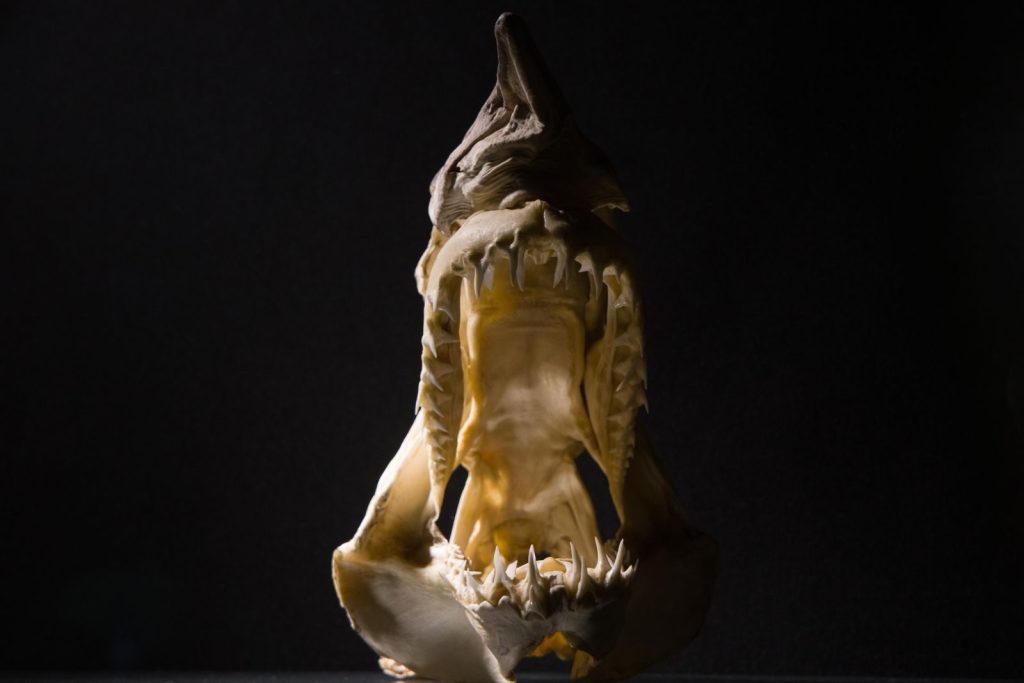
Fangtooth fish are famous for teeth that appear absurdly large compared with their bodies. Deep-sea predators often cannot afford to waste a rare feeding opportunity, so large jaws and recurved teeth can help secure prey when contact finally occurs.
Monterey Bay Aquarium material highlights oversized mouths and sharp teeth among several deep-sea feeding adaptations. These structures are not evidence that fangtooths seek humans. Their natural world is far below ordinary swimming depths, where food is scarce and encounters happen in darkness. What looks terrifying in a photograph is simply equipment for catching small deep-ocean prey.
Ultra-Black Fish

Some deep-sea fishes are so dark that their skin reflects extraordinarily little light. In an environment where many animals make their own bioluminescence, even tiny reflections can reveal a predator or prey animal.
MBARI research on deep-sea camouflage shows how ultra-black surfaces help absorb incoming light, making the body difficult to detect. This adaptation can create a nearly featureless appearance in photographs until powerful research lights illuminate the animal. The result looks sinister to humans because facial details disappear into darkness, but biologically it is sophisticated concealment in a habitat where being seen can mean losing a meal or becoming one.
Barreleye Fish

The barreleye fish has a transparent dome over the top of its head, with tubular eyes visible inside. MBARI observations showed that those eyes can rotate, allowing the fish to look upward for silhouettes and then forward when feeding.
Its clear head may appear science-fictional, yet it is associated with highly specialized vision in dim midwater habitat. Large flat fins allow the fish to remain remarkably stable while watching for prey. The barreleye demonstrates that deeper animals often look strange because their bodies solve sensory problems humans never encounter, not because evolution somehow makes ocean animals progressively “scarier.”
Deep-Sea Snailfish

Deep-sea snailfish lack the heavily armored appearance people might expect from an animal living under enormous pressure. Instead, many have soft, gelatinous bodies with reduced hard structures, an arrangement that can function well in cold, high-pressure water.
Research on newly described deep species continues to reveal how snailfish specialize for different depth ranges. Members of this family also include the deepest fish ever recorded alive. Their soft bodies may look fragile at the surface, but they are adapted to environments that would be physically impossible for shallow-water fishes—and crushingly dangerous for an unprotected human.
Goblin Shark Jaws

The goblin shark has one of the ocean’s strangest feeding mechanisms. Its long snout extends ahead of a soft-looking body, while the jaws can rapidly project forward, dramatically changing the shape of the head during a strike.
Until recently, natural behavior was extraordinarily difficult to observe. In 2026, researchers reported the first live observations of goblin sharks in their natural deep habitat. The animals’ unusual jaws may look horrifying when extended, but they are specialized feeding equipment. There is no evidence that deep-living goblin sharks represent a routine threat to people.
Deep-Ocean Pressure
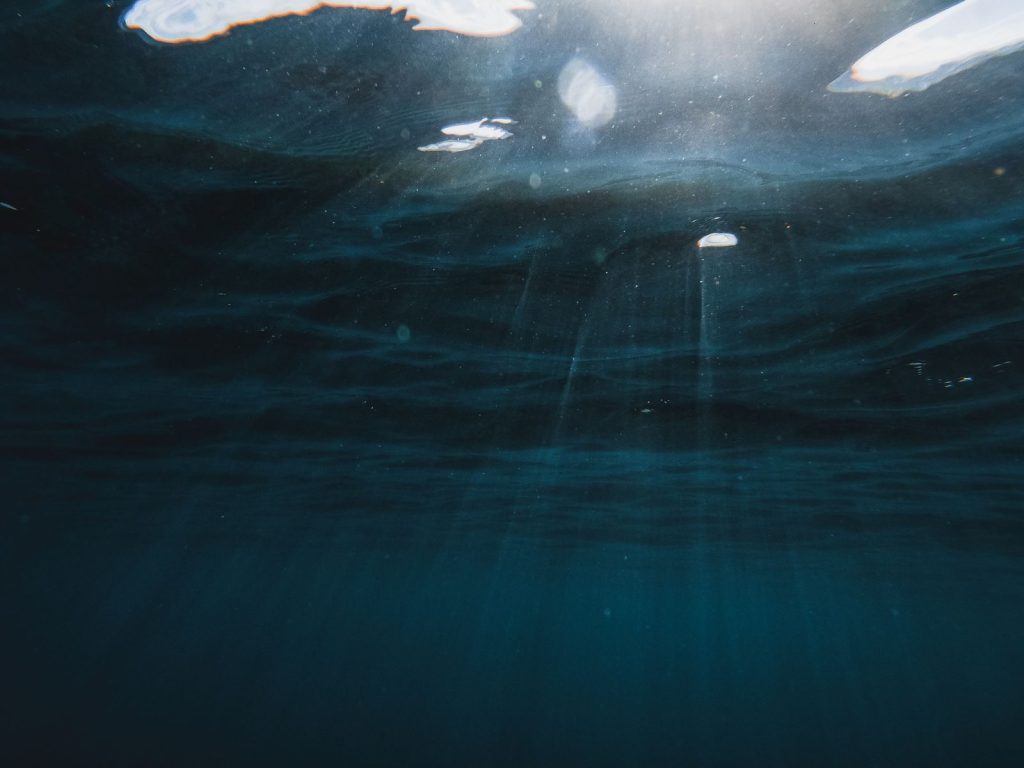
Pressure increases dramatically with depth, while temperatures generally become colder and food can become scarce. MBARI describes deep-sea animals as specialists adapted to darkness, frigid water, and crushing pressure that most familiar organisms could not tolerate.
These conditions reshape physiology as much as appearance. Flexible tissues, altered proteins, reduced skeletal structures, slow metabolism, and unusual sensory systems can all become advantageous in different deep species. The creatures look increasingly unfamiliar because human beings evolved at the surface. Their bodies are not “wrong”; they are solutions to an environment that is profoundly alien from our own.
Featured Image: Photo by David Clode on Unsplash