The title alone does not identify an authenticated filming event, so describing a particular lynx as fearless, friendly, or interested in a specific person would go beyond what can be verified.
Canada lynx are normally elusive wild cats. An individual remaining visible near a camera may be watching, assessing, habituated to human presence, or simply choosing not to flee immediately.
Canada Lynx

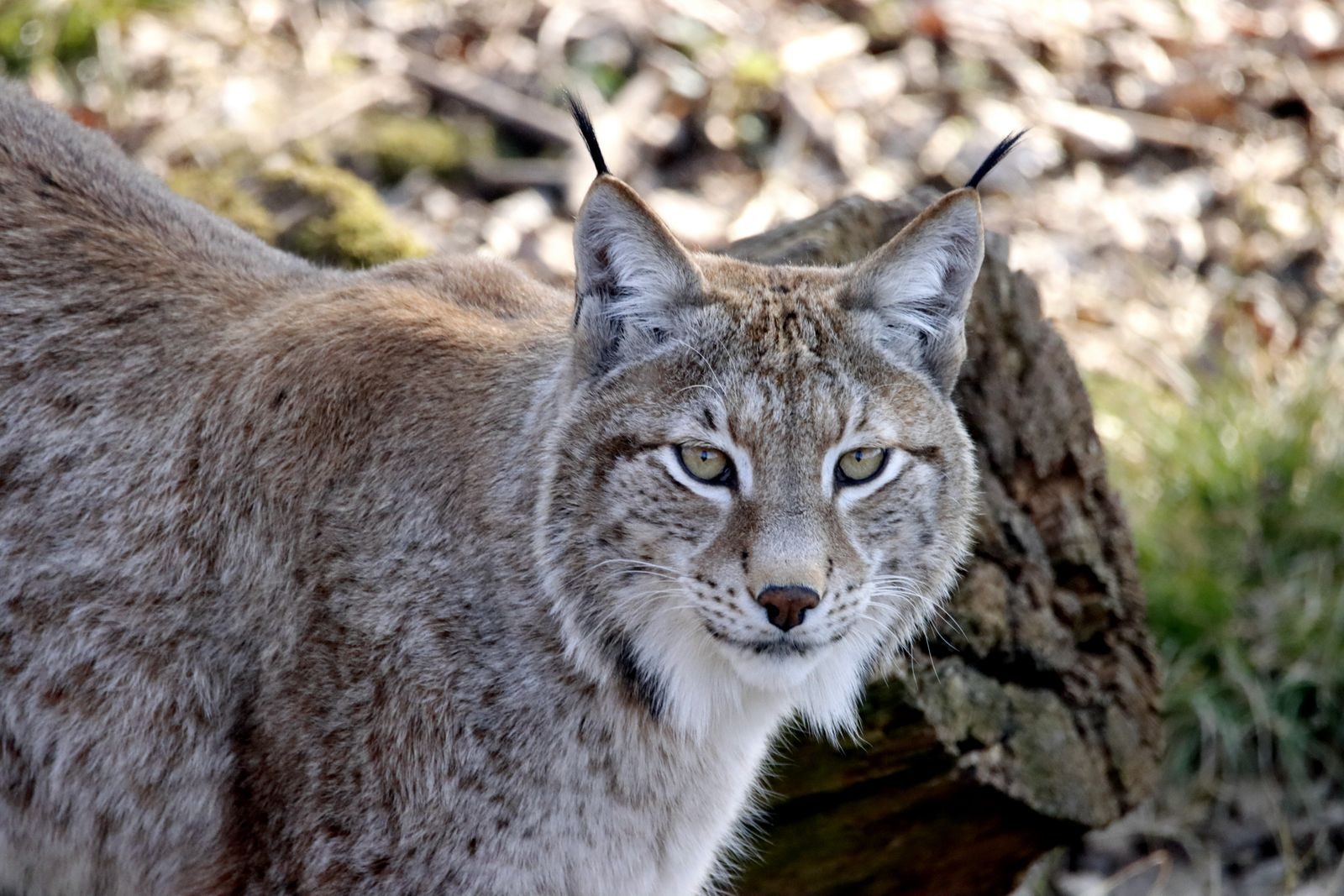
The Canada lynx is a medium-sized wild cat of northern forests. Its long legs, short tail, tufted ears, broad paws, and thick coat make it particularly well suited to snowy environments.
Despite its striking appearance, the lynx is not normally an animal people can expect to approach closely. It spends much of its life away from human attention, hunting across large forested landscapes where its camouflage and quiet movement make sightings relatively uncommon.
Snowshoe Feet

A lynx’s oversized paws spread its weight across soft snow, functioning somewhat like natural snowshoes. Long legs also help the cat move through deep winter conditions that would slow animals with smaller feet.
These adaptations give lynx an advantage in boreal forests where snow can remain deep for months. Their body shape can look slightly oversized and unusual compared with a domestic cat, but it is closely tied to hunting and traveling efficiently through their cold northern habitat.
Snowshoe Hare

Snowshoe hares are central to Canada lynx ecology. Lynx populations can rise and fall in response to long-term changes in hare abundance because this prey forms such an important part of their diet across much of their range.
A lynx will also take other prey when available, but its close relationship with snowshoe hares helps explain why suitable boreal habitat matters so much. Protecting the cat requires landscapes capable of supporting both the predator and enough prey to sustain it.
Solitary Lynx

Canada lynx are generally solitary except during breeding and when females are raising kittens. An adult seen alone is therefore behaving normally rather than necessarily being separated from a missing group.
Solitary living also means a lynx does not depend on a pack to hunt or patrol its environment. Individuals move through large home ranges and rely on their own senses and stealth. A quiet cat watching a photographer may simply be assessing an unfamiliar object within that landscape.
Boreal Forest

Canada lynx are strongly associated with boreal and other northern forest environments that support snowshoe hares and provide cover for hunting, resting, and raising young. Forest structure is therefore important to their survival.
In the contiguous United States, suitable habitat occurs near the southern edge of the species’ broader North American range. Changes to forest conditions and climate can affect where both lynx and their prey can thrive, making habitat conservation a continuing concern.
Curious Lynx

A lynx that stops to look at a person cannot be confidently described as “unafraid.” Fear is an internal state, while watching, remaining still, approaching, retreating, or continuing to forage are behaviors that cameras can actually document.
An animal may tolerate someone because it has not yet judged the situation dangerous, because it is accustomed to distant human activity, or for reasons observers cannot determine. Curiosity is possible, but it should not automatically be treated as friendship or trust.
Keep Your Distance

A close wildlife encounter can feel special, but moving toward a lynx to extend the moment can change its behavior. Giving the animal an obvious escape route and avoiding food, touching, pursuit, or repeated disturbance is safer.
A lynx that does not run away is still a wild carnivore. Distance protects both sides and produces more authentic wildlife observation. Telephoto lenses allow photographers to capture detailed images without turning tolerance into an increasingly close confrontation.
U.S. Lynx Conservation

The Canada lynx is listed as threatened under the U.S. Endangered Species Act in the contiguous United States. Federal conservation work focuses heavily on maintaining suitable habitat and understanding how environmental changes affect the species.
That status makes responsible observation especially important. A rare close sighting can inspire interest in the species without requiring physical interaction. The more useful story is not that a wild lynx behaved like a pet, but that people occasionally receive a brief view into an otherwise secretive predator’s life.
Featured Image: Photo by patrice schoefolt on Pexels