Nature produces animals that look as if somebody ignored the usual design rules. Some have leaf-shaped bodies, external gills, enormous bills, strange fingers, or tusks that grow through the face. Photographs can look edited, yet every animal below is real, and each odd feature reflects a genuine evolutionary history and a practical survival challenge. Strange does not mean artificial, impossible, or poorly adapted.
The most surprising part is not simply how unusual these animals look, but why those forms work. Camouflage, feeding, sensing, swimming, defense, and reproduction can all push bodies in unexpected directions. Looking closely at the biology behind these creatures makes them seem less like visual tricks and more like reminders of how flexible evolution can be. In many cases, the oddest feature is the most useful one.
Platypus

The platypus famously looks like several familiar animals combined into one body. It has a broad bill, webbed feet, dense fur, lays eggs, and males carry venomous ankle spurs. Early European observers reportedly found its anatomy so strange that doubts about specimens were understandable. The animal is actually a monotreme, one of the few living egg-laying mammals. Its bill also contains receptors that detect electrical signals from prey underwater, letting the platypus hunt while its eyes, ears, and nostrils are closed beneath the surface.
Leafy Seadragon

The leafy seadragon looks more like drifting seaweed than a fish. Leaf-shaped appendages extend from its body and help break up its outline among kelp and reef vegetation. Those elaborate projections are mainly camouflage rather than the structures that propel it forward. Small fins do the actual swimming while the animal moves with a plantlike appearance. Native to southern Australian waters, the species shows how natural selection can favor a body that resembles surrounding habitat so closely that an animal nearly disappears in plain sight.
Star-Nosed Mole

The star-nosed mole has 22 fleshy appendages arranged around its nose, creating one of the strangest faces among mammals. Those rays are packed with thousands of touch receptors called Eimer’s organs. The mole moves them rapidly across soil, tunnels, and prey, allowing it to gather tactile information at remarkable speed. It also spends time in wet habitats and can swim. The star is not a set of decorative tentacles; it is an extremely specialized sensory surface that helps the mole hunt where vision is of limited use.
Axolotl
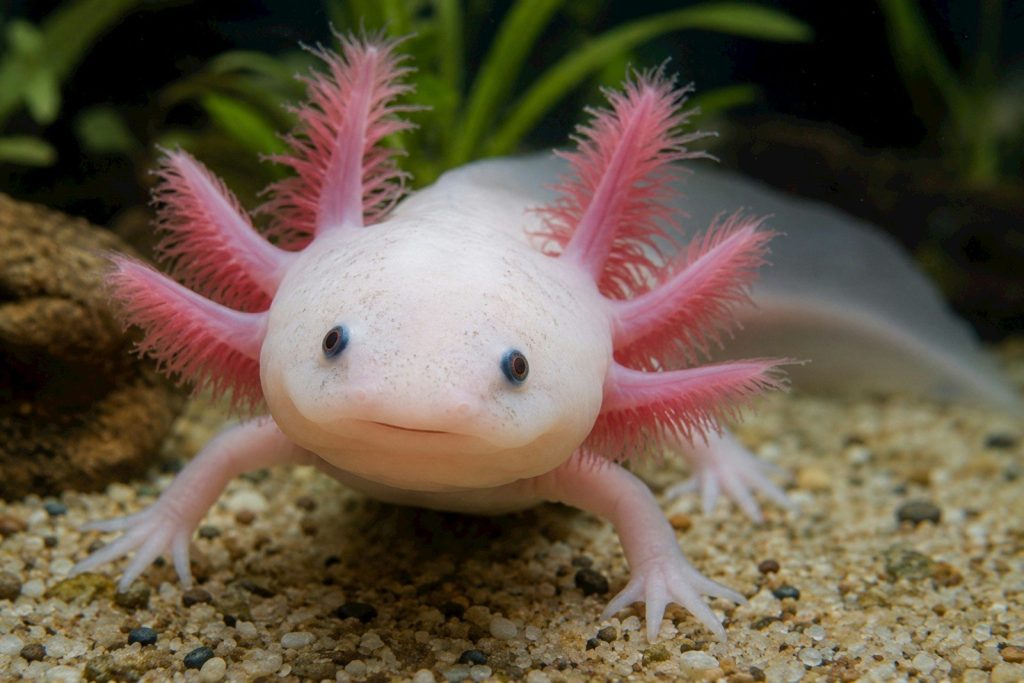
Axolotls keep juvenile features into adulthood, including prominent feathery external gills and a body adapted for permanent aquatic life. This condition, called neoteny, makes them look like salamander larvae that never finished changing. Their biology becomes even more remarkable because they can regenerate limbs and repair several other tissues with unusual effectiveness. Wild axolotls are restricted to freshwater habitat around Mexico City and face severe pressures from habitat degradation, pollution, and introduced species. Their unreal appearance hides a very real conservation problem.
Shoebill
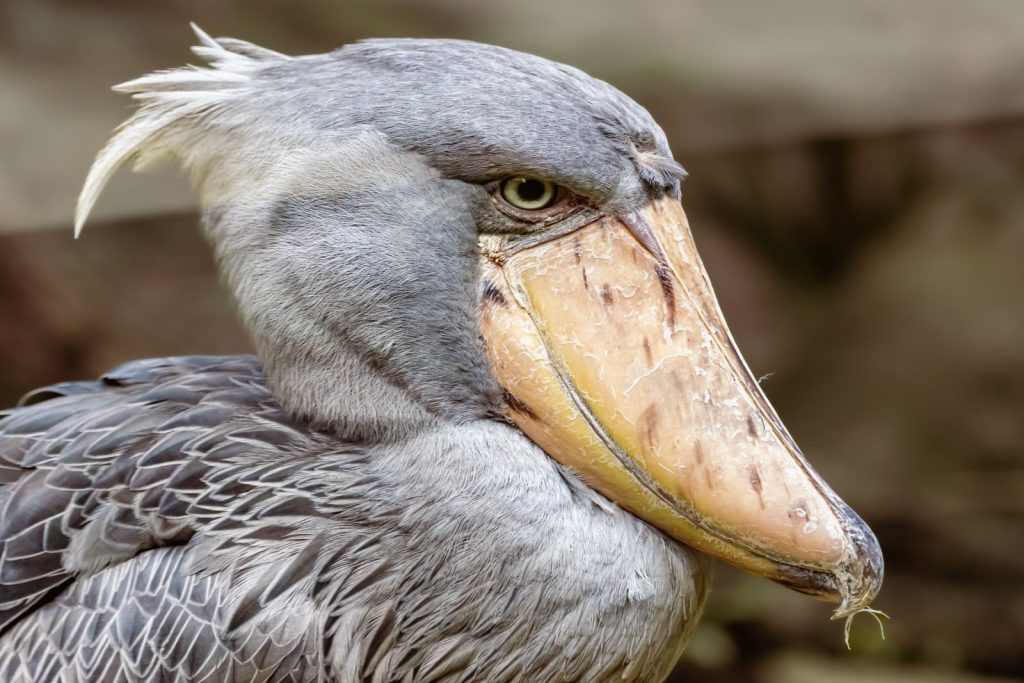
The shoebill is a towering African wetland bird with an enormous shoe-shaped bill that can look almost prehistoric. The bill is not an oversized decoration. It helps the bird seize slippery aquatic prey, including fish, after long periods of patient stillness. Shoebills often stand nearly motionless before striking suddenly, which adds to their uncanny appearance in photographs. Their gray plumage, large body, and massive head create a silhouette unlike most familiar birds, yet every exaggerated feature is tied to life as a specialized wetland predator.
Babirusa

Male babirusas can grow upper canine teeth that emerge through the skin of the snout and curve backward toward the forehead. The result looks anatomically impossible, but it is normal for adult males of some babirusa species. San Diego Zoo notes that the exact function of these upper tusks remains uncertain, despite several hypotheses involving display or competition. Babirusas are pig relatives native to Indonesian islands. Their strange teeth make them look invented, but the more important reality is that they are threatened by habitat loss and hunting.
Aye-Aye
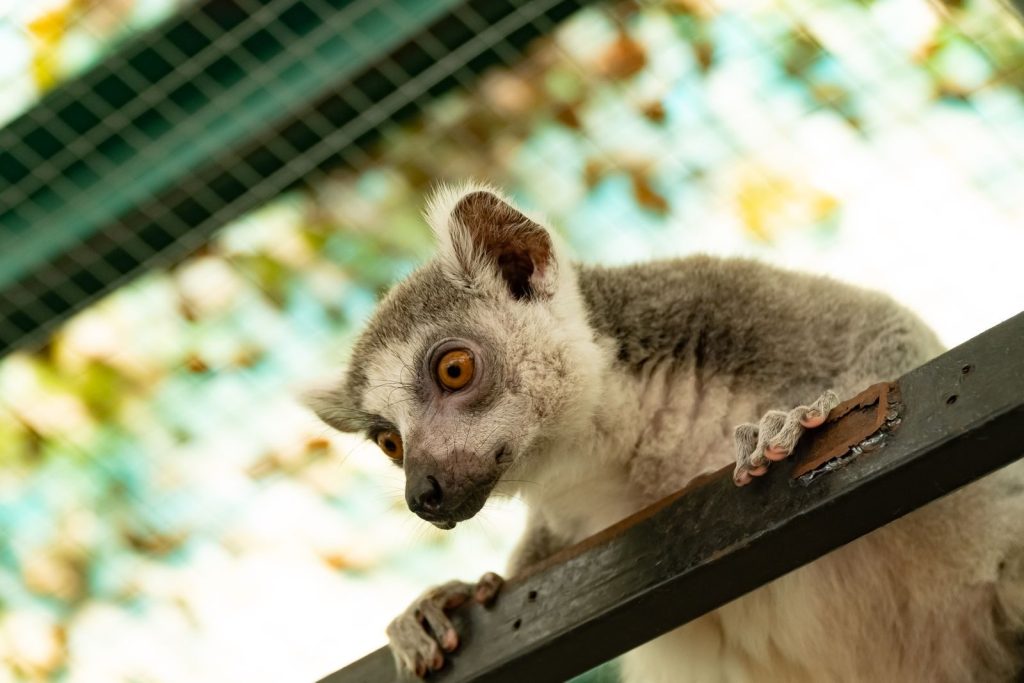
The aye-aye looks like an improbable combination of primate, bat, and squirrel, but its strangest feature is a very thin middle finger. This nocturnal lemur taps on wood, listens for signs of insect larvae, gnaws into the surface with strong incisors, and then uses the elongated finger to extract prey. The technique gives the aye-aye access to food hidden inside branches. Native to Madagascar, it is a highly specialized primate whose unusual anatomy makes sense once its feeding method is understood rather than judged only by appearance.
Cassowary

Cassowaries look almost prehistoric, with glossy black feathers, brightly colored skin, strong legs, and a tall casque rising from the head. The casque is covered in keratin, though researchers still debate all of its functions. These large flightless birds live in tropical forests of New Guinea and northeastern Australia, where they eat large quantities of fruit and disperse seeds. Their body plan seems fantastical in photographs, but it is perfectly functional for moving through dense rainforest, finding fruit, communicating, and defending themselves when threatened.
Featured Image: Photo by stefan kroeger on Unsplash