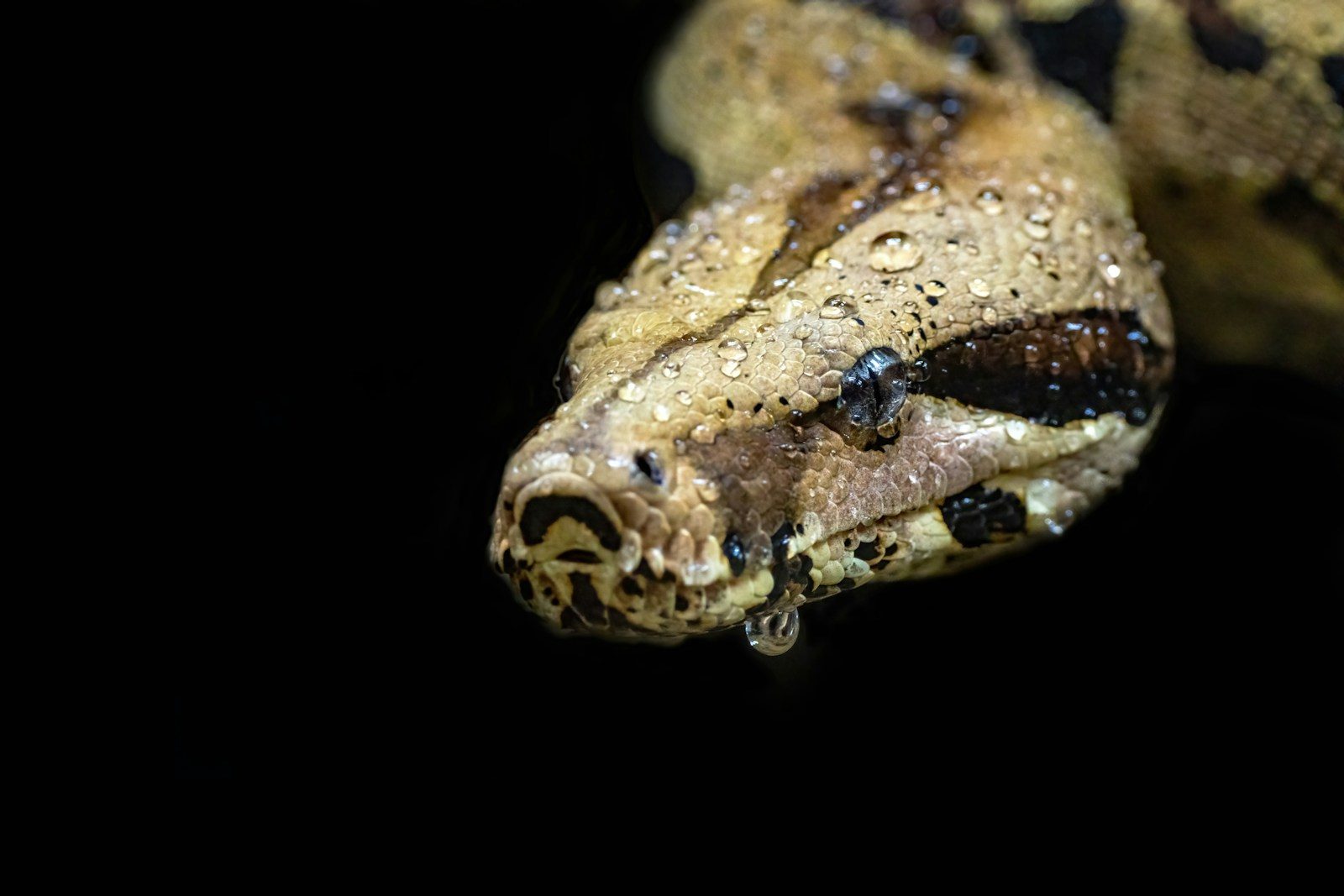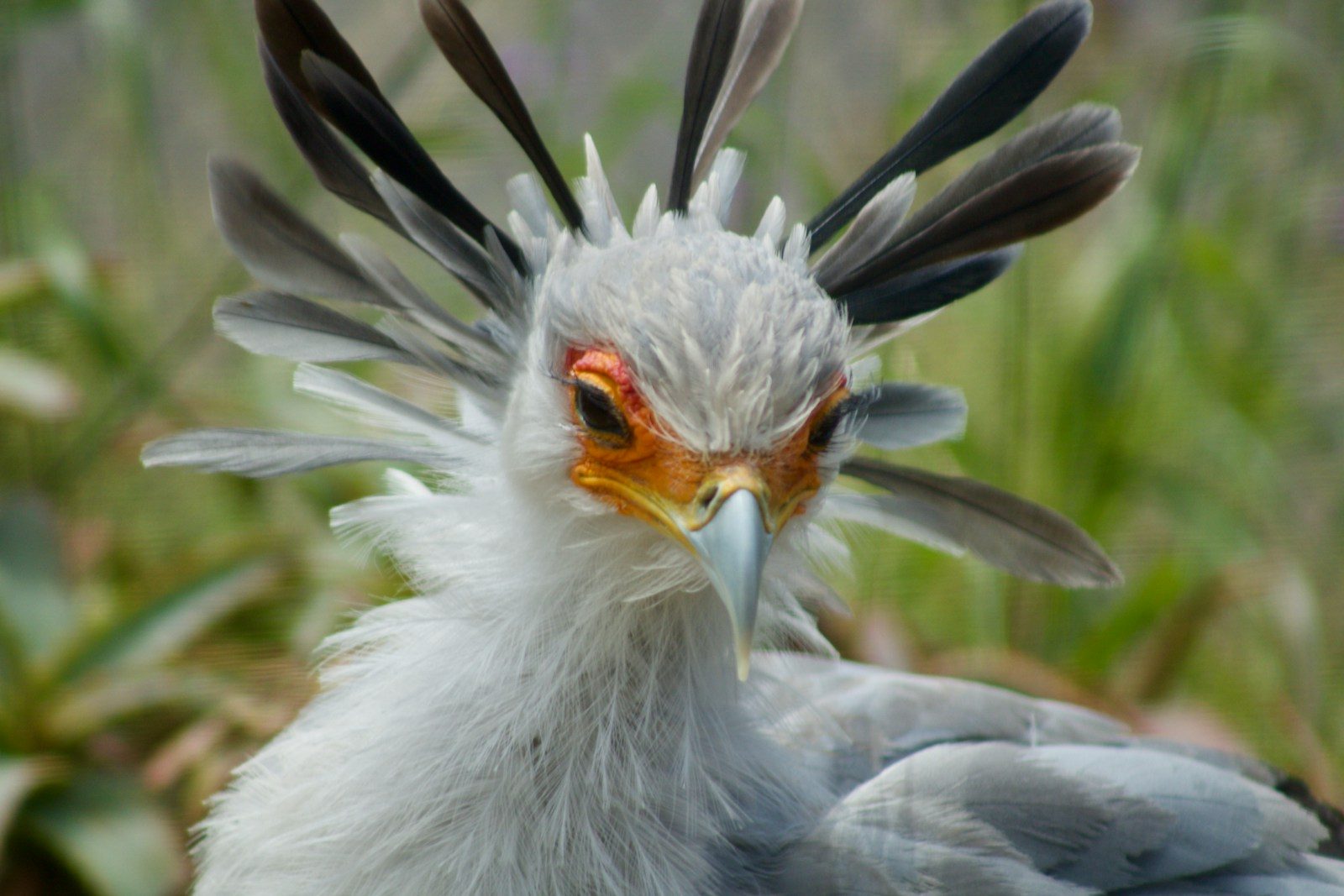
Secretary birds look almost too elegant to be snake hunters. They stand more than four feet tall, walk across African savannas on exceptionally long legs, and spend much of the day searching the ground for prey. Snakes are only part of their varied diet, but the birds are famous for taking them, including venomous species, with fast and highly targeted kicks.
That reputation should not be turned into the claim that every snake encounter is effortless. A venomous bite could still be dangerous, so secretary birds rely on speed, distance, visual targeting, and repeated foot strikes. Research has measured how forceful those kicks can be, while zoo observations show the birds spreading their wings during attacks, creating moving feather targets that may help reduce bite risk.
Secretary Bird
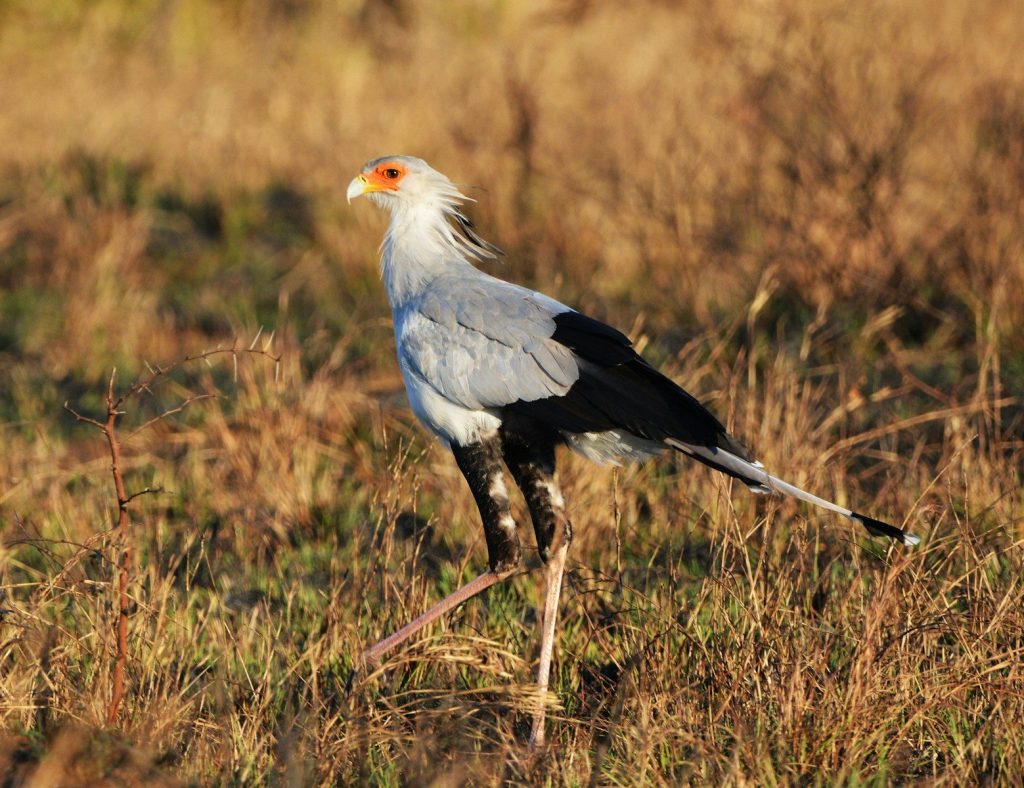
The secretary bird is a large terrestrial raptor native to sub-Saharan Africa. Unlike most birds of prey, it spends much of its hunting time walking through open grasslands and savannas rather than searching from the air. San Diego Zoo Wildlife Alliance reports that individuals can cover more than 20 miles in a day while looking for food. Their diet includes insects, small mammals, reptiles, birds, and other animals. Snakes are famous prey, but they are not the bird’s only target.
Snake Hunting

When a secretary bird encounters a snake, it may chase and strike rather than grabbing the reptile immediately with its bill. The bird uses quick downward kicks and stomps to stun or kill prey while keeping its vulnerable head farther from the snake’s mouth. San Diego Zoo notes that secretary birds can kill many kinds of snakes, including venomous ones. The strategy depends on controlling distance and repeatedly landing accurate blows before the snake can successfully counterattack at close range.
Powerful Kicks
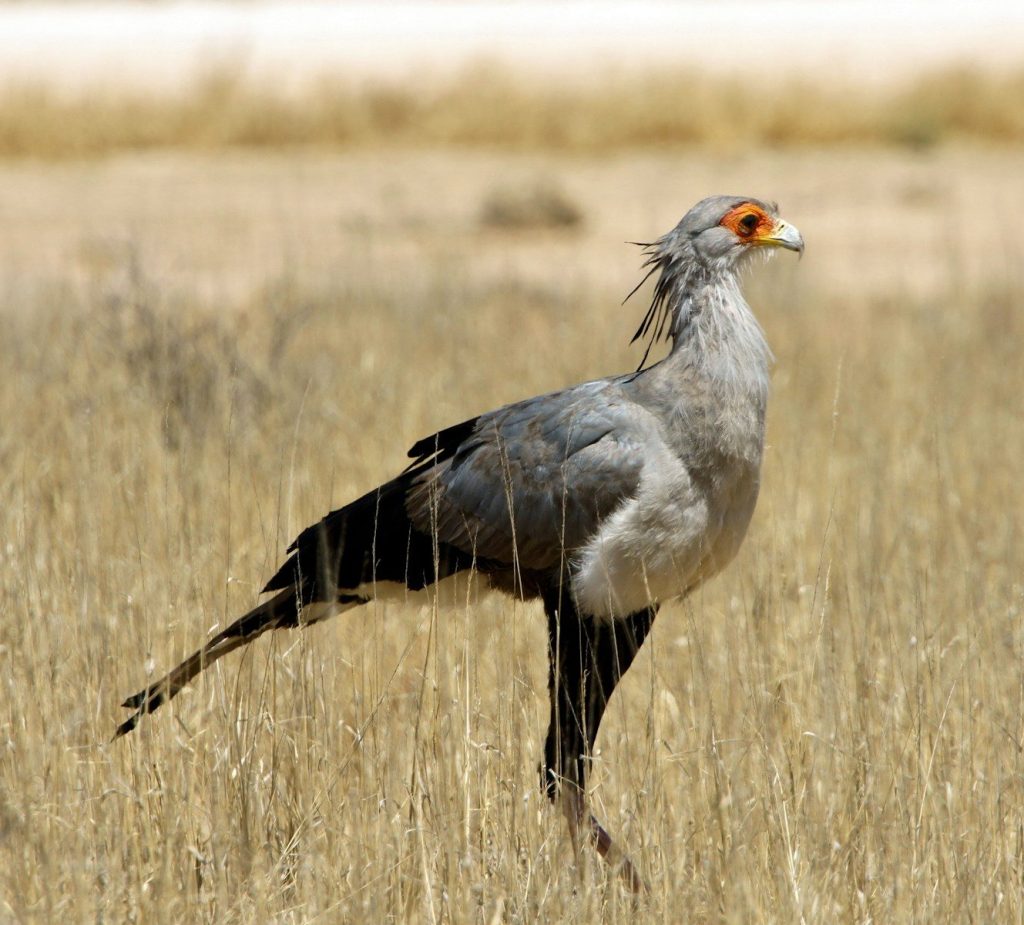
Biomechanics research has shown that a secretary bird’s kick is exceptionally forceful. In a study using a trained adult male striking a rubber snake on a force plate, the bird delivered impacts reaching about five times its own body weight. That force can rapidly incapacitate small prey. The measurement came from a controlled experiment rather than a wild venomous-snake encounter, so it should be used carefully. Even so, it demonstrates that the bird’s long legs are formidable hunting weapons rather than simply adaptations for walking.
Strike Speed
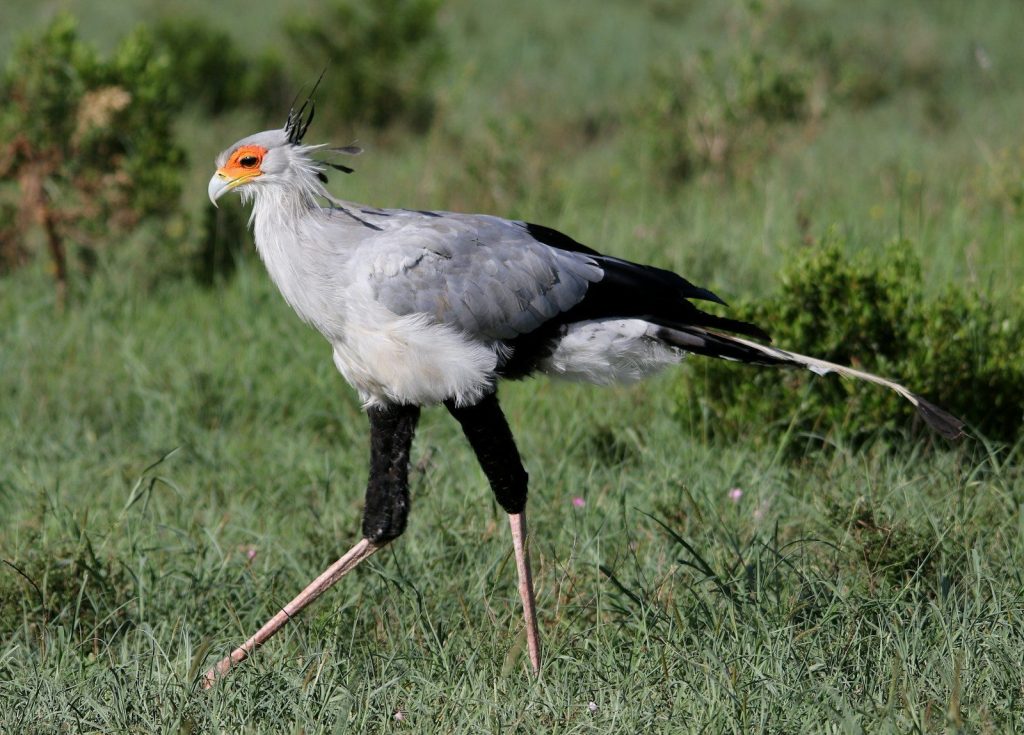
The same research found that contact during a secretary bird strike can last only about 10 to 15 milliseconds. Such brief contact reduces the time a snake has to respond to the attacking foot. Researchers argued that the bird must therefore rely on precise visual targeting to place its kicks effectively. Speed alone would not be enough if the bird repeatedly missed the head or body. The combination of fast contact, force, and accuracy helps explain how the species can attack dangerous reptiles while limiting exposure.
Long Legs
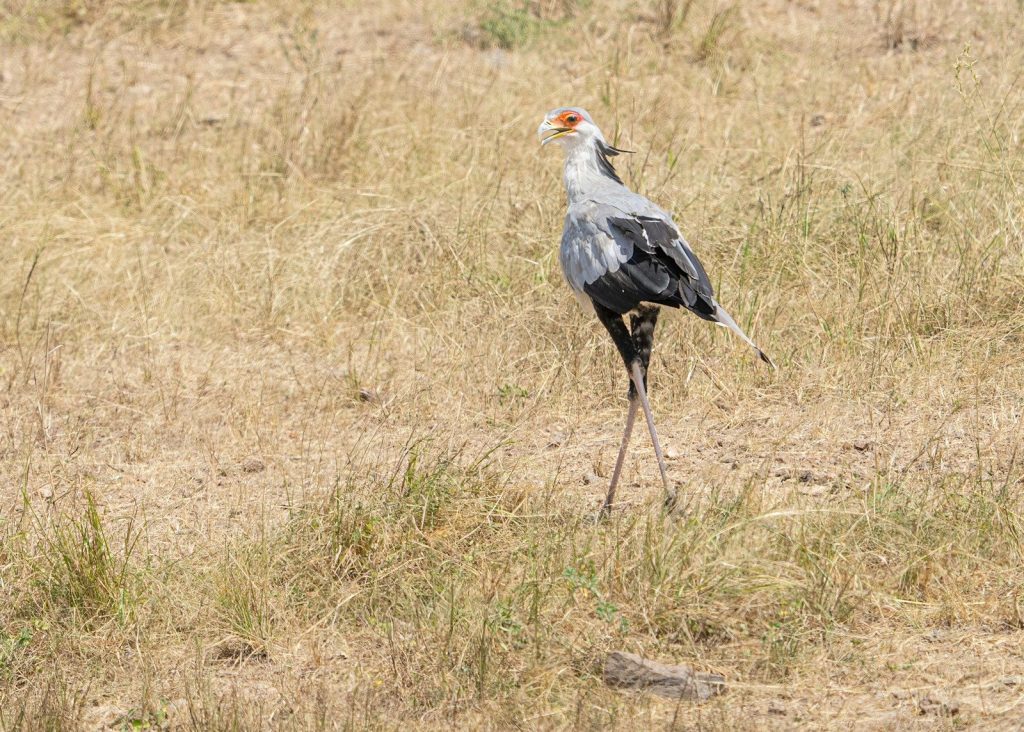
Secretary birds have extraordinarily long legs for raptors, and those limbs serve both locomotion and predation. Their height lets them move through grass while scanning the ground, and the legs keep the bird’s body farther from prey during a strike. The feet are better suited to powerful stamping than to the grasping style used by many other raptors. This unusual anatomy matches a hunting lifestyle built around walking, flushing prey, chasing short distances, and delivering forceful blows from above rather than carrying victims away in the talons.
Wing Distraction
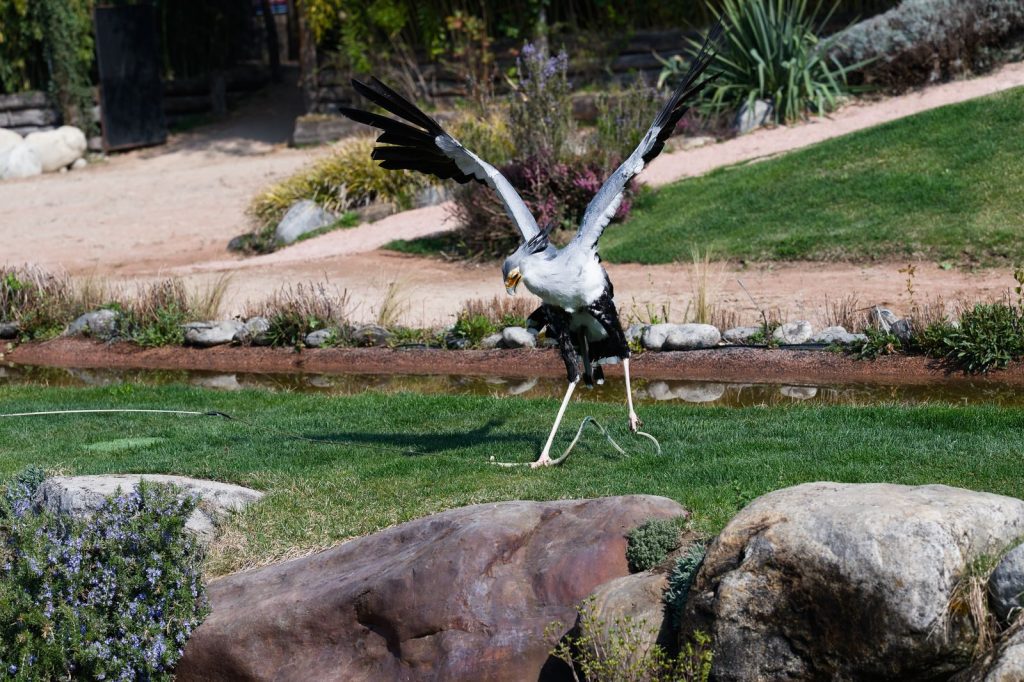
During an attack, secretary birds may spread their wings and raise the crest feathers behind the head. San Diego Zoo explains that a venomous snake may strike at the moving feathers, which can act as relatively safe distraction targets because biting a hollow feather does not injure the bird the way a bite into flesh would. This does not make the bird immune to venom. The behavior instead appears to add another layer of risk management while the legs remain the main weapons used to subdue the snake.
Venomous Prey

Venomous snakes are genuine prey for secretary birds, but older popular accounts sometimes exaggerated how central snakes are to their diet. BirdLife International notes that insects make up a large share of recorded food, while rodents, lizards, snakes, eggs, young birds, and amphibians are also eaten. That broader diet matters when interpreting dramatic videos. A secretary bird fighting a cobra or adder shows a specialized ability within a flexible feeding strategy, not an animal that spends every day seeking only the most dangerous snakes it can find.
Conservation Status

The secretary bird’s snake-hunting skill has not protected the species from conservation decline. BirdLife International currently lists it as Endangered, with habitat loss, degradation, disturbance, and other pressures contributing to population concerns. These birds need extensive open landscapes where they can walk, hunt, nest, and raise young. A spectacular snake encounter may draw attention online, but the larger conservation story is about keeping enough functioning savanna and grassland habitat for this unusual ground-hunting raptor to survive across its African range.