Bald eagles build some of the largest nests made by any bird. Typical structures are already several feet across, and nests reused for many years can reach extraordinary dimensions.
The impressive size develops through repeated construction rather than one enormous building effort. Eagle pairs may repair and enlarge successful nests season after season.
Bald Eagle Nest Size

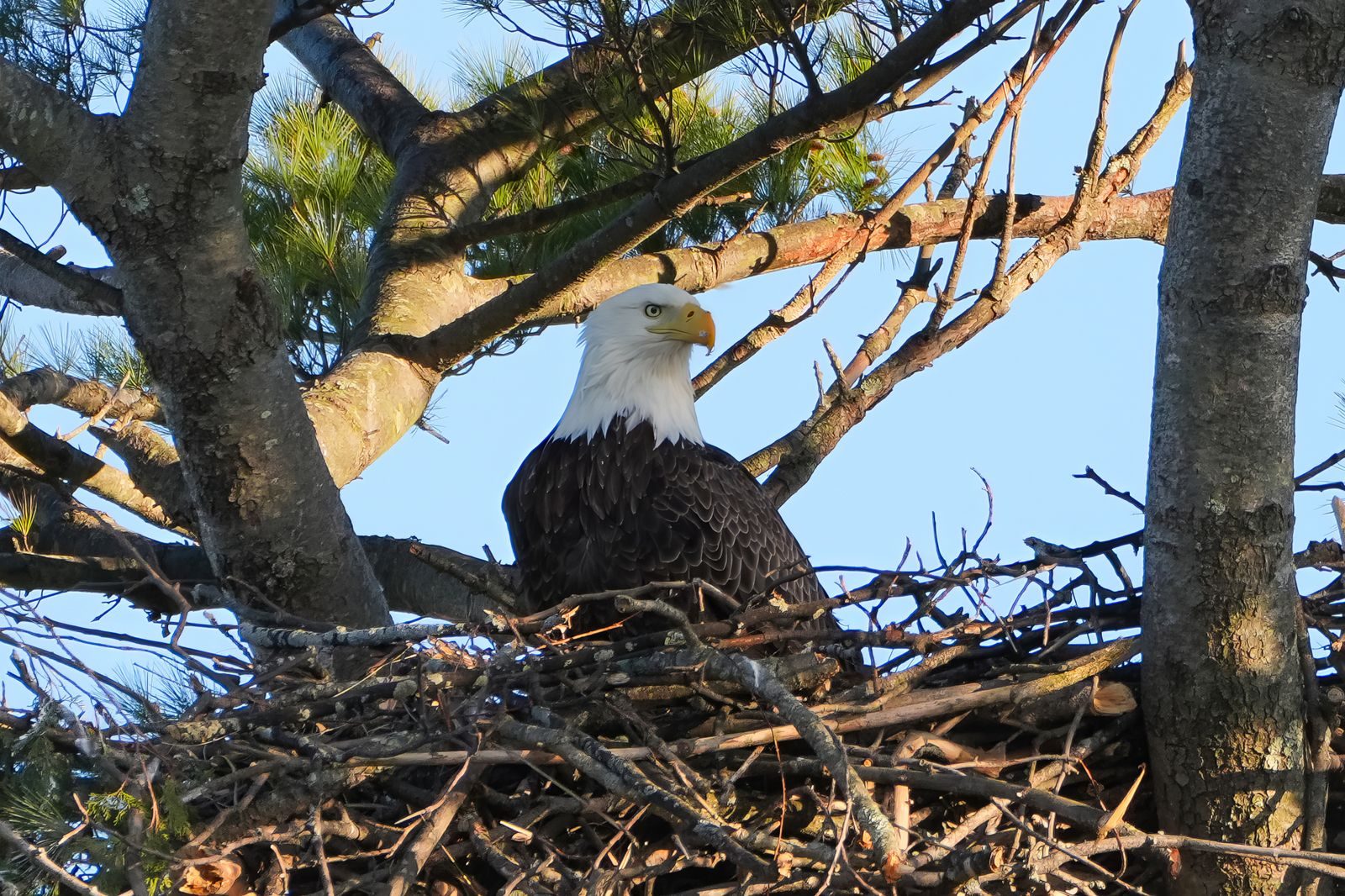
A typical bald eagle nest measures roughly five to six feet across and two to four feet tall. Its exact shape depends on the tree or structure supporting it, so nests can appear flat, cylindrical, or cone-shaped.
These measurements make even an average eagle nest far larger than most familiar backyard bird nests. The size can also be deceptive from the ground because nests are commonly placed high in large trees. Comparing the structure with an adult bald eagle perched on its edge provides a better sense of the nest’s remarkable scale.
Sticks and Soft Lining
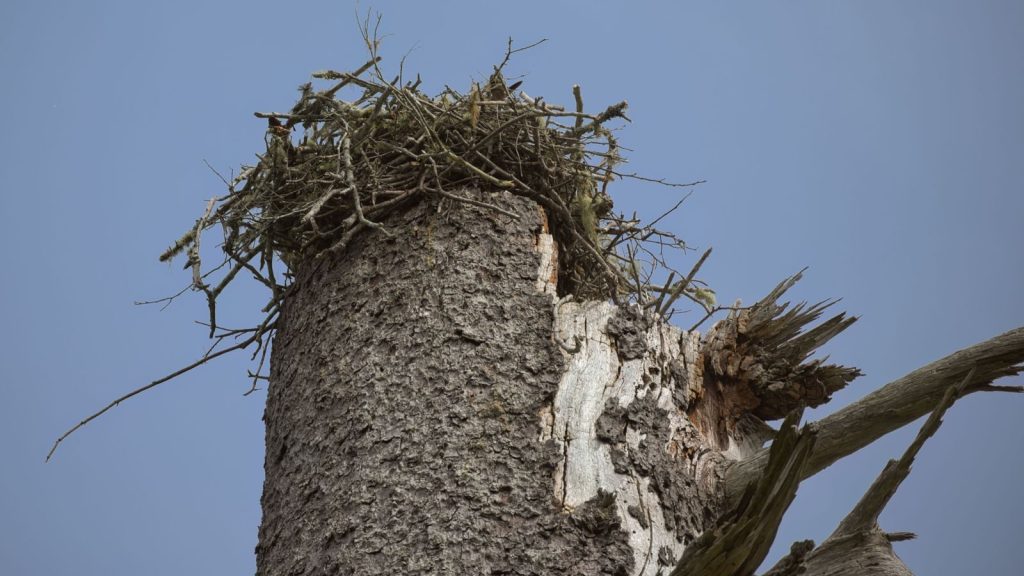
Both adult bald eagles bring material to the nest, although the female generally does more of the placement. Large sticks form the main framework, while grass, moss, cornstalks, and similar softer materials fill the gaps.
The inner nesting area receives finer material, including vegetation and sometimes downy feathers. Building a new nest can take as long as several months. The final structure must support adult birds, eggs, growing eaglets, and prey brought back for feeding, so strong construction and continued maintenance are essential throughout the nesting season.
Reused Eagle Nests

Bald eagle pairs may return to the same nest and add new material year after year. Instead of rebuilding the entire structure, they repair damaged sections and reinforce what remains.
This repeated use explains how some nests become dramatically larger and heavier with age. Pairs may also maintain more than one nest within a breeding territory, meaning an unused structure is not automatically abandoned forever. Under current U.S. regulations, eagle nests remain legally protected even when they are not presently in use unless wildlife authorities determine they are no longer usable.
Record Bald Eagle Nest

The largest bald eagle nest on Cornell Lab’s record was located in St. Petersburg, Florida. It measured approximately 2.9 metres across and 6.1 metres, or 20 feet, tall.
Another famous nest in Vermilion, Ohio, was used for 34 years and reportedly weighed nearly two metric tons before the supporting tree eventually blew down. These extreme examples should not be presented as normal nest dimensions. Instead, they demonstrate what decades of repeated repairs and additions can produce when eagles continue using a successful nesting location.
Bald Eagle Nest Trees

Bald eagles usually build in tall, sturdy trees near large bodies of water. Cornell notes that they commonly select mature trees providing good visibility and convenient flight access.
Nests are generally positioned close to the trunk rather than on weak outer branches. Nearby rivers, lakes, reservoirs, or coastlines also provide access to fish, which form an important part of the bald eagle diet. In areas without suitable trees, eagles can use cliffs or even ground sites. Local habitat determines which secure nesting options are available.
Bald Eagle Egg Cup

The giant outer structure contains a much smaller central area where the eggs actually rest. Eagles line this egg cup with finer, softer materials than the large sticks forming the outside platform.
Bald eagles generally lay one to three eggs, and incubation lasts roughly 34 to 36 days. The large platform becomes increasingly useful once eaglets grow. Young birds can remain in the nest for roughly two to three months before fledging, eventually approaching adult size and needing space to move, feed, stretch, and exercise their developing wings.
Alternative Eagle Nests

Not every bald eagle nest is built in a towering tree. Cornell documents cliff and ground nesting in places where trees are unavailable, while human-made platforms can sometimes provide another suitable foundation.
The birds still perform the actual construction themselves, carrying sticks and lining materials to whatever support they select. This flexibility helps bald eagles reproduce across very different North American landscapes. Regardless of location, however, the site must safely hold an increasingly heavy structure while providing adults with enough room to approach, leave, and deliver food to their chicks.
Protect Bald Eagle Nests
Bald eagle nests are federally protected in the United States under the Bald and Golden Eagle Protection Act. Current U.S. Fish and Wildlife Service guidance says nests cannot be removed, destroyed, relocated, tampered with, or obstructed without the appropriate permit, even when they are not currently occupied.
Disturbance around breeding eagles can also be regulated when human activity is likely to interfere substantially with nesting, feeding, or sheltering behavior. For ordinary observers, the practical approach is simple: watch eagle nests from a respectful distance rather than approaching for a closer photograph.
Featured Image: Photo by Cara Denison on Pexels