Australia has many venomous snakes, but “scariest” is not a scientific category. Venom potency, venom yield, behavior, habitat, and the likelihood of meeting people all affect real-world risk, so the most toxic species is not automatically the most dangerous.
These eight snakes deserve respect because they combine medically important venom with traits that can make bites serious. Most snakes prefer escape over confrontation, and the safest response is to leave them alone, keep your distance, and seek urgent medical care after any suspected bite.
Eastern Brown Snake

The eastern brown snake is one of Australia’s most medically important snakes because it has highly toxic venom and often lives in open country, farmland, and areas modified by people. Australian Museum information notes that land clearing and rodent abundance have helped the species thrive in some agricultural landscapes. Its coloration varies, so identification by color alone is unreliable. It can become defensive when threatened, but avoiding close approach greatly reduces personal risk. Any suspected bite should be treated as a medical emergency, even when symptoms are not immediately obvious.
Inland Taipan
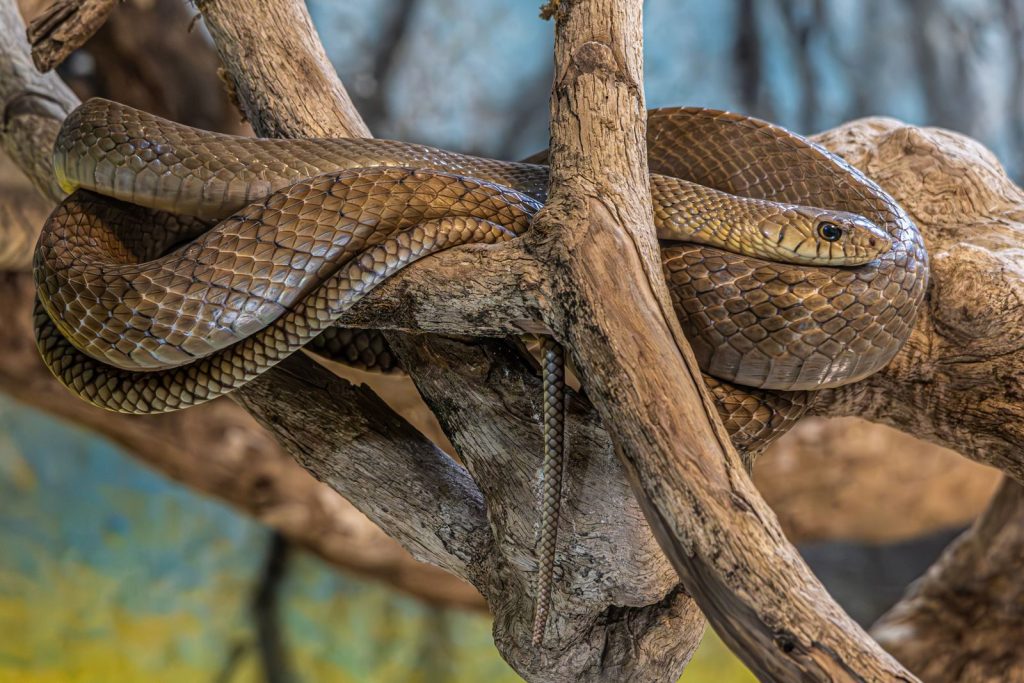
The inland taipan is often described as the world’s most venomous snake based on laboratory measures of venom toxicity, but that does not make it the snake people are most likely to encounter. The Australian Museum emphasizes that it lives in remote semi-arid country and is relatively shy, so human contact is uncommon. Its venom is extremely potent and a bite is potentially life-threatening, yet real-world danger depends on exposure as well as toxicity. This species is a good example of why “most venomous” and “most dangerous” are not interchangeable terms.
Coastal Taipan
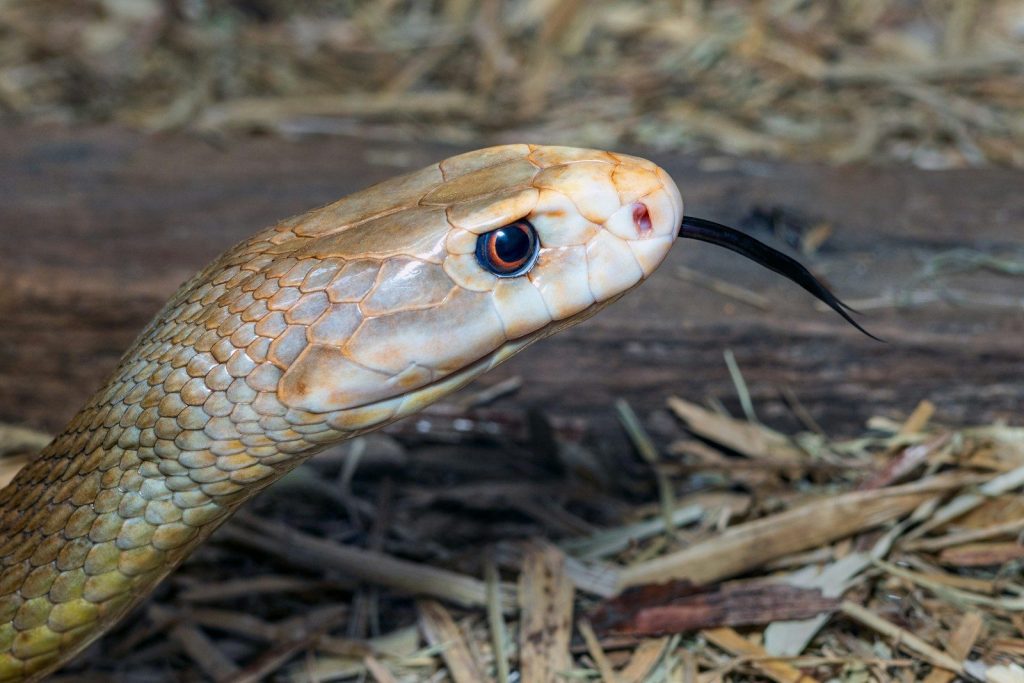
The coastal taipan is a large, fast-moving elapid found across parts of northern and eastern Australia. The Australian Museum lists it among the world’s most venomous snakes, and its medically significant venom makes every bite an emergency. Unlike the inland taipan, it occurs in regions where encounters with people are more plausible, including warm coastal and tropical landscapes. When threatened, it may defend itself vigorously, but that does not mean it seeks humans. Keeping distance, never attempting capture, and calling trained snake handlers are far safer choices than trying to move one yourself.
Tiger Snake

Tiger snakes are highly venomous snakes found mainly across southern and southeastern Australia, including Tasmania and several coastal islands. Their appearance can vary considerably; not every individual has obvious tiger-like bands. The Australian Museum describes the species as highly resilient and well adapted to different environments, including wetlands and areas where frogs and other prey are abundant. Because identification can be difficult, people should not rely on pattern alone when judging a snake. A suspected tiger snake bite requires immediate first aid and emergency medical attention, just like other serious Australian snake bites.
Common Death Adder

The common death adder differs from many Australian elapids in both shape and hunting style. It has a short, thick body and is an ambush predator that may remain motionless under leaves or other cover rather than quickly fleeing. The Australian Museum notes that it has relatively large fangs and highly toxic venom. Its camouflage creates an added hazard because a person may get close without noticing it. Death adders do not need to chase people to be dangerous; accidental close contact is enough. Avoid reaching blindly into leaf litter or moving hidden snakes.
Mulga Snake

The mulga snake, also called the king brown, is actually a member of the black-snake genus Pseudechis rather than the brown-snake genus Pseudonaja. It is widespread across much of inland Australia and can deliver a substantial quantity of venom. Australian Museum guidance describes a strong defensive display when the animal feels pressured, including hissing, body inflation, and forceful biting. That behavior is defensive, not evidence that the snake hunts people. Because venom yield can be high, any bite warrants urgent treatment. Giving a mulga snake space is the simplest and safest response.
Red-bellied Black Snake

The red-bellied black snake is a familiar species along much of Australia’s east coast, especially near wetlands, creeks, and other moist habitats. The Australian Museum notes that it is one of the more frequently encountered snakes in the region and that bites occur each year, although the species is generally shy. It may freeze when approached, which can allow a person to get surprisingly close before noticing it. Its venom is medically important, so a bite still requires urgent care. Familiarity should never be mistaken for harmlessness, and handling should be left to professionals.
Rough-scaled Snake

The rough-scaled snake is less famous than the eastern brown or taipans, but its venom is highly toxic and medically significant. The Australian Museum describes it as shy and extremely nervous; if cornered, it can raise the front of its body, hiss loudly, and strike repeatedly before attempting to escape. It occurs mainly in wetter habitats of eastern Australia, where frogs form an important part of its diet. Its reputation should be based on what it can do when threatened, not on the idea that it is naturally aggressive toward humans. Avoiding close contact remains the key precaution.
Featured Image: Photo by Michael Jerrard on Unsplash