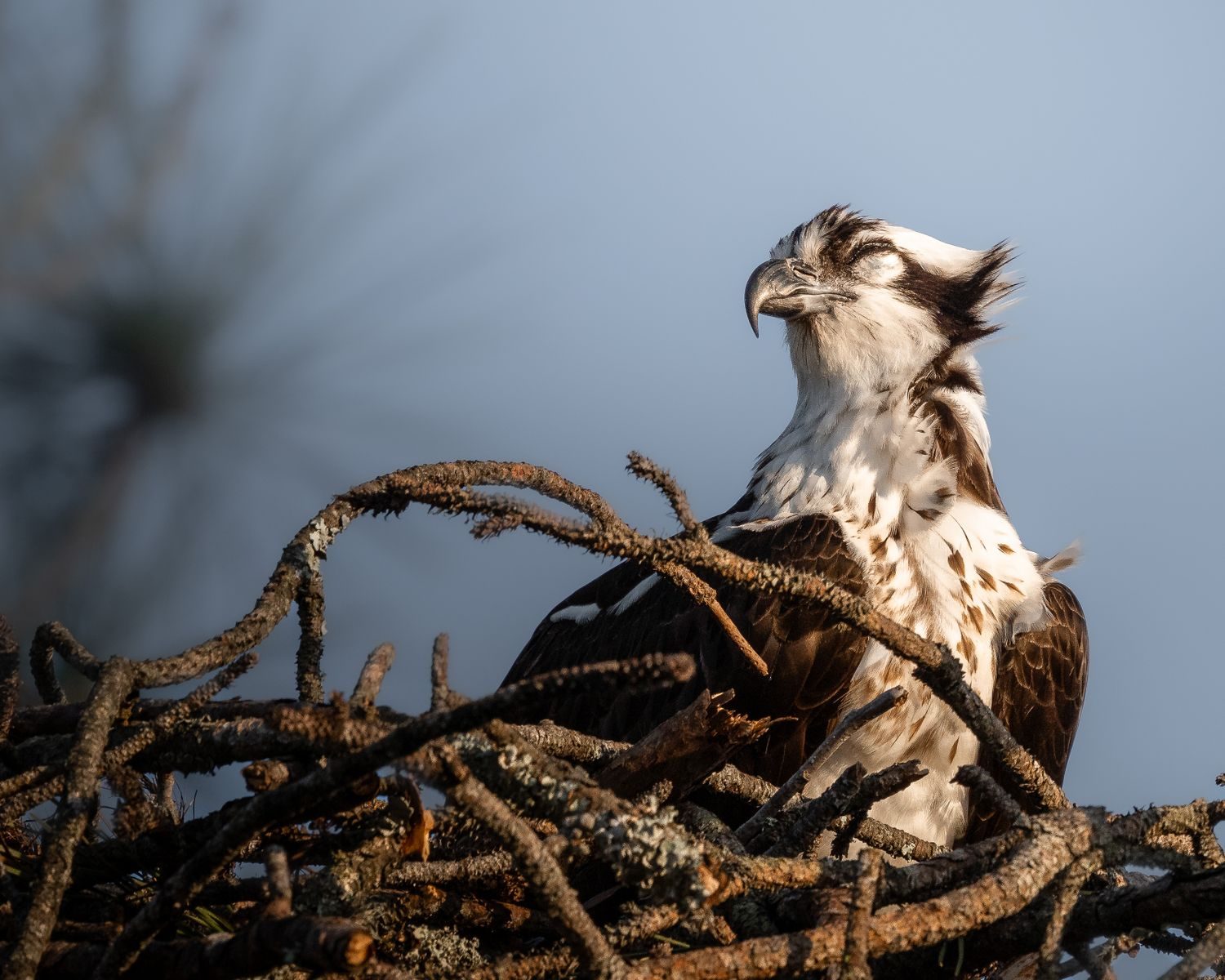
Iris is the celebrated female osprey at the Hellgate Canyon nest in Missoula, Montana. Audubon estimated her at 28 or 29 years old in 2025 and called her the oldest known living osprey at that time.
She returned again in 2026 and formed a breeding pair with a new male named Clark.
Iris the Osprey
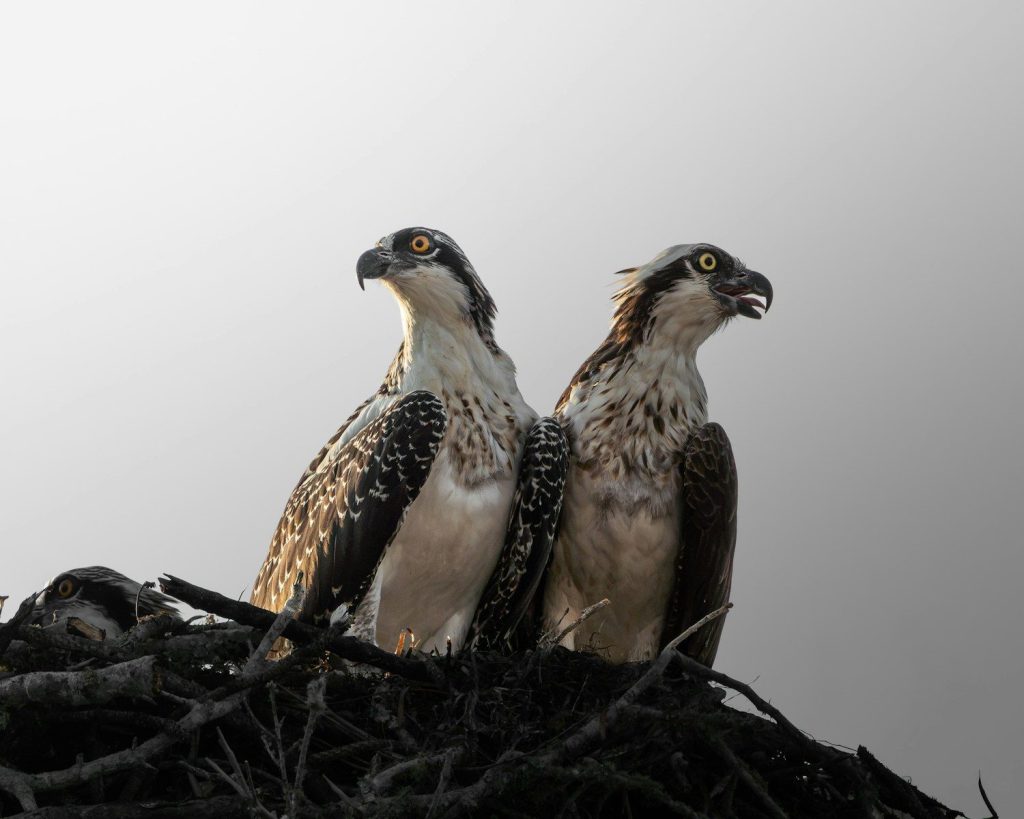
Researchers have tracked Iris since she began nesting along Montana’s Clark Fork River in 1999. Because ospreys generally begin breeding when they are several years old, her monitors estimated that she was about 28 or 29 in 2025.
That places her around 29 to 30 during the 2026 season, although her exact hatch date is unknown. Her exceptional longevity is why Audubon called her the oldest known living osprey in 2025. The uncertainty around her birthday makes an estimated age more accurate than claiming a precisely documented number.
Iris Eye Markings

Iris received her name from distinctive markings visible in her eyes, especially the left iris. Cornell Lab says these patterns act like individual barcodes that allow observers to identify her reliably.
That natural identification has been important because Iris was not originally followed from hatching with a record establishing her exact age. Researchers can confidently connect decades of nesting events to the same female even though they cannot provide a precise birth date. Her recognizable eye pattern has therefore helped transform one osprey’s life into an unusually detailed long-term record.
Hellgate Osprey Nest
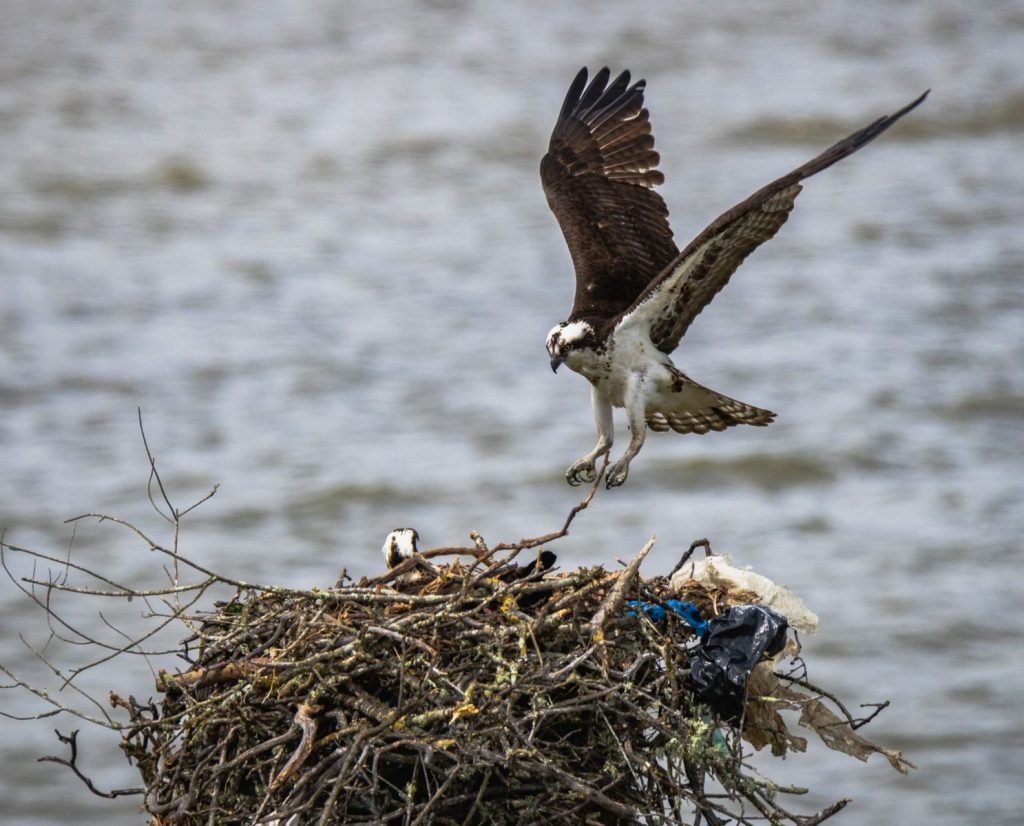
Iris nests near the mouth of Hellgate Canyon on the edge of Missoula. The location is surrounded by human activity, including roads, parking areas, buildings, and a railroad, yet it sits only about 50 feet from the Clark Fork River.
That river access makes the site highly useful for ospreys because they specialize in catching fish. Cornell reports that the Hellgate pair fishes primarily in the Clark Fork and nearby Rattlesnake Creek. The nest demonstrates how appropriate feeding habitat can support breeding wildlife even within a busy human landscape.
Iris and Clark

Iris has had several mates during her long breeding life. Her first known mate, Stanley, failed to return in 2016. She later bred successfully with Louis and, in 2024, paired with Finnegan and raised two chicks.
Finnegan did not return the following year. By 2026, Iris had paired with a younger male named Clark, who had begun spending time around the nest toward the end of 2025. Long-lived birds can form new partnerships when previous mates fail to return from migration.
Three Osprey Eggs

Iris and Clark laid three eggs during their first full breeding attempt together in 2026. Cornell recorded the eggs on May 4, May 7, and May 13.
Osprey incubation normally lasts around five to six weeks, although exact timing varies. Iris’s first egg ultimately hatched after 38 days. The other two eggs did not produce chicks. Even one successful hatch was notable because Cornell explicitly identified Iris’s advanced age as one factor researchers were considering when evaluating the breeding season.
Osprey Chick Wensi
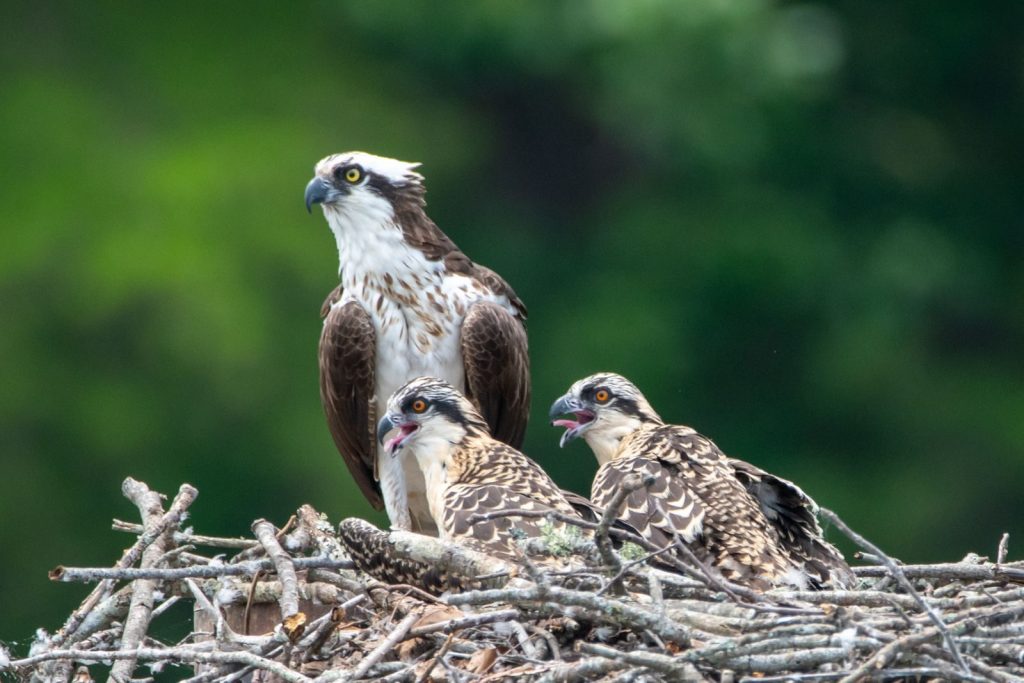
Iris and Clark’s chick hatched on June 11, 2026. The youngster was later named Wensi, an English phonetic spelling of the Salish name Wénš, meaning “dancer.”
The name was selected through collaboration between the Montana Osprey Project and members of the Salish community. Cornell explained that the tradition recognizes that the Hellgate nest lies within the ancestral homeland of the Salish people. Wensi was Iris and Clark’s first chick together, adding another successful offspring to Iris’s exceptionally long breeding record.
Osprey Fishing
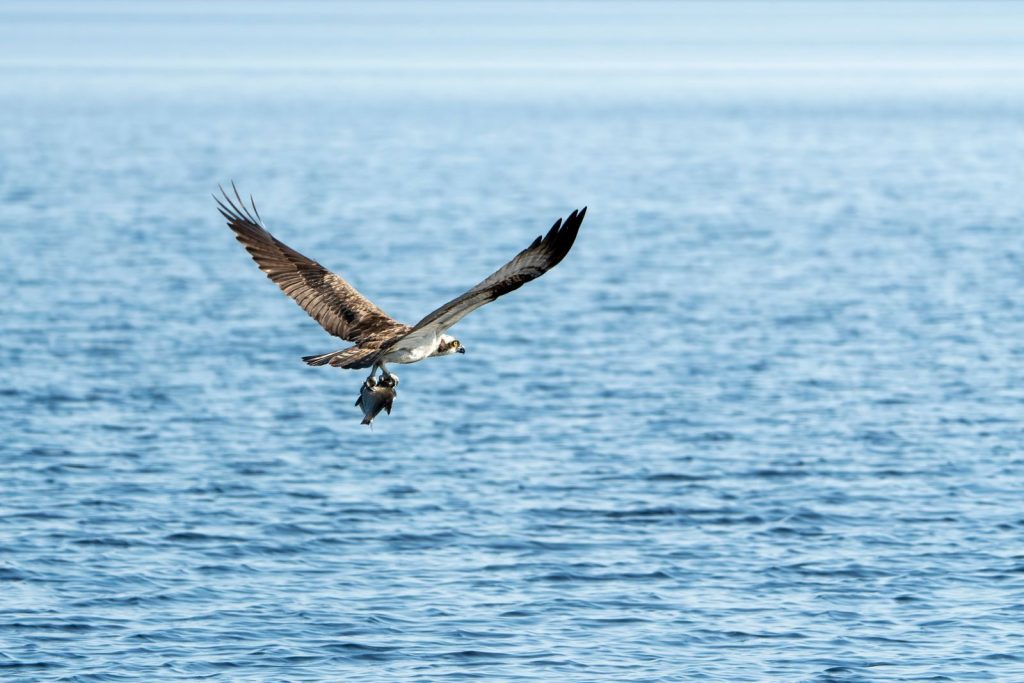
Ospreys are highly specialized fish hunters. Cornell reports that the Hellgate birds use wingspans of roughly six to seven feet to soar above nearby water before diving for shallow-swimming fish.
The Clark Fork River and Rattlesnake Creek therefore provide the food that supports Iris, Clark, and their chick. After Wensi hatched, Cornell observed Clark increasing his fishing effort and delivering a steady stream of food to the nest. Successful osprey breeding depends not only on a secure platform but also on having enough accessible fish within practical hunting distance.
Iris’s Long Legacy
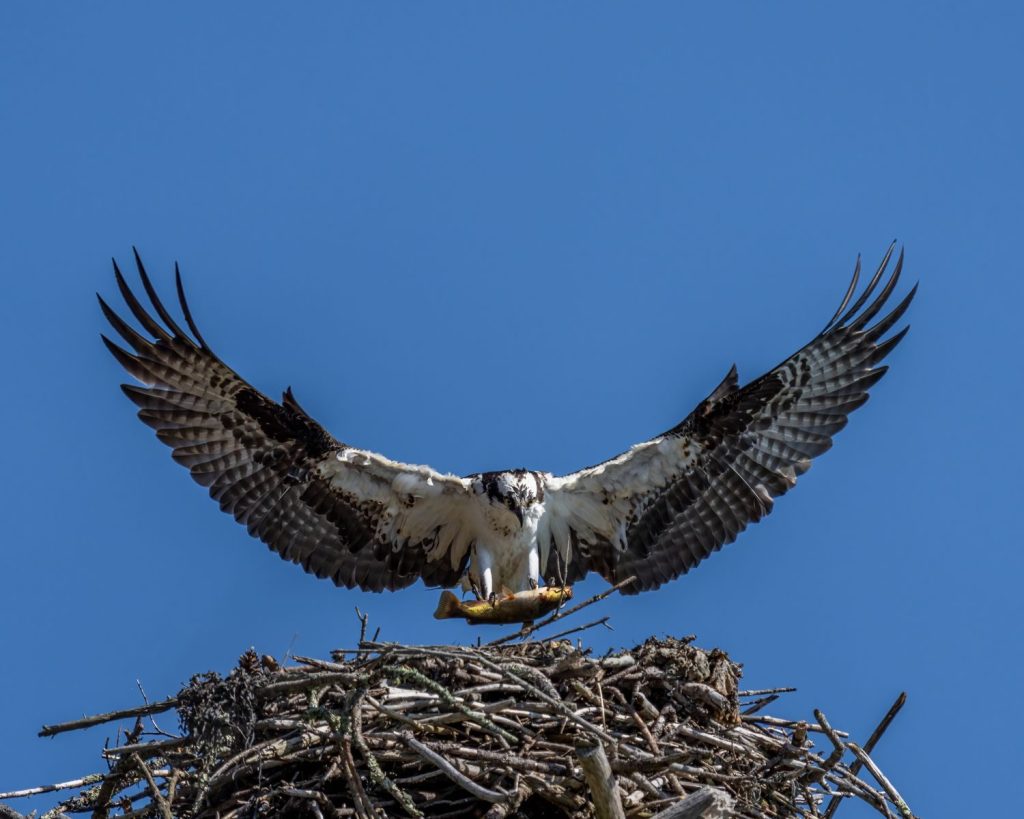
Audubon reported in 2025 that Iris had already raised more than 20 offspring and had descendants living in the region. Her value to researchers extends beyond her unusual age.
Because ospreys eat locally caught fish, scientists have also used birds in the Clark Fork watershed to study environmental contamination and river health. Iris therefore represents both a remarkable individual life and part of a much larger ecological monitoring story. Her decades of nesting observations show what long-term wildlife study can reveal when the same identifiable animal returns year after year.
Featured Image: Photo by Dmytro Koplyk on Pexels


