Australia’s long geographic isolation helped produce animals with combinations of traits that can seem almost invented: egg-laying mammals, water-harvesting lizards, blind marsupial diggers, armored birds, and fish disguised as seaweed.
None of these creatures is “primitive” or unfinished. Each is a modern species shaped by evolution for a particular way of life. Their unusual anatomy makes sense once you see the habitats and problems those features help them survive.
Platypus
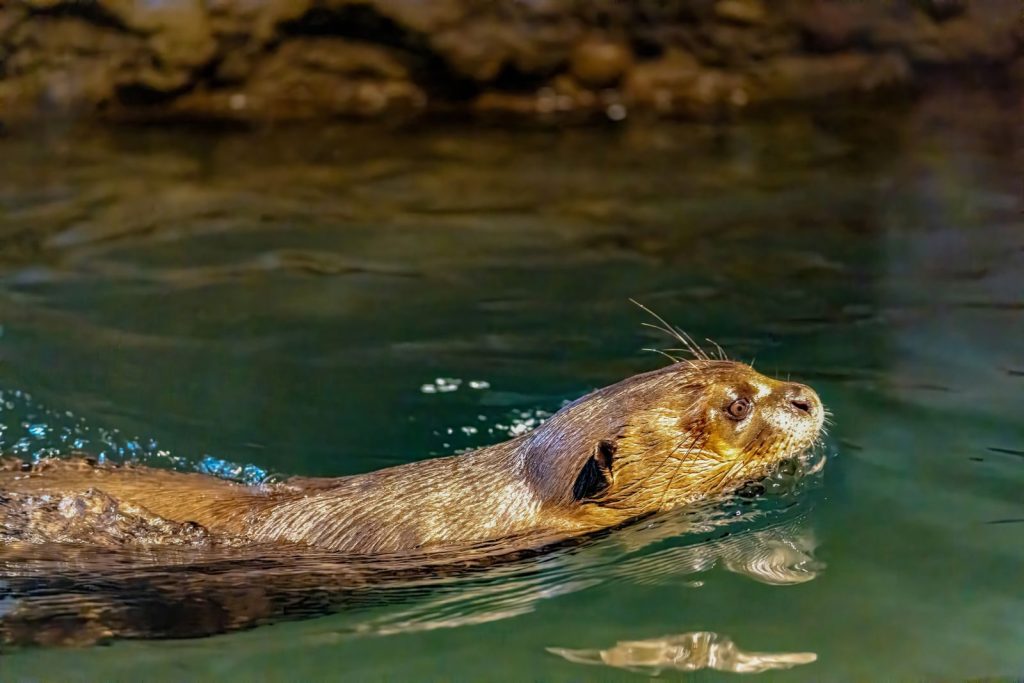
The platypus combines features that once seemed so unlikely that early European specimens were reportedly treated with suspicion. It is a mammal, yet females lay eggs instead of giving birth to live young. Platypuses also have dense waterproof fur, webbed feet, and a broad bill suited to finding prey underwater. Australian Museum information places them with echidnas in the monotremes, the only living egg-laying mammals. Males also possess venomous spurs on the hind legs. The result is not a patchwork animal, but a highly specialized freshwater mammal with a genuinely unusual evolutionary history.
Short-beaked Echidna

The short-beaked echidna looks like a cross between several unrelated animals, but its features form a coherent survival package. It is another monotreme, meaning the female lays an egg, while its body is protected by stiff spines that are actually modified hairs. A long snout and powerful claws help it locate and dig into ant and termite nests. Australian Museum sources note that echidnas can curl or dig down when threatened, leaving their spiny back exposed. They are found across a remarkable range of Australian environments, showing how versatile this strange-looking mammal really is.
Thorny Devil

The thorny devil is a small desert lizard covered in spikes, but its strangest feature may be its skin. Research and Australian Museum material describe microscopic channels between the scales that move water across the body by capillary action toward the mouth. This lets the lizard collect moisture from rain, wet surfaces, and other sources without drinking in the usual way. Its spines also make it difficult for predators to swallow, while its sandy colors provide camouflage. Despite the intimidating name, thorny devils mainly eat ants and are specialized for life in Australia’s dry interior.
Frilled Lizard
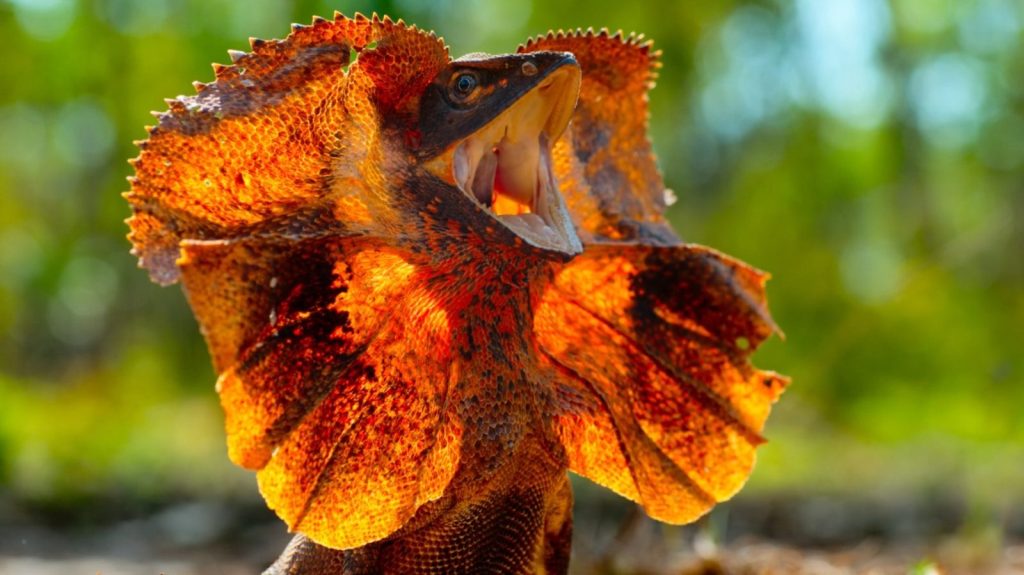
The frilled lizard can transform its appearance in seconds. When threatened, it opens a large folded membrane around its neck, gapes its mouth, hisses, and may rise onto its hind legs before running toward a tree. University of New England museum material describes this bipedal escape behavior and the dramatic defensive display. The frill does not turn the lizard into a miniature dinosaur, and it is not a weapon designed to attack people. Instead, it makes the animal look larger and more startling, buying time to escape while its mottled body helps it remain camouflaged on tree trunks.
Southern Marsupial Mole

The southern marsupial mole spends so much of its life underground that it has evolved an appearance unlike almost any familiar mammal. Its eyes are reduced beneath the skin, it lacks external ear flaps, and its compact body, leathery nose shield, and powerful foreclaws are built for moving through sand. Recent genomic research published in Science Advances examined how extreme this subterranean lifestyle shaped its evolution. Despite the name, it is not closely related to true moles. Its mole-like form is an example of convergent evolution, with unrelated animals independently arriving at similar solutions to underground life.
Southern Cassowary
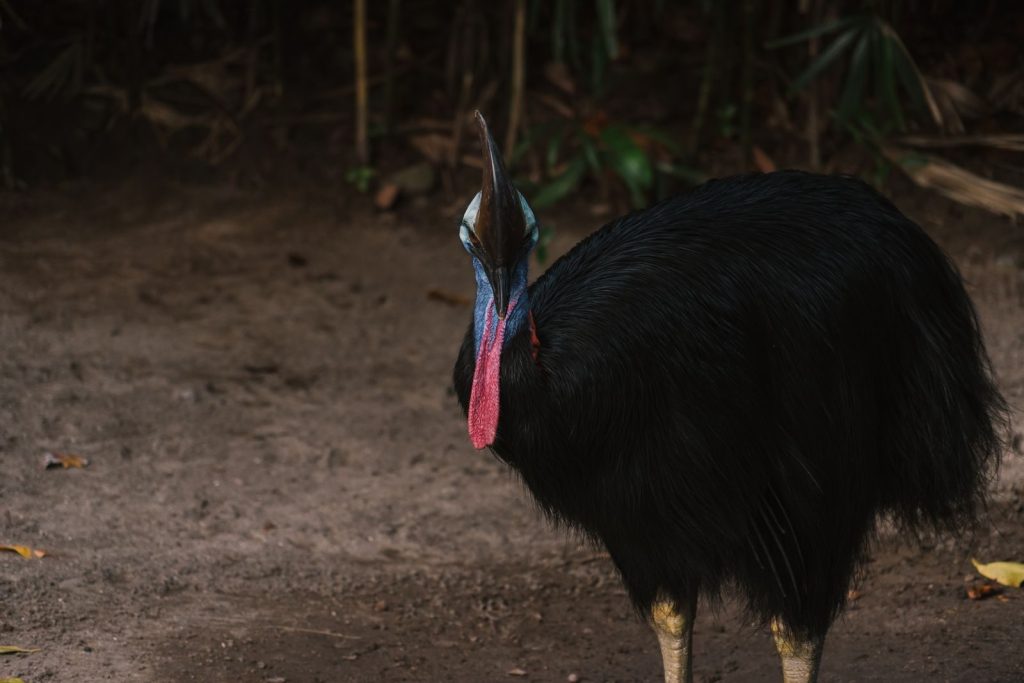
The southern cassowary looks prehistoric because of its tall casque, coarse black plumage, vivid blue neck, and powerful three-toed feet. The Australian Museum notes that the inner toe carries a formidable claw capable of causing severe injury if a bird is persistently threatened. Yet cassowaries usually prefer to retreat into dense rainforest rather than confront people. Their ecological role is just as remarkable as their appearance: they swallow many rainforest fruits and disperse the seeds in their droppings. This large flightless bird is therefore both an unusual-looking animal and an important mover of plant life through tropical forests.
Leafy Seadragon

The leafy seadragon looks more like drifting seaweed than a fish. It carries elaborate leaf-shaped appendages that do not power its swimming but break up the outline of the body, providing excellent camouflage among kelp and reef vegetation. The Australian Museum notes that this species occurs in southern Australian waters and relies heavily on its remarkable disguise. Like seahorses and pipefishes, it belongs to the family Syngnathidae. Its slow movement and plant-like profile make it one of Australia’s most visually unusual marine animals, yet every strange projection has value in helping it disappear into a complex underwater background.
Greater Bilby

The greater bilby has enormous ears, silky blue-gray fur, a pointed snout, and long hind legs, giving it an appearance that seems assembled from several familiar animals. It is actually a nocturnal burrowing marsupial related to bandicoots. The Australian Museum describes it as an endangered species whose long ears are among its most obvious features. Bilbies dig extensive burrows that provide refuge from daytime heat and predators, while their strong forelimbs help them search for bulbs, seeds, insects, and other foods. Their unusual form is closely tied to survival in arid and semi-arid Australian landscapes.
Featured Image: Photo by Yanming Guo on Pexels