A hornet nest looks like manufactured paper, but the colony creates the material itself from processed wood and saliva.
A 2026 Scientific Reports study used CT scans, microscopy, and chemical analysis to examine a European hornet nest, revealing its layered walls, brood combs, fibres, and natural adhesives.
Queen Starts the Nest
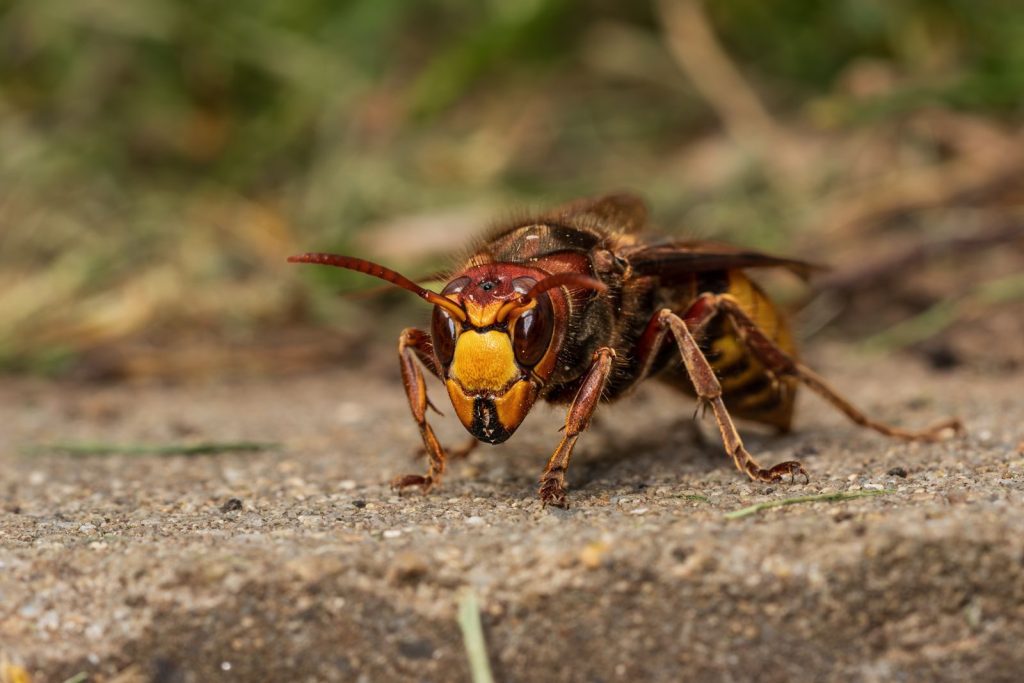
A European hornet colony begins with one overwintered queen. In spring, she searches for a protected site such as a tree cavity, attic, shed, or sheltered corner.
The queen builds the earliest cells herself, lays eggs, feeds the first larvae, keeps the nest clean, regulates conditions, and defends it. The 2026 study describes this founding period as lasting roughly 30–50 days. Once the first female workers emerge, they take over most construction and brood care, allowing the queen to concentrate increasingly on reproduction.
Hornets Collect Wood

Hornets manufacture nest material from plant fibres rather than producing wax like honey bees. The queen and later the workers scrape old wood, bark, and other lignocellulosic material with their jaws.
The 2026 research indicates that European hornets may favor weathered or partly decayed wood because it is softer and easier to process. Different sources can also produce the visible bands of gray, beige, and brown across a nest’s exterior. Hundreds of tiny collection trips gradually provide enough material for the colony’s expanding structure.
Wood Becomes Paper
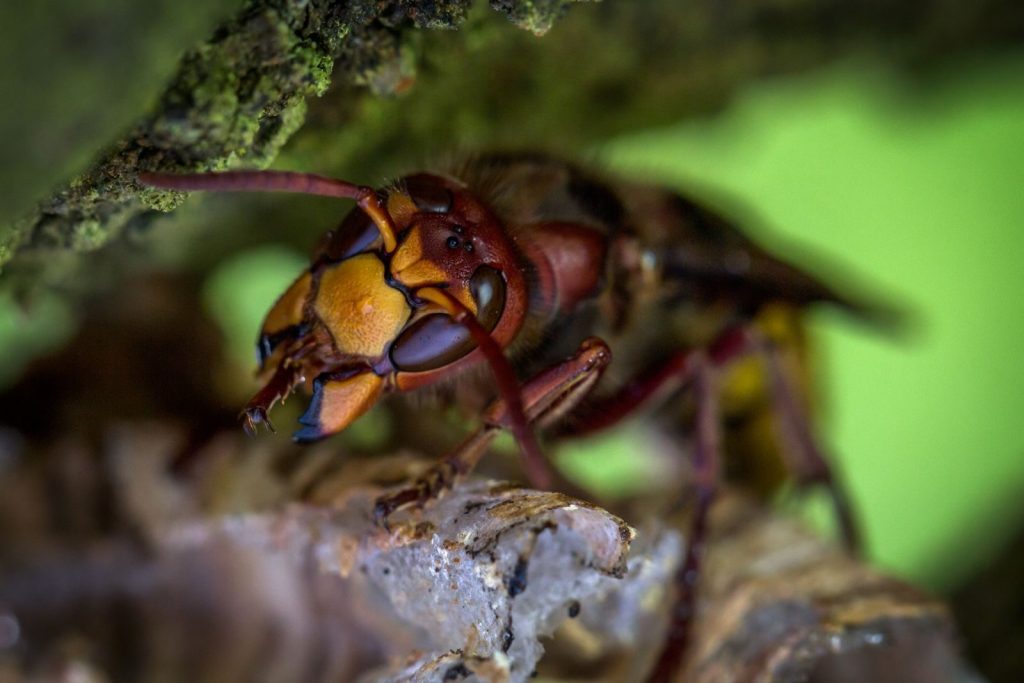
Collected wood is ground with the jaws and mixed with saliva while the hornet chews it. The result becomes a moldable mass resembling paper pulp.
The material is initially moist and fragile. After workers spread it into place, it dries, hardens, and becomes part of the nest. Scientific analysis shows that the material remains a complex mixture of processed plant fibres rather than being identical to manufactured paper. This simple technique allows hornets to convert weathered wood into lightweight walls without using wax, mud, or human-made adhesives.
Hexagonal Brood Cells

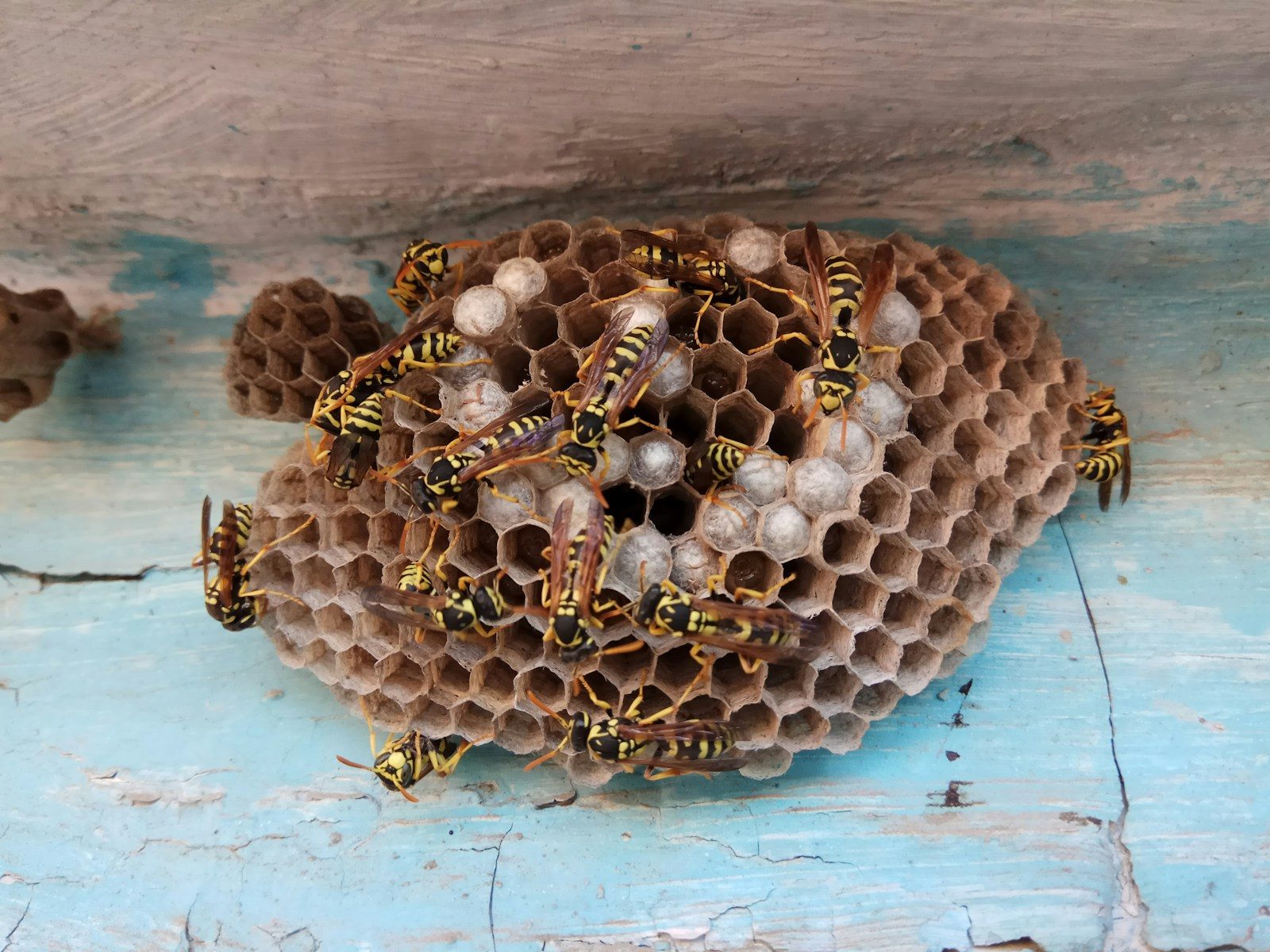
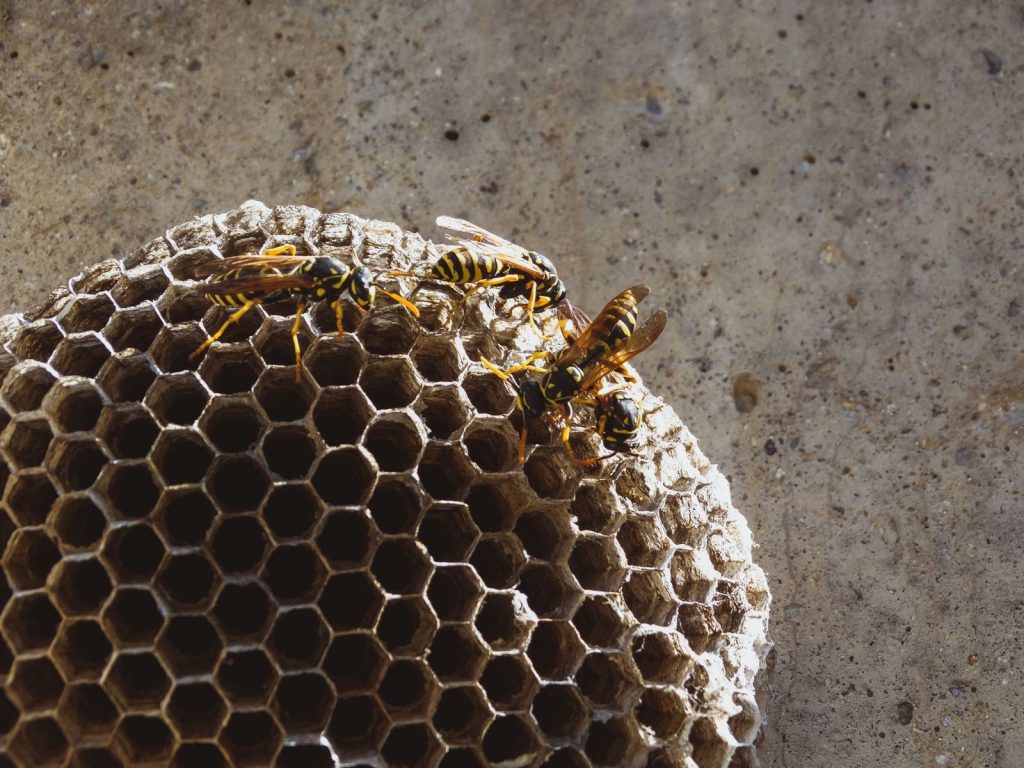
Inside the protective shell are horizontal combs containing hexagonal brood cells. The queen lays eggs inside these cells, where larvae and later pupae develop.
CT scans of the European hornet nest examined in 2026 revealed ten horizontal comb layers. Unlike a honey bee hive, the cells do not store honey reserves; their primary function is brood development. The openings point downward, while spaces between combs allow adult hornets to move through the nest and care for developing young.
Layered Paper Walls

The visible outside of the nest is not one solid sheet. Workers build several overlapping layers around the internal combs and leave air pockets between parts of the envelope.
In the nest examined by researchers, CT scans revealed as many as six covering layers in some areas. The outer portions were generally thicker and denser because they faced greater environmental exposure. The air pockets also contribute to thermal insulation, helping the colony maintain more stable conditions around the developing brood.
Natural Nest Glue
Chemical analysis detected proteins in the nest’s outer shell. Researchers concluded that these proteins function as a natural adhesive that helps connect wood fibres and strengthen the structure.
Hornet saliva contains proteins and enzymes involved in nest construction and other colony functions. The insects therefore do more than wet wood until it sticks. Their chewing, saliva, fibre selection, and repeated layering create a biological composite capable of surviving ordinary environmental stress while remaining lightweight enough to hang from a branch, beam, or cavity roof.
Workers Expand the Nest

When the first workers emerge, construction accelerates. They continually add plant material, create additional combs, and enlarge the protective outer shell as the colony population grows.
The 2026 research described European hornet nests with several comb levels and noted that large nests can contain thousands of brood cells. Workers may even remove older inner envelope material and recycle it into new cells or outer walls. The finished nest is therefore not a static object—it is repeatedly enlarged and reorganized as the colony needs more space.
Colony Ends in Autumn
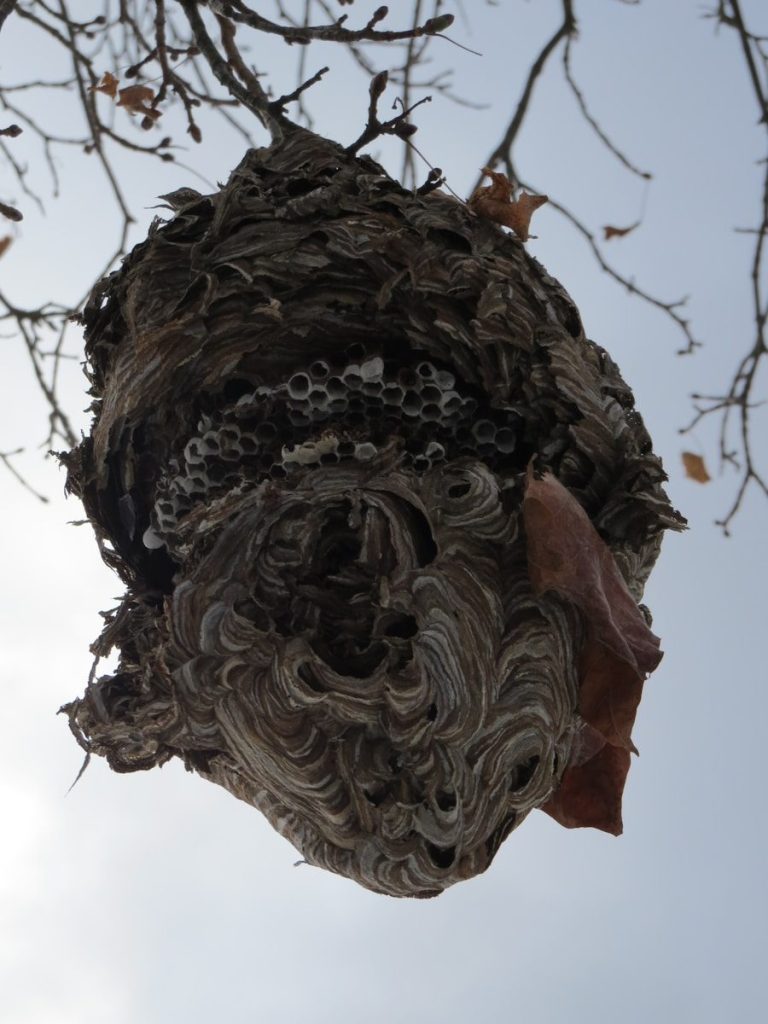
A European hornet nest is generally a one-season structure. After new queens and males appear, the original colony begins to decline as colder weather approaches.
The 2026 study describes workers dying by early November, with the colony’s cycle lasting about six months. The old nest is not normally reused by the surviving young queens. Instead, fertilized queens overwinter elsewhere and establish new colonies the following spring. An empty winter nest can therefore provide a fascinating look at hornet architecture, while an active summer nest should be left undisturbed.
Featured Image: Photo by Anna Evans on Unsplash