Carpenter bees can look intimidating when large males patrol decks, fences, or sheds, but they are native pollinators and generally do not require control simply because they are present.
The real question is where they are nesting. A single gallery in a noncritical piece of wood may cause little concern, while repeated nesting in structural timbers can gradually create damage that justifies prevention or professional management.
Eastern Carpenter Bee
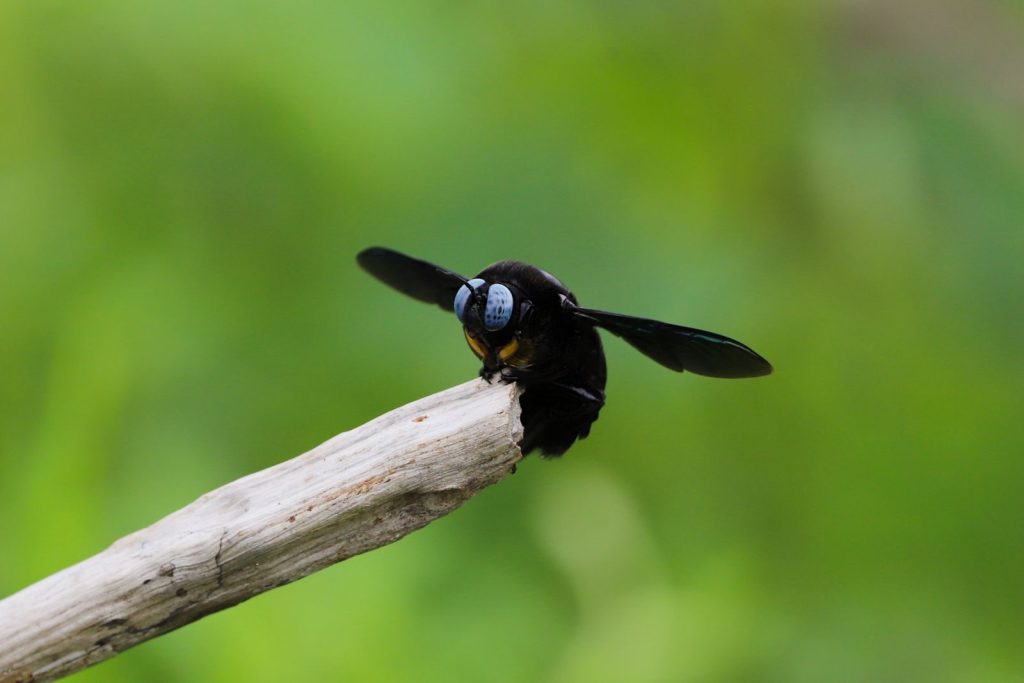
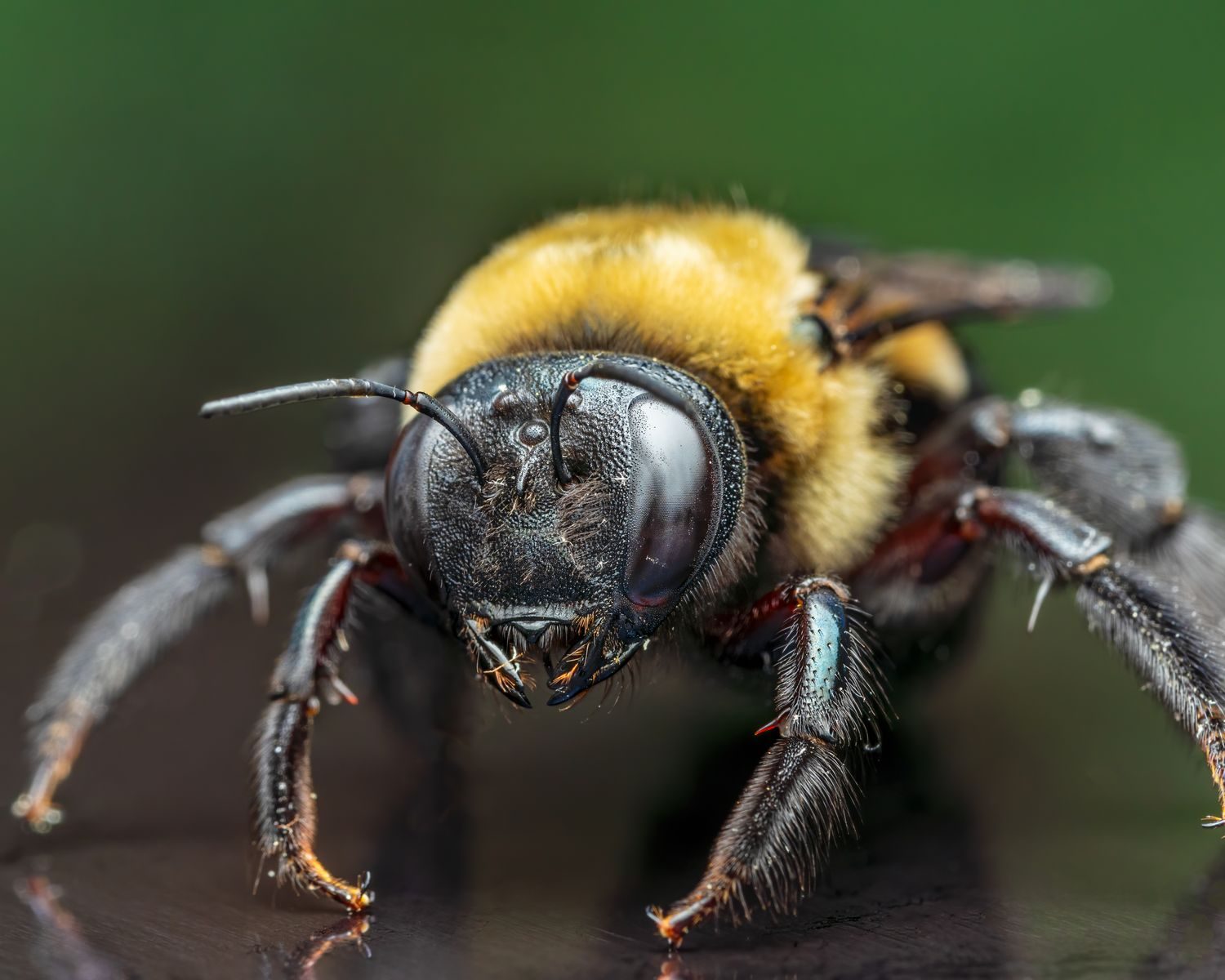
Eastern carpenter bees are large bees, commonly around three-quarters to one inch long. They are often confused with bumblebees, but carpenter bees typically have a shiny, relatively hairless black abdomen, while bumblebees are much fuzzier. Carpenter bees collect nectar and pollen and are useful pollinators. They do not eat wood. Females chew into wood only to create nesting galleries where their offspring develop, making identification important before anyone decides that a large bee around the house must be destroyed.
Round Carpenter Bee Hole

The clearest sign of an active carpenter bee nest is usually a remarkably round entrance hole in wood, often about half an inch across. A female initially tunnels inward and then turns to excavate parallel with the wood grain. Fresh coarse sawdust beneath the opening can reveal recent digging. Carpenter bees frequently choose unfinished, weathered, or stained wood in decks, railings, fences, siding, soffits, sheds, and outdoor furniture. Finding one round hole is therefore more informative than simply noticing a large bee flying nearby.
Carpenter Bee Tunnel
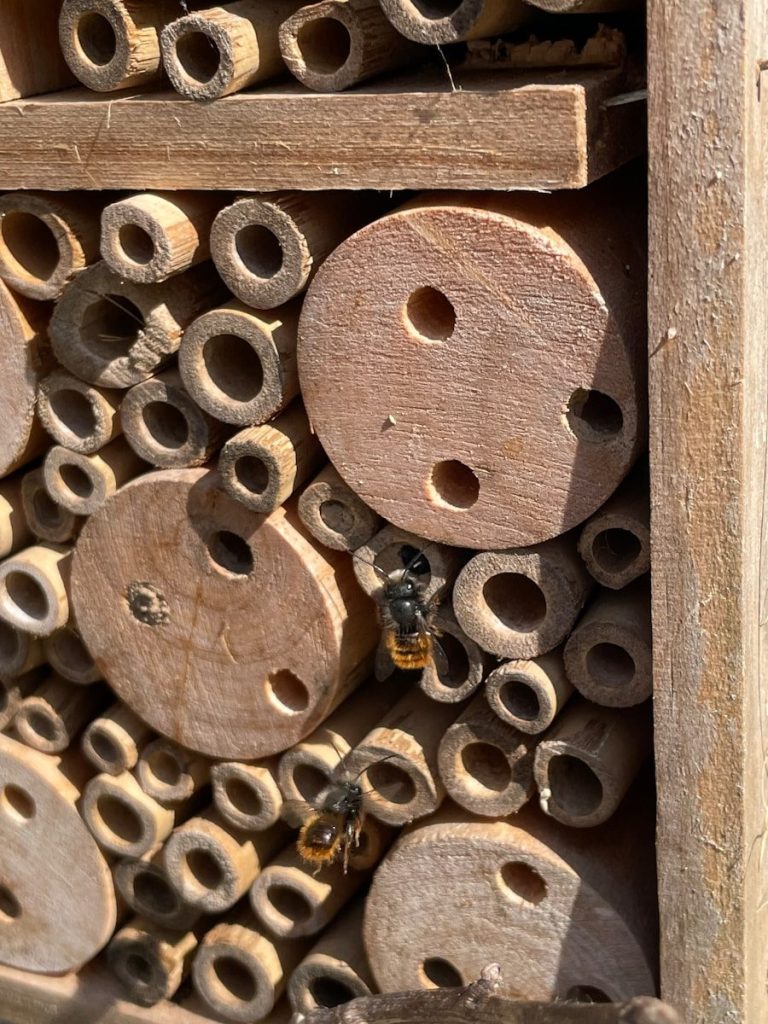
A carpenter bee nest is not a honey bee-style hive filled with hundreds or thousands of workers. Carpenter bees are primarily solitary. Each female creates and provisions her own nest tunnel, placing pollen and nectar into individual brood cells and laying one egg in each. University of Maryland reports that galleries commonly extend around 6 to 12 inches, although reused tunnels can become much longer over multiple generations. Several females can nest near one another when attractive wood is available, making an area appear much more socially organized than it actually is.
Male Carpenter Bee

The bee repeatedly flying toward your head may actually be the least capable of stinging. Male carpenter bees patrol nesting areas and can approach intruders aggressively, but males have no sting. Their territorial flights are largely bluff. Females do possess a functional sting, yet university extension guidance describes them as docile and unlikely to sting unless they are handled or directly threatened. Knowing this difference can prevent an unnecessary panic response when a large male repeatedly hovers around a deck or wooden railing during spring.
Carpenter Bee Wood Damage

One carpenter bee tunnel normally does not destroy a wooden structure. Problems develop when suitable wood attracts numerous bees or when galleries are reused and enlarged year after year. University of Maryland warns that accumulated tunneling can weaken wood, while moisture entering galleries, staining around entrances, and woodpeckers searching for larvae can create additional damage. The sensible response therefore depends on scale. A single nest in a harmless location is different from repeated activity in important rafters, railings, siding, or other structural wood.
When to Leave Bees Alone

If carpenter bees are nesting in dead wood, a fence post, or another location where their tunnels pose no structural problem, control may be unnecessary. University of Maryland explicitly recommends control only when bees are damaging wooden structures. Leaving nonproblem nests alone preserves native pollinators and avoids using pesticides where there is no meaningful need. People can simply avoid handling the bees and give active females room around the entrance. The presence of carpenter bees in a flower garden is not itself evidence of an infestation requiring removal.
Repair Carpenter Bee Damage

When galleries threaten valuable wood, timing repairs can reduce harm to bees and prevent future reuse. University of Maryland recommends late summer after young adults have emerged but before overwintering, or early spring before new nest construction begins, as useful periods for treatment and repair. Damaged wood may need filling, sealing, or replacement depending on severity. Avoid blindly sealing an active tunnel while bees or developing young remain trapped inside. Extensive structural damage or inaccessible nesting sites are better evaluated by a qualified pest-management or building professional.
Prevent Future Nests

Prevention is usually easier than repeatedly dealing with occupied tunnels. Carpenter bees strongly prefer unfinished or weathered wood, while well-maintained painted surfaces are much less attractive. Extension guidance recommends filling cracks and old holes and keeping exposed wood properly painted or otherwise finished. Where appropriate, replacing vulnerable surfaces with nonwood materials can eliminate nesting opportunities entirely. The goal does not need to be removing carpenter bees from the yard; it is making important structures unattractive while allowing these native pollinators to forage elsewhere without causing costly damage.
Featured Image: Photo by Skyler Ewing on Pexels