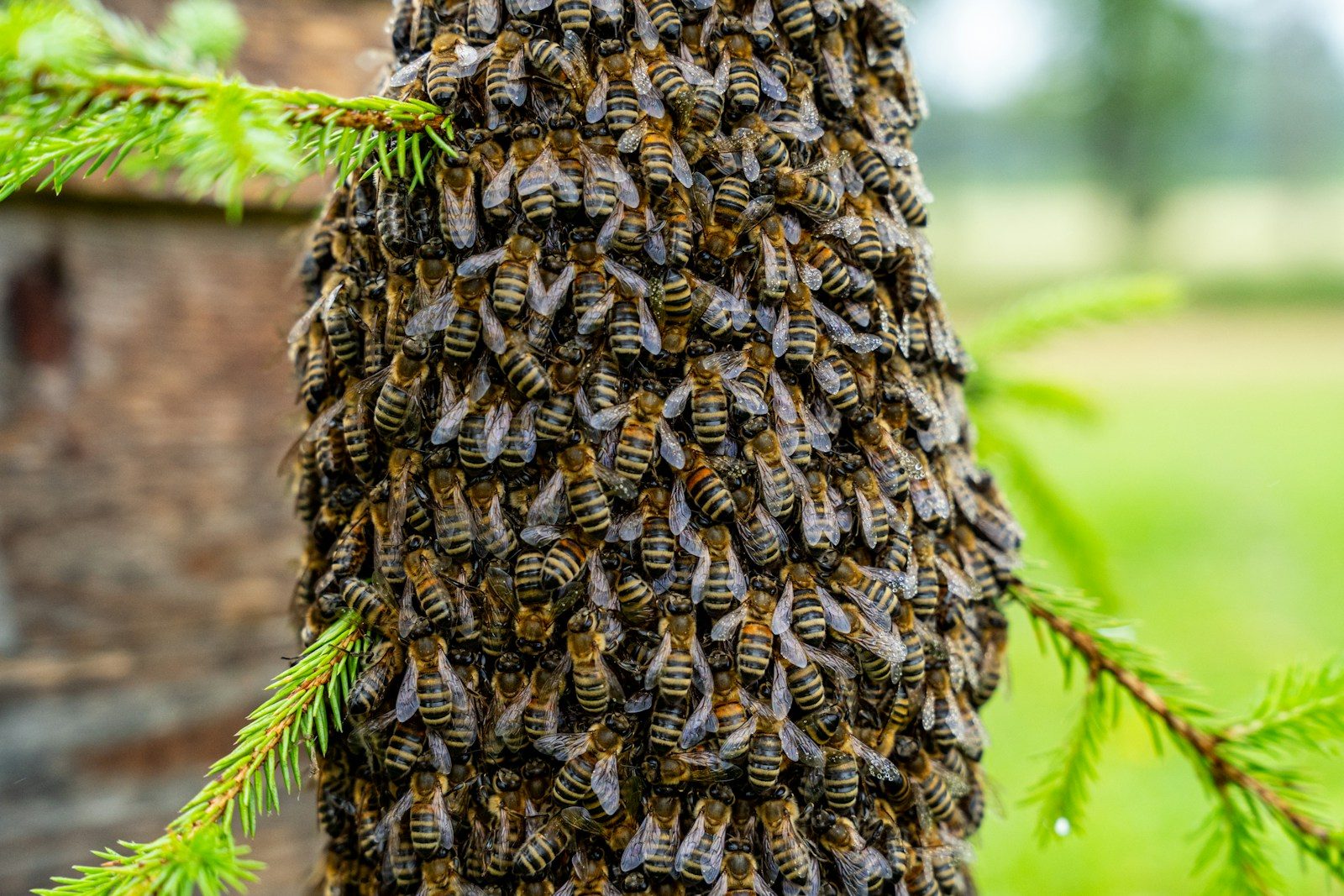
A cluster containing thousands of honey bees looks intimidating, yet a newly formed swarm can behave very differently from bees defending an established hive. Swarms are temporary groups searching for a permanent home.
That helps explain why experienced beekeepers sometimes work surprisingly close to them. It does not mean handling a swarm without protective equipment is universally safe. Disturbed bees can still sting, and inexperienced people should keep their distance.
Honey Bee Swarm
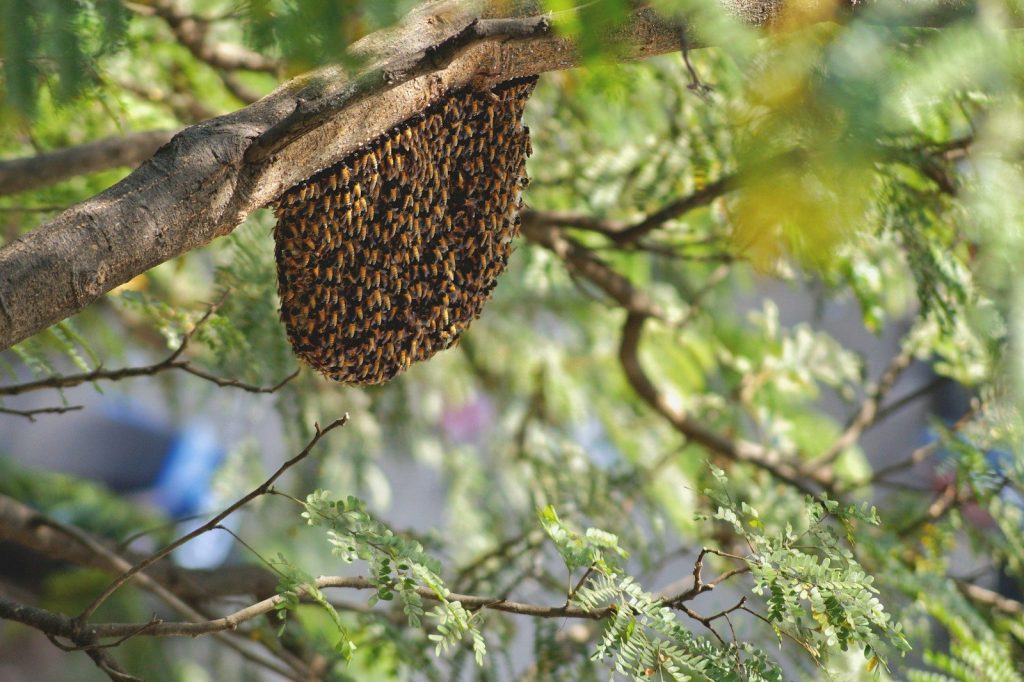
Swarming is the normal reproductive process of a honey bee colony. Typically, an established colony raises new queens while the old queen leaves with a large group of workers, effectively dividing one colony into two.
The departing bees may briefly fill the air before gathering into a dense cluster on a branch, fence, wall, or other object. That visible mass is not their new hive. It is usually a temporary stop while the colony searches for somewhere permanent to live.
Temporary Bee Cluster

Once a swarm settles, most bees remain tightly grouped around the queen. University of Minnesota Extension says these temporary clusters may remain for an hour, several hours, or sometimes a few days depending on conditions.
During that period, the bees are essentially between homes. They have not yet built comb or established a nest at the resting place. If a suitable cavity is found nearby, the entire swarm can suddenly lift off and travel together toward its selected destination.
Scout Honey Bees

While most of the swarm remains clustered, scout bees fly through the surrounding area searching for potential nesting sites. Suitable locations may include hollow trees or other protected cavities large enough for a new colony.
The cluster therefore may look inactive even though an important search is underway. Once the bees settle on a suitable destination, the temporary gathering breaks apart and moves. This scouting phase explains why many backyard swarms disappear naturally without anyone needing to remove them.
Calm Swarming Bees

Honey bees normally defend stored food, comb, brood, and their established colony. A temporary swarm has left those resources behind, which is one reason swarming bees are often described as comparatively docile by university extension specialists.
That reduced defensiveness should not be confused with an inability to sting. Extension guidance specifically warns that a swarm can sting if disturbed or agitated. Temperament can also vary, so deliberately touching or provoking a cluster simply because it appears calm is unnecessary risk.
Queen Inside the Swarm

The queen is normally somewhere inside the mass of workers. Her presence is essential because the departing group is not merely wandering; it is attempting to establish a functioning new colony with a reproductive queen at its center.
Workers surround her while the group pauses and scouts explore. Once relocated into a suitable hive, a captured swarm can begin building comb and establishing itself. That is why swarm collection can provide beekeepers with an entirely new colony rather than simply a box filled with unrelated bees.
Beekeeper Swarm Collection

When a swarm hangs within safe reach, an experienced beekeeper may place or shake the cluster into suitable equipment and relocate it. Penn State Extension specifically identifies catching local swarms as one way beekeepers can obtain new colonies.
Collection becomes more complicated when bees are high in a tree, inside a structure, near power lines, or somewhere that makes access hazardous. Homeowners do not need to reproduce what they see in beekeeping videos. Local beekeeping groups often help connect residents with experienced swarm collectors.
Beekeeping Protective Clothing

The fact that some experienced beekeepers occasionally handle calm bees with limited protection does not establish a general safety rule. Bee behavior can change, and people differ greatly in their experience, reactions to stings, and ability to recognize warning behavior.
Anyone with a known sting allergy should be especially cautious. For an inexperienced person, protective equipment and guidance from a knowledgeable beekeeper provide a much larger safety margin than assuming every swarm will remain docile throughout an attempted capture.
Backyard Bee Swarm

For most homeowners, a swarm resting harmlessly outdoors can simply be left alone while people and pets keep their distance. University guidance notes that many swarms move away naturally once scout bees locate a suitable nest.
Professional help makes more sense when the cluster is in a playground, doorway, busy public location, or another place where accidental contact is likely. If bees enter a wall or building cavity and establish a colony, removal becomes a different and more complicated problem.
Featured Image: Photo by Anna Ansone on Unsplash