Night changes the balance between predator and prey. Darkness rewards animals that can move quietly, hear tiny sounds, see in dim light, or locate targets without vision at all. Some of the world’s most capable hunters therefore become especially effective after sunset, when concealment and specialized senses offer important advantages.
This is not a scientific ranking of danger to humans. Instead, these eight predators are notable for hunting at night and for adaptations that make darkness useful. Their prey, habitats, and hunting methods differ, but each shows how evolution has turned nighttime conditions into an opportunity rather than an obstacle.
Leopard

Leopards are usually nocturnal, resting through much of the day and hunting after dark. They rely on keen vision, hearing, whiskers, camouflage, and patient stalking rather than long pursuits. After closing the distance, a leopard typically attacks suddenly and kills prey with a throat bite. Their remarkable strength also helps them move carcasses into trees or dense cover, reducing the chance that lions, hyenas, or other competitors will steal the meal.
Jaguar

Jaguars are well equipped for hunting in low light. Their eyes contain a reflective layer called the tapetum lucidum, which sends light back through the retina and improves night vision. Jaguars commonly stalk and ambush ground-dwelling prey after sunset rather than chase it for long distances. Their powerful jaws allow them to tackle unusually tough prey, including caimans and hard-shelled reptiles, making them formidable nocturnal hunters in forests and wetlands.
Gray Wolf
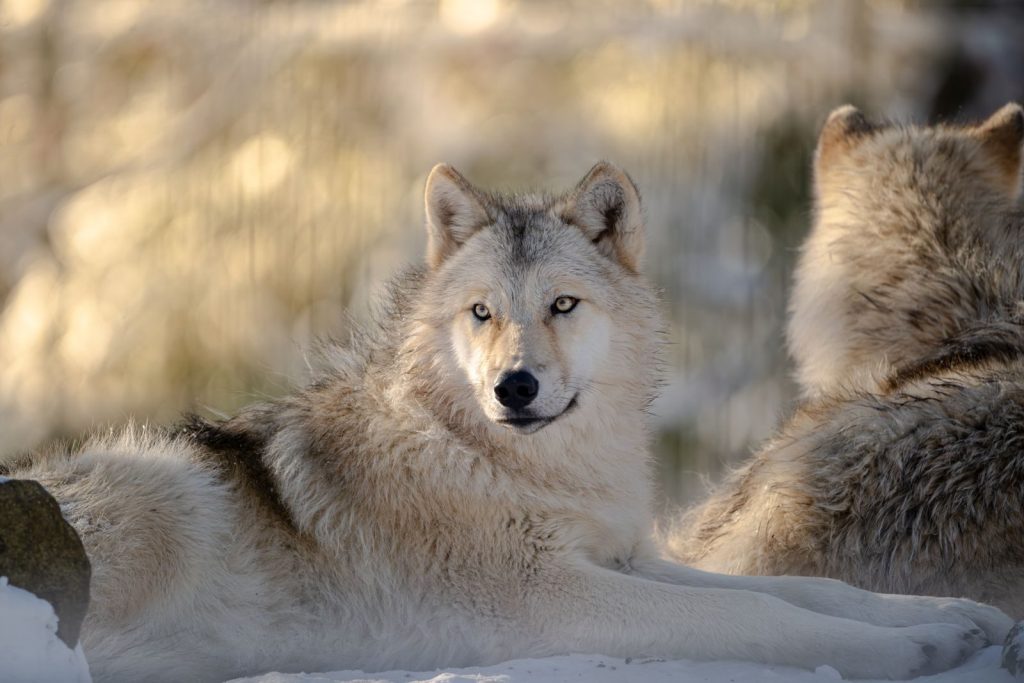
Gray wolves can hunt at night as coordinated packs, using speed, endurance, hearing, scent, and teamwork to locate and pursue prey. Smithsonian notes that packs hunt animals ranging from deer and caribou to moose and bison. Wolves are not limited to darkness, but nighttime activity can provide cooler conditions and concealment. Their success depends less on a single explosive attack than on cooperation, persistence, and coordinated pursuit across large areas.
Spotted Hyena
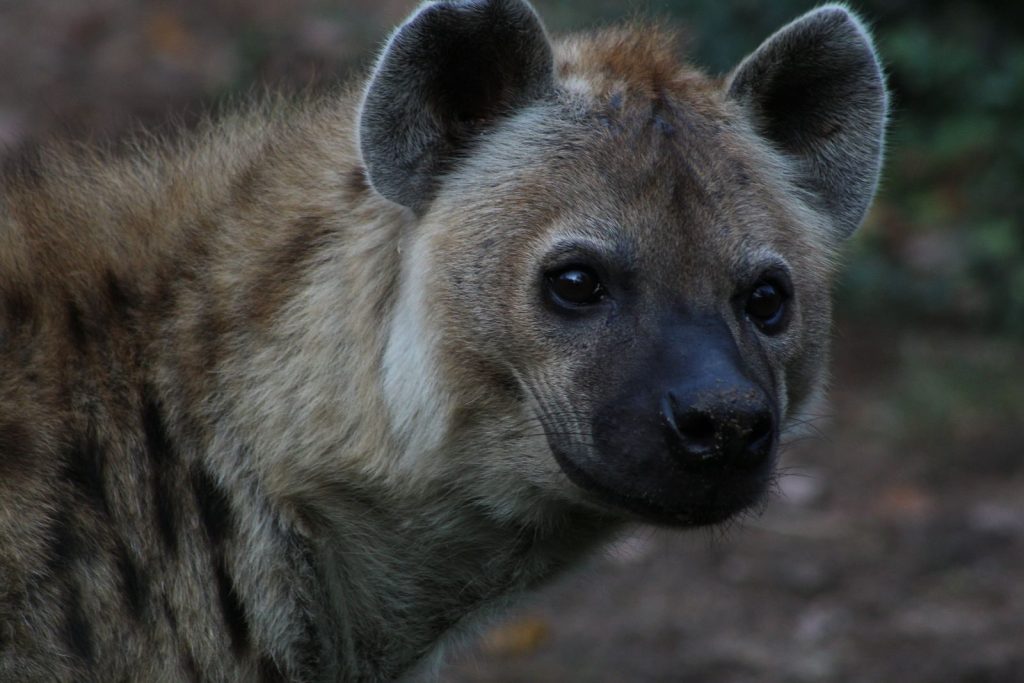
Spotted hyenas can be active during both day and night, but they are generally nocturnal. They are capable hunters, not merely scavengers, and groups can pursue large hoofed mammals over considerable distances. Their strong jaws can crush bones, allowing them to consume parts of carcasses that many predators leave behind. Activity patterns can also shift where people are present, showing how these adaptable carnivores adjust their behavior to local conditions.
Clouded Leopard
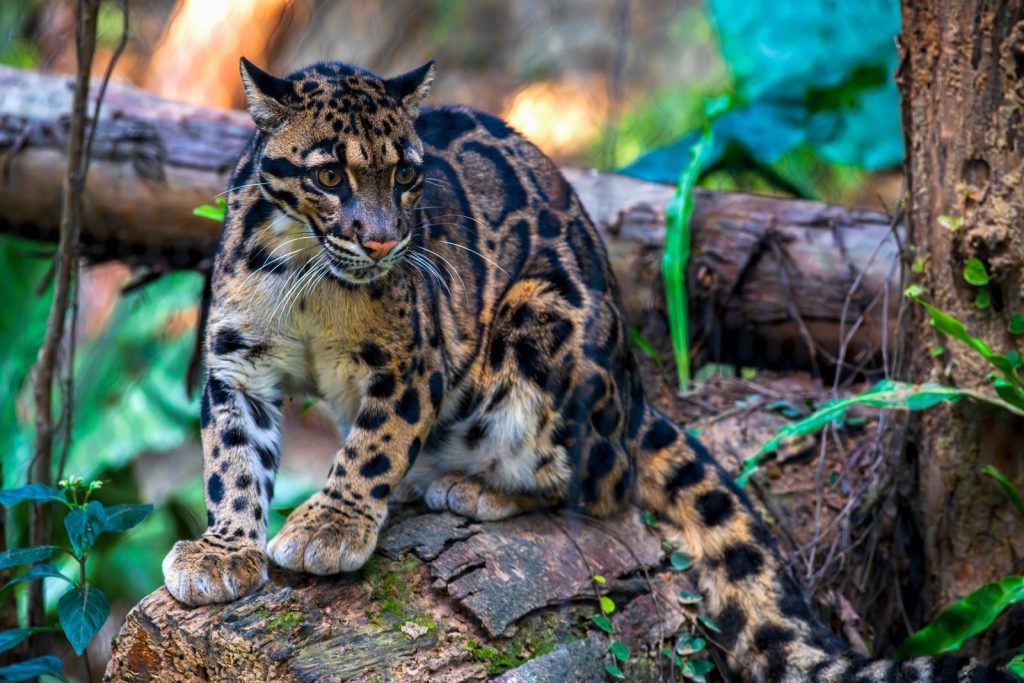
Clouded leopards are thought to be primarily nocturnal, especially where they share habitat with larger cats. Their large paws, flexible ankles, long tail, and strong limbs make them exceptional climbers, while long canine teeth help subdue prey. Although they can move through trees with remarkable control, researchers now think much of their hunting occurs on the ground. Birds, monkeys, squirrels, and wild pigs are among the animals they may pursue.
Barred Owl

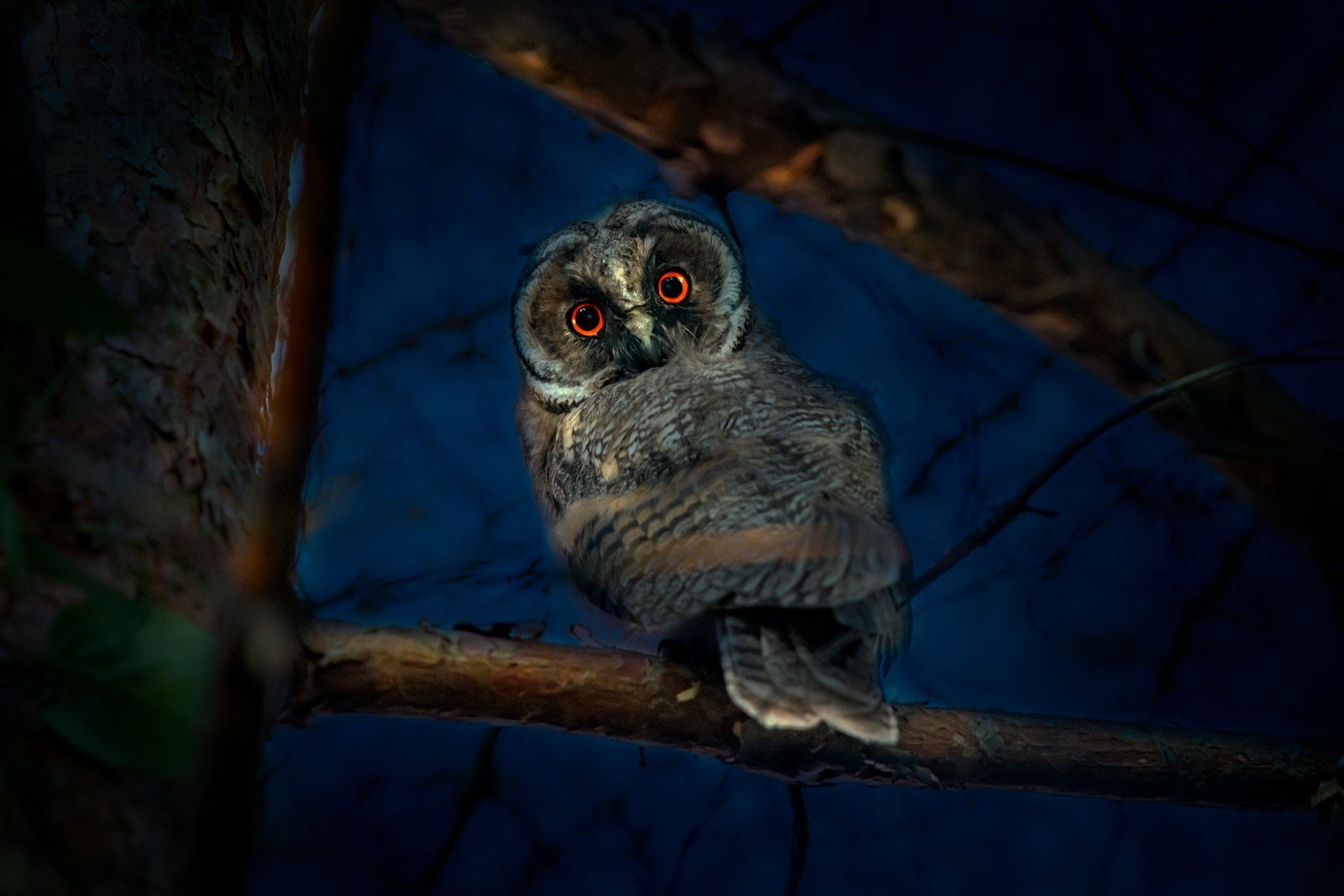
Barred owls are primarily nocturnal and actively hunt after dark. Their large eyes help in dim conditions, while sensitive hearing allows them to detect prey hidden by vegetation. Like other owls, feather adaptations help reduce flight noise, making their approach difficult for prey to hear. Barred owls take a varied diet that can include mice, rabbits, birds, reptiles, amphibians, and invertebrates, often striking prey on or near the ground successfully.
Insect-Eating Bats

Many insect-eating bats hunt in darkness with echolocation. They produce ultrasonic calls and interpret returning echoes to locate obstacles and moving prey. As a bat closes in on an insect, its calls become faster, creating the rapid “feeding buzz” recorded by researchers. This sensory system allows bats to hunt where vision is limited or useless. Some species can detect extremely small objects and track insects with remarkable precision in complete darkness.
Ocelot

Ocelots are secretive cats that are active mainly at night, especially around dusk and dawn. Dense vegetation gives them cover, and their spotted coats help break up their outline as they move through forests and brush. They hunt small mammals, birds, reptiles, and other prey by searching quietly and striking at close range. Because wild ocelots are difficult to observe, nighttime activity is one reason researchers often rely on remote cameras to study them.
Featured Image: Photo by Erik Karits on Unsplash