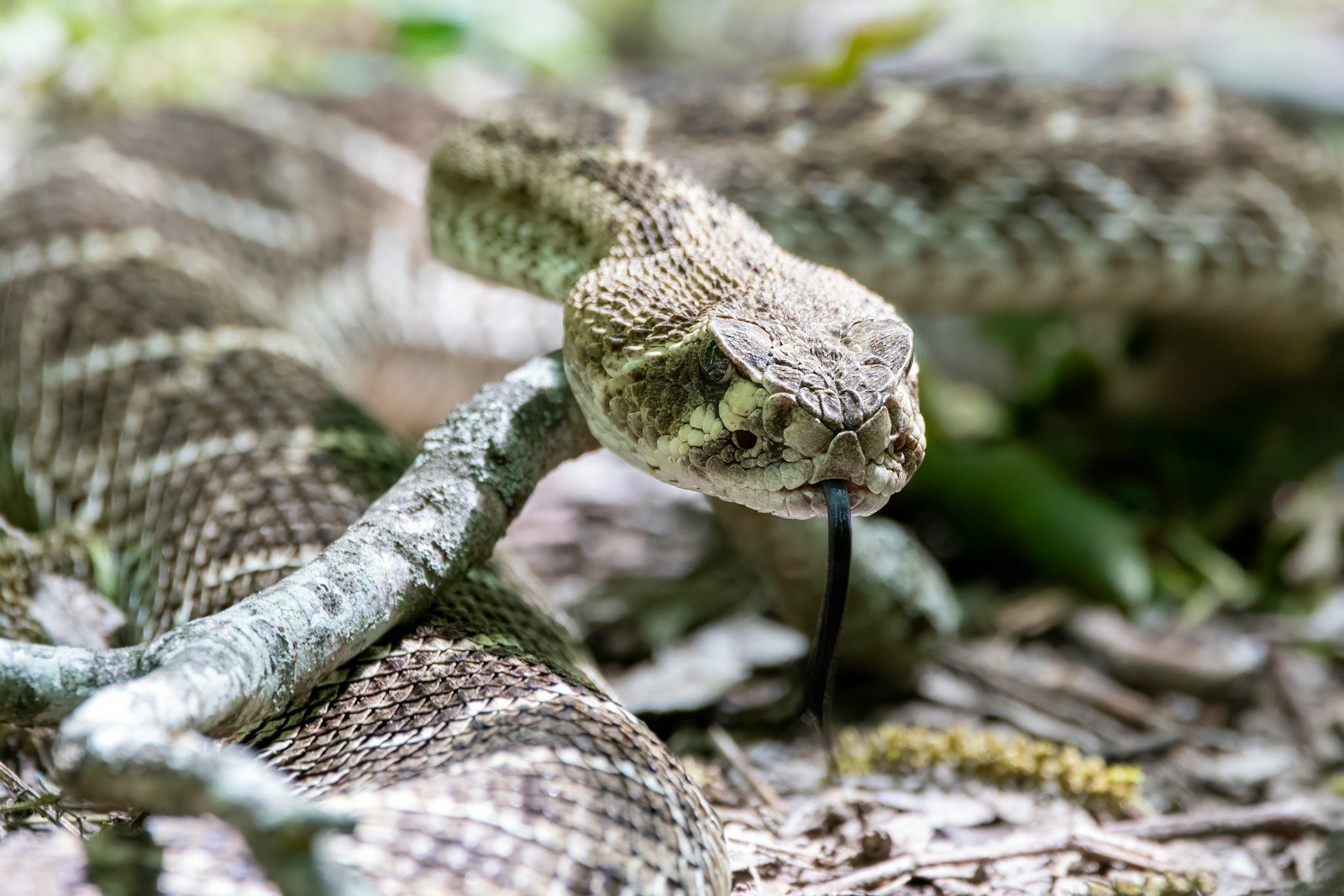
Rattlesnake venom is highly effective against many prey animals, but it does not make rattlesnakes untouchable. Other predators use venom resistance, constriction, speed, aerial attacks, or careful strike avoidance to reverse the normal predator-prey relationship.
The phrase “without hesitation” cannot be measured scientifically. What is documented is that kingsnakes, eastern indigo snakes, roadrunners, opossums, and several raptors can prey on rattlesnakes under natural conditions.
Common Kingsnake

Common kingsnakes are among the most famous rattlesnake predators. National Park Service material notes that they prey on rattlesnakes and possess biological resistance that helps them tolerate venom far better than ordinary prey would.
The kingsnake attacks with a very different weapon: constriction. After seizing another snake, it coils around the victim and applies pressure until it can be swallowed. Venom resistance reduces the danger from defensive bites, but it does not make the kingsnake literally invulnerable. Evolution has simply shifted the odds strongly in its favor during encounters with venomous snakes.
Eastern Indigo Snake

The eastern indigo is North America’s longest native snake and an exceptionally powerful predator of other reptiles. U.S. Fish and Wildlife Service says its diet includes venomous snakes and describes the species as immune to North American rattlesnake venom.
Unlike kingsnakes, indigos do not depend primarily on tight constriction. They overpower prey using strong jaws, body strength, and vigorous physical handling before swallowing it. Their ability to consume rattlesnakes demonstrates how one snake lineage can evolve around a venom defense that would be highly effective against most mammals or other vulnerable prey.
Greater Roadrunner

The cartoon is exaggerated, but the real greater roadrunner is a formidable terrestrial hunter. National Park Service accounts specifically list rattlesnakes among its prey, alongside lizards, rodents, scorpions, insects, and smaller birds.
Roadrunners rely on speed and precision rather than venom resistance. They can strike at the snake while avoiding its head and may beat large prey against rocks or the ground to subdue it. NPS has even described pairs cooperating during rattlesnake attacks, with one distracting the snake while another targets its head.
Virginia Opossum

Opossums are among several mammals known to prey on venomous snakes and possess unusual physiological resistance to snake toxins. A scientific review identified opossums as part of a broader group of mammalian snake predators with evolved venom resistance.
Experimental work has also identified proteins in opossum blood capable of resisting damaging components of rattlesnake venom. That does not mean every bite is completely harmless, but it substantially changes the predator’s vulnerability. A defensive weapon capable of killing ordinary mammalian prey can become far less effective against an animal whose blood chemistry evolved specifically around venom exposure.
Red-Tailed Hawk

Rattlesnakes face danger from above as well. National Park Service accounts list red-tailed hawks among predatory birds that take rattlesnakes, and Smithsonian identifies them as predators of young eastern diamondbacks.
A hawk does not need biochemical immunity if it can avoid the fangs. Talons, aerial speed, and attack angle allow a raptor to seize or injure a snake while keeping vulnerable parts of its body farther from the striking head. The encounter remains risky, but venom works only if the rattlesnake manages to deliver it successfully.
Striped Whipsnake
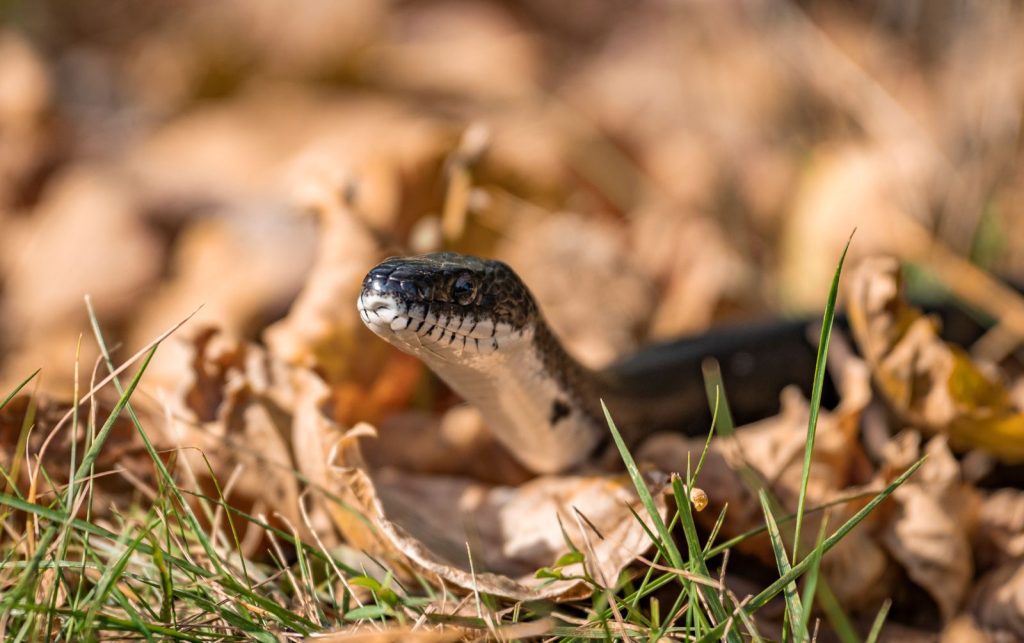
Rattlesnake predators are not limited to five species. The striped whipsnake provides another striking example. Capitol Reef National Park notes that these fast, daytime hunters eat lizards, mammals, frogs, insects, and other snakes—including rattlesnakes.
Their strategy differs from the heavy constriction of a kingsnake. Whipsnakes depend more on speed, agility, and rapid seizure of prey. This diversity of tactics explains why venom cannot create an unbeatable predator. Natural selection continually produces other animals capable of avoiding, tolerating, or physically overwhelming defenses that appear formidable in isolation.
Rattlesnakes Are Prey Too

Rattlesnakes occupy the middle of food webs rather than sitting permanently at the top. Prairie rattlesnakes, for example, eat rodents and birds while simultaneously becoming prey for hawks, eagles, badgers, and other predators.
Young rattlesnakes may be especially vulnerable because their smaller bodies expand the list of animals capable of overpowering them. Smithsonian notes that juvenile eastern diamondbacks face predators including hogs, foxes, hawks, and kingsnakes. Venom is therefore one powerful defense among several—not an ecological guarantee of survival.
Venom Is One Part of Survival

Rattlesnake venom remains extraordinarily useful because it allows a relatively vulnerable snake to subdue prey rapidly while minimizing dangerous struggles. Against most targets, that is an excellent evolutionary strategy.
Predators such as kingsnakes and opossums demonstrate the evolutionary response: resistance can reduce venom’s effects. Roadrunners and hawks demonstrate another solution, avoid being bitten. Indigo snakes add sheer physical power. Predator and prey are therefore locked in continuing biological tradeoffs. No weapon is universally unbeatable because another species may eventually evolve anatomy, chemistry, or behavior that makes the defense less effective.