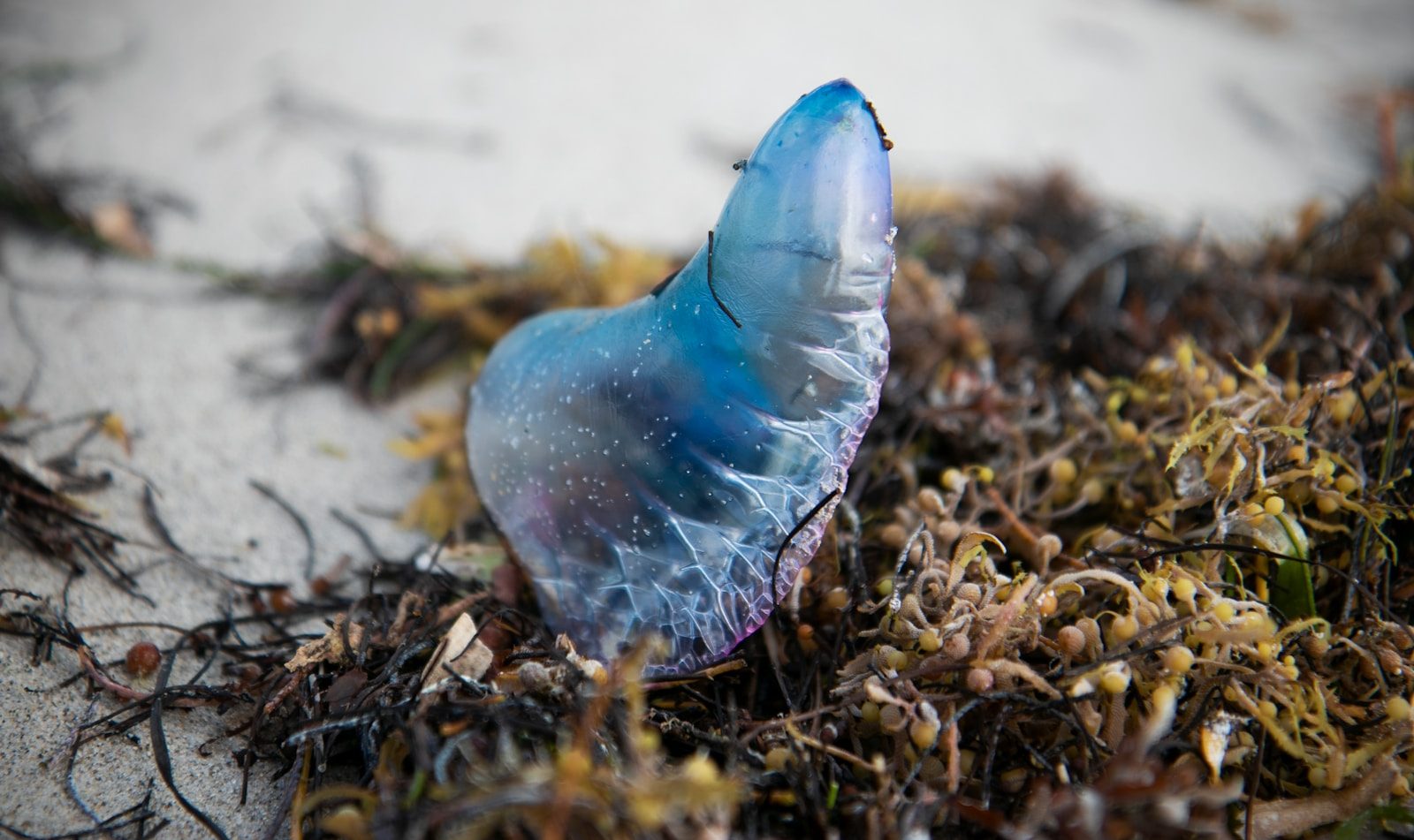
After certain storms, beaches can suddenly look as if they have been painted blue. Thousands of tiny ocean creatures may appear across the sand, forming bright ribbons along the shoreline.
Many people mistake them for jellyfish, but they are actually Velella velella, also known as by-the-wind sailors. These unusual drifting animals spend their lives moving across the ocean surface with the help of wind and currents.
The Beach Can Turn Blue Almost Overnight
A walk along the shore after rough weather can reveal a surprising scene. Small blue creatures may be scattered across the sand in huge numbers, sometimes stretching for miles.
Their sudden arrival often confuses beachgoers. Because of their soft bodies and ocean origin, many people assume they are jellyfish.
In reality, they are a different kind of marine animal with a very unusual way of life. Their mass appearances happen when wind and waves push them toward land.
Once they reach the beach, they cannot return to the sea on their own. That is why entire shorelines can become covered with them so quickly.
They Move Across the Ocean Using Tiny Sails
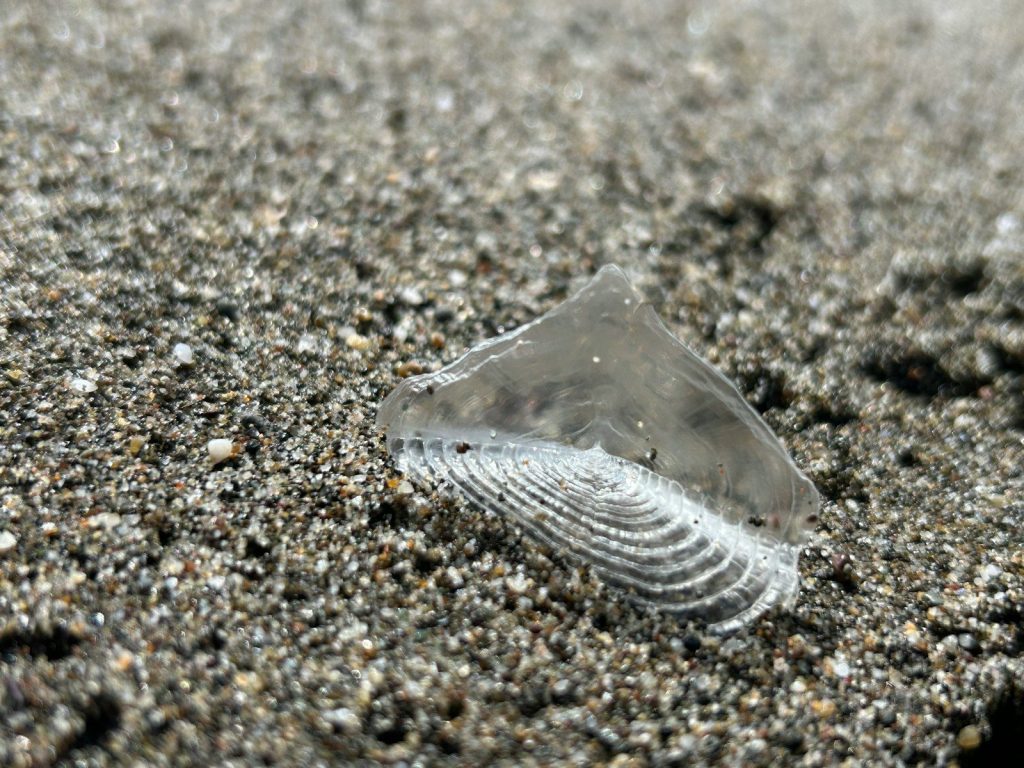
The nickname by-the-wind sailor comes from their most noticeable feature. Each one has a small, clear sail that rises above the water’s surface.
This sail catches the wind and helps move the animal across the ocean. Instead of swimming strongly, Velella mostly drift wherever wind and currents carry them.
They belong to a group of surface-dwelling marine life that lives between sea and air. This floating community is adapted to life on the ocean’s surface.
Their sail-like design makes them perfectly suited for long-distance drifting. It also explains why changes in wind direction can send thousands toward shore.
Each “Sailor” Is Actually a Colony
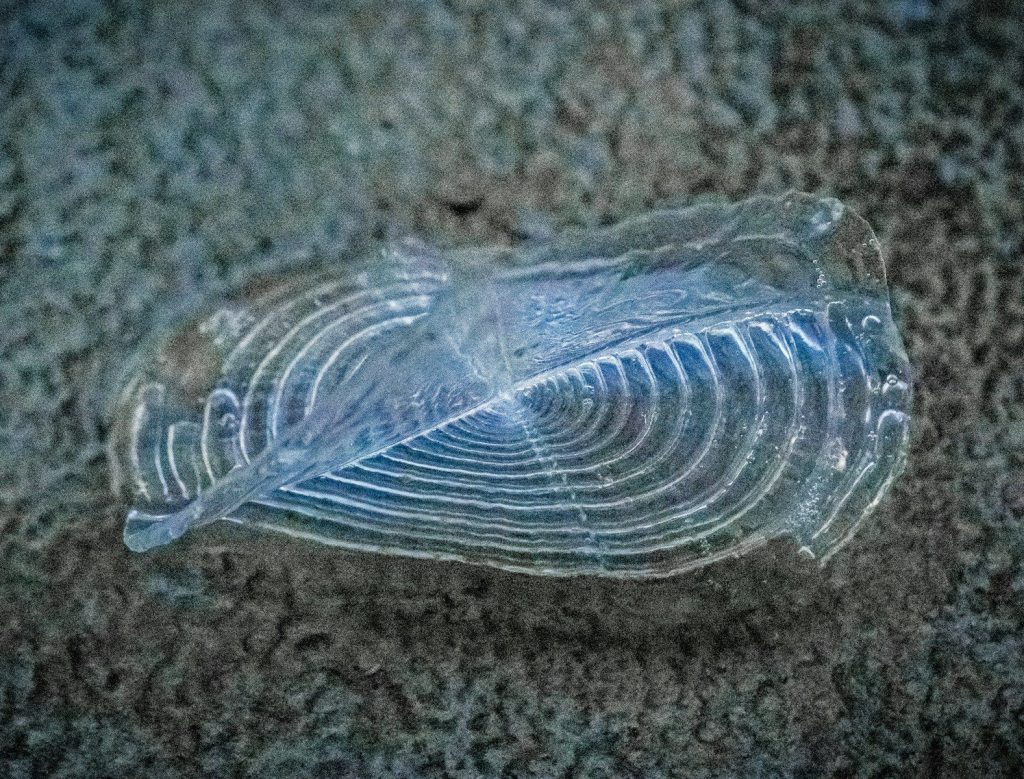
One of the most surprising facts about Velella is that each blue sailor is not a single animal. It is actually a colony made up of specialized parts working together.
These colonies are related to jellyfish and belong to a group known as hydrozoans. From a distance, they may look simple, but their structure is more complex than it seems.
Different parts of the colony handle different jobs. Some help with feeding, while others are involved in reproduction or defense.
This teamwork allows the colony to survive while drifting across the open ocean. What looks like one tiny creature is really a coordinated living system.
Strong Winds Can Push Them Ashore
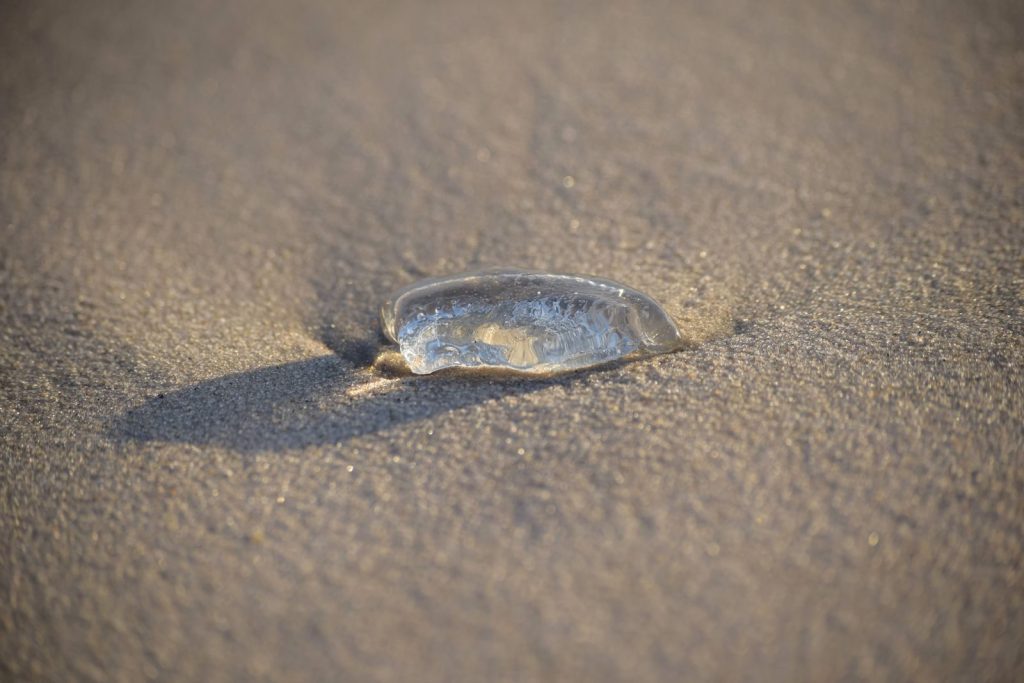
Mass strandings happen because Velella have very little control over where they go. Their movement depends heavily on wind, tides, and ocean currents.
When storms or seasonal weather patterns push them toward land, large numbers can arrive at the same time. Once stranded, they cannot swim back into deeper water.
Some years bring only small strandings. In other years, beaches may be covered with thousands or even millions of these blue sailors.
These events are often seen along parts of the Pacific coast of North America. However, similar strandings can occur in other coastal regions around the world.
They Are Part of the Ocean Food Web
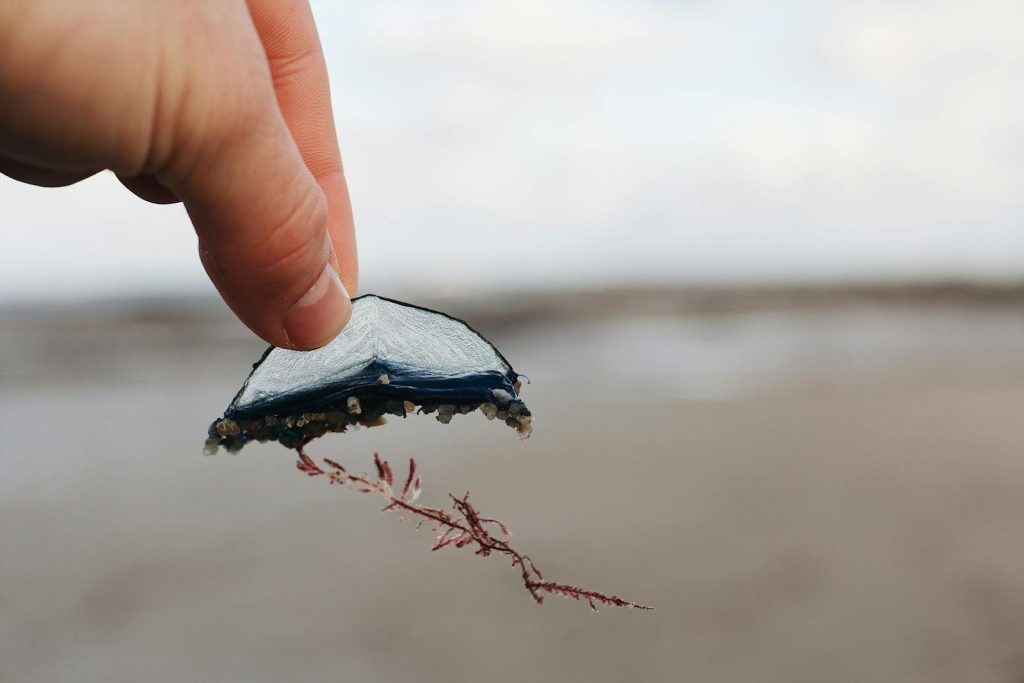
Although they may look strange on the sand, Velella play a real role in marine ecosystems. They feed on tiny plankton drifting near the ocean surface.
They also become food for other marine animals. Some sea slugs, fish, and other ocean creatures feed on floating hydrozoans like Velella.
This makes them part of a larger food chain that connects tiny plankton to bigger marine life. Their presence helps move energy through the ocean surface ecosystem.
Many organisms in this floating world are still not as well known as dolphins, sharks, or coral reefs. Yet they are important to the balance of ocean life.
They Are Usually Not Dangerous to People
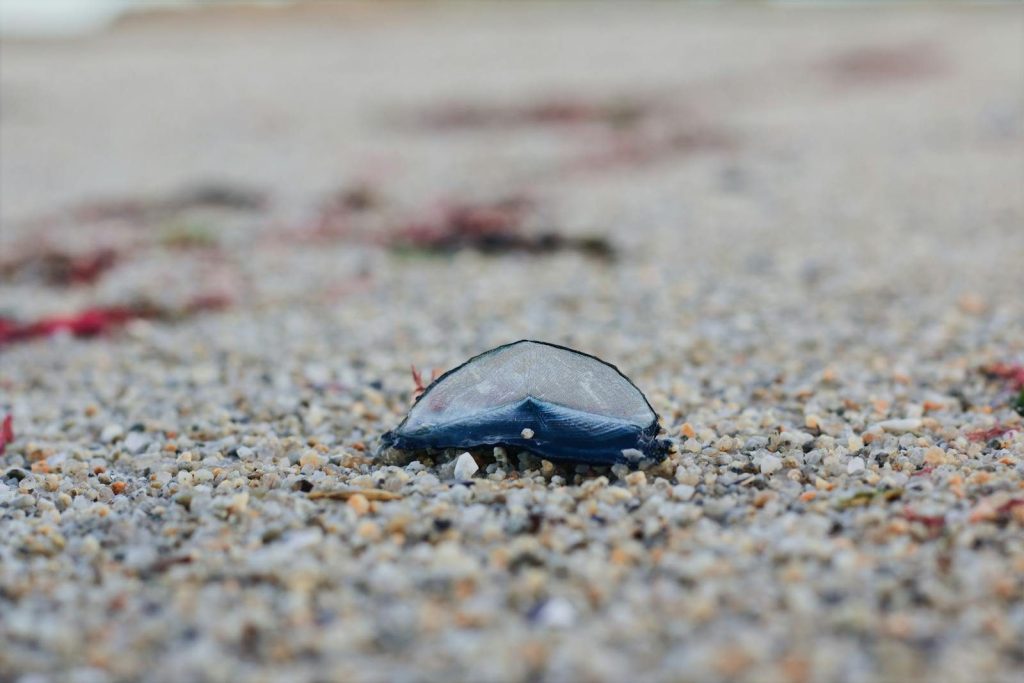
Because Velella are related to jellyfish, many people wonder if they can sting. They do have stinging cells, but these are mainly used to capture tiny prey.
For most people, stranded Velella are considered harmless. Some sensitive individuals may experience mild skin irritation, so it is still better to avoid unnecessary handling.
They are not considered a serious beach hazard like some jellyfish species. Their biggest impact is usually the dramatic scene they create along the shoreline.
Their bright color and sudden arrival often attract curiosity. For many visitors, it becomes a rare chance to see a hidden part of ocean life up close.