Famous wildlife documentaries repeatedly feature lions, elephants, sharks, and bears, but Earth contains thousands of animals with equally remarkable adaptations that receive far less attention.
These eight species are genuinely unusual rather than fictional. Some survive in tiny ranges, others live underground or in deep water, and several are so elusive that even scientists rarely observe them in the wild.
Saola

The saola was scientifically described only in the 1990s after researchers found unusual horns and skulls in Vietnam. It lives in forests of the Annamite Mountains along the Vietnam-Laos border and is the sole living species in its genus, Pseudoryx.
Its rarity has earned it the nickname “Asian unicorn,” although it is a real bovine relative rather than a mythical animal. Direct observations are exceptionally scarce. The IUCN currently classifies the saola as Critically Endangered, with its population believed to be decreasing, making every confirmed record important for conservation.
Star-Nosed Mole
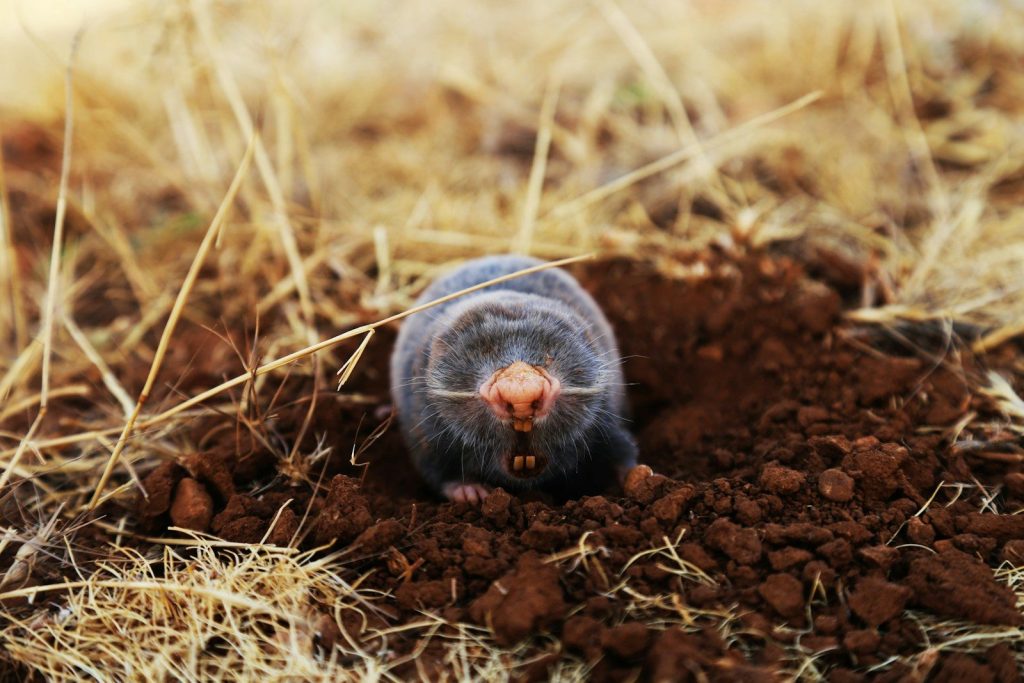
The star-nosed mole looks as though someone replaced an ordinary mole’s nose with a tiny pink sea creature. Twenty-two fleshy appendages surround its nostrils, creating one of the most sensitive touch organs known among mammals.
Those rays contain thousands of specialized sensory structures called Eimer’s organs, allowing the mole to identify small prey with extraordinary speed. It also hunts in wet habitats and is among the very few mammals demonstrated to detect odors underwater by blowing and re-inhaling bubbles. Its bizarre face is therefore a precision sensory system, not decorative anatomy.
Maned Wolf

The maned wolf resembles an unusually tall red fox standing on stilts, yet it is neither a true fox nor a typical wolf. Smithsonian’s National Zoo identifies it as the only living member of the genus Chrysocyon.
Its extremely long legs help it move and see through tall grasslands of South America. Unlike large pack-hunting wolves, maned wolves are generally solitary and eat a varied diet containing both animal prey and substantial plant material. Their unusual combination of foxlike coloring, enormous ears, and long limbs reflects adaptation to open grasslands rather than close relationship to foxes.
Hispaniolan Solenodon

The Hispaniolan solenodon is a nocturnal mammal with a long flexible snout, small eyes, powerful claws, and an evolutionary history stretching deep into the past. Together with the Cuban solenodon, it represents the only surviving members of the family Solenodontidae.
Its strangest feature is venom delivery. Specialized lower teeth have grooves associated with venomous saliva, an extremely uncommon trait among living mammals. Solenodons forage for invertebrates and other foods around forest floors, yet many people outside the Caribbean have never heard of them despite their distinctive place in mammalian evolution.
Aye-Aye

The aye-aye is a nocturnal lemur found only in Madagascar. Its continuously growing front teeth, huge ears, yellow-orange eyes, and extremely thin elongated middle finger give it an appearance unlike nearly any other primate.
That middle finger is a specialized feeding tool. Aye-ayes tap wood and listen for signs of hollow spaces or insect larvae, then gnaw into the wood and use the slender digit to extract food. Duke Lemur Center describes the finger as an important sensory structure, showing that one of the animal’s strangest features is also central to how it survives.
Shoebill
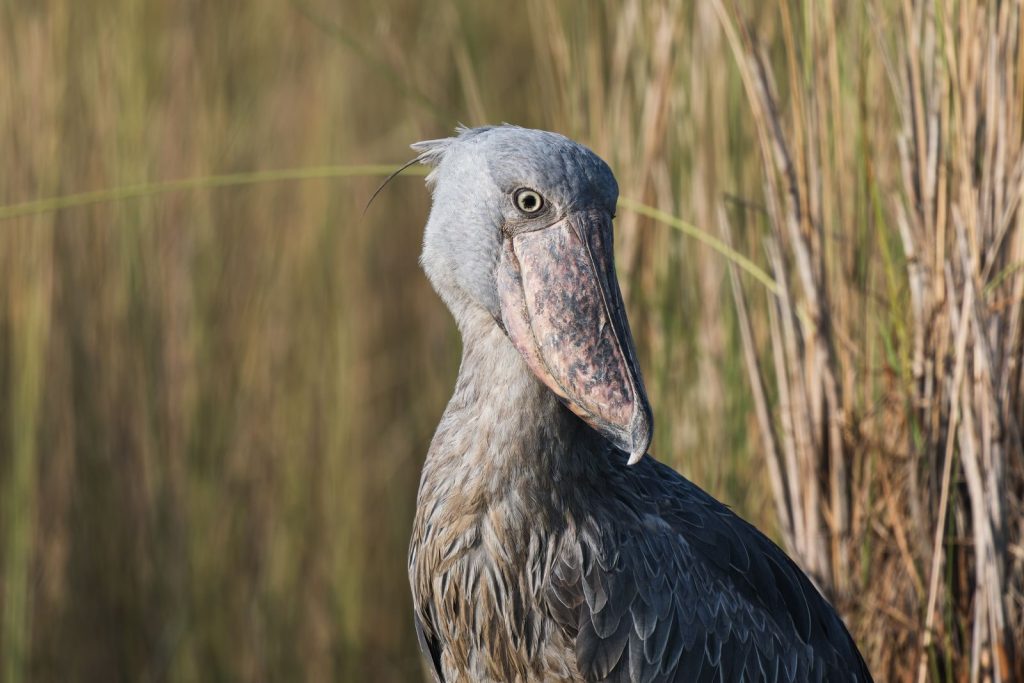
The shoebill is a towering African wetland bird whose enormous bill resembles a wooden clog. Its expression and prehistoric-looking shape have made it an internet favorite, but that oversized bill is a functional hunting tool rather than a strange evolutionary accident.
Shoebills spend long periods standing nearly motionless before striking at aquatic prey. San Diego Zoo Wildlife Alliance lists lungfish, catfish, eels, water snakes, and even small crocodilians among documented foods. The combination of patient hunting, long legs, broad wings, and a massive bill makes the bird especially well adapted to swamp environments.
Pink Fairy Armadillo
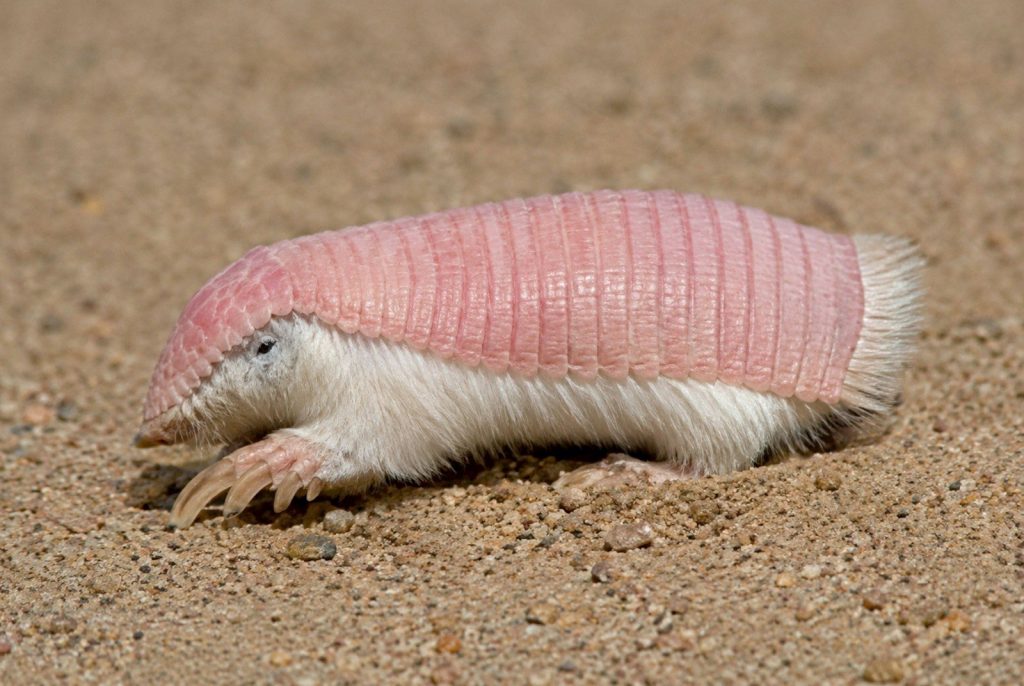
The pink fairy armadillo looks more like a miniature fantasy creature than a familiar armadillo. It is the smallest living armadillo and has pale fur, a flexible pink shell, powerful front claws, and a body designed largely for life beneath loose soil.
The species occurs in central Argentina and is exceptionally difficult to study because it spends so much time underground. WWF notes that researchers still know relatively little about its population. Its compact shape, digging claws, and unusual armor suit a subterranean lifestyle, while its elusive behavior explains why photographs and reliable field observations remain comparatively uncommon.
Goblin Shark

Goblin sharks possess an elongated flattened snout and jaws that can shoot dramatically forward to seize prey. Dead specimens have been known for more than a century, but seeing these animals behaving naturally in the deep ocean has been exceptionally difficult.
In 2026, researchers reported the first live observations of goblin sharks in their natural habitat, based on remotely operated vehicle encounters in deep Pacific waters. The footage offered rare evidence of how this unusual shark actually moves in the wild. Its pale body and protrusible jaws look alien, but they are genuine deep-sea adaptations.
Featured Image: Photo by Daniel Norin on Unsplash