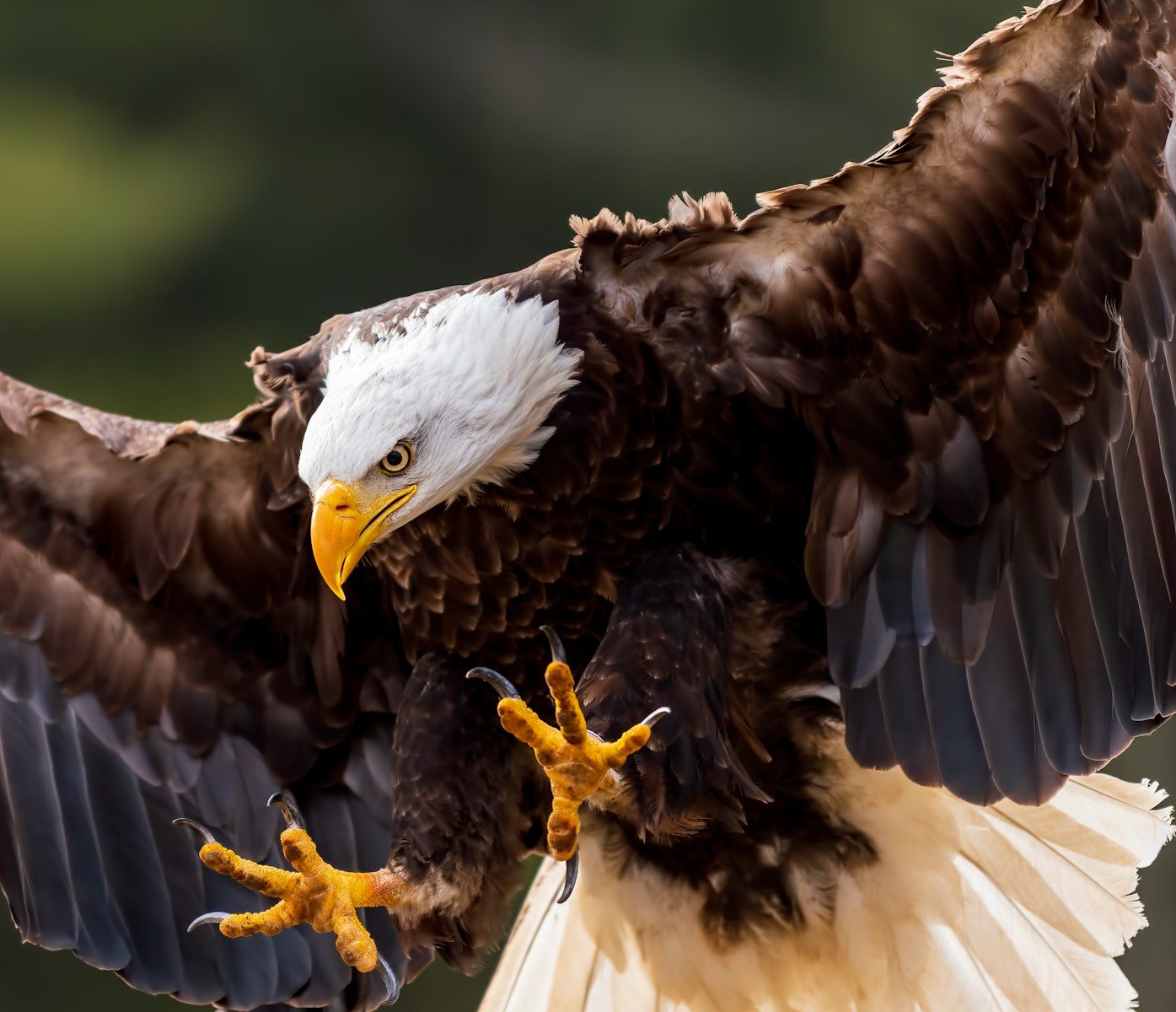
A remarkable video attributed to Bill Shawler shows a bald eagle swooping at a brown bear beside Alaska’s Naknek River. Reports describing the footage say the eagle makes contact or passes extremely close before climbing away. The encounter is genuine enough to attract repeated attention online, but available reporting does not establish exactly why the eagle targeted the bear.
It is tempting to say the eagle was defending a nest, protecting food, or simply “picking a fight,” but those explanations are interpretations rather than confirmed facts from the footage. Bald eagles are territorial birds, opportunistic feeders, and powerful fliers. The safest account therefore focuses on what can actually be seen: an eagle repeatedly approaching a much larger mammal at extraordinarily close range.
Naknek River
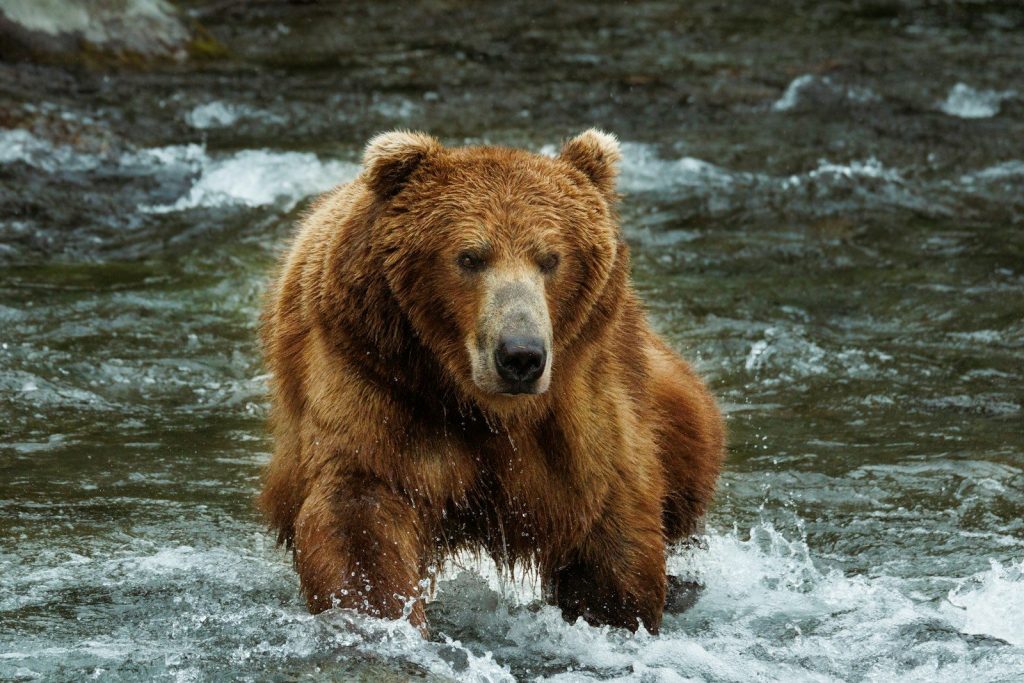
Reports place the filmed encounter beside Alaska’s Naknek River, where the bear was moving along the shoreline while people watched from a boat. The bald eagle approached from the air and swooped toward the animal. The setting makes sense for both species because productive Alaskan rivers can provide feeding opportunities for bears and eagles alike. What the footage cannot establish is whether a nest, carcass, fish, or another resource was nearby and influenced the eagle’s behavior.
Eagle Dive
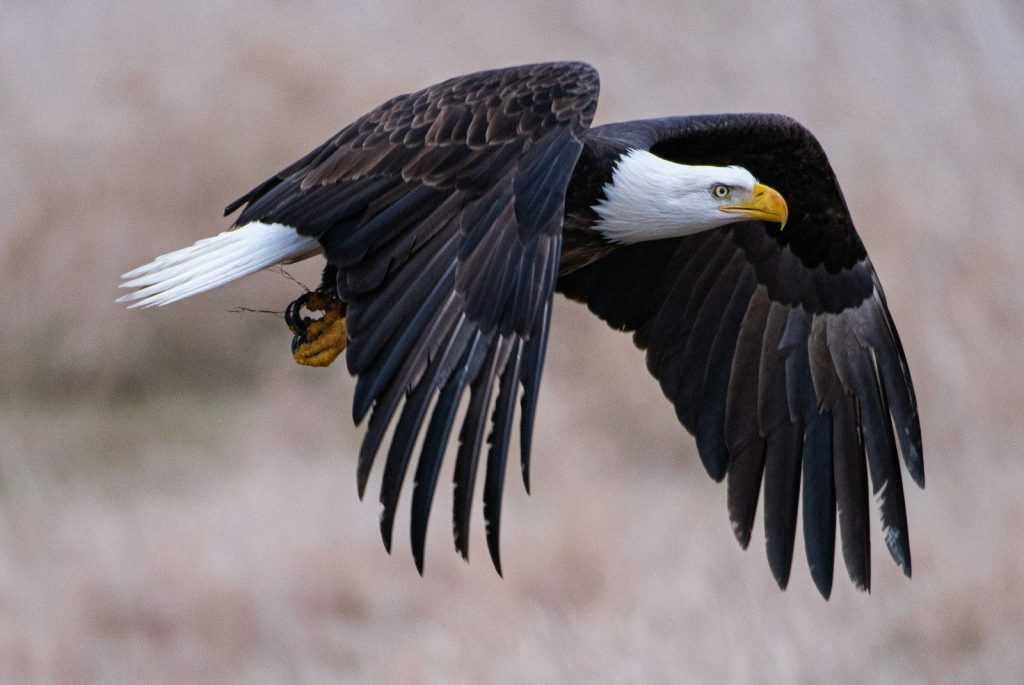
The eagle’s attack is striking because of the size difference between the two animals. Bald eagles are large raptors, but even a big female weighs only a tiny fraction of an adult brown bear. Flight gives the bird an important advantage: it can approach rapidly, strike or pass close, and climb away without remaining within reach for long. That does not make the maneuver risk-free. A poor approach could potentially bring the bird close enough for the bear to react physically.
Bald Eagle
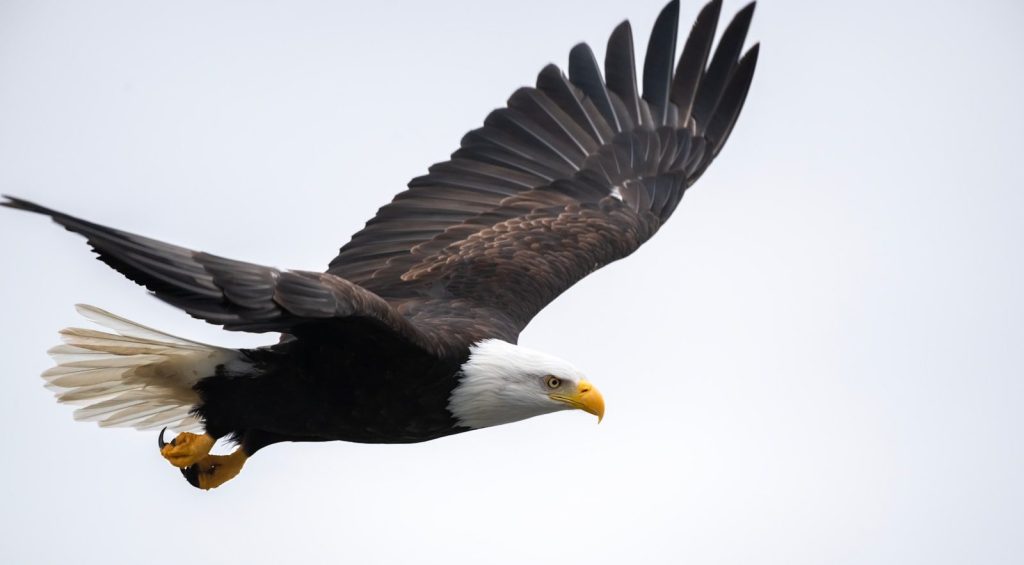
Bald eagles are powerful birds equipped with sharp talons, large wings, strong feet, and hooked bills. The U.S. Fish and Wildlife Service describes them as visual hunters that locate food from perches or soaring flight before swooping downward. Fish are a staple, but their diet also includes waterfowl, small mammals, reptiles, and carrion. They are opportunistic rather than limited to one feeding strategy, which helps explain why eagles frequently share landscapes and food sources with much larger scavengers and predators.
Bear Reaction
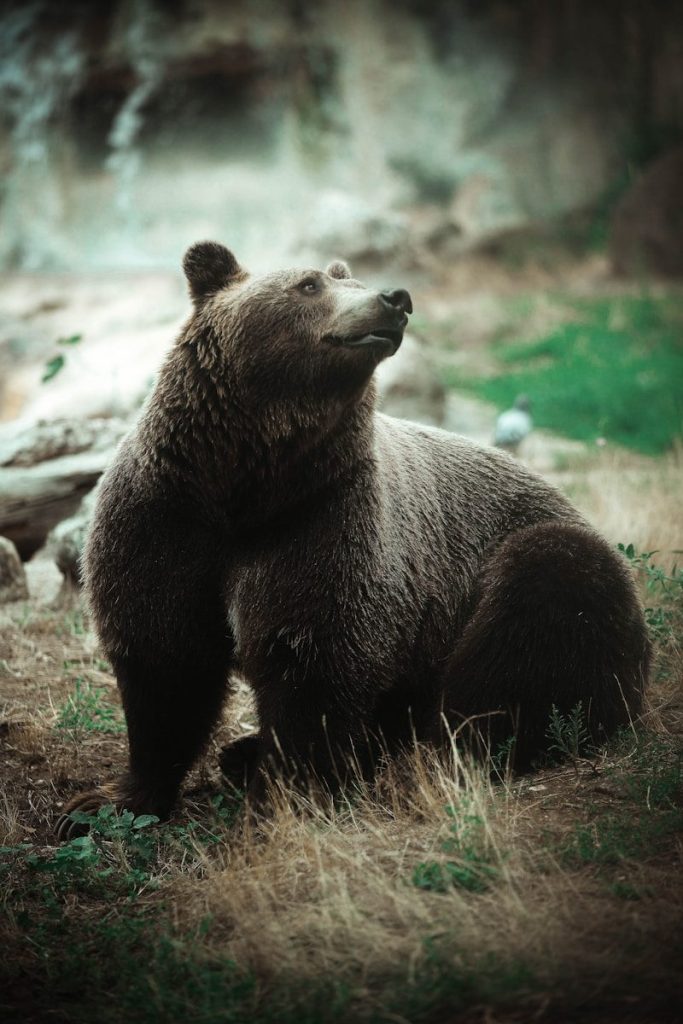
The bear in the circulating footage reacts to the eagle’s close pass, but a brief video cannot reveal precisely how it interpreted the encounter. Brown bears regularly deal with birds around feeding areas, particularly where fish or carrion attract several scavenging species. A bald eagle would not normally be considered a serious predator of an adult bear. The significance lies instead in the bird’s willingness to approach something enormously larger, then use aerial mobility to avoid prolonged contact on the ground.
Territorial Behavior
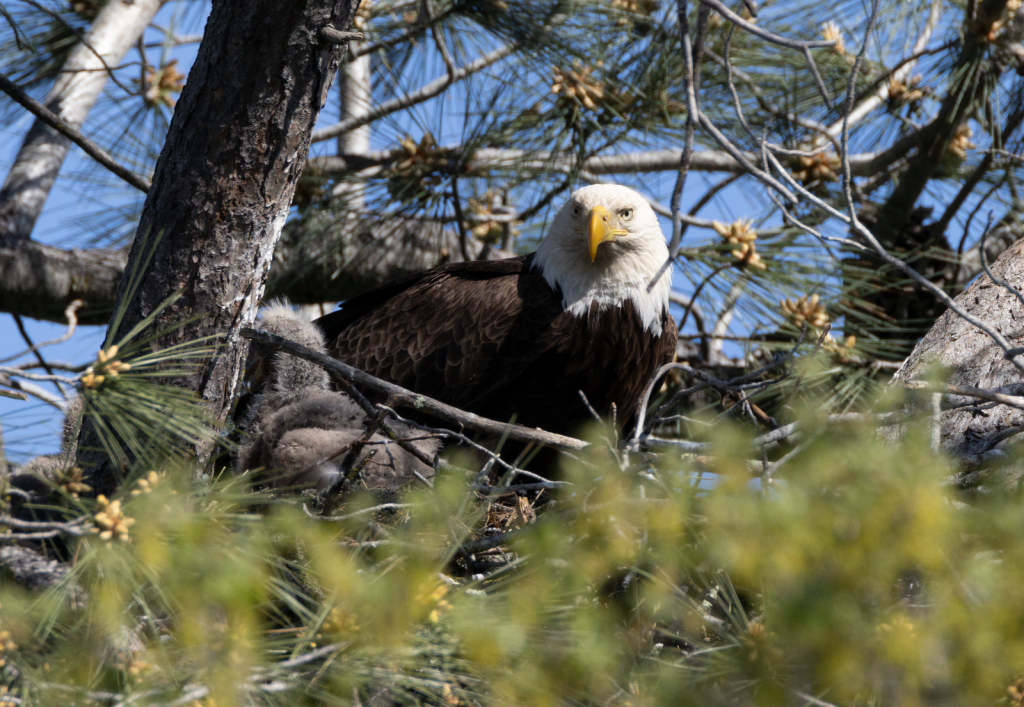
Bald eagles occupy breeding territories containing nests and important foraging areas. Pairs can reuse and enlarge nests for years, and adults invest heavily in eggs and young. Territorial behavior could theoretically explain aggressive aerial approaches toward another animal, but the specific Alaska video does not show enough context to prove nest defense. That distinction is important. Wildlife articles should separate known species behavior from an explanation invented for one individual. The footage documents the swoop; the eagle’s exact motivation remains uncertain.
Food Competition
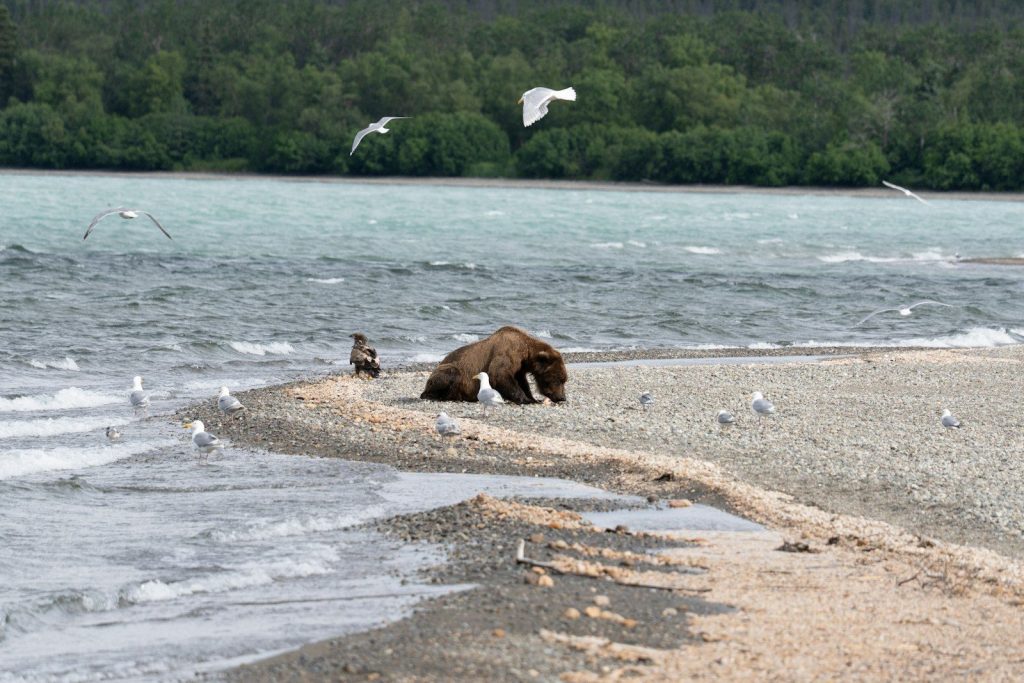
Food is another possible source of interactions between eagles and large mammals. Bald eagles readily scavenge carrion and are notorious for stealing prey from other birds and animals. Bears also exploit fish and carcasses, creating opportunities for different species to gather around the same resource. However, no clearly identified food item in the available reporting proves that competition caused this particular dive-bombing episode. It is therefore useful ecological context, not a confirmed explanation for what the eagle was doing.
Eagle Talons
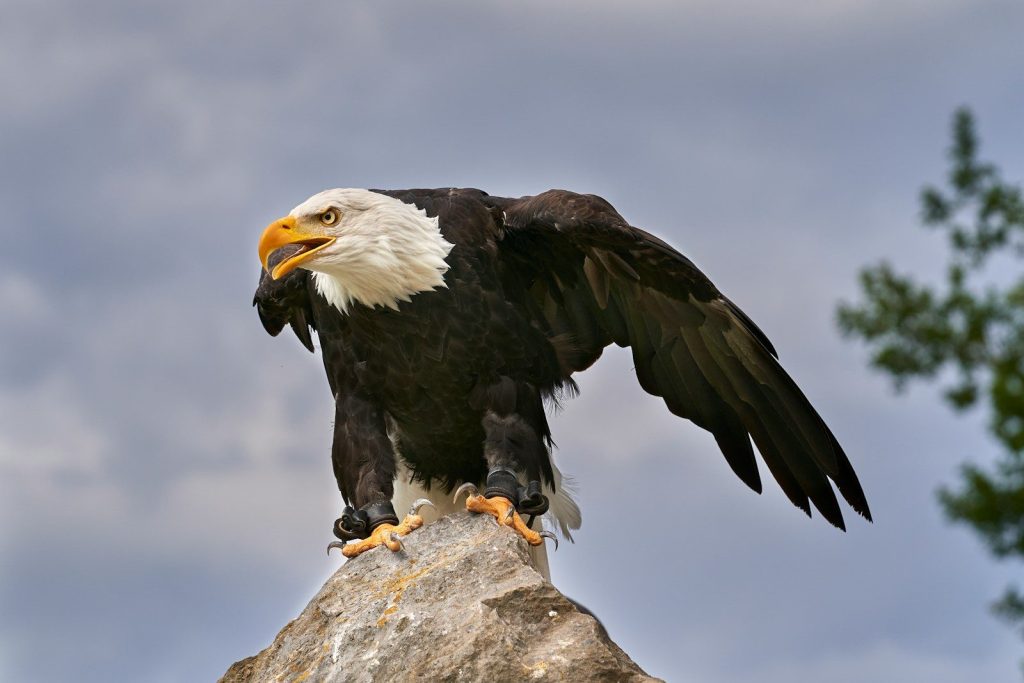
A bald eagle’s feet are specialized for gripping prey, particularly slippery fish. The underside of the feet contains rough structures that improve grip, while long curved talons can penetrate prey. Those weapons make a close aerial strike potentially painful even to a much larger animal. Still, talons designed to catch fish and smaller prey are not enough to turn a bald eagle into a realistic predator of an adult grizzly. The interaction is better understood as an aggressive encounter than a serious predation attempt.
Unknown Motive
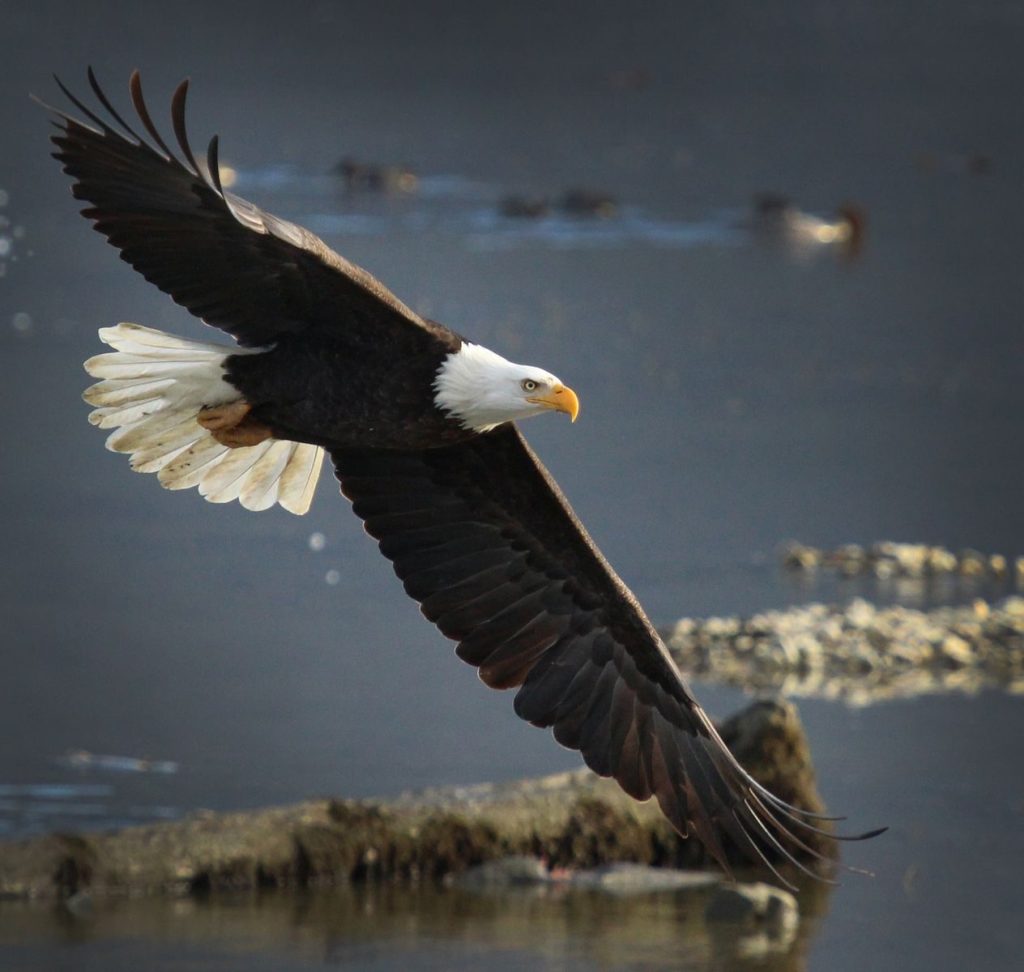
The most responsible conclusion is also the simplest: a bald eagle was filmed making an aggressive close pass at a bear, but the video does not reveal why. Nest defense, food competition, territoriality, or another nearby stimulus are possible explanations, yet none should be stated as fact without more evidence. Wildlife behavior often looks obvious from a few seconds of footage, but motives are difficult to establish. Describing what happened accurately makes the encounter more credible, not less fascinating.
Featured Image: Photo by Manoj Balotia on Unsplash