Dolphins in Queensland have now been filmed using large empty sea shells as fishing tools, giving researchers a rare look at a hunting technique called shelling. The behavior was recorded in 2025 in the Great Sandy Marine Park near Hervey Bay and published in August 2026. It is the first published record of shelling from Australia’s east coast, far from the famous Shark Bay population in Western Australia.
The footage becomes even more interesting when a calf handles the same shell only minutes after its mother used it. Researchers describe this as the first potential evidence of maternal social transmission of shelling, not proof that the mother deliberately “taught” a lesson. Earlier work in Shark Bay showed shelling can spread among associates. The new observations suggest dolphins may acquire the same specialized technique through more than one social pathway.
Hervey Bay

The new observations came from the Great Sandy Marine Park on Butchulla Country in southeast Queensland. University of the Sunshine Coast researchers were conducting dolphin surveys when they recorded two adult female Indo-Pacific bottlenose dolphins handling large bailer shells in 2025. Until this work, published shelling research had focused on Shark Bay in Western Australia. The Queensland record therefore extends the known behavior to the opposite side of the continent and raises the possibility that other populations may be using the same technique without researchers having noticed it yet.
Shelling Technique
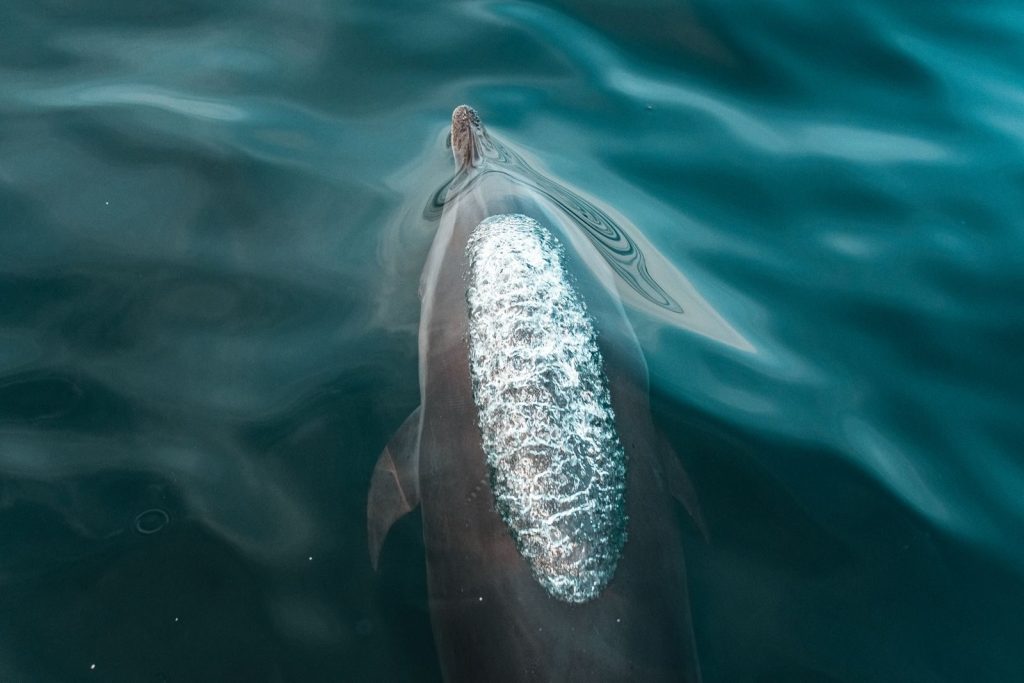
Shelling turns a fish’s hiding place into a trap. A dolphin chases or finds prey inside a large empty gastropod shell, inserts its rostrum into the opening, lifts the shell to the surface, and manipulates it so water and the trapped fish can drain toward the mouth. The sequence requires the animal to locate a suitable shell, orient it correctly, and handle it while swimming. Because the behavior happens quickly and only some dolphins perform it, researchers can spend years studying a population without witnessing a single clear event.
Bailer Shells

The Queensland dolphins were seen using bailer shells, large gastropod shells from Melo species that can provide enough internal space for small fish to hide. An empty shell is not simply carried as decoration. During shelling, its shape becomes part of the hunting process because prey entering the cavity can be transported toward the surface. The dolphin then manipulates the opening to recover the fish. This is why researchers discuss shelling as tool use: an external object is incorporated into a specialized method for obtaining food that would otherwise be difficult to capture.
Stevie Nicks
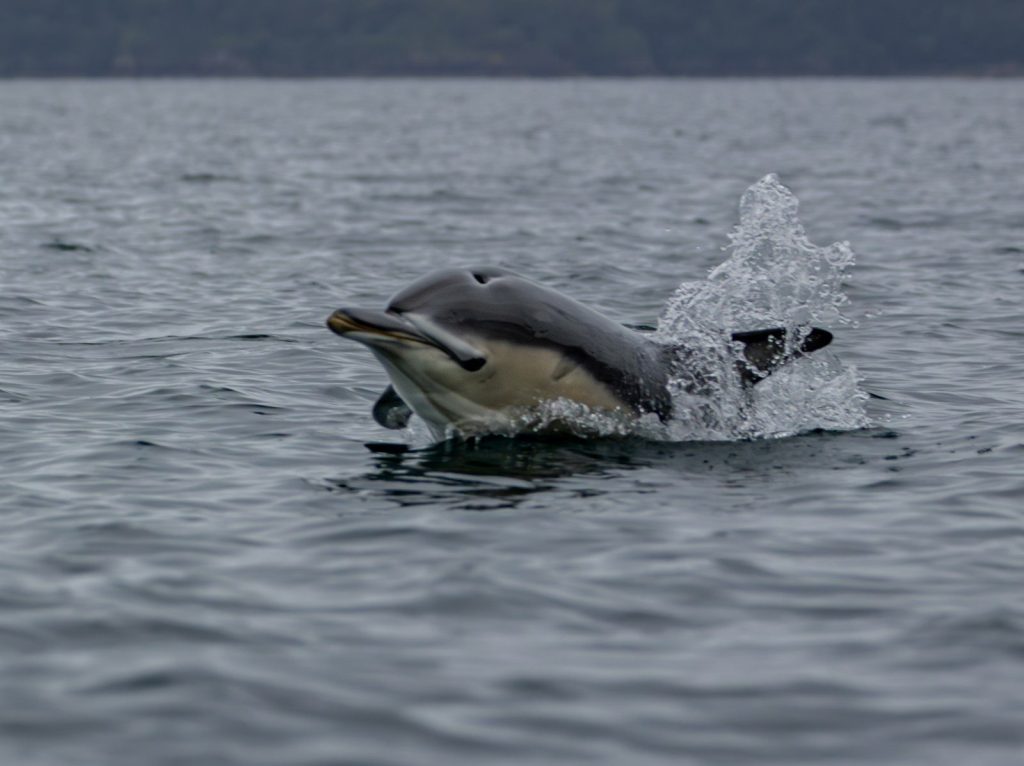
On July 6, 2025, researchers followed an adult female dolphin nicknamed Stevie Nicks after seeing her maneuver a bailer shell at the surface. The published account describes her raising the shell during several surfacings while positioning her rostrum inside the opening. Rain ended the observation after about nine minutes, and the team could not confirm whether she successfully obtained a fish. That uncertainty is important. Scientists can document tool handling without turning every attempt into a successful hunt when the actual prey outcome disappears beneath the water.
Maserati

A second observation on October 1, 2025, involved an adult female known as Maserati. Drone footage showed her surfacing with a bailer shell while a fish was inside. The fish escaped, Maserati dropped the shell, and she pursued the prey. Researchers could not confirm whether she ultimately caught it because underwater visibility was limited. Even without a confirmed meal, the sequence clearly documented the shelling process. It also became unusually valuable because Maserati’s calf remained nearby and interacted with the same shell only minutes later.
Bentley

Three minutes after Maserati dropped the shell, her calf Bentley picked it up in the same area. The calf inserted its rostrum, raised the shell, and manipulated it at the surface in a way resembling the mother’s earlier behavior. A photograph appears to show a suspected lizardfish protruding from the shell opening. The researchers were careful not to claim more than the evidence allowed. Bentley’s actions are consistent with learning from the mother, but one observation cannot prove the exact cognitive process by which the calf acquired the technique.
Social Learning

The mother-calf sequence provides what the authors call the first potential evidence of vertical social transmission for shelling. Vertical transmission means a behavior passes from parent to offspring. That is different from deliberately teaching in the strict scientific sense, which requires stronger evidence that a knowledgeable individual actively modifies behavior to help a learner. Earlier research in Shark Bay found that shelling spread mainly among associates of the same generation. Together, the studies suggest that dolphin foraging traditions can move through social networks in more than one way.
Independent Innovation

Hervey Bay and Shark Bay lie on opposite sides of Australia and involve different dolphin populations. The researchers therefore argue that shelling may have arisen independently in the two regions rather than spreading through ordinary contact between them. Historical photographs from Queensland in 2013 and 2019 suggest the behavior had been present there for years before scientists formally documented it. Similar ecological opportunities, intelligent animals, and suitable shells may have produced the same solution twice. That possibility makes shelling especially interesting as an example of innovation in wild animals.
Featured Image: Photo by Emilio Sánchez Hernández on Pexels