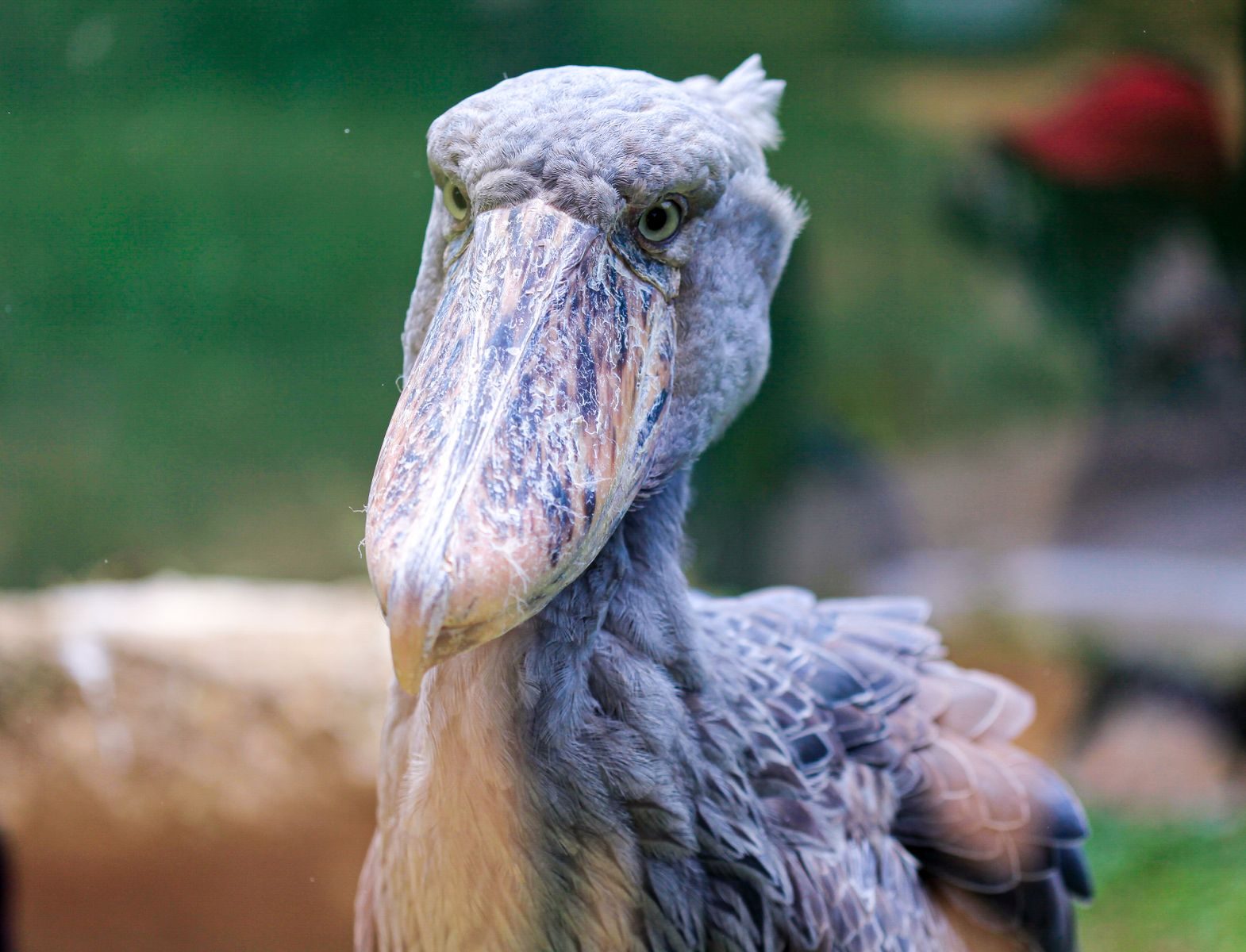
Shoebills can create an unforgettable close-range impression. Their enormous shoe-shaped bill, pale staring eyes, tall body, and habit of standing almost motionless make them look more like prehistoric sculptures than living wetland birds. Viral videos often show a captive shoebill facing a person at very close range, sometimes followed by bowing or bill movements that viewers interpret as a greeting, respect, or friendship.
Some widely shared bowing clips are attributed to a shoebill called Sushi at Uganda’s Wildlife Conservation Education Centre, but viral reposts often strip away original context. A bow should not automatically be translated into human social meaning. Shoebills have their own displays and behaviors, while wild individuals deserve distance. The scientifically interesting story is how a highly specialized African wetland predator behaves and communicates, not whether it understands human etiquette.
Viral Shoebill
Close-range shoebill videos are compelling because the bird barely needs to move to command attention. A person may stand nearby while the shoebill lowers its head, raises it again, or remains almost statue-still. Social posts commonly identify the famous captive bird in bowing videos as Sushi at Uganda’s Wildlife Conservation Education Centre. That attribution is plausible, but individual reposts should still be checked before claiming a specific clip’s origin. The visible interaction is real enough; the humanlike interpretation added in captions is the part that requires caution.
Sushi in Uganda
Uganda’s Wildlife Conservation Education Centre in Entebbe houses shoebills among the many native birds in its care and educational programs. Social media posts about a bird named Sushi describe close interactions in which visitors bow and the shoebill appears to respond. Those accounts are useful context, but they are not behavioral experiments proving that Sushi understands bowing as human respect. A captive bird familiar with keepers and visitors can develop routines around people that should never be assumed to apply to wild shoebills in wetlands.
Bill Clapping

Shoebills communicate partly through movements and sounds involving their enormous bills. San Diego Zoo Wildlife Alliance notes that they perform bill clapping in social situations, including courtship and interactions with intruders. The sound can be surprisingly loud because the two halves of the bill strike together. That means a dramatic head movement or bill display near a person may have several possible explanations. Observers should describe the behavior first and avoid assigning a human emotion unless keepers who know the individual can provide reliable context for that specific interaction.
Enormous Bill
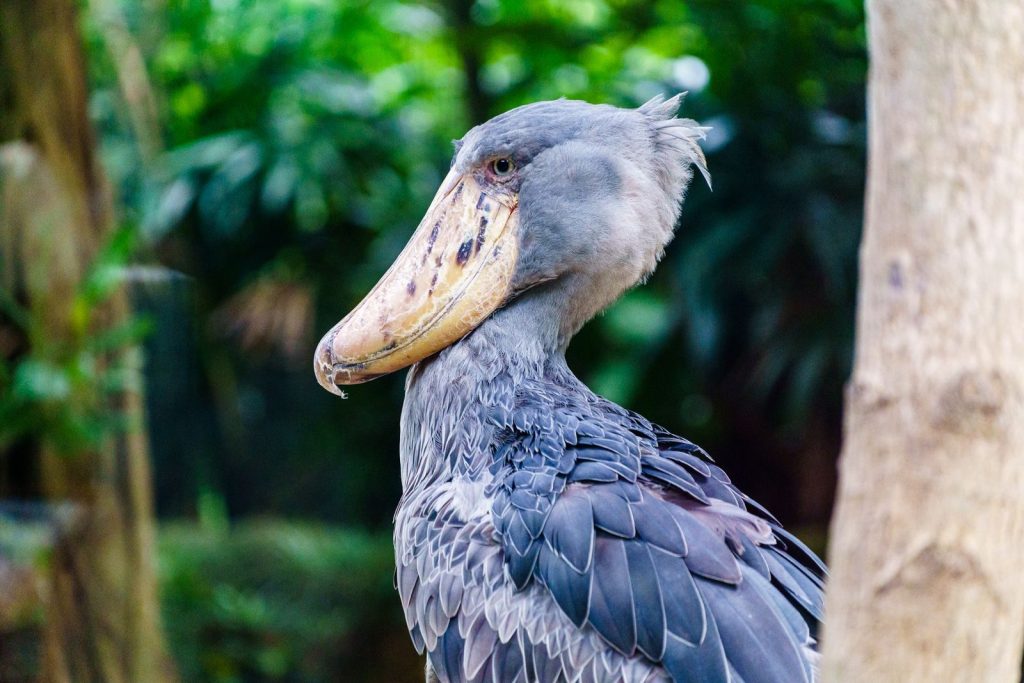
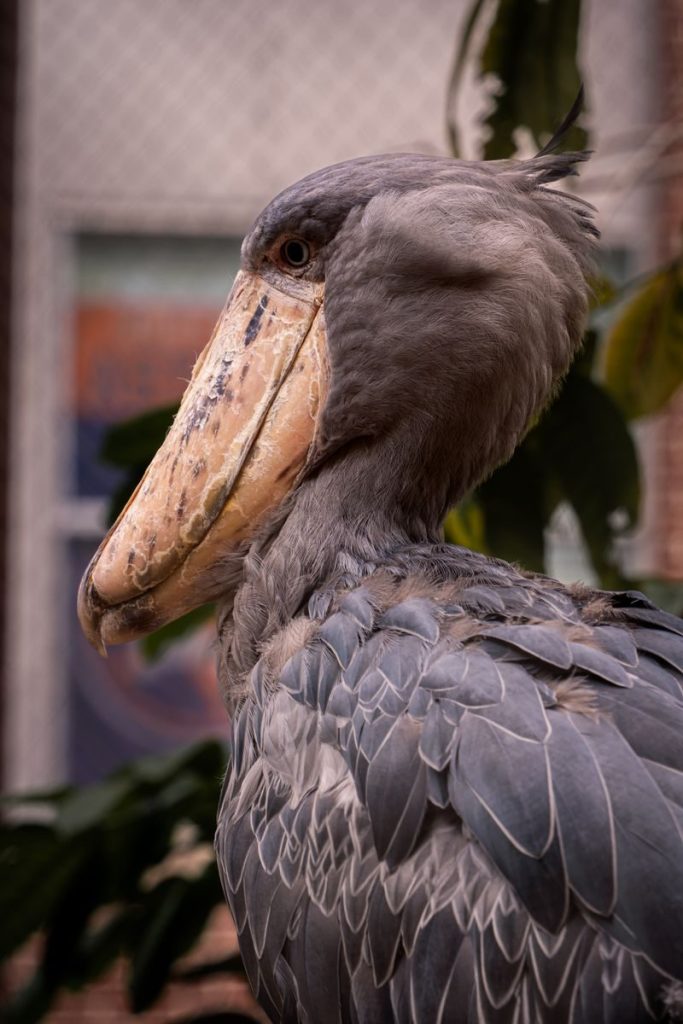
The shoebill’s bill is a hunting tool rather than an oversized ornament. Its broad shape ends in a strong hooked tip that helps seize and handle slippery or struggling prey. Shoebills hunt in African wetlands where vegetation and shallow water provide opportunities to ambush fish and other aquatic animals. The head and bill are so large that close photographs distort the bird’s proportions even further. A human standing beside one can make the bill look almost unreal, but its form is tightly connected to the way the bird captures food.
Still Hunter
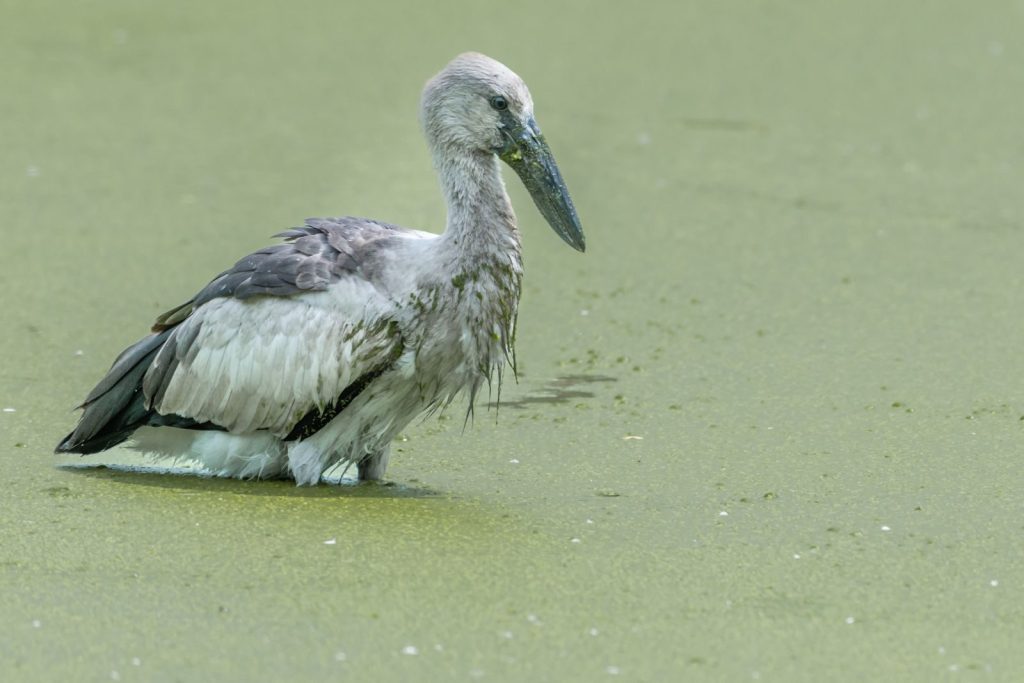
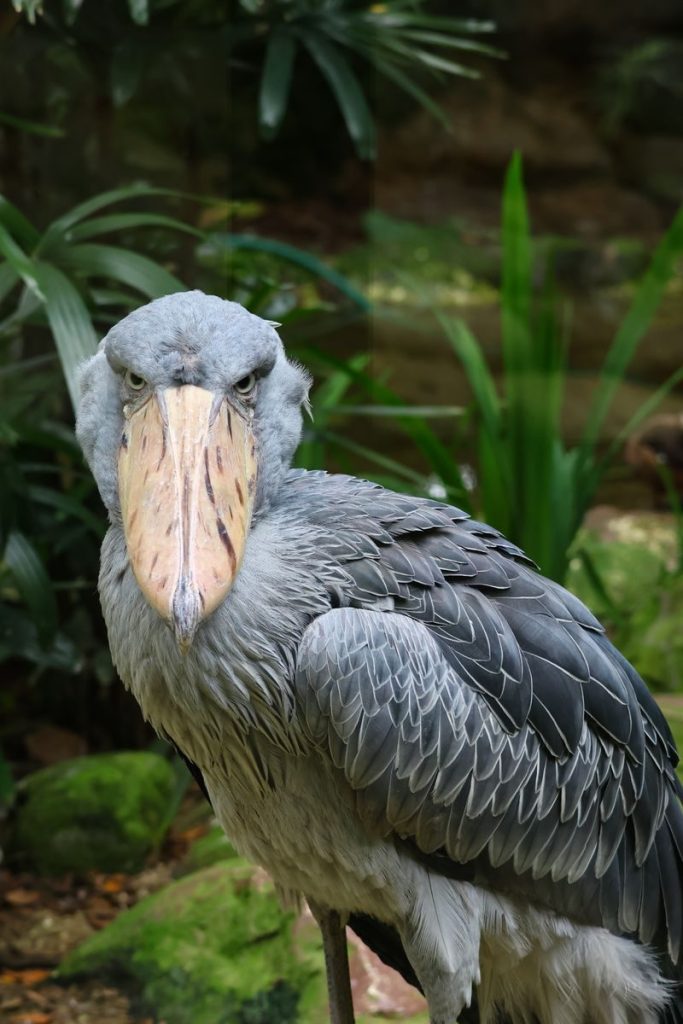
Shoebills often hunt by standing still for long periods and then striking suddenly. Uganda Wildlife Authority describes them as ambush hunters capable of remaining motionless while waiting for fish to move into range. This patient style explains why videos can show a bird appearing calm and almost frozen before an abrupt movement. Stillness should not be mistaken for passivity or permission to approach. It is a normal part of the shoebill’s behavioral repertoire and one reason the species can seem so unusual compared with constantly moving waterbirds.
Wetland Diet

Fish form an important part of a shoebill’s diet, including lungfish and other species available in swamp habitat. The bird may also take frogs, reptiles, and other suitable aquatic prey. Its long legs allow it to move through shallow water while the huge bill performs the final capture. This feeding ecology helps explain the bird’s body plan better than comparisons with dinosaurs or fictional creatures. Each dramatic feature, from the tall stance to the heavy bill, supports life as a patient predator in dense African wetlands.
Wild Shoebills

A captive shoebill accustomed to people is not a model for approaching one in the wild. Uganda Wildlife Authority promotes bird hides as a way to observe birds while minimizing disturbance, and shoebills are among Uganda’s notable wetland species. Wild birds may be nesting, feeding, or simply trying to avoid human activity. Keeping distance protects their behavior and reduces pressure on habitats already affected by wetland conversion and other threats. The safest memorable encounter is one where the bird never has to change what it was doing.
No Human Etiquette
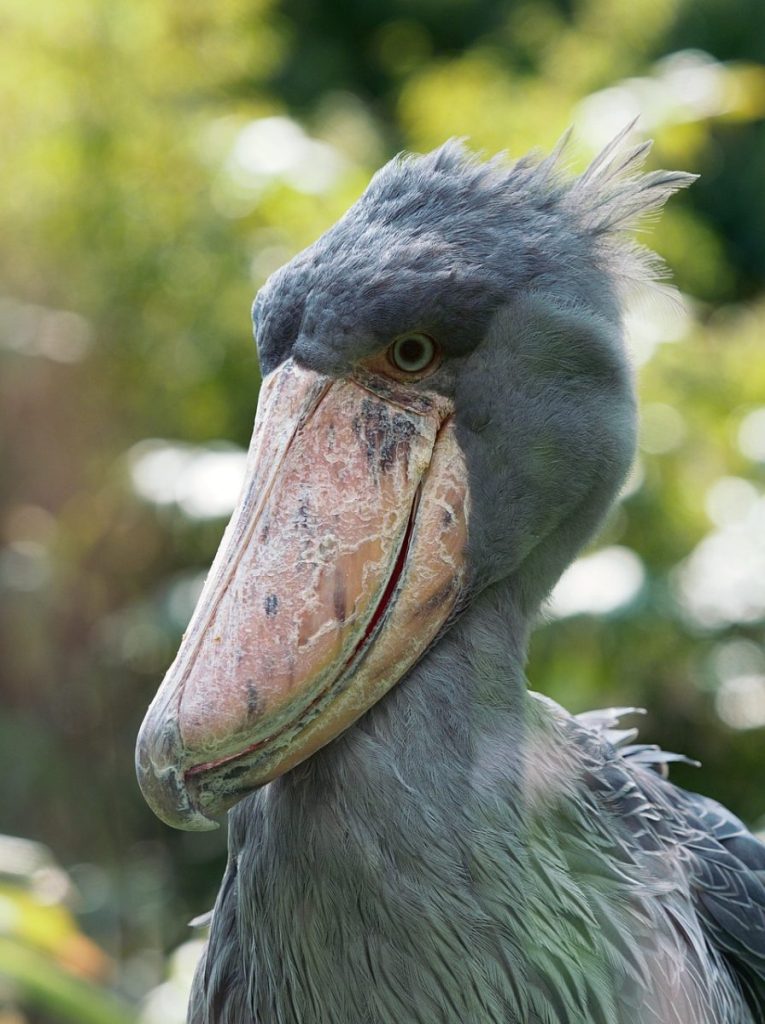
The charming idea that a shoebill demands a bow before accepting a visitor is better treated as a story about a particular captive routine than a rule of shoebill society. Birds can learn repeated cues and associations, but a viral clip cannot establish that the animal understands concepts such as politeness, respect, or social rank in a human sense. Describing a shoebill’s actual posture, bill clapping, familiarity with caretakers, and hunting behavior gives the animal more credit than turning it into a character following human etiquette.
Featured Image: Photo by Marvin Ssemakula on Pexels