Words like “beautiful” and “ugly” reflect human taste, not ecological value. A species with exposed gills, an enormous nose, a narrow crocodilian snout, or a saw-shaped face may perform an ecological role just as important as a panda or tiger.
Conservation based only on appearance risks overlooking some of the planet’s most evolutionarily unusual animals.
Axolotl

Wild axolotls keep feathery external gills and other juvenile features throughout adulthood, giving them an appearance unlike most salamanders. They can regenerate limbs and other tissues, yet wild populations are Critically Endangered and largely restricted to the canal system around Xochimilco in Mexico City.
Chinese Giant Salamander

Chinese giant salamanders can grow larger than any other living amphibian and belong to an ancient evolutionary lineage. Once widespread, their populations have collapsed because of habitat degradation, harvesting, disease concerns, and genetic mixing associated with poorly planned releases. They are considered Critically Endangered.
Proboscis Monkey

Male proboscis monkeys possess enormous hanging noses that make the Bornean primates instantly recognisable. Their strange appearance is paired with a specialised digestive system adapted to leaves. The species is Endangered as mangrove and riverine forests are cleared or degraded.
Gharial

The gharial has an extremely narrow, tooth-filled snout specialised for catching fish. Adult males develop a bulbous structure near the tip called a ghara. Despite looking prehistoric and formidable, this river crocodilian is Critically Endangered and depends on protection of large, connected river systems.
Kākāpō

The kākāpō is a heavy, flightless, nocturnal parrot with an owl-like face and an unusual breeding system. Introduced predators drove it close to extinction. By early 2026, intensive management had rebuilt the population to more than 200 birds, but the species remained critically endangered and dependent on active conservation.
Saola
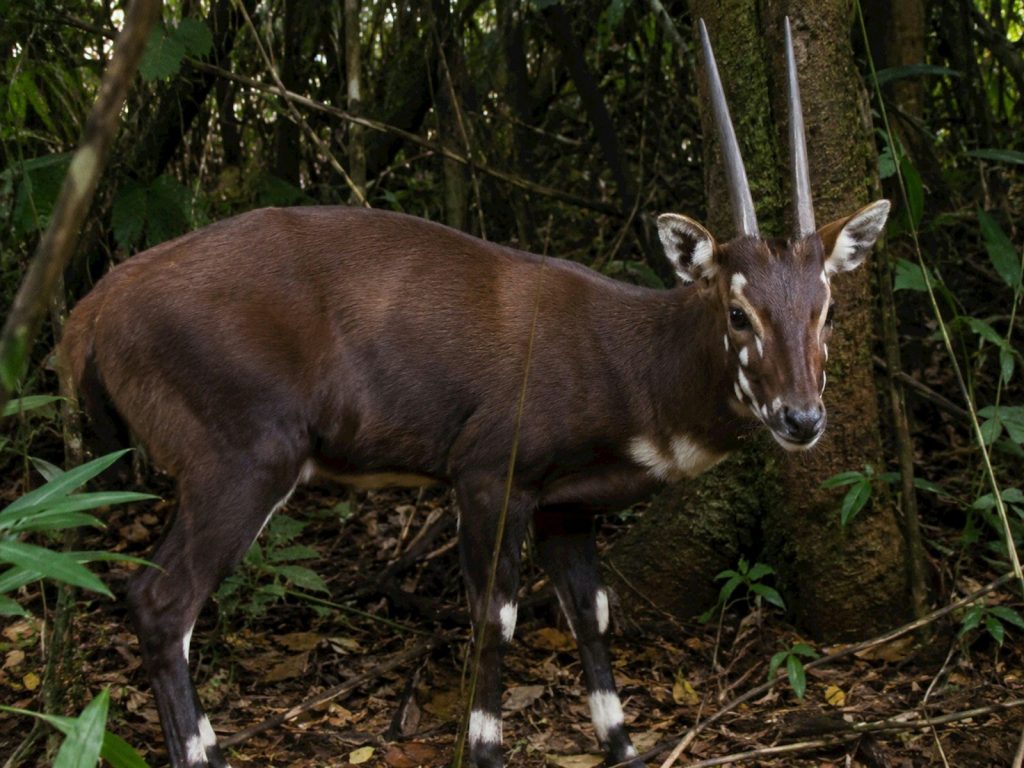
The saola looks almost like an antelope designed from several different mammals, with long parallel horns and striking white facial markings. Scientists only discovered it in 1992. No saola lives in captivity, sightings are extraordinarily rare, and the species is Critically Endangered in forests of Laos and Vietnam.
Smalltooth Sawfish

A smalltooth sawfish resembles a shark carrying a chainsaw-shaped snout, but it is actually a ray. The rostrum helps detect and strike prey. Habitat loss and entanglement caused severe declines, and both U.S. and non-U.S. populations receive endangered-species protection.
Philippine Eagle
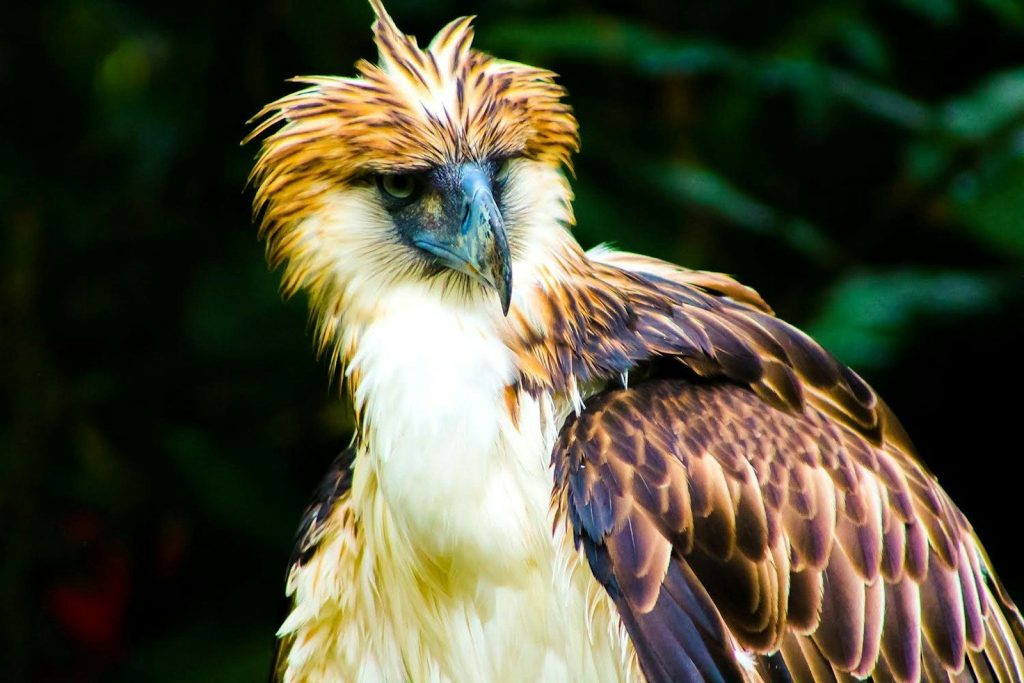
The Philippine eagle has an enormous beak, shaggy crest, and powerful feet adapted for hunting forest prey. It is Critically Endangered because of deforestation, habitat fragmentation, and shooting. Conservation organisations estimate only a few hundred breeding pairs remain, making every surviving adult important.
Featured Image: Photo by hartono subagio on Pexels