Skip to content

Recent Posts

  • Baby Elephant Linh Mai Takes Her First Steps
  • Why a Kangaroo May Challenge a Human
  • How Electric Eels Shock and Control Their Prey
  • How Giraffes Escape Attacks From Lions
  • How Orcas Turn Great White Sharks Into Prey

Most Used Categories

  • Nature & Wildlife (720)
  • Risk (68)
  • Human Interest (51)
  • Hunting (24)
  • Exotic Animals (24)
  • Survival (23)
  • Bees/Swarms fear (21)
  • Suspense (18)
  • Adventure (3)
  • Gears (2)
Skip to content
  • About Us
  • Contact Us
  • Disclaimer
  • Privacy Policy
  • Terms & Conditions

Hive Hunters Tales

  • Suspense
  • Nature & Wildlife
  • Human Interest
  • Hunting
  • Bees/Swarms fear
  • Exotic Animals
  • Risk
  • Survival
  • Adventure
  • Gears
  • Home
  • Risk
  • Why a Kangaroo May Challenge a Human
a large kangaroo standing next to a tree

Why a Kangaroo May Challenge a Human

JakeAugust 11, 2026August 10, 2026

The exact viral incident described by the original title could not be verified confidently, so specific actions should not be invented.

Large male kangaroos can stand close to human height and may use upright postures, forelimb grappling and powerful kicks during fights. Human encounters become especially risky when an animal feels cornered or has become accustomed to people.

Large Males Look Intimidating

Group of kangaroos enjoying a sunny day in Walpole, Western Australia.
Photo by Sergey Guk on Pexels

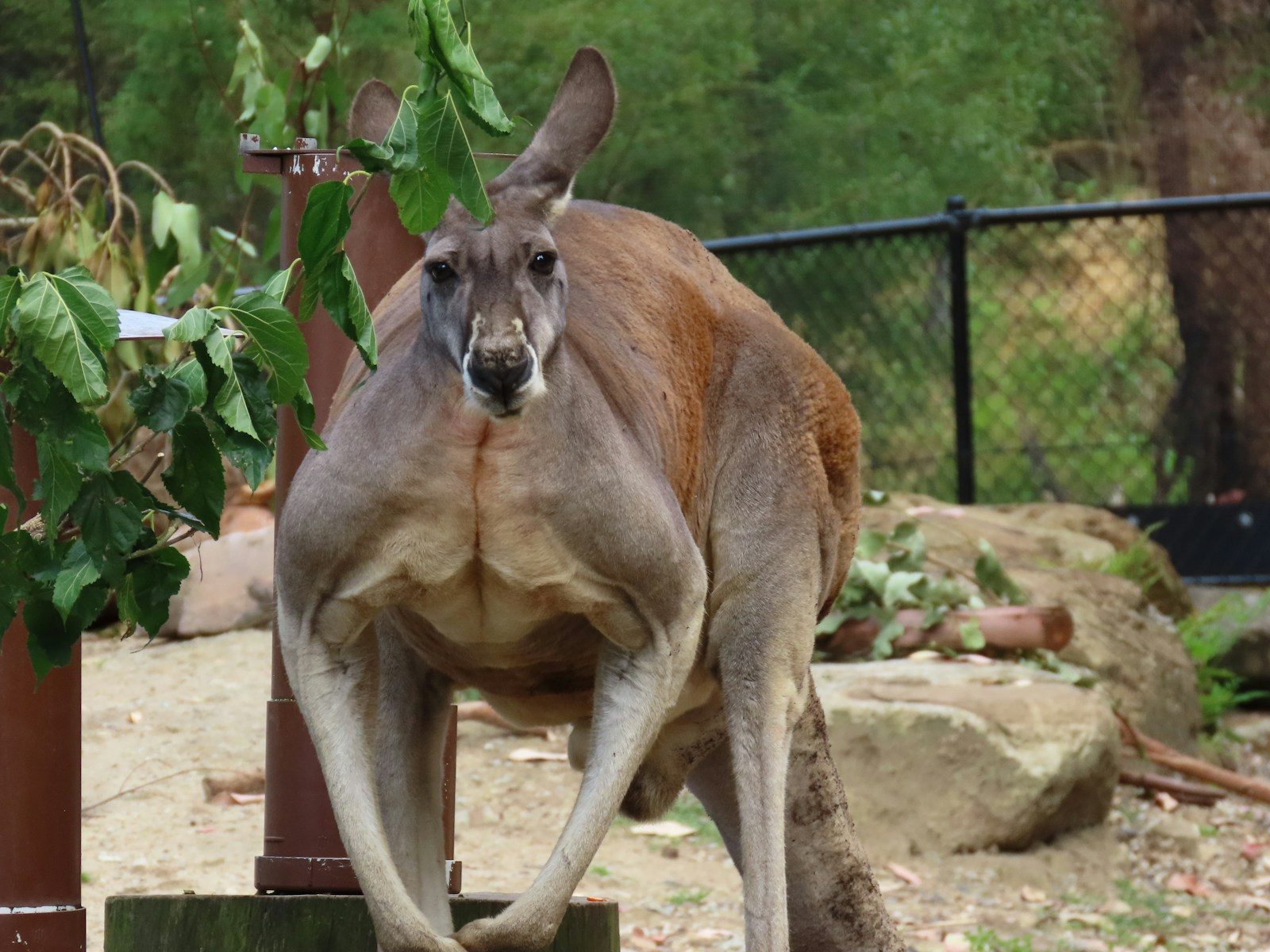
Adult male kangaroos can become tall, muscular animals with powerful shoulders, forearms and hind legs. Standing upright allows a male to assess an opponent and prepare for the wrestling and kicking behavior used during competition with other males.

Boxing Starts With Grappling
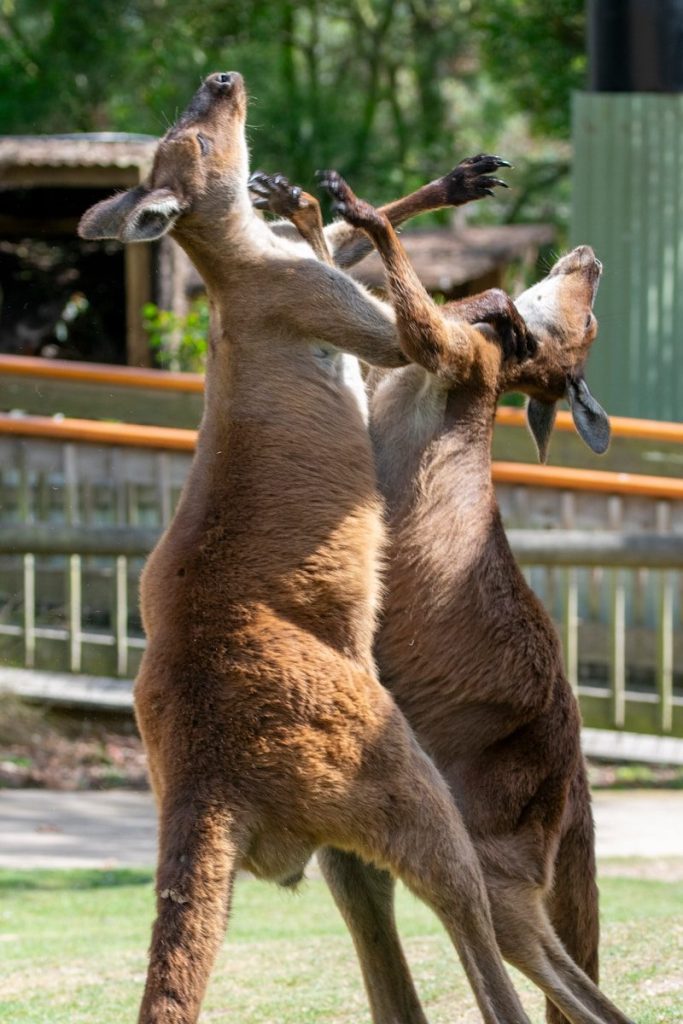
Kangaroos are fighting in an upright position.
Photo by Ellephant on Unsplash

Kangaroo fighting is often described as boxing, but the animals do more than strike with their forepaws. Males grab and push one another while balancing on their large feet and tail, creating opportunities to position the opponent for a much stronger hind-leg attack.

The Tail Becomes a Support

brown goat standing on green grass
Photo by Photoholgic on Unsplash

During fighting, a kangaroo can lean backward and use its thick tail as additional support. This frees both hind legs to kick forward together. Long claws on the feet make that movement capable of causing serious cuts and other injuries.

A Human Can Look Like a Rival
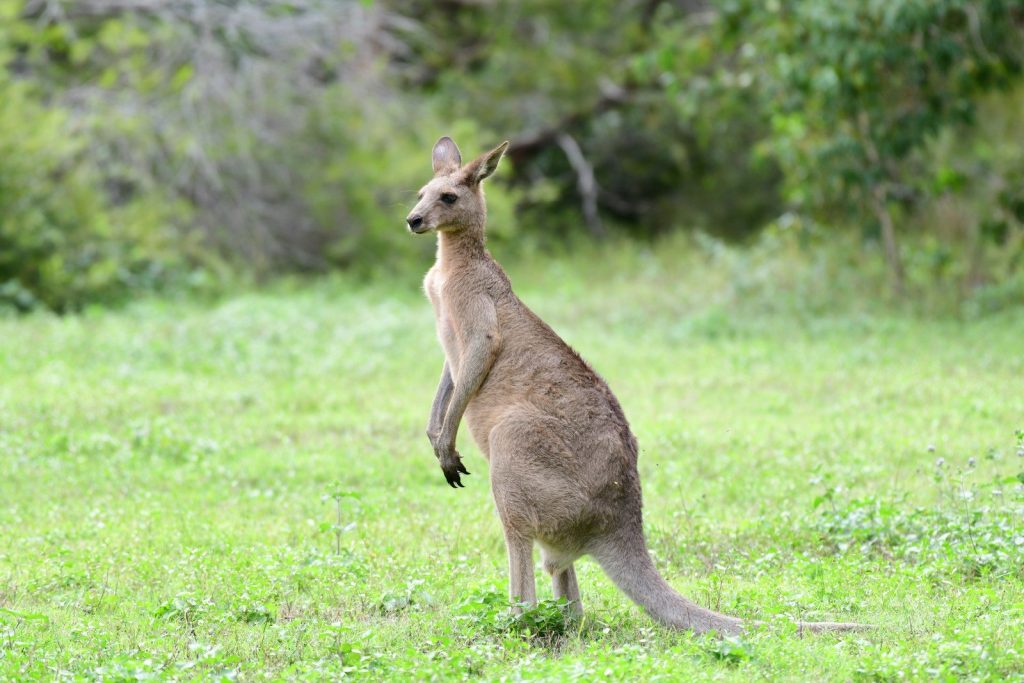
A kangaroo stands alert in a grassy field.
Photo by Previn Samuel on Unsplash

Habituated male kangaroos may approach people more closely than normal. If a person faces the animal, raises their arms, blocks its path or moves toward it, the kangaroo may respond defensively or interpret the posture as a challenge.

Feeding Increases Risk
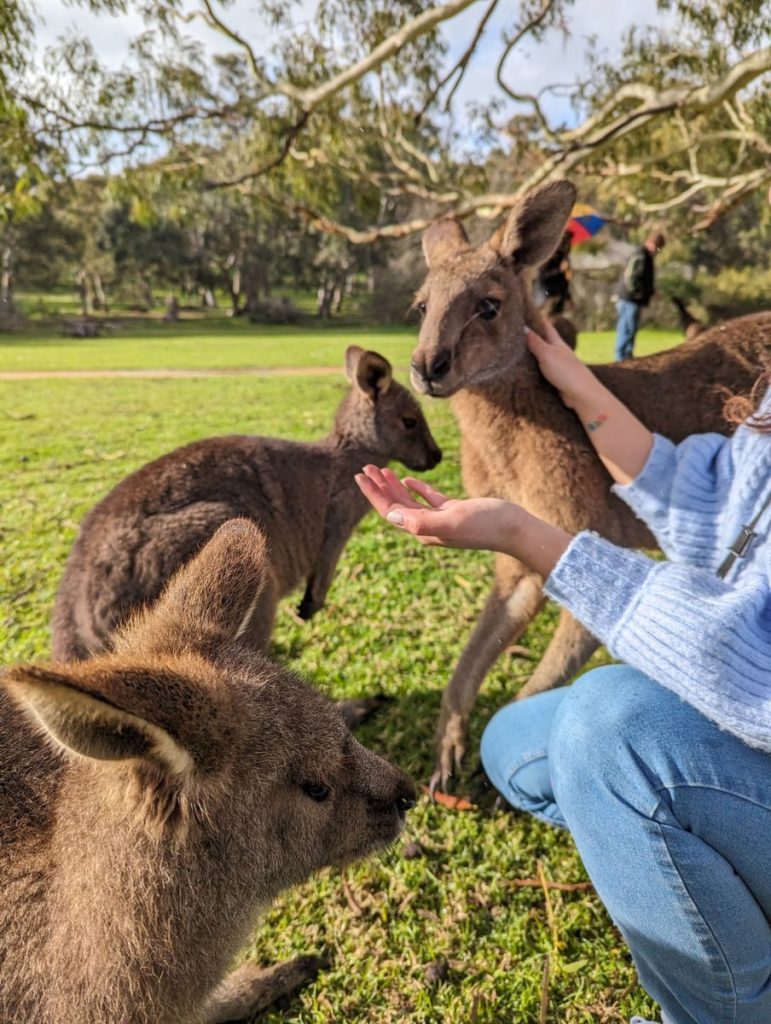
A person interacts with kangaroos in a lush park setting, showcasing wildlife engagement.
Photo by Nanling Liu on Pexels

Wildlife authorities discourage feeding kangaroos because animals that associate people with food may lose their natural caution. A large male that confidently approaches humans can become difficult to manage, particularly if it expects food and does not receive it.

Do Not Square Up

Man sitting on pavement feeding a kangaroo in NSW, Australia park.
Photo by Bjørn Nielsen on Pexels

People should not imitate kangaroo fighting postures, attempt to punch the animal or approach for a close photograph. The aim should be to reduce confrontation by moving away calmly, keeping obstacles between yourself and the kangaroo and leaving it a clear route to escape.

Dogs Can Trigger Conflict

Close-up of an Eastern Grey Kangaroo in New South Wales, Australia
Photo by Stuart Robinson on Pexels

Kangaroos may perceive dogs as predators. A kangaroo pursued by a dog can turn and defend itself, creating danger for both the pet and an owner attempting a rescue. Dogs should be restrained around wild kangaroos and kept away from resting animals.

Distance Prevents the Fight
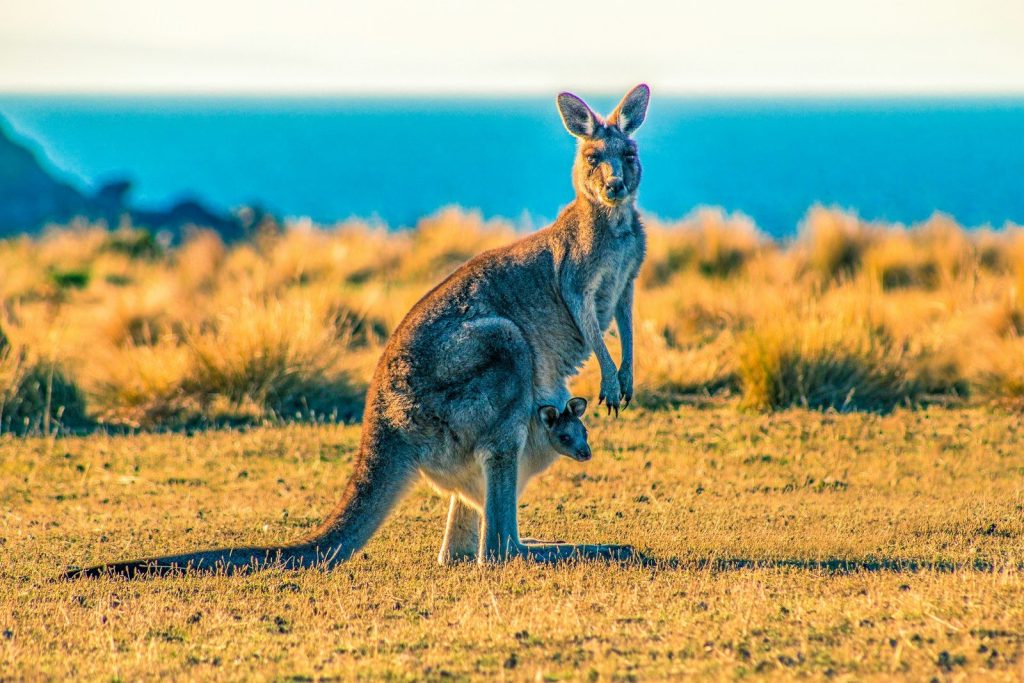
kangaroo with joey on grass field during day
Photo by Ondrej Machart on Unsplash

A six-foot kangaroo standing upright makes dramatic footage, but a close encounter should not become entertainment. The safest outcome is one where the animal never feels forced to grapple, kick or defend itself against a person.

Featured Image: Photo by Taylor Johnson on Unsplash

Post navigation

Previous: How Electric Eels Shock and Control Their Prey
Next: Baby Elephant Linh Mai Takes Her First Steps

Related Posts

Detailed close-up of a rattlesnake coiled on earthy terrain in Ciudad de México.

U.S. Venomous Snakes That Need Immediate Medical Care

August 10, 2026August 10, 2026 Jake
Three saltwater crocodiles swim in a zoo enclosure, showcasing wildlife conservation.

Why Crocodile Feeding Requires Heavy Safety Barriers

August 9, 2026August 9, 2026 Jake
Vulture walking on grass, showcasing feathers and natural habitat.

10 Birds Capable of Seriously Injuring People

August 9, 2026 Jake

Leave a Reply Cancel reply

Your email address will not be published. Required fields are marked *

Recent Posts

  • Baby Elephant Linh Mai Takes Her First Steps
  • Why a Kangaroo May Challenge a Human
  • How Electric Eels Shock and Control Their Prey
  • How Giraffes Escape Attacks From Lions
  • How Orcas Turn Great White Sharks Into Prey
Copyright All Rights Reserved | Theme: BlockWP by Candid Themes.