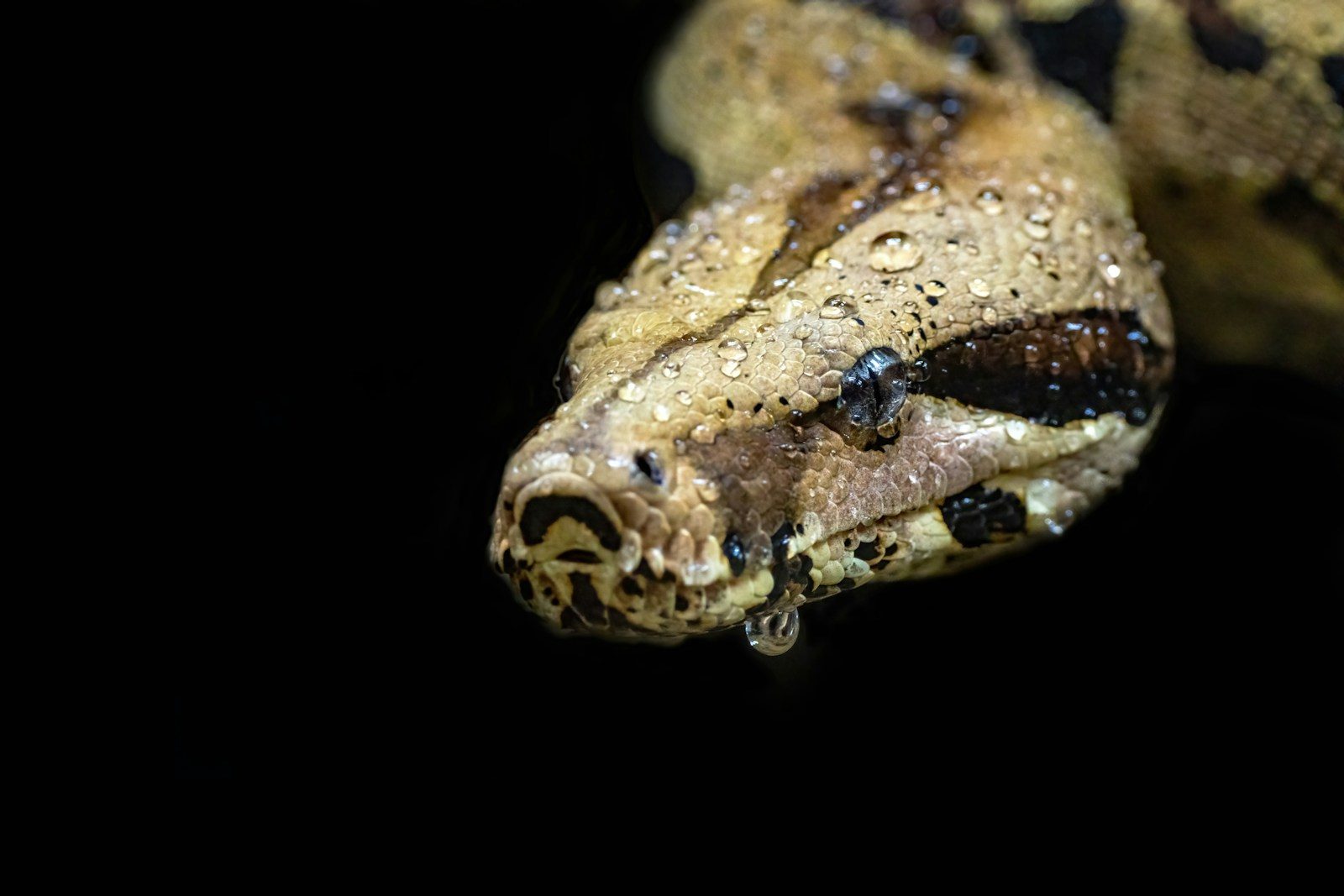
A huge python striking from close range can look almost instantaneous, especially in ordinary video. But the exact viral clip behind this title cannot be authenticated reliably from the information available, so its species, location, target, and outcome should not be invented. What can be explained accurately is the biomechanics that allow pythons to accelerate the front of the body with remarkable speed.
Pythons are nonvenomous ambush predators. They combine concealment, sensory information, a rapid forward strike, backward-curving teeth, and constriction to capture prey. Researchers studying blood pythons with high-speed cameras have measured how the body produces these sudden movements. The science shows that the dramatic strike is only one stage in a sequence that begins with stillness and ends, when successful, with the snake securing control of its prey.
Ambush Hunting

Many pythons rely heavily on ambush rather than chasing prey over long distances. A concealed snake waits until an animal moves within effective range, then launches the head and front of the body forward. San Diego Zoo describes pythons as nonvenomous ambush predators whose camouflage helps them remain unnoticed before an attack. The stillness before the movement is part of the hunting strategy. A strike that appears sudden to a viewer may follow a much longer period of positioning, sensing, and waiting for the target to come close enough.
Strike Mechanics

High-speed research on juvenile blood pythons shows that a strike depends on more than simply throwing the head forward. The snake must generate strong ground reaction forces while maintaining enough friction to keep the body from slipping. Researchers found that blood pythons could strike effectively on a flat surface without pushing against a wall or other object. As the head and neck accelerated forward, parts of the rear body and tail moved backward, helping balance momentum and support the rapid motion toward the target.
Rapid Acceleration
There is no single universal python strike speed because performance changes with species, body size, temperature, surface, motivation, and how researchers measure the movement. The blood python study focused on velocity, acceleration, force, and strike duration under controlled conditions. Its results showed that these snakes can produce very high accelerations over a short distance. That distinction matters. A python is not racing through the landscape at strike speed; it is generating an explosive burst across the limited space separating its head from nearby prey or a perceived threat.
Curved Teeth

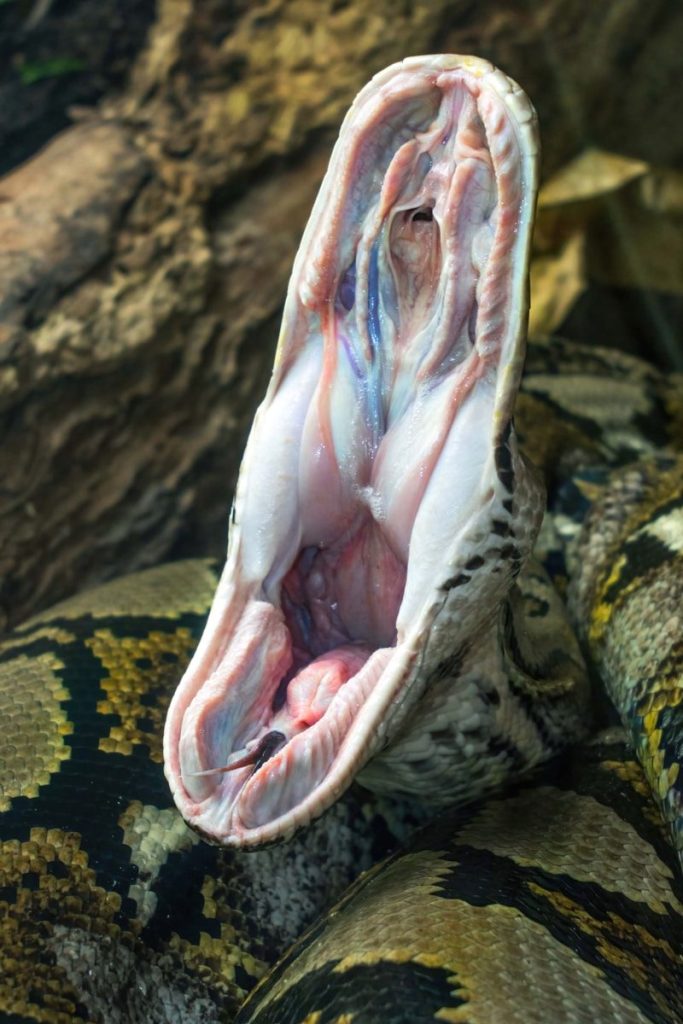
Once a constricting snake reaches prey, backward-curving teeth help maintain the grip. Smithsonian describes boa constrictor teeth as small and hooked, preventing struggling prey from easily pulling free while the snake brings its body around the victim. Pythons use the same general mechanical principle even though tooth number and arrangement vary by species. These are not venom-delivery fangs. Their job is to seize and hold. For a person, that means even a nonvenomous python bite can cause deep punctures and lacerations if a large snake is handled carelessly.
Constriction

Constriction is more complex than simply squeezing the air out of prey. A 2015 physiological study of boa constrictors found that pressure rapidly disrupted circulation in rats, leading to cardiovascular failure. That work involved boas rather than pythons, so the exact measurements should not be copied automatically to every constricting species. Still, it changed the general understanding of how powerful constriction can disable prey. After a successful bite, a python’s coils apply pressure around the body, making the strike only the beginning of the capture sequence rather than the entire attack.
Defensive Strikes

A python strike is not always a feeding attempt. Snakes can also strike defensively when they feel threatened, restrained, cornered, or handled. The blood python biomechanics study deliberately examined defensive strikes because the animals reliably performed them in the experimental setting. That matters when interpreting viral footage. A short clip of a python lunging does not reveal its motivation by itself. Without knowing what happened before the camera started, a viewer cannot safely conclude that the snake was hunting, trying to eat someone, or responding to a specific unseen provocation.
Large Pythons
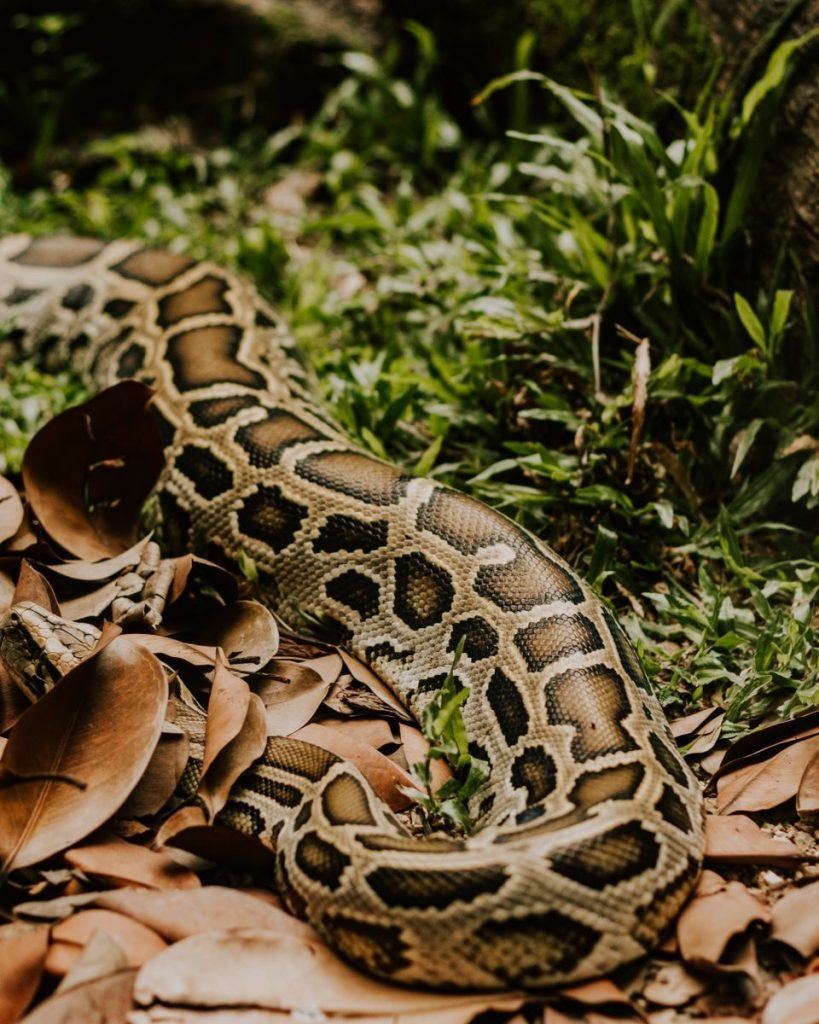
Some python species reach impressive sizes, which increases the consequences of close handling even when the snake is not venomous. Burmese pythons, for example, can exceed 17 feet in Florida, according to the U.S. Geological Survey. Large constrictors have powerful bodies, numerous teeth, and the ability to deliver forceful defensive bites. Size alone does not make an individual likely to attack a person, however. Risk depends heavily on circumstances. Wild animals should be given space, and unusually large snakes should never be approached or restrained by untrained people.
Human Risk

The U.S. Geological Survey has assessed wild Burmese pythons in Everglades National Park as posing a low overall risk to people. USGS reported several defensive strikes at field biologists over a decade, but none involved constriction, and the agency states that no human deaths have been attributed to wild-living Burmese pythons in Florida. Low risk does not mean no risk. The sensible response is to avoid provoking, cornering, feeding, or handling large wild pythons and to follow local wildlife guidance when one is encountered.
Featured Image: Photo by David Clode on Unsplash