The “2-ton” claim is not supported by the strongest government sources. Saltwater crocodiles are the world’s largest living reptiles, but Australian authorities describe exceptional animals exceeding 1,000 kilograms, not routinely reaching two metric tons.
Their explosive movement is real. A crocodile concealed almost entirely underwater can accelerate suddenly, using its tail and hindquarters to drive upward toward prey or an object above the surface.
Saltwater Crocodile Size
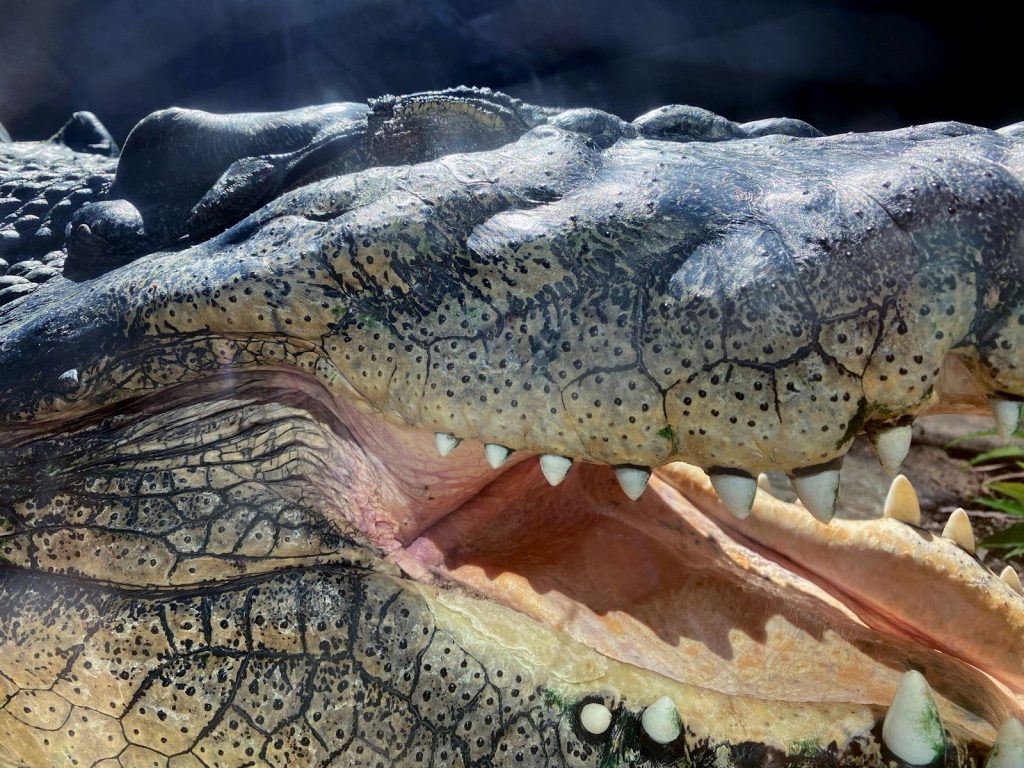
Adult male saltwater crocodiles can reach extraordinary dimensions. Parks Australia says large males may grow to around six metres and exceed 1,000 kilograms, while Northern Territory material identifies the species as the largest living reptile.
That is enormous, but still far below the unsupported idea that ordinary giant crocodiles weigh two metric tons. Size estimates become exaggerated easily when most of an animal remains underwater. An exceptionally large crocodile already possesses more than enough mass and strength to make a vertical surge spectacular without doubling its scientifically supported weight.
Hidden Below the Surface
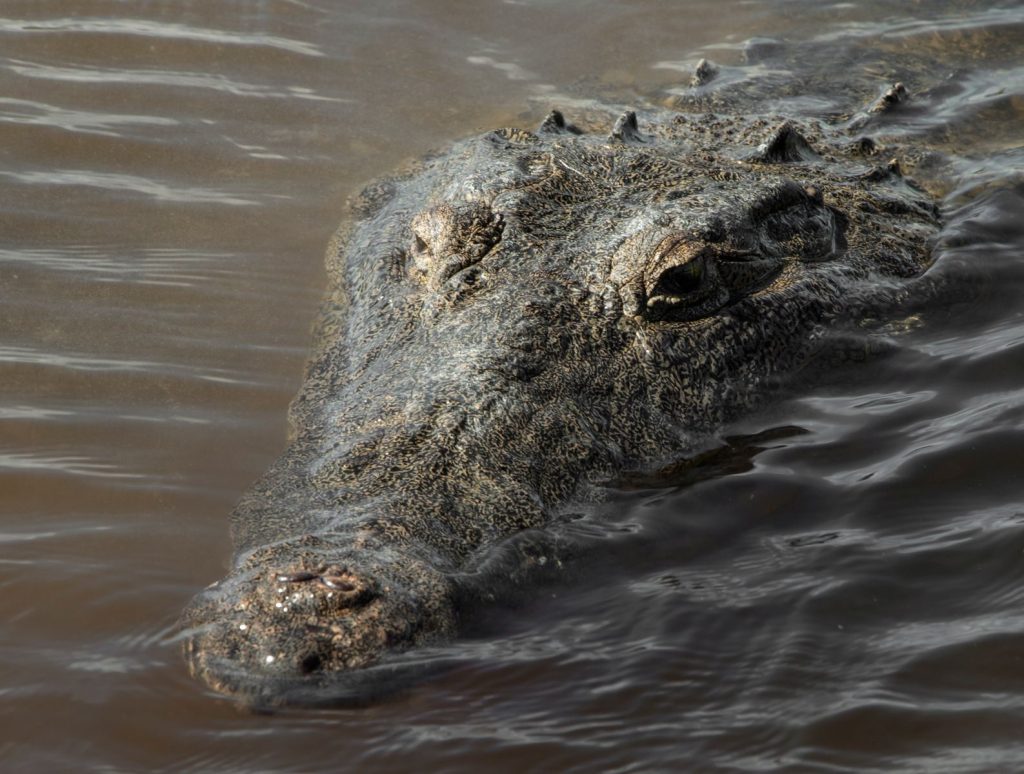
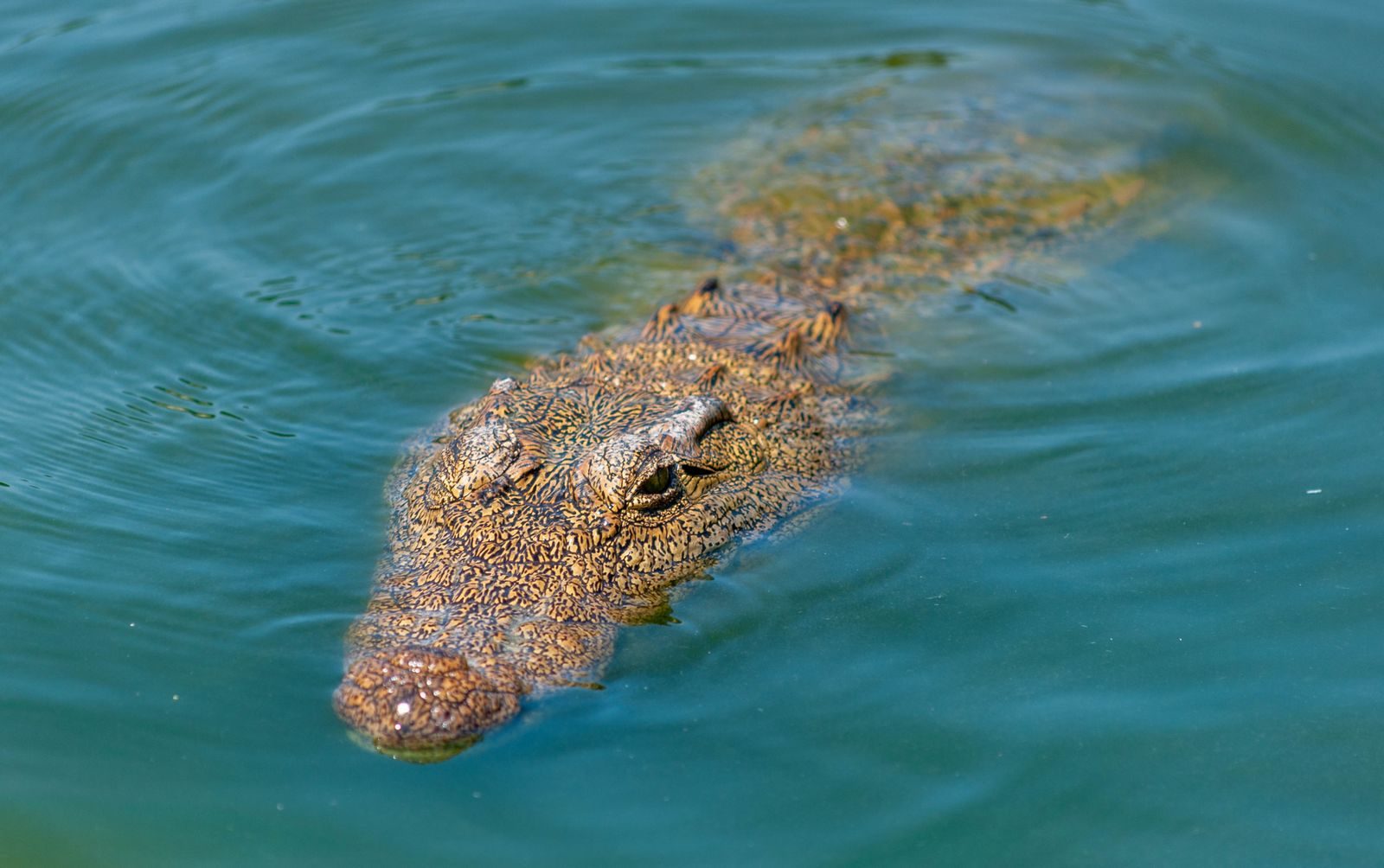
Crocodiles are exceptionally difficult to judge when floating. Eyes, nostrils, and part of the skull can remain above water while most of the body is concealed, letting a large animal observe its surroundings without advertising its true size.
That low profile is useful for ambush. Prey at the water’s edge may see little more than a head before the crocodile accelerates. Northern Territory safety guidance treats saltwater crocodiles as a serious threat precisely because their size, aquatic concealment, and short-burst speed can turn an apparently quiet shoreline into dangerous habitat.
Powerful Crocodile Tail

A saltwater crocodile’s muscular tail provides much of its propulsion in water. Rapid lateral movement pushes against the surrounding water, accelerating the animal forward or upward while its streamlined body follows behind.
A vertical feeding demonstration can make the crocodile appear to “jump,” but it is not springing from solid ground. The animal converts underwater acceleration into upward momentum before breaking through the surface. Its movement becomes especially impressive because a body weighing hundreds of kilograms can emerge remarkably quickly once the tail begins producing maximum short-burst thrust.
Short-Burst Speed

Northern Territory authorities report that saltwater crocodiles can swim at approximately 24–29 kilometres per hour during short bursts. That speed is not something they maintain continuously, but it is ideal for ambush attacks occurring over relatively short distances.
A prey animal does not need to be chased across a river. The crocodile benefits by getting close while hidden, then covering the final distance rapidly. That strategy explains why safety advice focuses strongly on staying back from water edges rather than assuming a visible crocodile is too distant or sluggish to matter.
Ambush at the Waterline
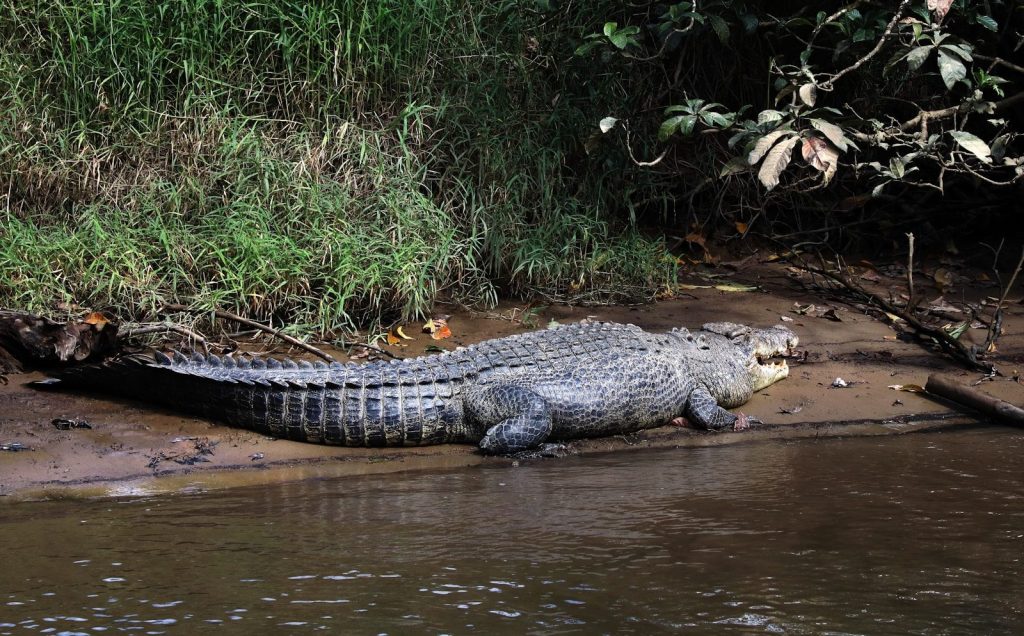
Saltwater crocodiles are opportunistic predators capable of taking fish, reptiles, birds, and mammals. Larger individuals can tackle substantial prey when animals come close enough to the water for an effective ambush.
The waterline provides the crocodile with concealment and propulsion simultaneously. An animal drinking or crossing may be vulnerable before it detects the predator. The strike can therefore appear instantaneous in video footage even though the crocodile may have spent a long period positioning itself beforehand. The explosive movement is simply the final stage of a patient hunting strategy.
Crocodiles Live Inland Too
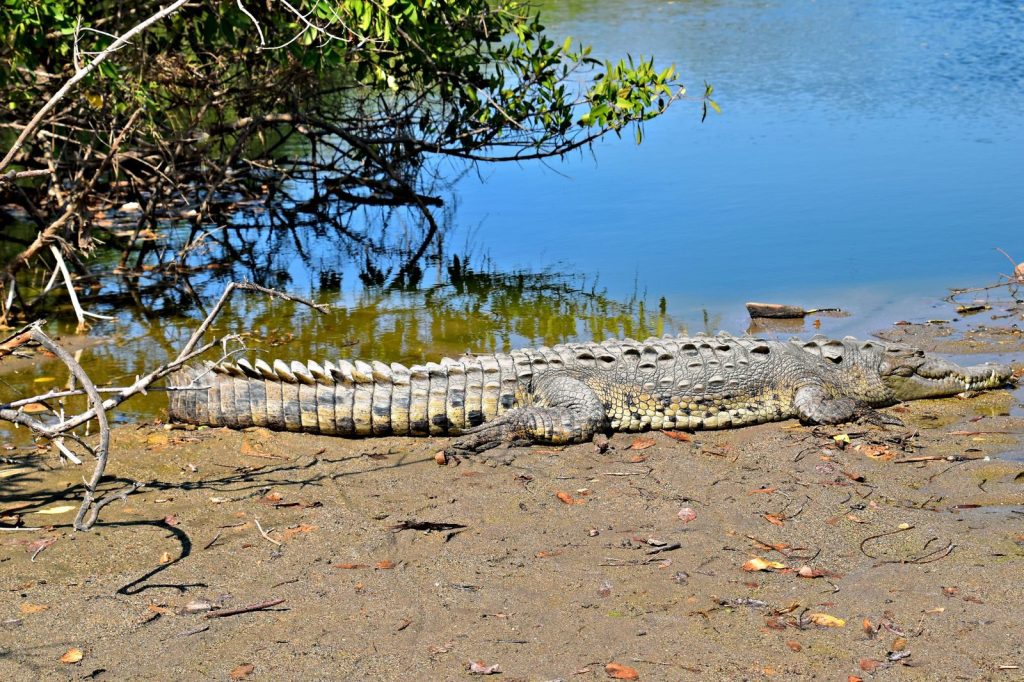
The name “saltwater crocodile” can be misleading. These reptiles tolerate both salt and fresh water and occur in coastal regions, estuaries, rivers, floodplains, and freshwater wetlands across northern Australia and other parts of their Indo-Pacific range.
That flexibility means people cannot assume an inland-looking waterhole is automatically crocodile-free. Australian “Be Crocwise” guidance exists because dangerous animals can move between connected waterways and appear in locations where visitors may not immediately expect them. Local warnings and closures should always override assumptions based on habitat appearance.
Large Crocodiles Are Dangerous

A mature saltwater crocodile has a body built for overpowering substantial prey. Size, jaws, teeth, aquatic acceleration, and stealth combine to create a serious danger to humans in occupied habitat.
Northern Territory authorities explicitly describe the species as a threat to people and warn visitors to behave cautiously around crocodile country. The risk does not require a mythical two-ton specimen. A crocodile weighing several hundred kilograms already has an overwhelming physical advantage over a person, especially at the water’s edge where the animal can attack from concealment.
Stay Back From Crocodile Water

The safest way to experience saltwater crocodiles is from designated viewing locations or professionally managed tours operating under local rules. Never stand at an unprotected water edge simply because no crocodile is visible.
These predators evolved to approach without being detected. Northern Territory guidance warns that saltwater crocodiles are capable swimmers and serious human hazards. Their sudden upward surges demonstrate the exact problem: by the time a crocodile “explodes” from the water, the crucial safety decision—how close to stand—has already been made.
Featured Image: Photo by Steward Masweneng on Pexels