The United States has rattlesnakes, copperheads, cottonmouths, and coral snakes capable of medically significant envenomation. Around 7,000 to 8,000 people are bitten by venomous snakes nationally each year, with roughly five deaths.
There is no safe countdown after a bite. Symptoms may appear quickly or develop over hours, so suspected venomous bites require immediate professional medical evaluation.
Eastern Diamondback Rattlesnake
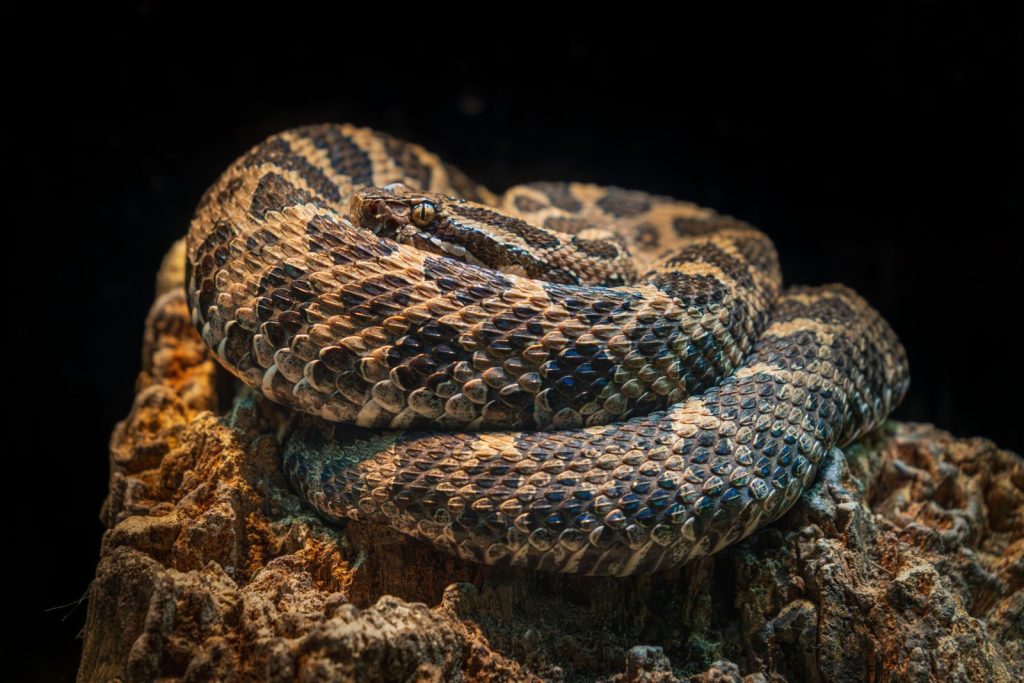
The eastern diamondback is a very large, heavy-bodied rattlesnake of the southeastern United States. Its bite can produce severe pain, swelling, tissue injury, bleeding abnormalities, and systemic illness. Florida Museum guidance classifies bites as dangerous and calls for immediate hospital treatment.
Western Diamondback and Mojave Rattlesnakes

Western rattlesnakes include species capable of delivering substantial venom through long hinged fangs. Mojave rattlesnake venom may include important neurotoxic effects in some populations, while other rattlesnake bites produce extensive swelling, bleeding problems, and muscle weakness. Waiting to see how bad symptoms become is unsafe.
Timber Rattlesnake

Timber rattlesnakes occur across parts of the eastern United States. They normally avoid people, but a bite can be very dangerous. Florida Museum guidance advises immediate medical treatment and notes that most encounters happen when a snake is stepped on or deliberately disturbed.
Pygmy Rattlesnake
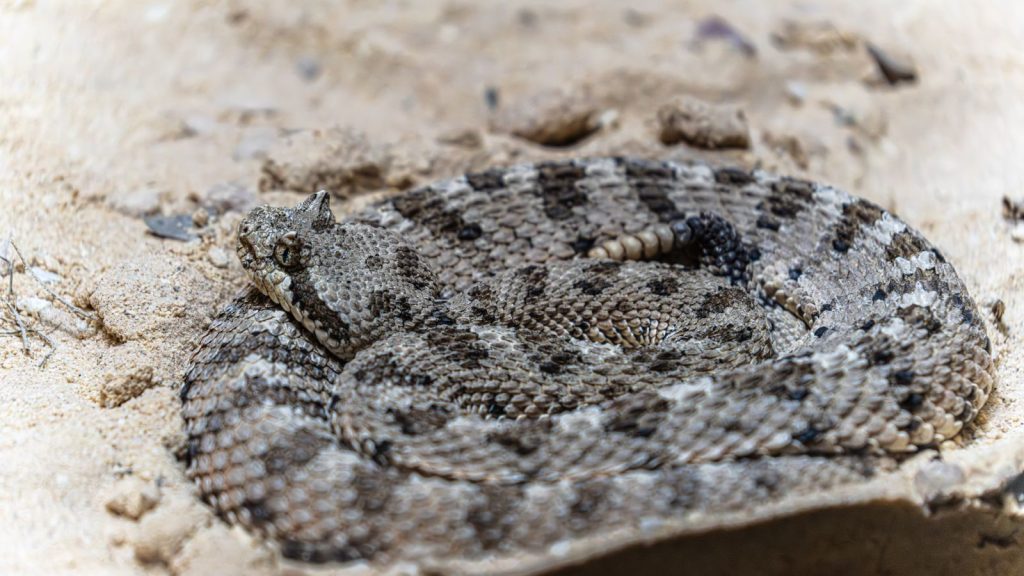
Pygmy rattlesnakes are much smaller than diamondbacks, but size does not make a bite harmless. Pain and swelling may progress after envenomation, and the victim cannot reliably judge venom dose from fang marks alone. Any suspected rattlesnake bite deserves urgent medical evaluation.
Copperhead

Copperhead bites commonly cause pain, swelling, bruising, redness, and sometimes blistering. Serious systemic illness is less common than with many rattlesnake bites, but symptoms can continue evolving for eight to twelve hours. Children, older adults, and medically vulnerable patients may face greater risk.
Cottonmouth
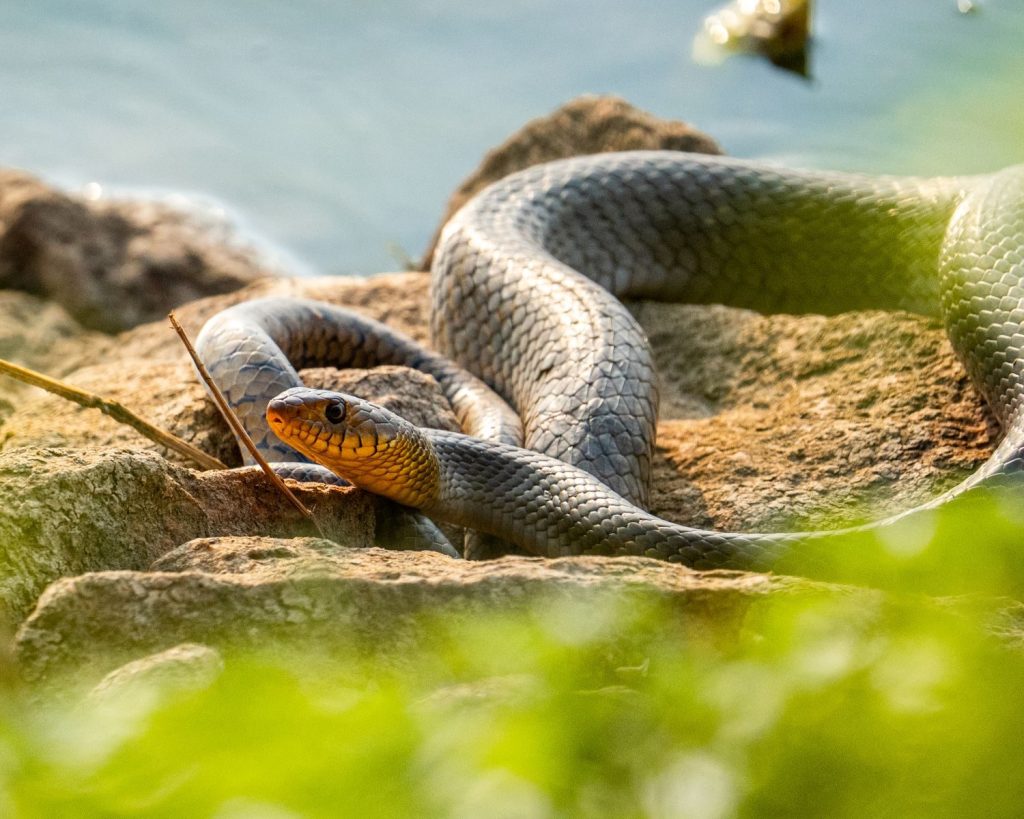
Cottonmouths are semiaquatic pit vipers found mainly in the southeastern United States. Bites often cause significant pain and progressive swelling, and some patients require antivenom. Contrary to a persistent myth, cottonmouths generally prefer to escape rather than chase people.
Eastern and Texas Coral Snakes

Coral snake bites may initially produce little pain or swelling, creating a dangerous false sense of security. Neurological symptoms can be delayed for hours and then progress to weakness and respiratory paralysis. Suspected bites should be monitored in hospital even when the wound appears minor.
Every Bite Is an Emergency

Do not cut the wound, suck venom, apply ice, or use a tourniquet. Move away from the snake, stay as still as practical, remove constricting items, and obtain emergency medical help. As of July 2026, FDA extended one North American coral-snake antivenom lot through December 31, 2026.
Featured Image: Photo by Miguel Á. Padriñán on Pexels