The “177 times in one hour” claim is based on real research, but the viral wording is misleading. A 1974 study of East Pacific red octopuses found an average of 2.95 appearance changes per minute during 7.5 hours of recorded foraging.
That works out to about 177 changes per hour on average; it was not one uniquely identified octopus changing color exactly 177 times in a single filmed hour. The underlying ability is still extraordinary and reveals how dynamic octopus camouflage can be.
East Pacific Red Octopus

The study involved the East Pacific red octopus, Octopus rubescens, a small shallow-water species found along the Pacific coast of North America. Its appearance is highly variable because the animal can rapidly alter skin pattern and brightness while moving across different backgrounds and approaching prey.
In the 1974 experiments, researchers recorded color and body-pattern changes during attacks on food-related and conditioned stimuli. Their analysis produced the often-repeated average of 2.95 phenotype changes per minute. Multiplying that rate by 60 gives roughly 177 changes per hour, which explains the modern headline.
Octopus Chromatophores

Rapid color change begins with thousands of pigment organs called chromatophores in the skin. Each contains an elastic pigment-filled sac connected to tiny muscles and nerves. When muscles pull the sac outward, more pigment becomes visible; when they relax, the colored area contracts again.
This system is controlled neurally, allowing cephalopods to alter patterns with remarkable speed. Different chromatophores contain pigments such as yellows, reds, browns, and dark tones. By activating combinations across the body, an octopus can create mottled, uniform, disruptive, or high-contrast appearances rather than simply switching between two colors.
Reflective Skin Cells
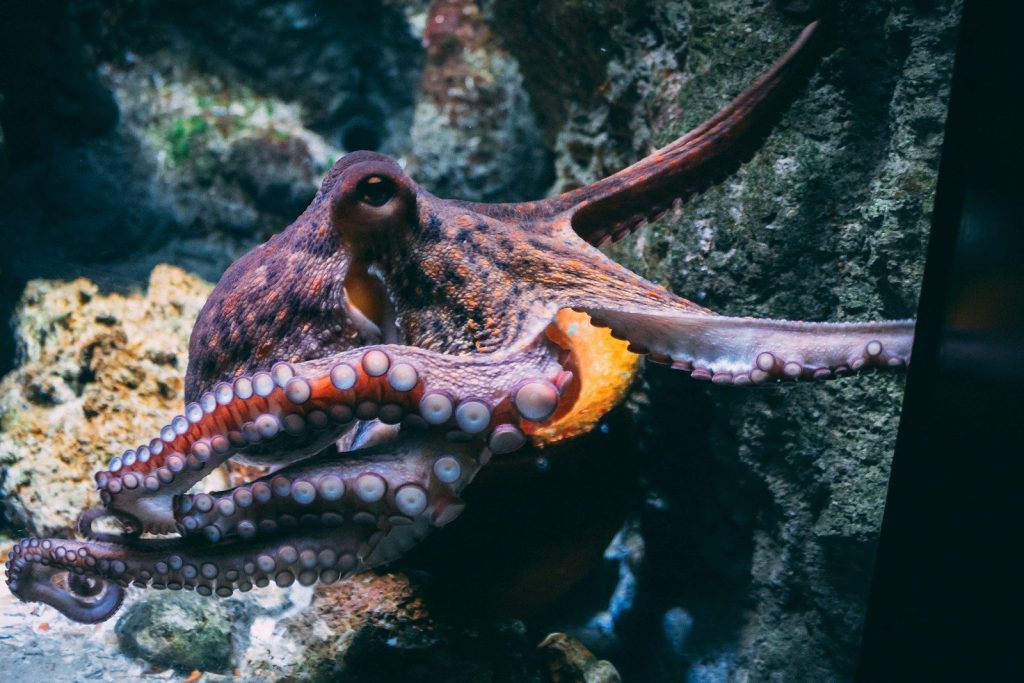
Pigment cells are only part of the visual system. Many cephalopods also possess reflective cells called iridophores and leucophores beneath the chromatophores. Iridophores can produce shimmering structural colors, while leucophores reflect surrounding light and can contribute pale or white-looking areas.
Working together, these layers expand the range of appearances available to the animal. The effect is more sophisticated than painting the skin one shade. An octopus can combine pigment, reflected light, brightness, and pattern across different parts of its body, creating camouflage suited to complex seafloor backgrounds across many changing reef surfaces.
Octopus Skin Texture
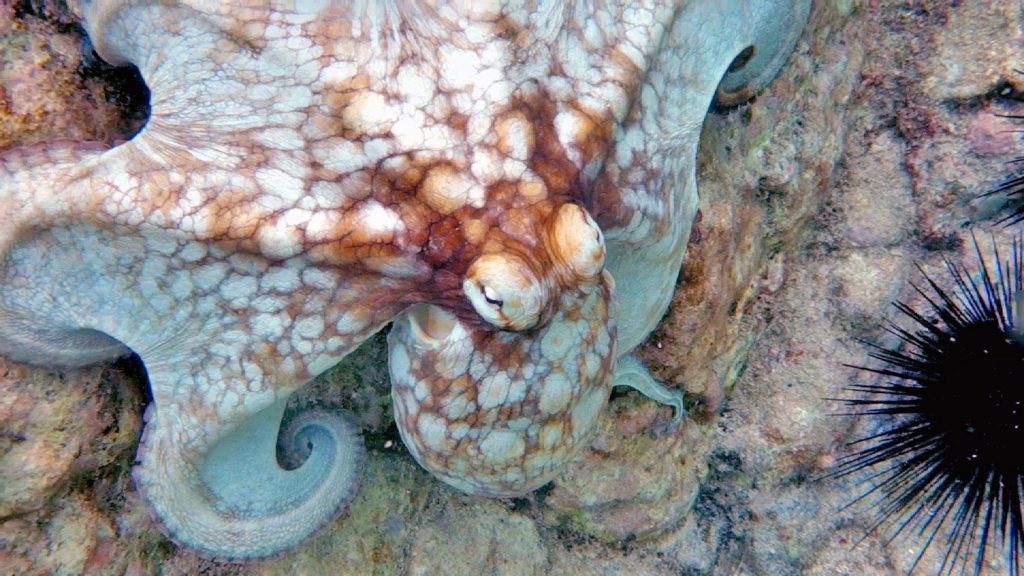
Octopus camouflage can involve texture as well as color. Muscular structures in the skin can raise projections called papillae, breaking up the animal’s smooth outline so it resembles rocks, algae, coral, or other irregular surfaces. Flattening those structures produces a smoother appearance again.
This matters because predators do not identify prey by color alone. Shape, edges, shadows, and surface texture can all reveal an animal. By altering several visual features together, an octopus can reduce the contrast between its body and surroundings. The result is a three-dimensional disguise rather than a simple color match.
Hunting Camouflage

Camouflage helps an octopus avoid predators, but it can also assist while approaching prey. The 1974 Octopus rubescens research examined appearance changes during attacks, linking rapid visual shifts with active foraging. A moving octopus may repeatedly encounter sand, rock, shells, vegetation, and shaded crevices.
Each change in background can favor a different appearance. That helps explain why a high rate of pattern switching is biologically plausible during hunting. The famous 177 figure should therefore be understood as an average rate from observed foraging behavior, not a record-setting performance by one animal.
Color Change Energy

Rapid camouflage looks effortless, but recent research shows that activating the chromatophore system has a substantial metabolic cost. A 2024 PNAS study measured oxygen consumption in octopus skin and modeled the energetic demand associated with expanding large numbers of chromatophores at once.
The researchers concluded that full chromatophore activation could require nearly as much energy as the octopus uses for all of its resting metabolism. That finding gives rapid color change an important tradeoff: camouflage can provide major survival benefits, but repeatedly operating the system is not biologically free during active periods.
Octopus Display Patterns

Cephalopod skin patterns are used for more than disappearing against the background. Depending on the species and situation, dramatic changes can also function in warning displays, courtship, social signaling, or attempts to startle a predator. Some patterns deliberately make the animal easier to see.
That flexibility is why “color change” is a broader term than camouflage. The same skin machinery can help an octopus hide in one moment and stand out in another. Researchers study body patterns as behavior because changes in contrast, texture, posture, and movement can carry different functions depending on context.
The 177 Figure

The strongest version of the viral claim says an octopus was watched changing color exactly 177 times during one remarkable hour. The original research does not support that wording. Instead, scientists calculated an average rate of 2.95 phenotype changes per minute from 7.5 hours of videotaped foraging.
Converted to an hourly rate, that average is about 177. The corrected version is still impressive because it shows how frequently an actively foraging octopus can alter its appearance. Keeping the distinction matters: a calculated average from multiple observations is not the same as a single documented one-hour performance.
Featured Image: Photo by Jeffry Surianto on Pexels