Eagles and hawks belong to a diverse group of birds of prey equipped with keen vision, hooked bills, powerful feet, and talons. Their body plans vary because different species hunt in very different habitats.
Some soar over mountains, others ambush from roadside perches, and forest hawks pursue prey between trees. Their shared raptor equipment becomes specialized for different versions of the same challenge: finding, catching, and eating food.
Raptor Eyes

Vision is one of the most important senses used by hawks and eagles. Smithsonian describes full-color vision as the bald eagle’s most developed sense, while raptors generally depend heavily on spotting prey from considerable distances.
Sharp eyesight is especially valuable when soaring high over open habitat. Detecting movement below allows a bird to begin positioning itself long before prey realizes danger is nearby. Vision works together with flight skill rather than functioning as a magical long-range zoom lens.
Powerful Talons
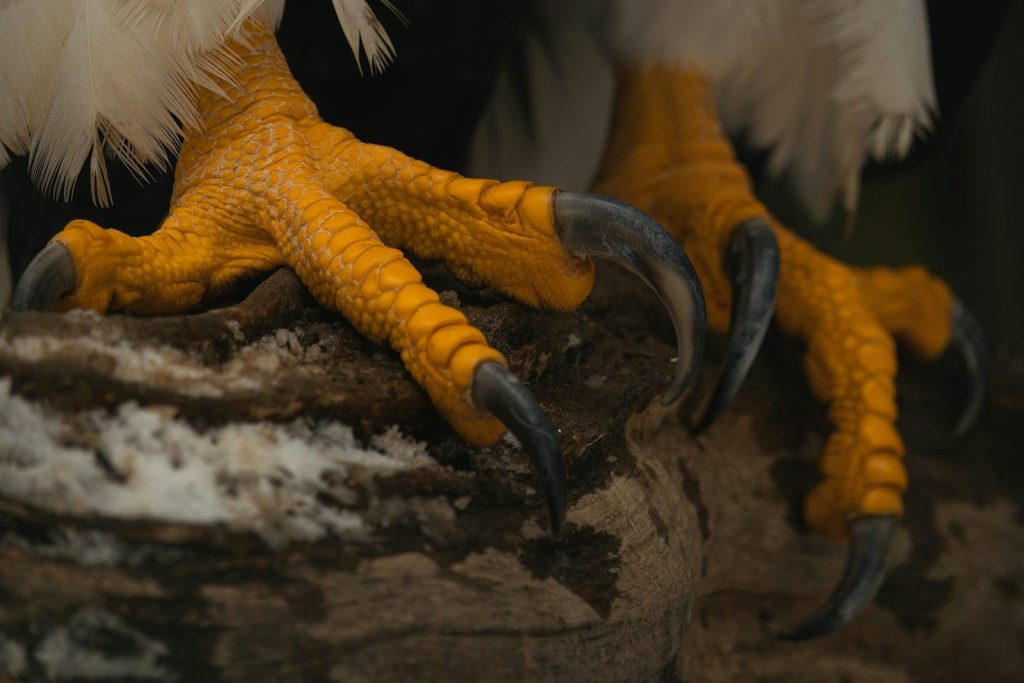
Most hawks and eagles have strong feet ending in curved talons built to grasp prey. Size and shape vary between species because seizing a fish requires different mechanics from capturing a rabbit or small woodland bird.
Talons are often the main weapons during a hunt. A raptor can strike with its feet while keeping the vulnerable head farther from struggling prey. Once the animal is controlled, the sharply hooked bill becomes important for tearing food into manageable pieces.
Hooked Beaks

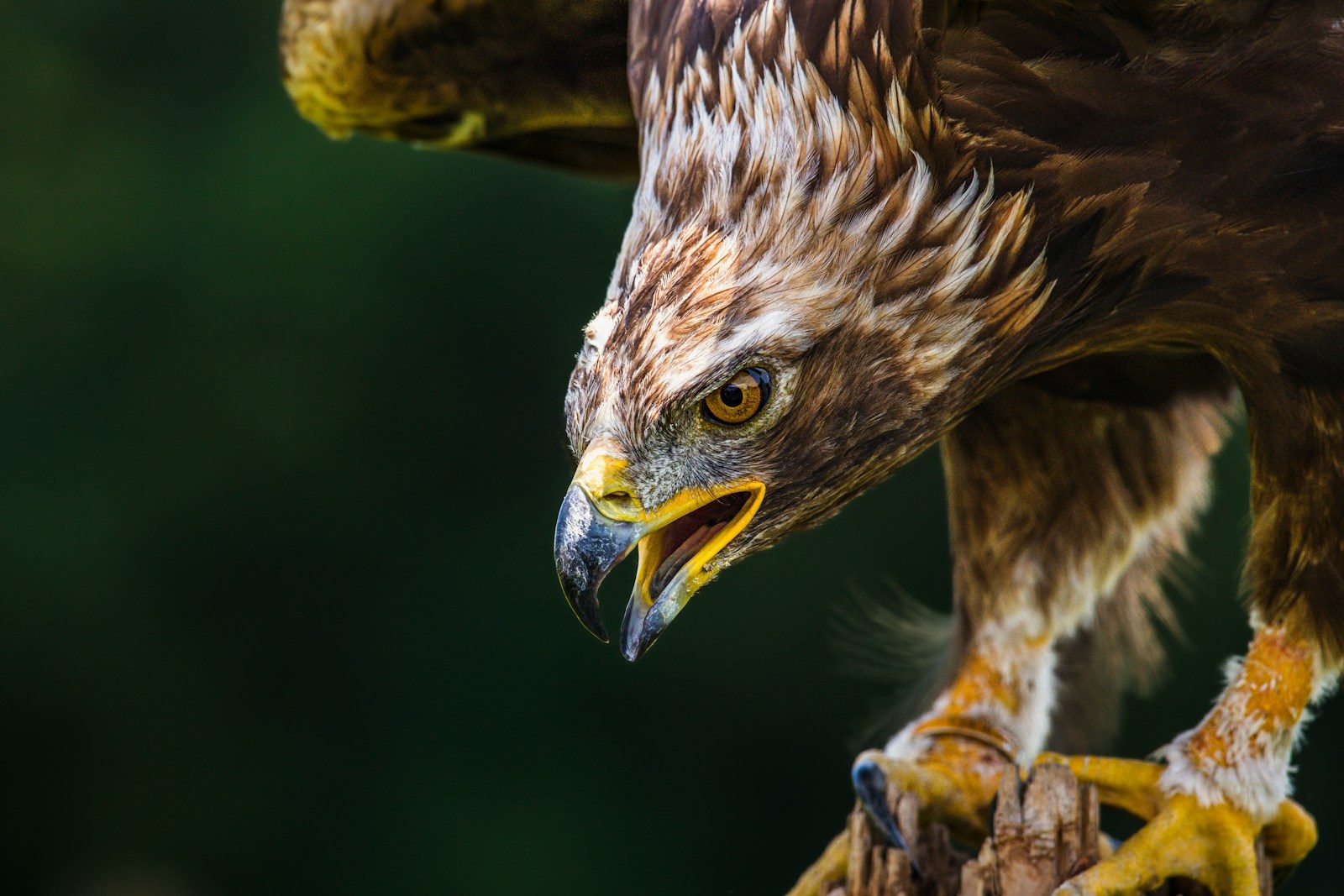
The hooked bill shared by hawks and eagles is built for feeding rather than performing the initial grab in most hunts. After prey is secured with the feet, the beak can tear flesh into pieces that are easier to swallow.
Beak size varies dramatically. A large eagle dealing with mammals or fish needs different equipment from a small hawk specializing in birds or rodents. The familiar hooked shape is therefore a shared raptor feature expressed at different scales.
Golden Eagle Hunt
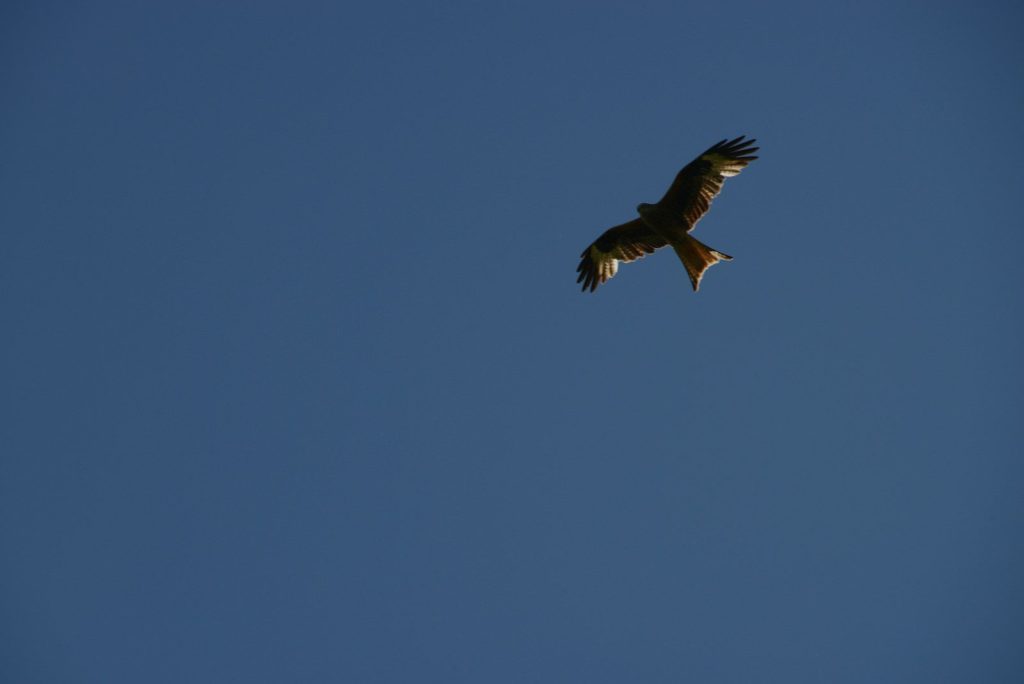
Golden eagles are among the largest and most agile raptors of North America. Cornell describes them soaring over open country or diving in pursuit of jackrabbits and other small to medium-sized mammals.
They can adjust hunting technique to terrain, sometimes diving from high above, ambushing from lower positions, or flying low over hills to conceal their approach. That flexibility matters because one hunting style cannot work equally well across mountains, grasslands, cliffs, and open desert.
Bald Eagle Fishing
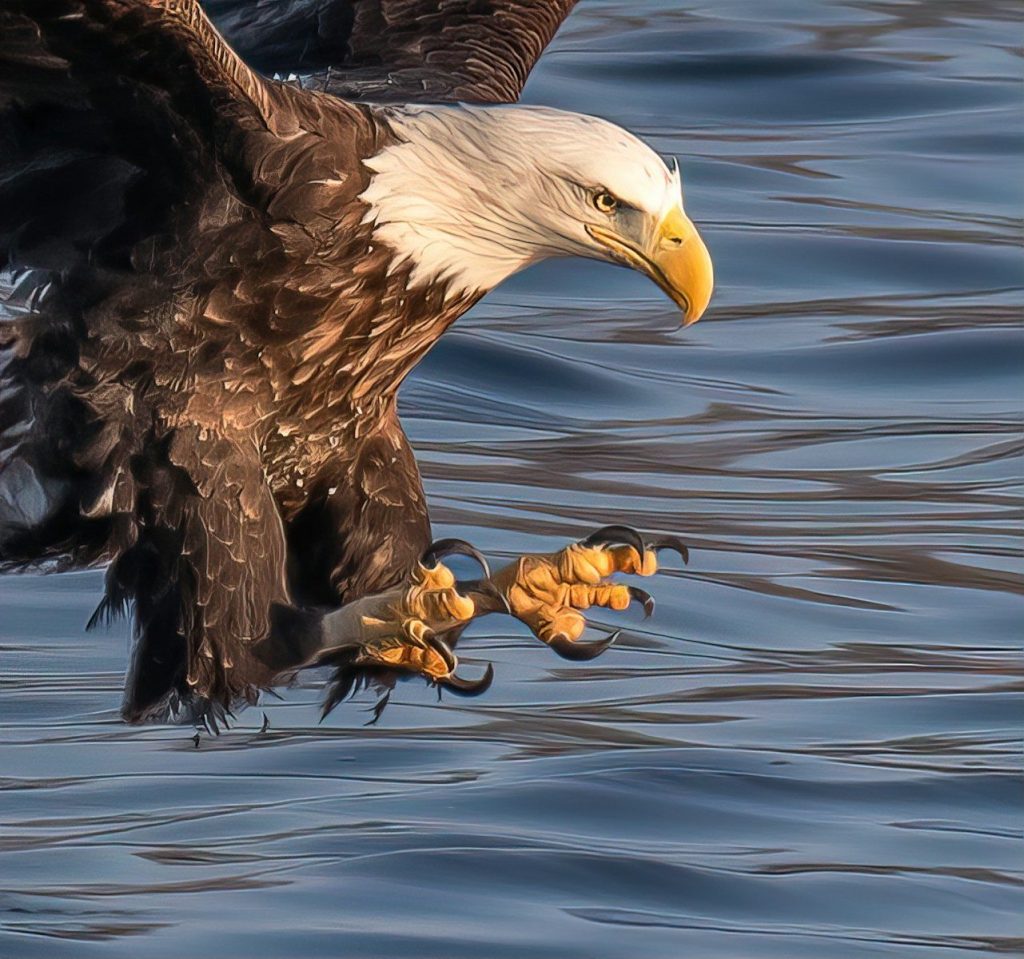
Bald eagles are closely associated with water and often take fish near the surface. Unlike ospreys, they typically do not plunge deeply into the water. Instead, they seize accessible fish with their feet.
They are also opportunistic enough to steal. Bald eagles may harass an osprey carrying a fish until the smaller bird drops its catch, then grab the falling meal. This behavior shows that powerful predators do not rely on hunting alone when another efficient route to food becomes available.
Red-Tailed Hawk

Red-tailed hawks commonly use elevated perches to watch open ground for rodents, rabbits, and other prey. Cornell notes that they are also frequently seen circling on broad wings above fields and roadsides.
Perch hunting saves energy. Instead of constantly chasing prey, the hawk can wait until movement reveals an opportunity, then launch a short attack. This combination of patience and sudden acceleration makes telephone poles, trees, fence posts, and similar lookout points useful parts of a hunting landscape.
Forest Hawk Hunt
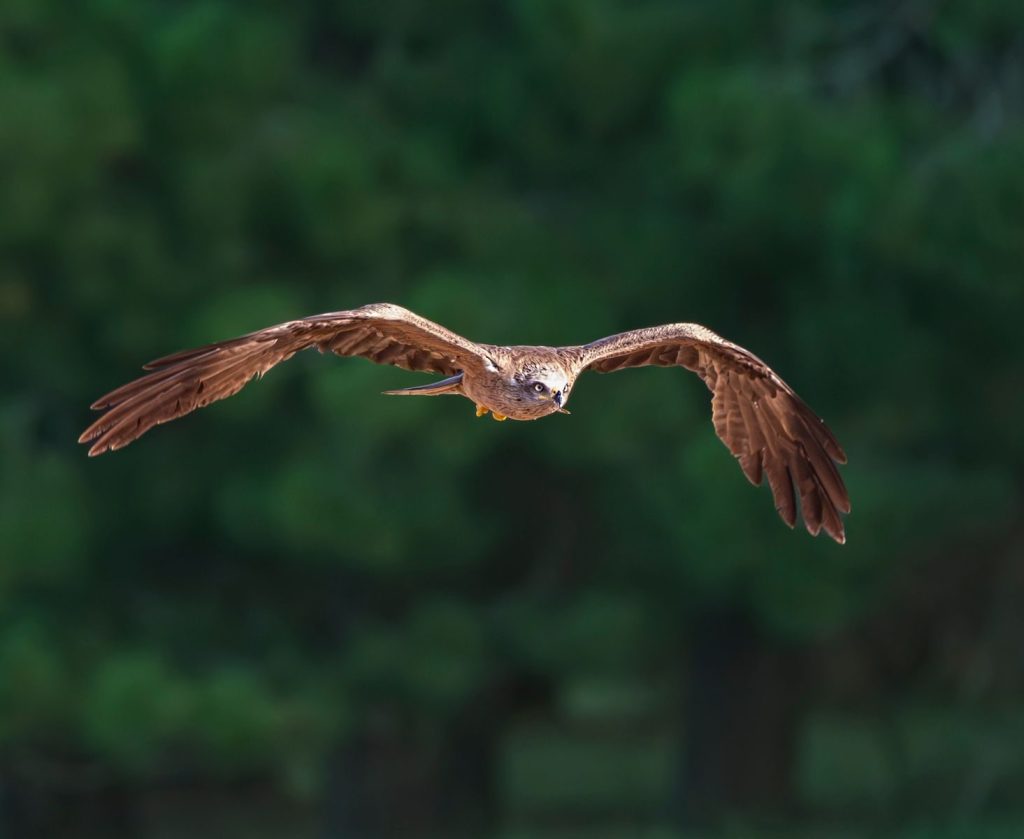
Forest hawks face a very different challenge from eagles hunting across open country. Trees restrict flight paths, prey can vanish behind vegetation, and successful pursuit may depend on rapid turns rather than one enormous dive.
Sharp-shinned hawks are specialists in this kind of hunting. Their compact wings and long tails help them maneuver through wooded habitat while chasing smaller birds. Their design shows why no single body shape defines the “best” raptor; success depends on matching flight equipment to habitat and prey.
Eagle Conservation

Bald eagles provide one of North America’s best-known wildlife recovery stories. After severe declines associated with persecution, habitat problems, and contaminants such as DDT, protections helped their population recover enough for removal from the U.S. endangered species list in 2007.
They remain protected under other federal laws, including the Bald and Golden Eagle Protection Act. Their recovery demonstrates that even powerful predators can be vulnerable when human pressures accumulate, and that legal protection and habitat management can reverse some declines.
Featured Image: Photo by Jeremy Hynes on Unsplash