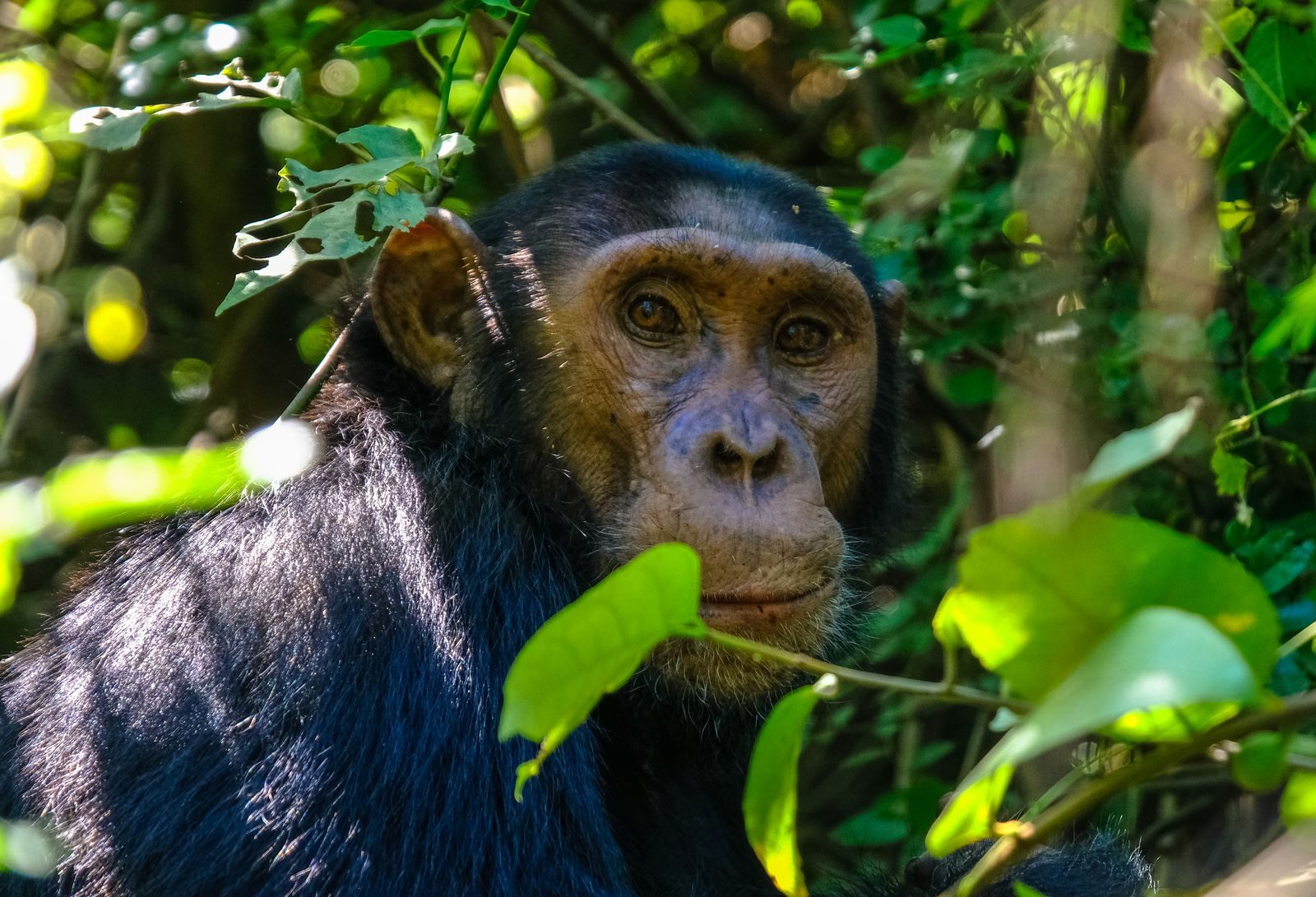
Chimpanzees eat mostly plant foods, but several wild populations also hunt vertebrates. Some of their most dramatic hunts take place high in tropical forest canopies, where agile chimpanzees pursue monkeys through branches that humans could barely navigate.
Red colobus monkeys are especially important prey at several long-term study sites. Research also shows that hunting methods vary among chimpanzee communities, so no single chase should be presented as the universal chimpanzee hunting strategy.
Chimpanzee Monkey Hunting
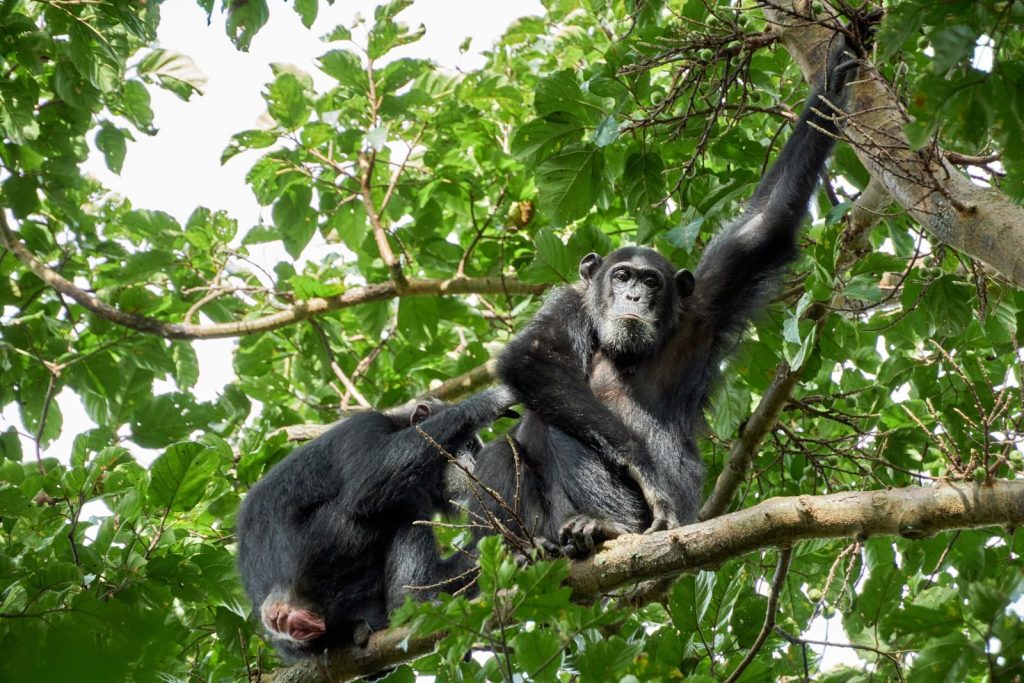
Chimpanzees are omnivores, and hunting is a real but variable part of their feeding behavior. Reviews of long-term field studies have documented chimpanzees taking monkeys, small ungulates, rodents, and other vertebrates, with hunting frequency differing greatly between communities.
At many sites where chimpanzees and red colobus overlap, monkeys form especially important prey. Hunting should not be confused with chimpanzees needing meat at every meal. Fruit and other plant foods remain central to their diets. A hunt is one feeding opportunity among many, shaped by local prey, group composition, season, and the traditions of particular communities.
Red Colobus Monkeys
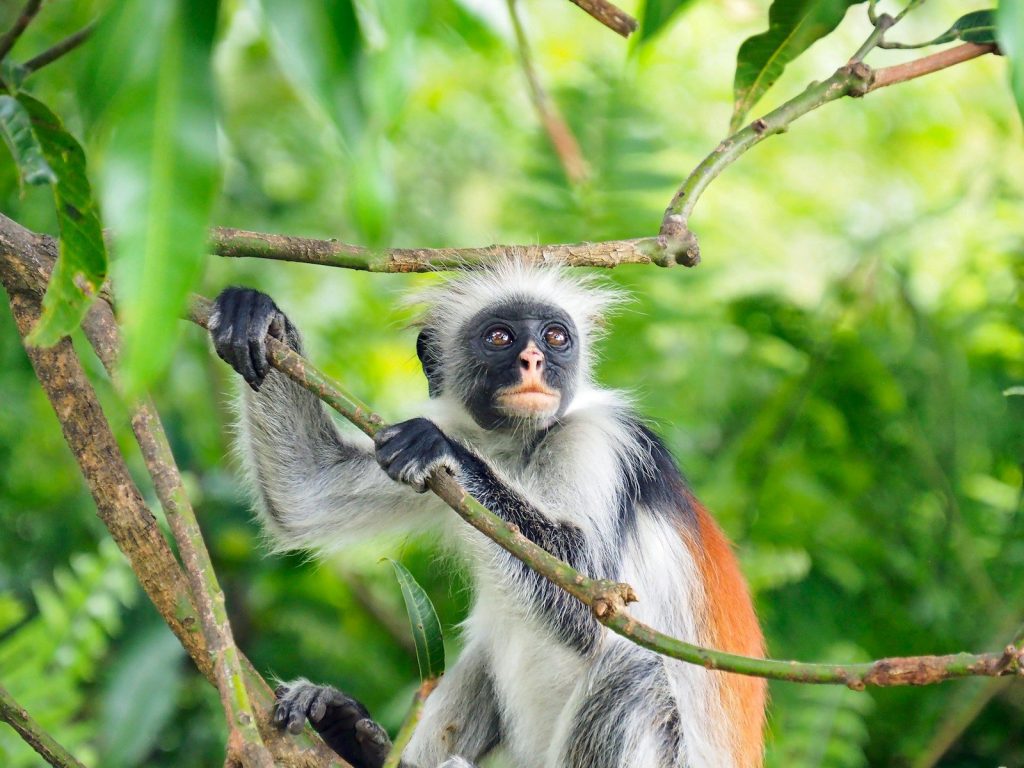
Red colobus monkeys are among the best-documented chimpanzee prey. Studies from several African research sites describe chimpanzees regularly pursuing them, while research in Taï National Park and elsewhere has examined the predator-prey relationship for decades.
Red colobus are arboreal and live in social groups, so a hunt can unfold through multiple neighboring trees rather than on the forest floor. Their agility does not make them easy prey, but group-living also means a chimpanzee party encountering one troop may suddenly have many possible targets moving through a confined section of canopy at the same time.
Canopy Chase
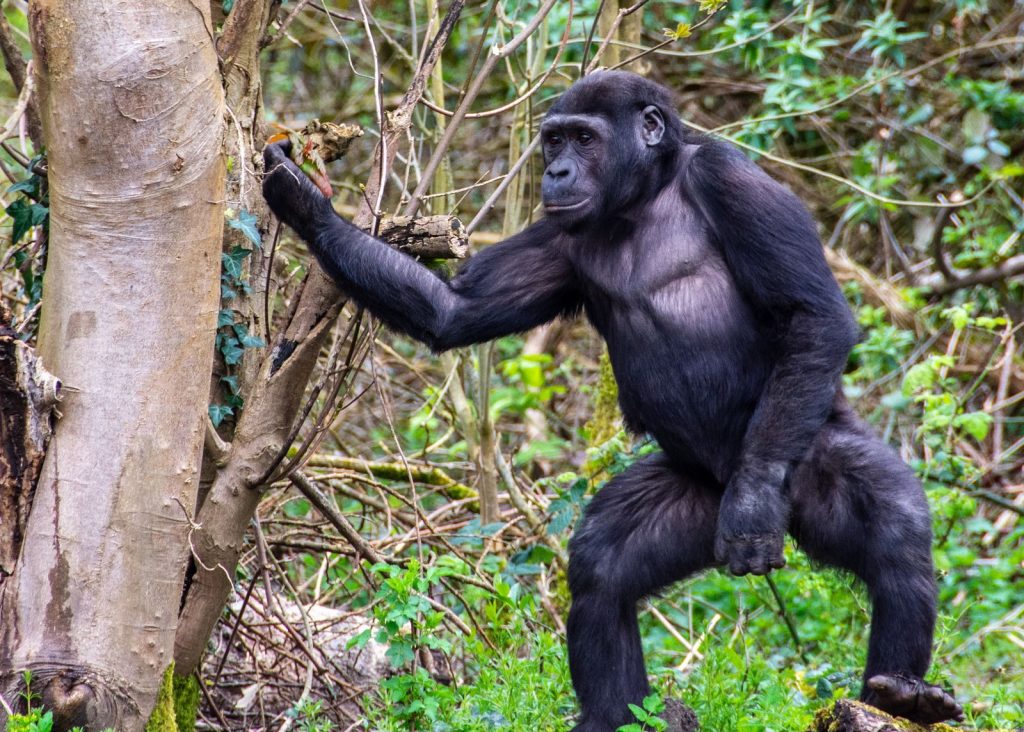
Monkey hunting can turn the forest canopy into a moving three-dimensional chase. Chimpanzees climb after arboreal prey while monkeys leap between branches and trees, creating escape possibilities unavailable to terrestrial prey.
At Taï, researchers have described highly coordinated hunts in which chimpanzees position themselves in different locations while prey moves overhead. The dense forest makes visibility limited, and one chimpanzee cannot simply sprint in a straight line after a monkey. Successful pursuit can depend on anticipating where the prey is likely to move and whether another chimpanzee is already occupying a possible escape route.
Hunting Barks
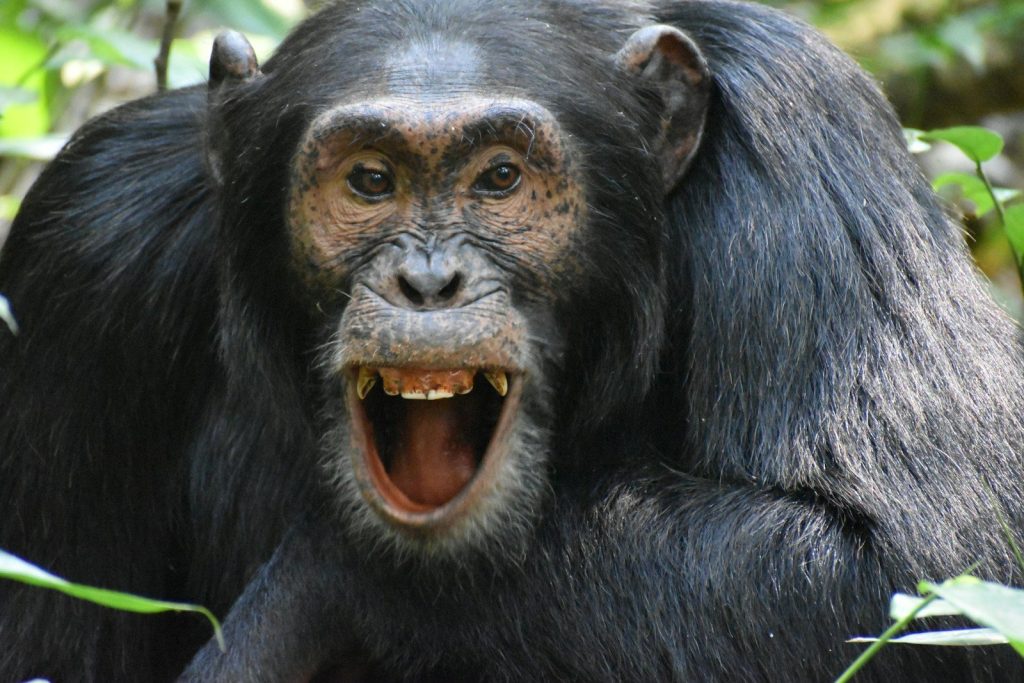
Research on the Kanyawara chimpanzee community in Uganda found that special bark vocalizations can help turn a monkey encounter into a group hunt. Scientists analyzed more than 300 hunting events recorded across roughly 25 years.
Chimpanzees producing these “hunting barks” were especially likely to join the hunt themselves. After barks occurred, more hunters tended to participate, hunts started sooner, and the first capture happened faster. Researchers cautioned that the calls may advertise an individual’s motivation rather than function like human instructions, but the results show vocal communication can facilitate cooperative hunting.
Cooperative Hunters
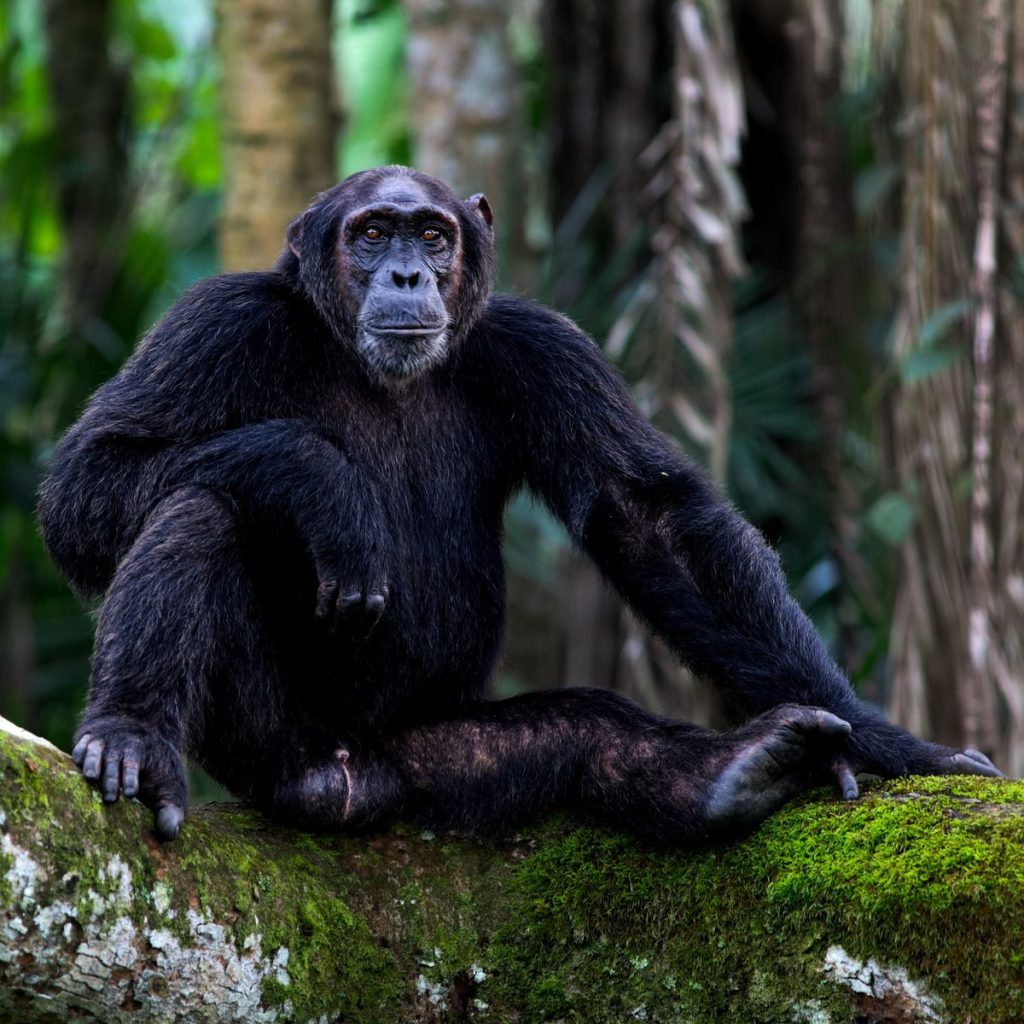
Chimpanzee hunting is not identical everywhere, but some populations show striking coordination. At Taï National Park in Côte d’Ivoire, researchers have described individuals taking complementary positions while hunting monkeys rather than everyone independently chasing the same target.
Long-term work identifies roles such as drivers that push monkeys onward, blockers positioned near potential routes, and catchers waiting where prey may arrive. Those labels describe observed movement patterns, not a formal plan spoken out in advance. The coordination emerges through the hunters’ positions and actions as the chase changes through the canopy around them.
Monkey Escape Routes
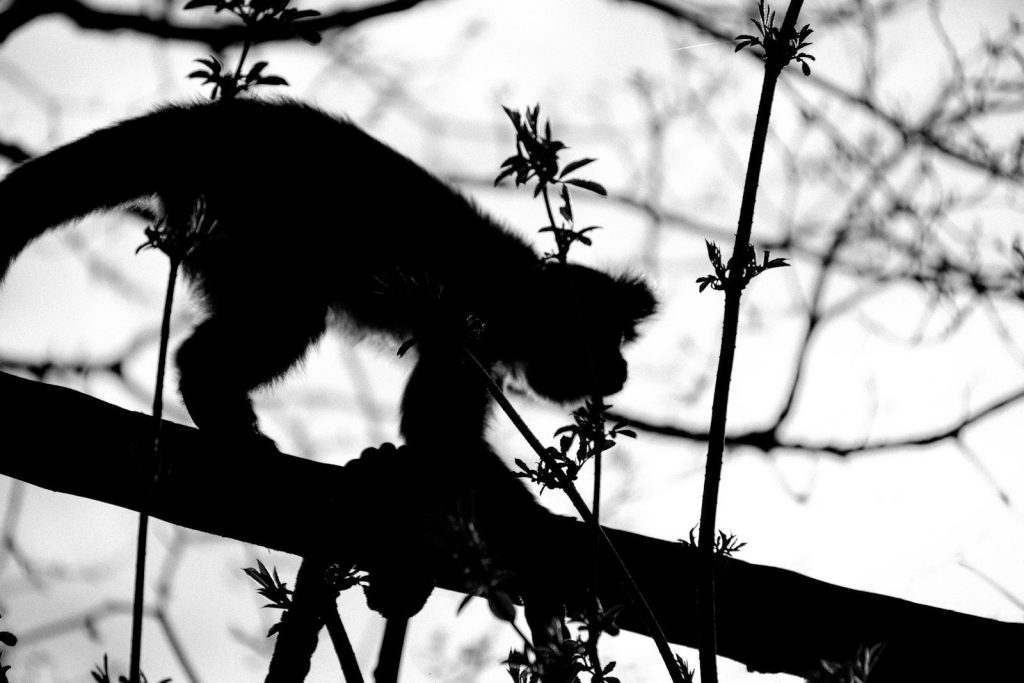
In documented Taï hunts, a chimpanzee acting as a driver may climb toward the monkeys and make them move into neighboring trees. Other chimpanzees can position themselves where they restrict or influence the prey’s available escape routes.
This matters because an arboreal monkey has many directions it could take. By occupying nearby trees, chimpanzees can narrow those options and increase the chance that fleeing prey moves toward another hunter. Researchers describe this as coordinated activity in both time and space. It is an unusually clear example of cooperation during predation in one of humans’ closest living relatives.
Prey Capture
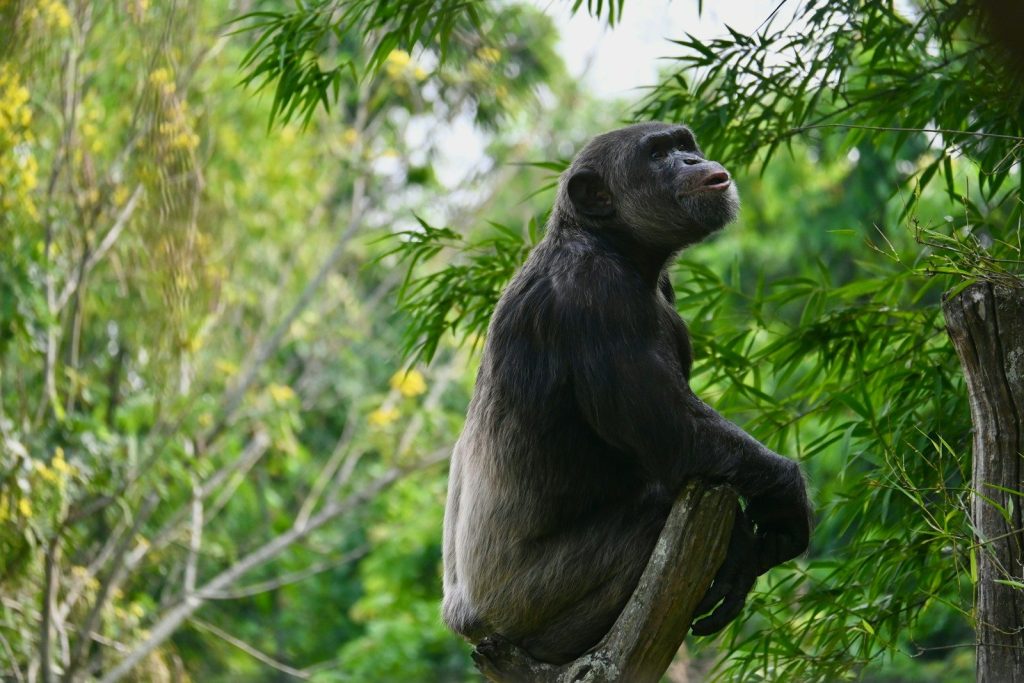
At Taï, researchers have described a catcher waiting in the direction toward which other hunters channel the monkeys. When prey reaches that area, the chimpanzee can make the final movement, grab a monkey, and bring the carcass down toward the ground.
Not every hunt succeeds, and not every chimpanzee population uses exactly the same coordinated roles. Field studies show strong variation between communities in prey choice, hunting frequency, and technique. That diversity is important because a dramatic canopy hunt represents learned and locally shaped chimpanzee behavior rather than one rigid instinct performed identically across Africa.
Chimpanzee Meat Sharing
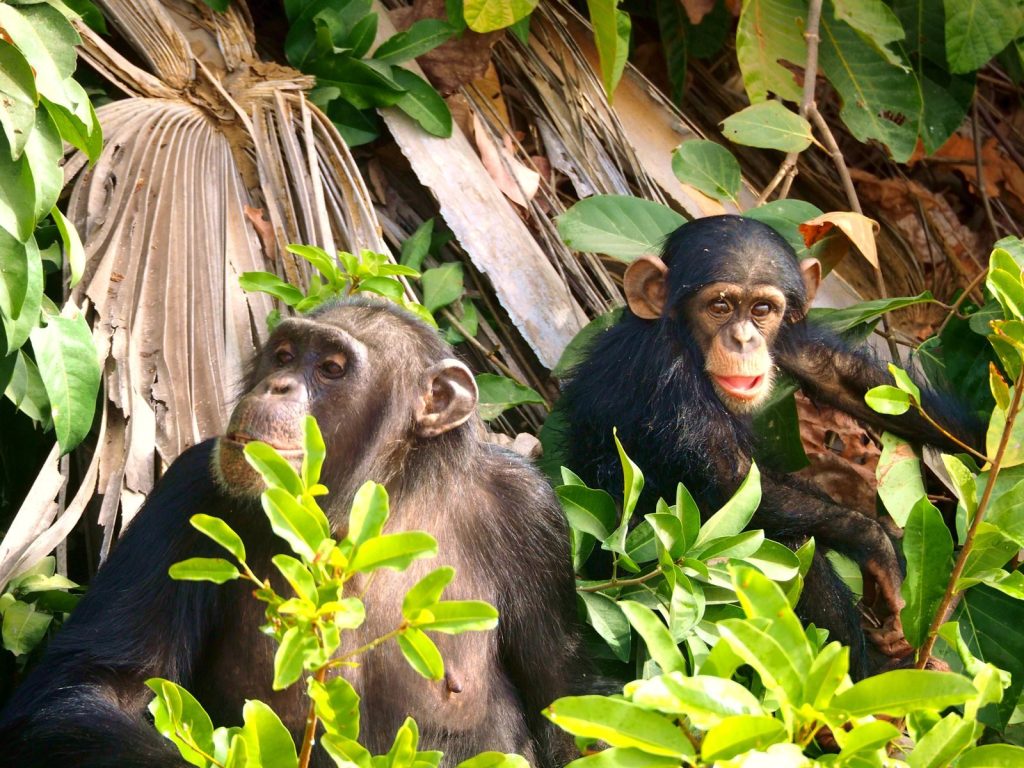
After a successful Taï monkey hunt, the captured meat is often distributed among more than one chimpanzee. Research summarized by the Taï Chimpanzee Project reports that hunters frequently receive shares and that sharing can also occur between socially connected individuals.
Studies have linked food sharing with social bonding and elevated urinary oxytocin, although the motives behind any single sharing event cannot be read directly from behavior. The meal therefore has both nutritional and social dimensions. Hunting ends with more than one animal eating, and who receives meat can reflect participation, relationships, harassment, or other social factors that vary between populations.
Featured Image: Photo by Francesco Ungaro on Pexels