Skip to content

Recent Posts

  • 8 of the Oldest Animals Ever Documented
  • 8 Animals With Extraordinary Physical Power
  • 9 of the Loudest Animals Ever Measured
  • Why a Doe May Return to the Same Door With Her Fawn
  • One of the World’s Rarest Wild Cats Lives in the Andes

Most Used Categories

  • Nature & Wildlife (709)
  • Risk (60)
  • Human Interest (36)
  • Exotic Animals (21)
  • Hunting (19)
  • Survival (18)
  • Bees/Swarms fear (14)
  • Suspense (10)
  • Adventure (3)
  • Gears (2)
Skip to content
  • About Us
  • Contact Us
  • Disclaimer
  • Privacy Policy
  • Terms & Conditions

Hive Hunters Tales

  • Suspense
  • Nature & Wildlife
  • Human Interest
  • Hunting
  • Bees/Swarms fear
  • Exotic Animals
  • Risk
  • Survival
  • Adventure
  • Gears
  • Home
  • Nature & Wildlife
  • Giraffes Can Run Nearly 35 MPH, And Their Gait Looks Unlike Any Other
Three giraffes gracefully walking in the South African savanna, showcasing wildlife beauty.

Giraffes Can Run Nearly 35 MPH, And Their Gait Looks Unlike Any Other

JakeAugust 5, 2026August 5, 2026

A giraffe may appear slow when walking across open ground, but that impression changes as soon as it begins to run. These exceptionally tall animals can reach surprising speeds over short distances.

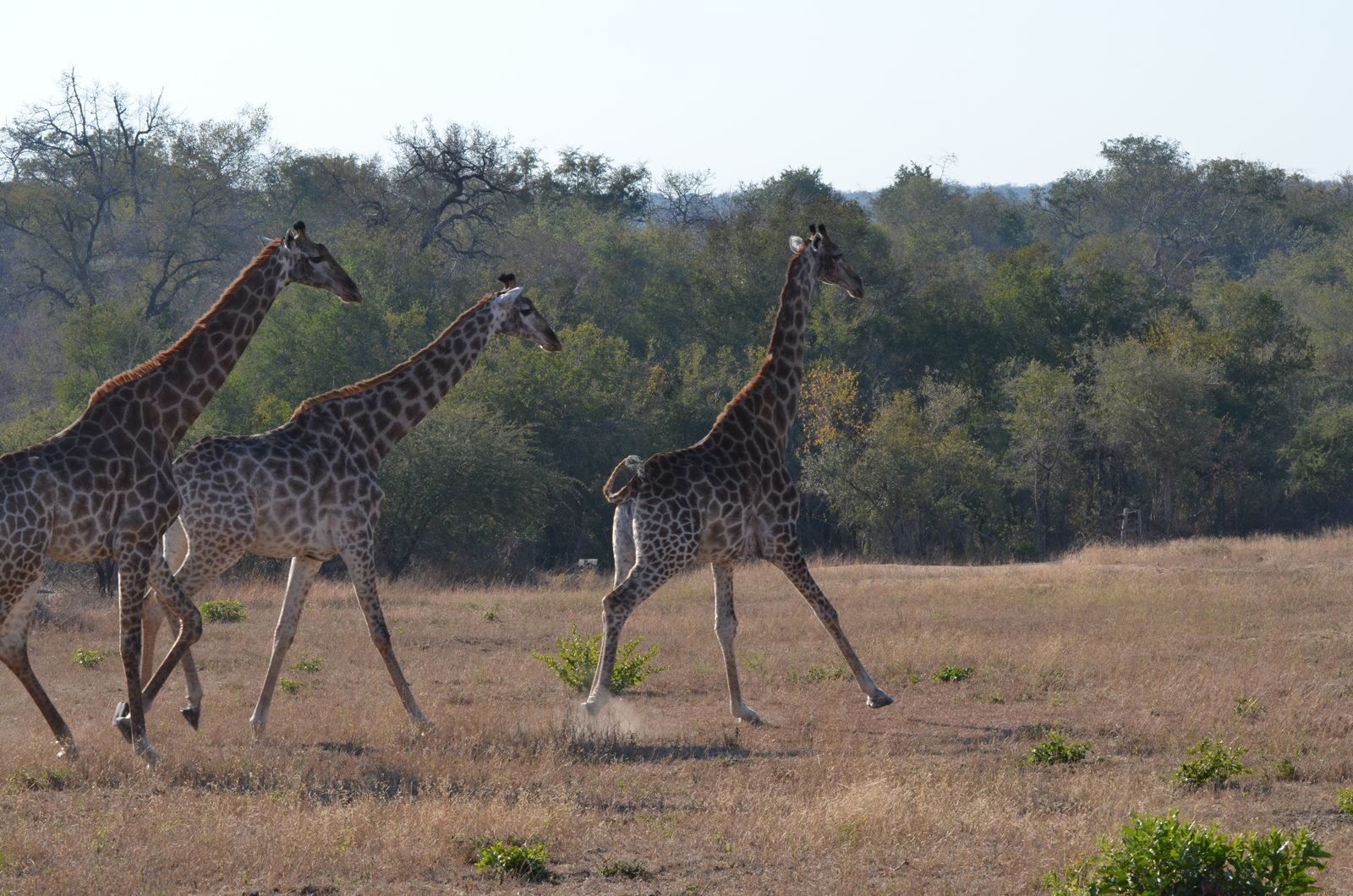
Their motion looks unusual because a giraffe uses a pacing gait, moving the legs on the same side together. Its height, long stride, and swinging neck make every sprint visually dramatic.

The Sprint Starts Quickly
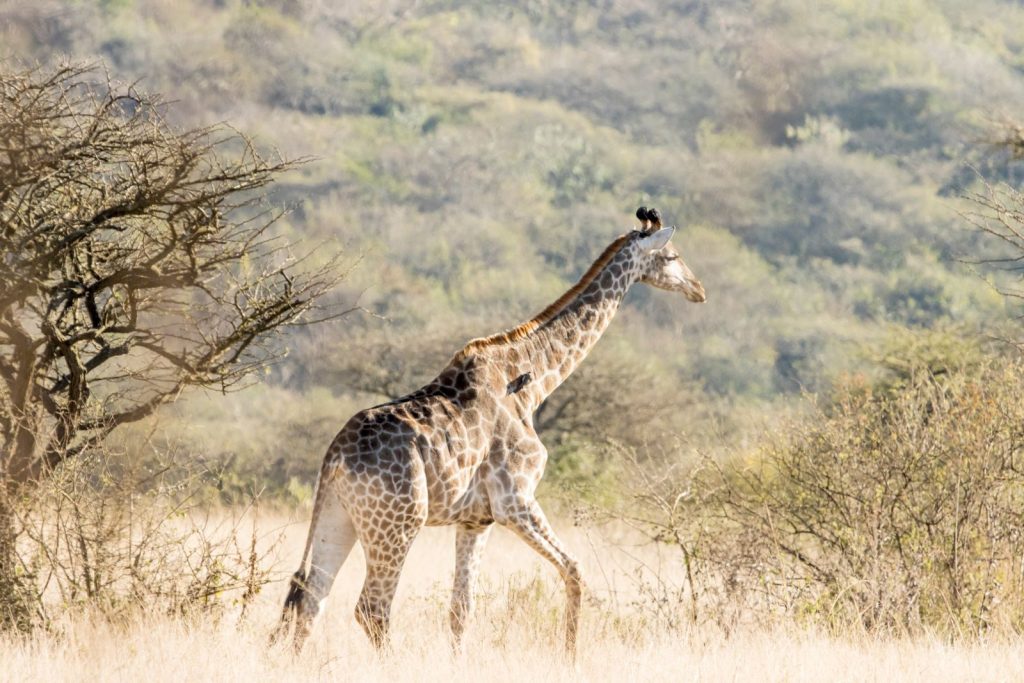
Giraffe strolling through the African savannah, accompanied by birds on its back, during daylight.
Photo by Charmain Jansen van Rensburg on Pexels

A giraffe’s relaxed walk can change into a rapid run when the animal needs to move. Its long legs cover a large amount of ground with each stride, so the acceleration may look smoother than the sprint of a smaller animal even while its speed is increasing.

Nearly 35 Miles Per Hour
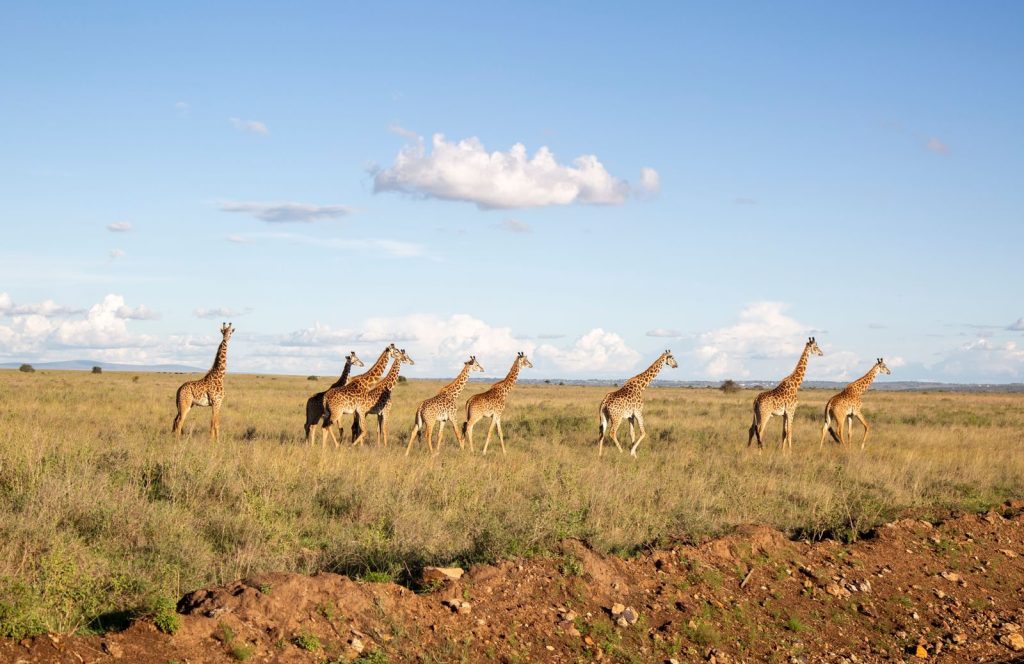
A herd of giraffes walks gracefully across the savanna under a clear blue sky.
Photo by John M on Pexels

San Diego Zoo Wildlife Alliance reports that giraffes can reach approximately 35 miles per hour over short distances. A recorded figure of 34.7 miles per hour is equal to about 56 kilometres per hour. That is an impressive speed for the world’s tallest land animal.

The Pacing Gait
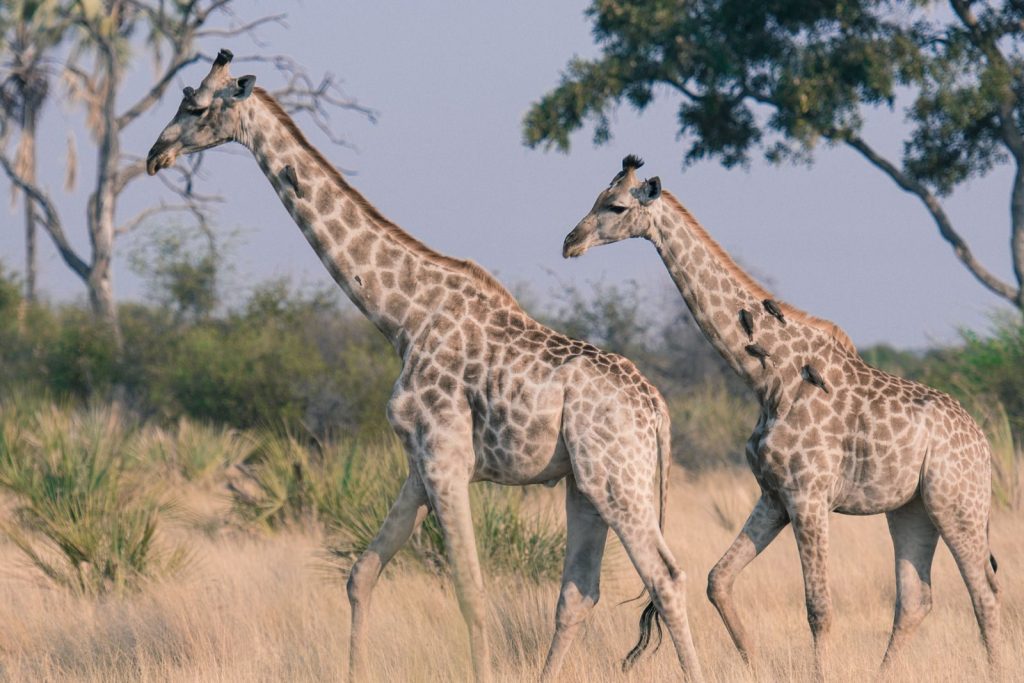
Two giraffes stroll through the African savanna under a clear sky, showcasing their iconic long necks.
Photo by Lelani Badenhorst on Pexels

When walking, a giraffe commonly moves both legs on one side and then both legs on the other. This movement is called pacing. During a faster run, the gait changes, but the animal’s long limbs and rocking body still create a motion that looks different from the stride of a horse.

Legs Around Six Feet Long
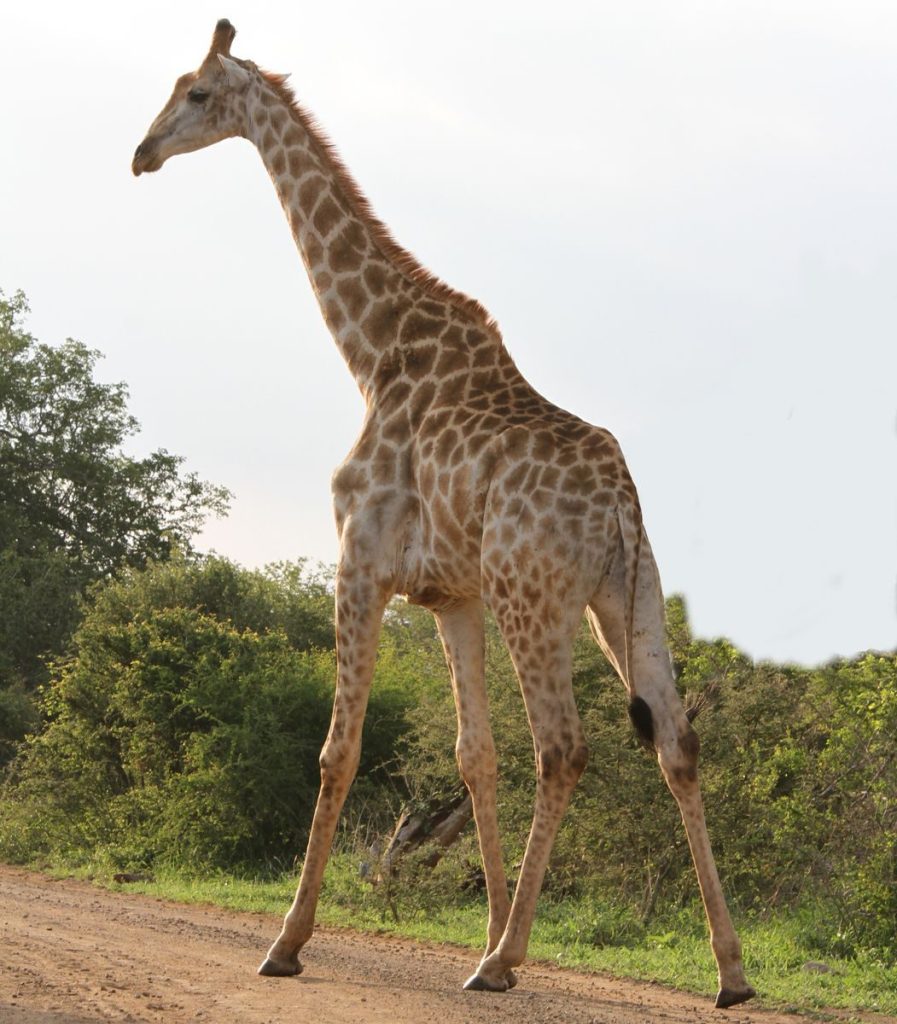
A tall giraffe gracefully strides through the African savanna under a bright sky.
Photo by Kaz Hutton on Pexels

A giraffe’s legs can be about six feet long, close to the height of many adult humans. These limbs create an exceptionally long stride and lift the body well above shrubs and grass. They also explain why even a young giraffe can appear enormous when standing beside zoo staff or nearby animals.

Dinner-Plate-Sized Feet
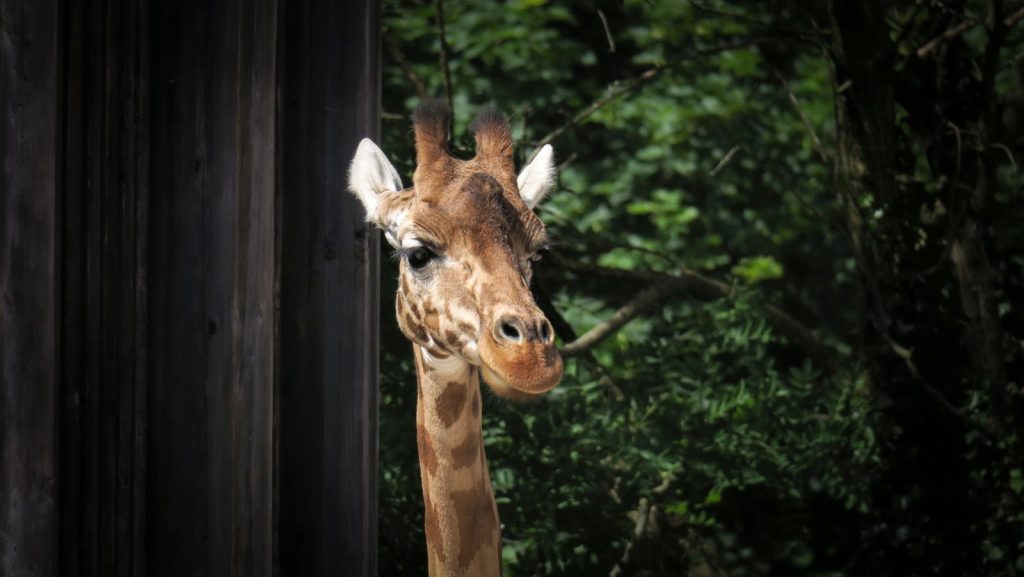
Close-up of a giraffe in Lyon Zoo with lush greenery providing a natural backdrop.
Photo by Bastien Neves on Pexels

Each giraffe hoof can be roughly the size of a dinner plate. The broad feet support an animal that may weigh well over a thousand pounds. They also make close contact dangerous, even when the giraffe is not behaving aggressively, which is why trained care and secure barriers are essential.

Only Seven Neck Bones
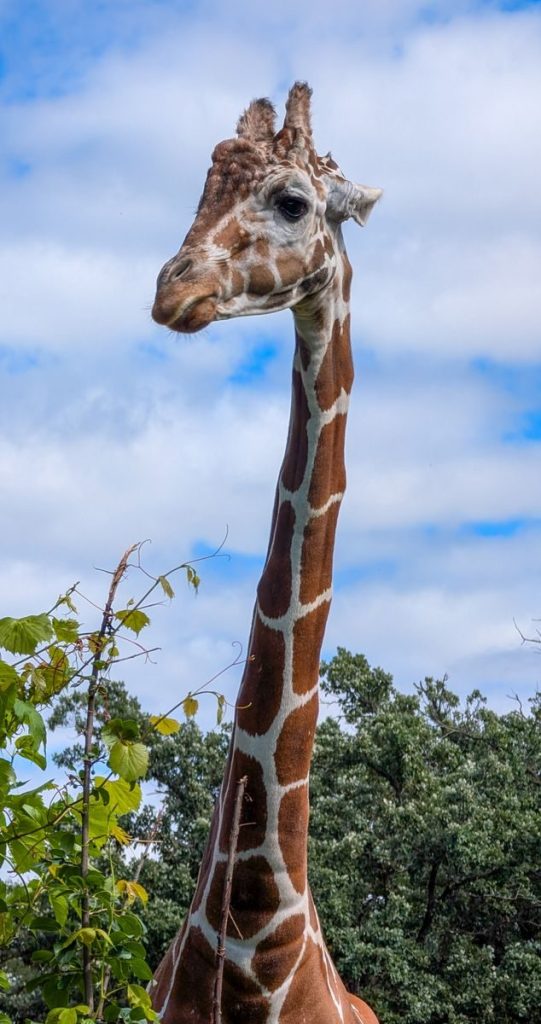
A tall giraffe stands elegantly against a backdrop of lush greenery and a cloudy sky.
Photo by K O’Shaughnessy on Pexels

Despite its extraordinary neck, a giraffe has seven cervical vertebrae—the same number found in most mammals, including humans. Each giraffe vertebra is greatly elongated. The neck moves visibly during a run and becomes part of the animal’s distinctive rhythm and balance.

Calves Are Born Tall

A mother giraffe with her calf standing in a zoo enclosure under sunlight.
Photo by patrice schoefolt on Pexels

A newborn giraffe may already stand around six feet tall and weigh between approximately 100 and 220 pounds. Young calves must coordinate their long legs soon after birth. Camera footage of their early running often looks awkward because the animal’s proportions are already extreme before it has fully mastered them.

Speed Is for Short Distances
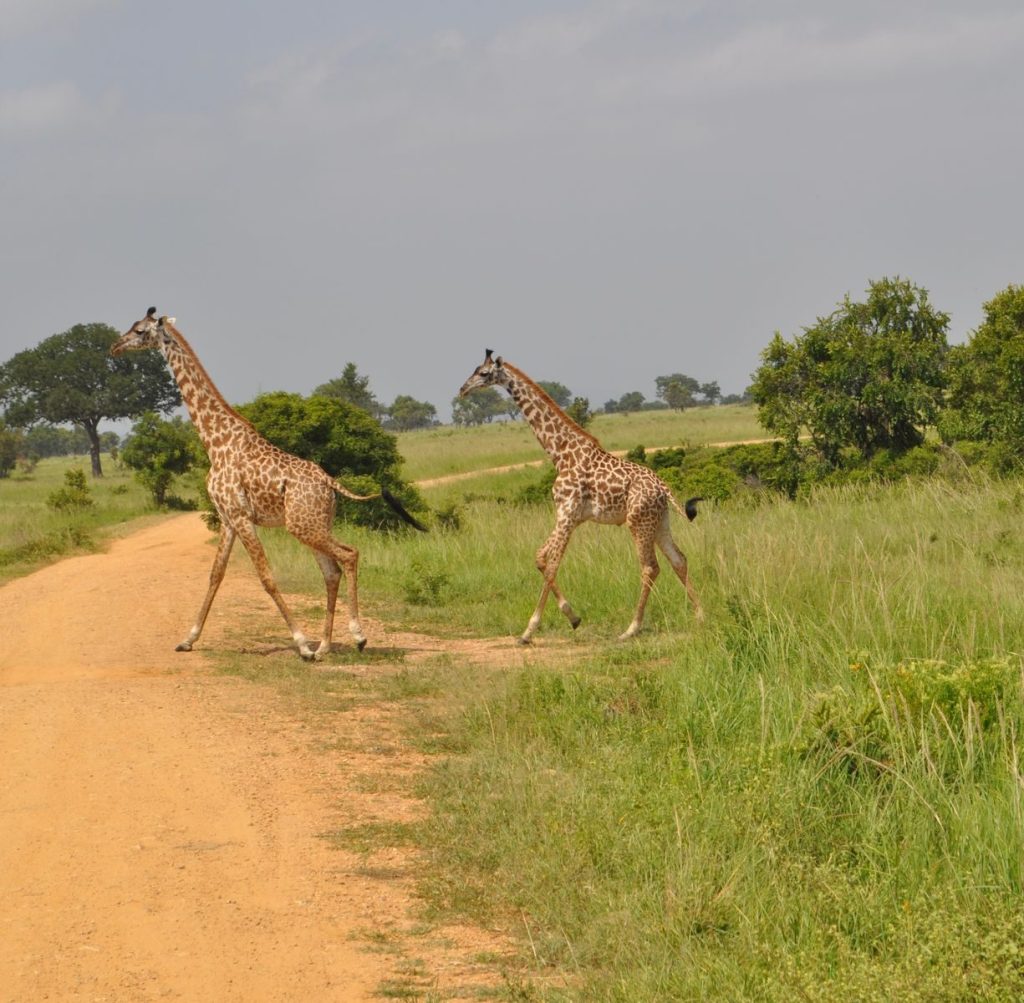
Two giraffes crossing a dirt path in the African savanna during daytime.
Photo by Maud Vermeulen on Pexels

Giraffes are fast sprinters rather than long-distance racers. The figure near 35 miles per hour applies to short bursts, not a pace they maintain indefinitely. A brief clip can therefore capture an impressive top-speed moment without showing how quickly the animal later returns to a slower gait.

Featured Image: Photo by loek fernengel on Pexels
Post navigation

Previous: This Cuttlefish Changes Color in Seconds: Here’s How Its Living Screen Works
Next: What Happens When a Sperm Whale Hunts a Giant Squid

Related Posts

Close-up of an African spurred tortoise foraging on the ground in Thailand.

8 of the Oldest Animals Ever Documented

August 6, 2026August 5, 2026 Jake
A close-up of a musk ox grazing in the lush green wilderness of Hjerkinn, Norway.

8 Animals With Extraordinary Physical Power

August 6, 2026August 5, 2026 Jake
A large hippopotamus yawning in an outdoor zoo setting in Werribee South, Australia.

9 of the Loudest Animals Ever Measured

August 6, 2026August 5, 2026 Jake

Leave a Reply Cancel reply

Your email address will not be published. Required fields are marked *

Recent Posts

  • 8 of the Oldest Animals Ever Documented
  • 8 Animals With Extraordinary Physical Power
  • 9 of the Loudest Animals Ever Measured
  • Why a Doe May Return to the Same Door With Her Fawn
  • One of the World’s Rarest Wild Cats Lives in the Andes
Copyright All Rights Reserved | Theme: BlockWP by Candid Themes.