Some animals use enormous sounds to hunt, navigate, defend territory, or attract mates. The loudest include ocean giants, rainforest primates, tiny insects, and a shrimp whose oversized claw creates an underwater shock wave.
This is not a perfect numerical ranking. Underwater and airborne decibels use different reference pressures, while results also change with distance and measuring method. The figures are therefore most useful when compared within the same environment.
Sperm Whale
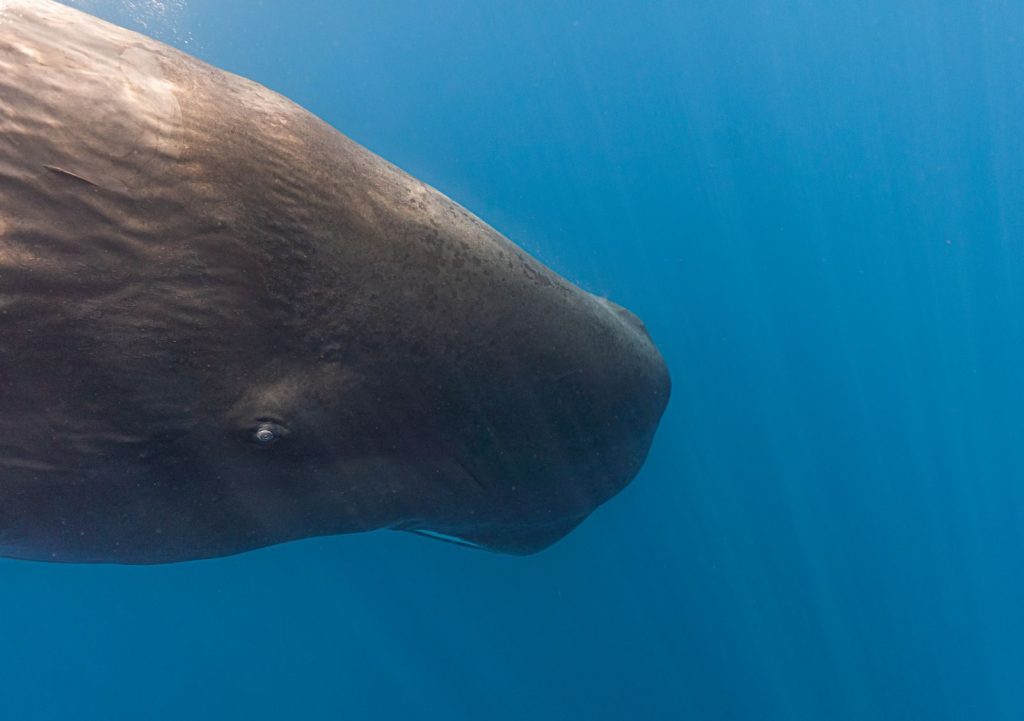
Sperm whales produce some of the most intense animal sounds ever measured. Their highly directional echolocation clicks can reach approximately 236 underwater decibels referenced to one micropascal at one metre. The brief clicks bounce off objects and prey, helping these deep-diving whales hunt in darkness where ordinary vision has limited value.
Bottlenose Dolphin
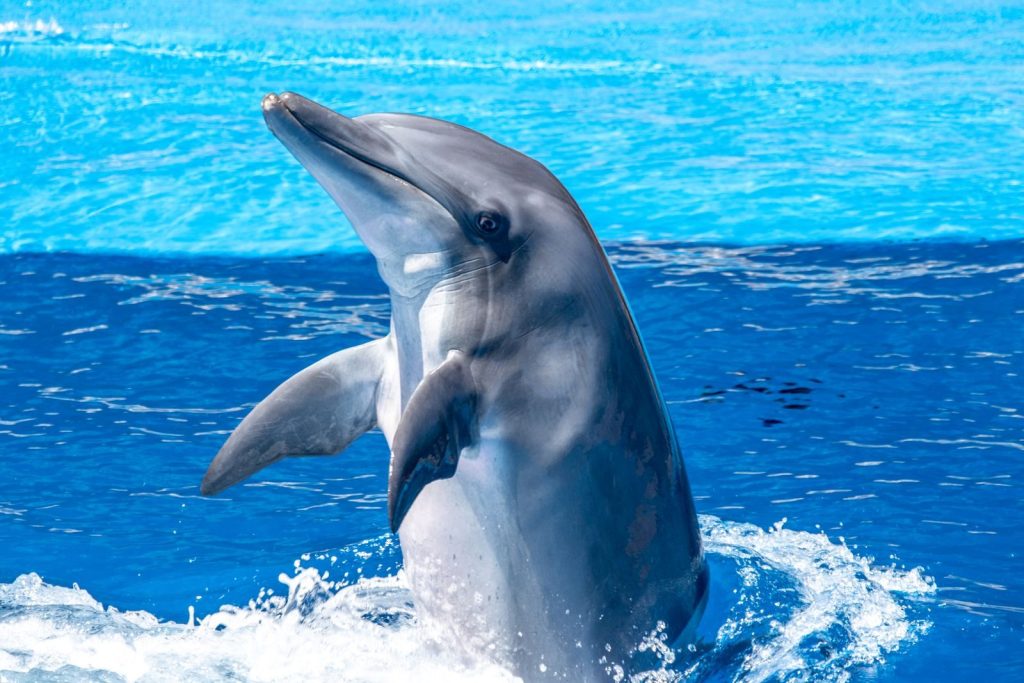
Bottlenose dolphins also produce exceptionally powerful echolocation clicks. Studies of wild dolphins have recorded source levels as high as 228 underwater decibels, with other research reporting maximum values near 230 decibels during long-range detection. The dolphins adjust their clicking rate and intensity as they approach fish or examine objects.
Blue Whale
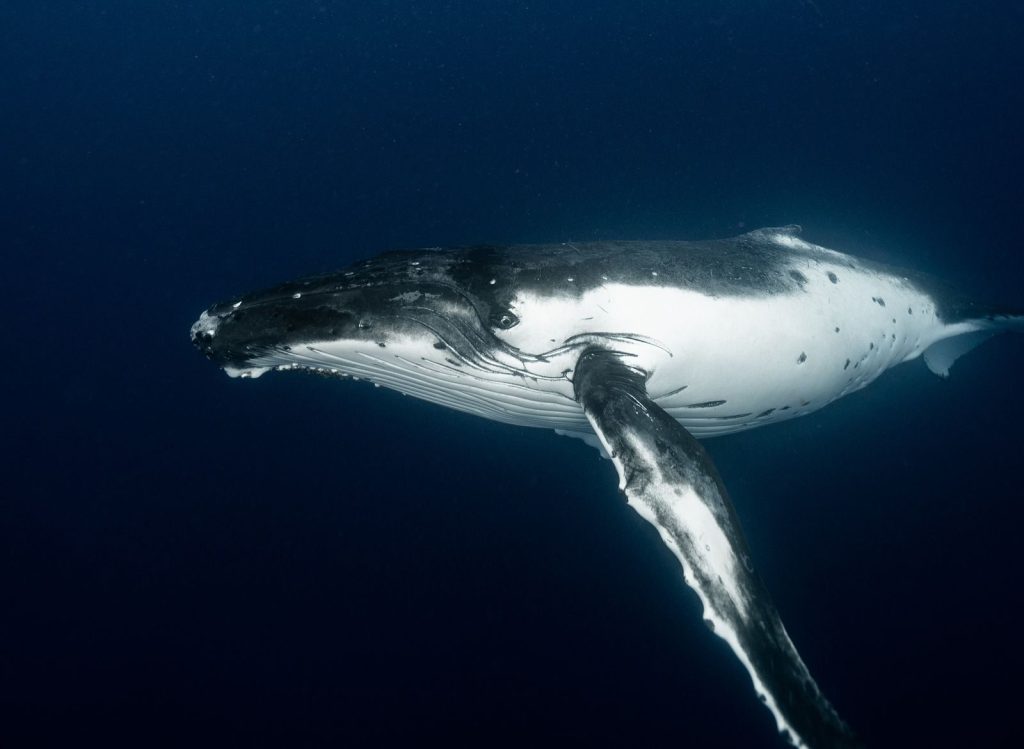
Blue whales produce extremely strong, low-frequency calls rather than the rapid sonar clicks used by toothed whales. Antarctic blue-whale calls have been estimated at approximately 188 to 192 underwater decibels. Their low frequencies travel efficiently through seawater, allowing whales to communicate across distances far greater than their eyesight could cover.
Snapping Shrimp
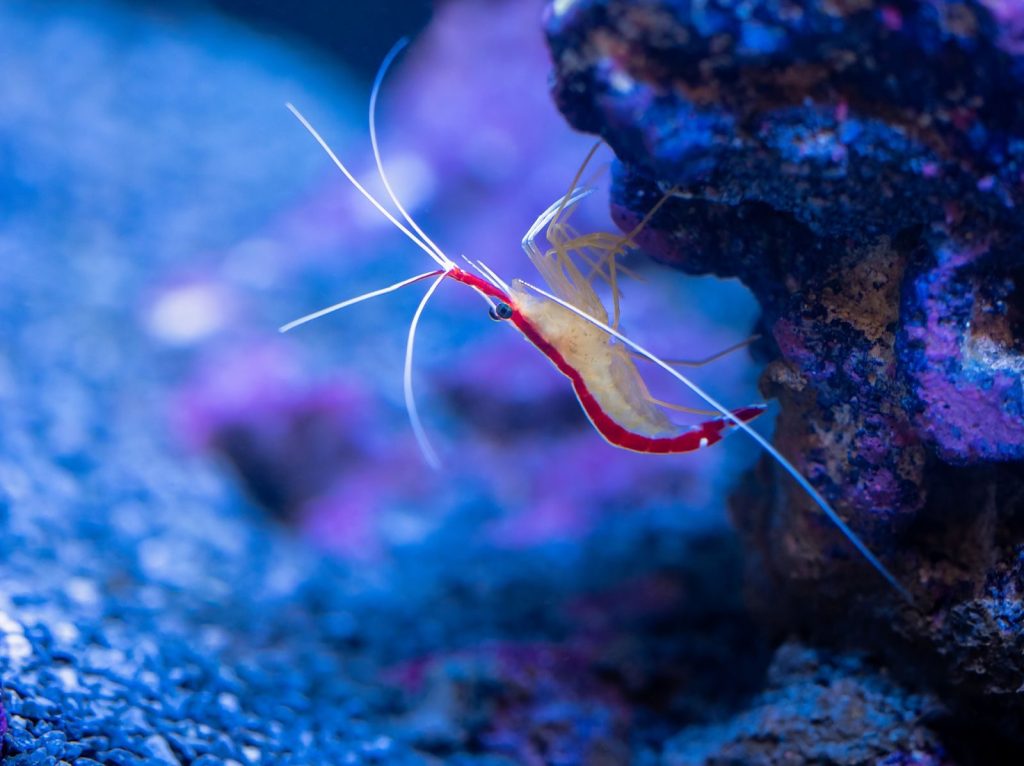
A snapping shrimp creates sound without using a voice. Closing its enlarged claw fires a fast jet of water that forms a cavitation bubble. The sound occurs when that bubble collapses, producing snaps measured at roughly 183 to 190 underwater decibels. Groups of these shrimp can dominate the soundscape around reefs and shallow coastlines.
Greater Bulldog Bat
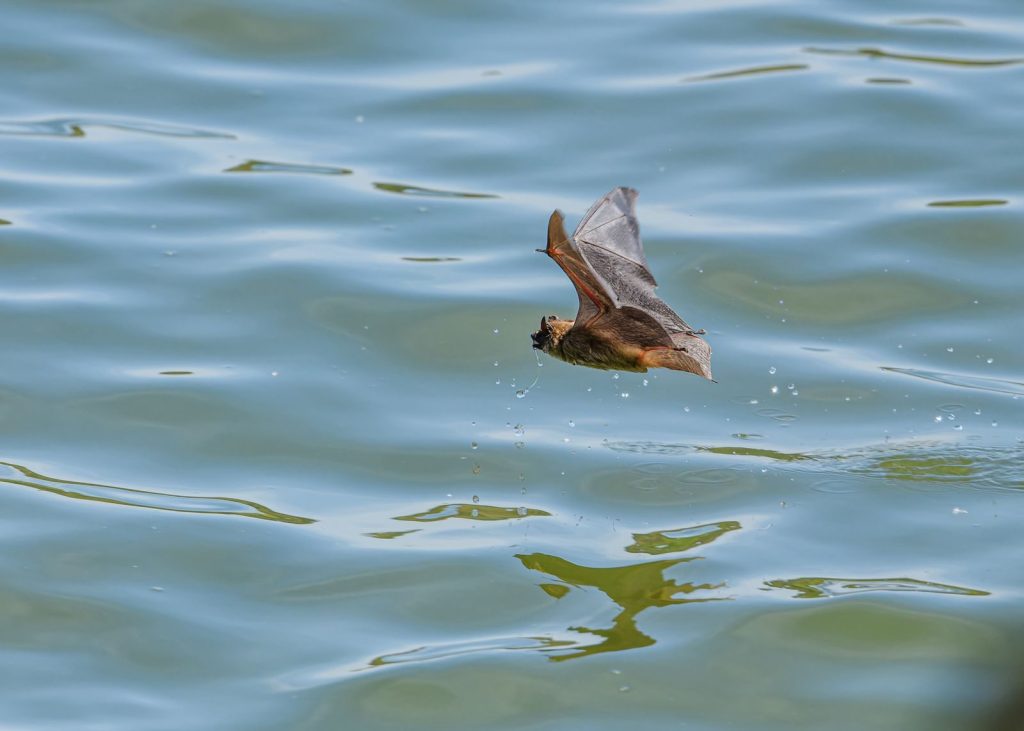
Greater bulldog bats send intense ultrasonic calls over water while searching for fish. Researchers recorded average source levels of about 137 airborne decibels, with maximum signals exceeding 140 decibels. Humans cannot normally hear the highest frequencies, but the returning echoes give the bat detailed information about movement at the water’s surface.
White Bellbird
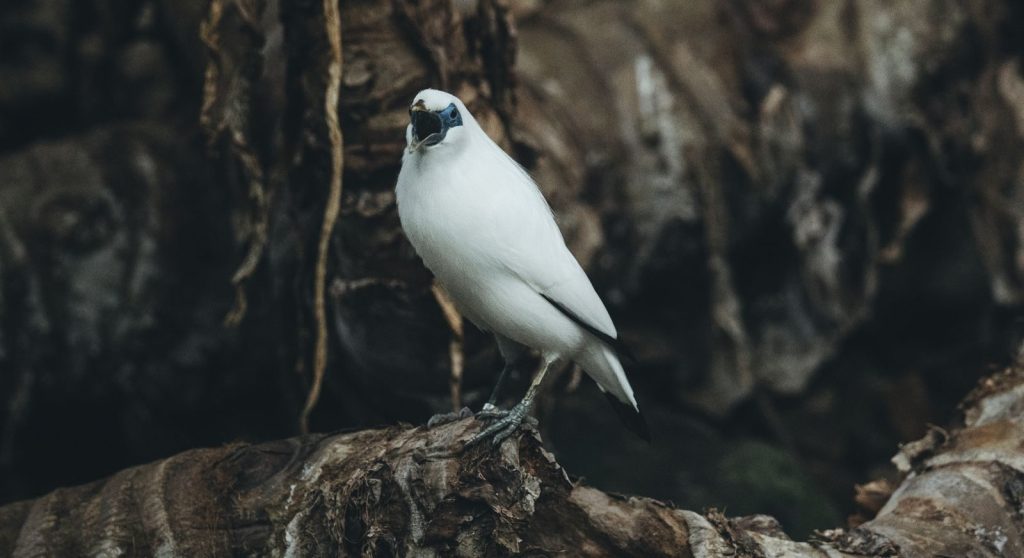
The male white bellbird holds the record for the loudest bird call measured under controlled field conditions. Its shorter mating song reached peak levels of about 125 airborne decibels when calculated at a distance of one metre. Males sometimes direct these explosive calls toward females sitting only a short distance away.
African Elephant
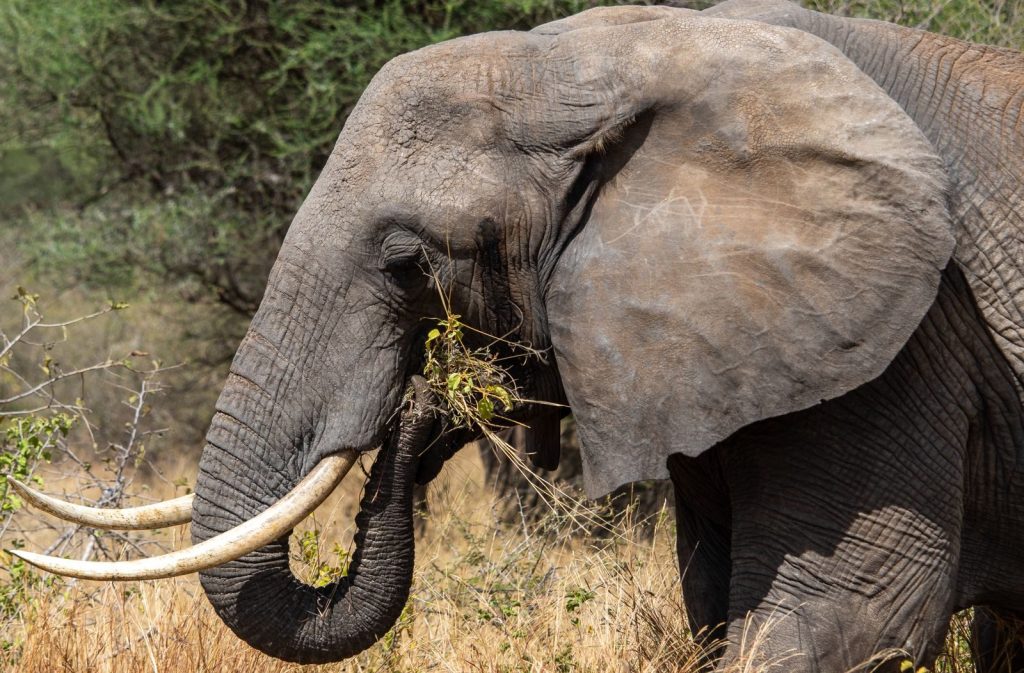
Elephants communicate with rumbles, roars, trumpets, and screams. Some calls measure between 90 and 117 airborne decibels. Their lowest rumbles include infrasonic frequencies that many humans cannot hear, but these sounds can travel for several kilometres and help separated elephants coordinate movements or locate potential mates.
African Cicada
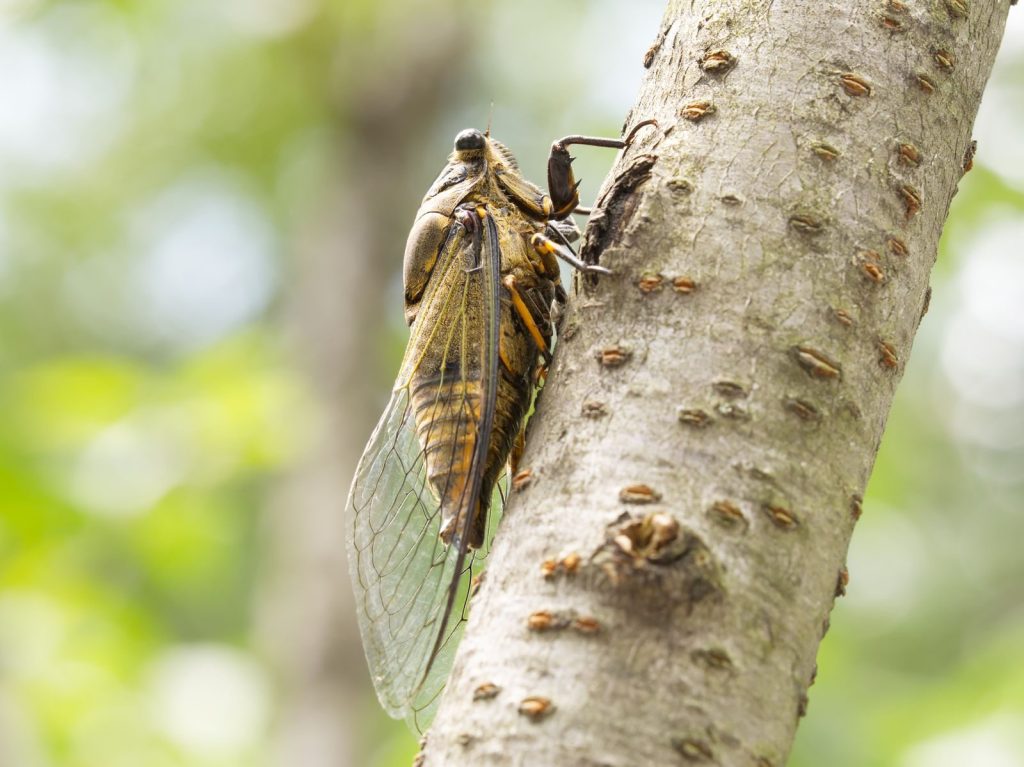
The African cicada Brevisana brevis has produced a mean calling-song measurement of 106.7 airborne decibels from 50 centimetres away. Male cicadas create their songs by rapidly flexing ribbed membranes called tymbals. The abdomen and other body structures amplify the repeated clicks into a continuous mating call that carries through surrounding vegetation.
Howler Monkey
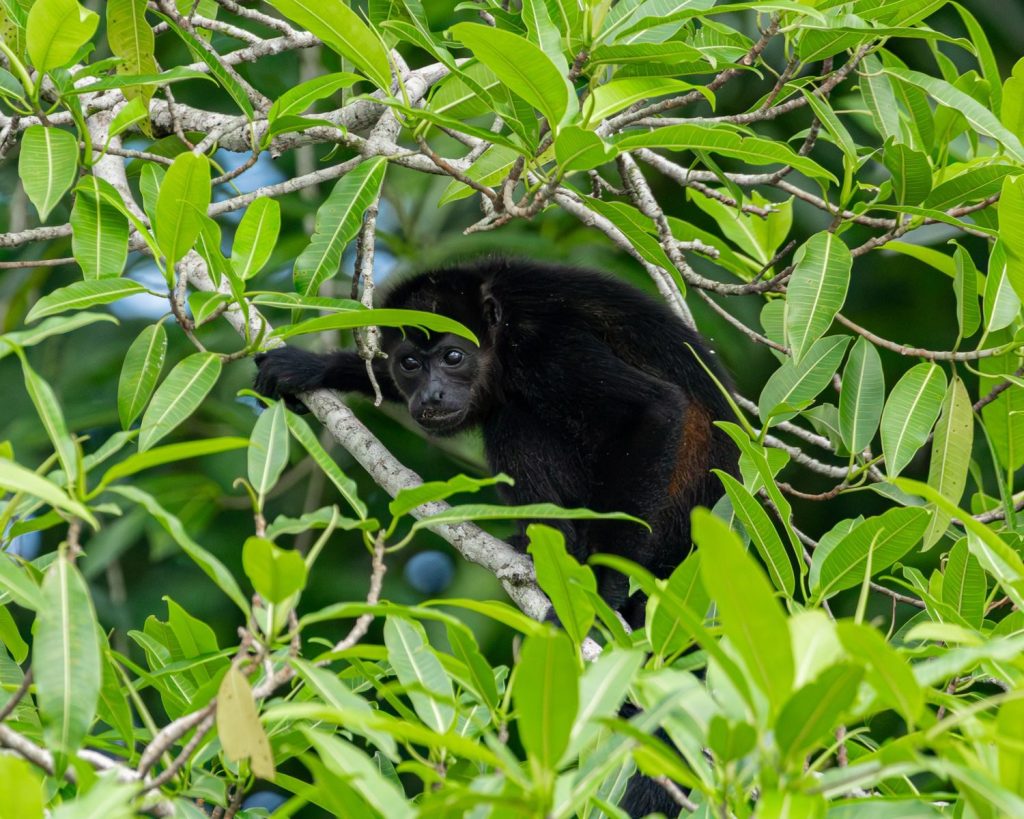
Howler monkeys produce some of the loudest calls made by land mammals. Their deep roars can travel approximately three miles through dense forest under favorable conditions. An enlarged, hollow hyoid bone in the throat acts as a resonating chamber, helping males advertise their location and warn neighboring groups without entering a physical confrontation.
Featured Image: Photo by Joolsmagools ®️ on Pexels