There is no authoritative nationwide ranking proving one U.S. national park is the “most snake-infested.” Population counts are incomplete, and the phrase itself makes healthy native wildlife sound like an infestation.
Big Bend National Park in Texas is nevertheless an extraordinary snake hotspot. The National Park Service confirms 31 snake species, including four rattlesnakes, within the park.
Big Bend National Park

Big Bend protects desert, mountain, canyon, and Rio Grande habitats across a vast portion of southwest Texas. That environmental variety allows many reptiles with very different ecological needs to occur inside one protected landscape.
The National Park Service lists 31 confirmed snake species, plus three additional hypothetical species without confirmed park sightings. That figure helps explain why Big Bend appears in discussions about America’s “snakiest” parks. It describes species diversity rather than millions of snakes crowding every trail, campsite, or canyon where visitors travel.
Thirty-One Snake Species

Thirty-one confirmed species is an unusually rich snake community for a single national park. Big Bend supports burrowing snakes, fast daytime hunters, nocturnal species, waterside snakes, constrictors, rat snakes, and venomous pit vipers.
The diversity comes from habitat rather than one enormous uniform snake population. A species adapted to the Chisos Mountains may be uncommon in lower desert, while another favors river corridors or scrub. Counting species therefore tells visitors something important about biodiversity but does not reveal how many individual snakes are present across the park at any particular moment.
Western Coachwhip

The western coachwhip, also called the red racer, is the snake visitors are most likely to notice at Big Bend according to the National Park Service. Its bright reddish-pink coloration can make it especially conspicuous against desert roads.
Individuals may stretch across much of a traffic lane, creating memorable sightings. Coachwhips are nonvenomous and use speed to capture prey and escape danger. Their visibility helps create the impression that snakes are everywhere, while many of Big Bend’s other species are far more secretive and may remain hidden even when hikers pass surprisingly close.
Four Rattlesnake Species

Big Bend contains four rattlesnake species: western diamondback, black-tailed, rock, and Mojave rattlesnakes. The western diamondback is the most commonly encountered rattlesnake in the park.
These species do not all use identical habitat. Black-tailed rattlesnakes occur across mountains and desert, rock rattlesnakes rely heavily on camouflage, and Mojave rattlesnakes are encountered less frequently. Their coexistence shows how Big Bend’s changing elevation and geology create multiple ecological niches. Four venomous rattlesnakes sounds dramatic, but each is a normal native component of this protected desert ecosystem.
Western Diamondback

Western diamondback rattlesnakes are widespread across arid parts of the American Southwest and are Big Bend’s most commonly encountered rattlesnake. Their alternating black-and-white tail bands can help distinguish them from other patterned rattlesnakes.
Like other rattlesnakes, they possess heat-sensitive facial pits that assist in detecting warm-blooded prey. Their venom is used primarily in feeding and secondarily in defense. A rattlesnake encountered beside a trail is not searching for hikers to attack; keeping distance allows the snake to retain its preferred option of avoiding a dangerous confrontation with a much larger animal.
Bullsnakes Mimic Danger
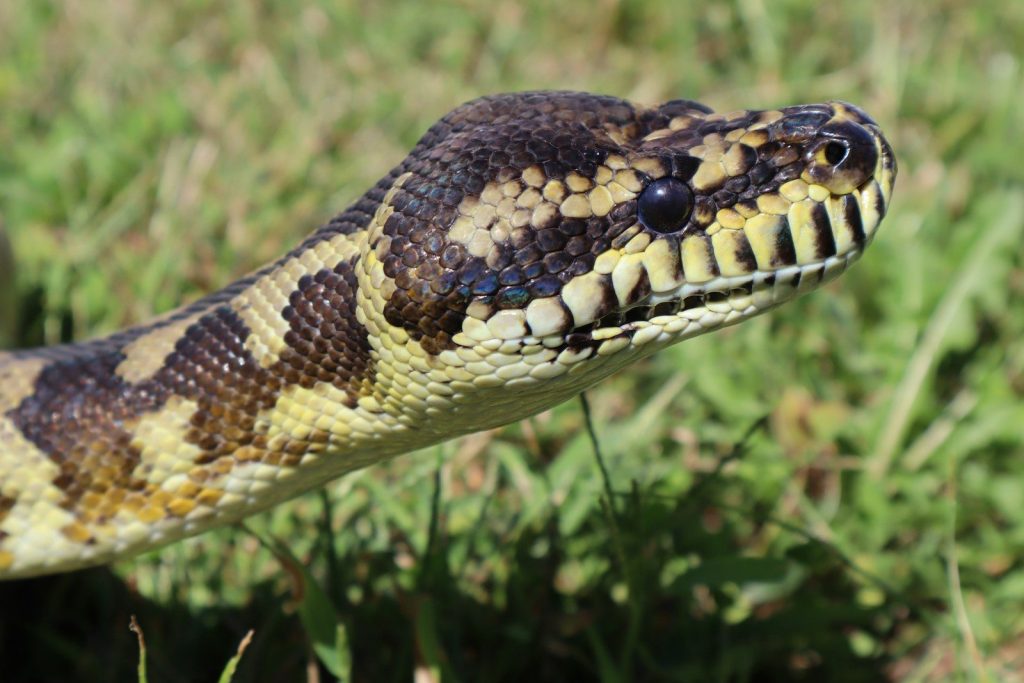
Big Bend also contains large bullsnakes, which are nonvenomous but can easily alarm visitors. Their heavy bodies and markings may resemble rattlesnakes at a glance, particularly when someone sees only part of the animal in vegetation.
When threatened, a bullsnake may hiss and rapidly vibrate its tail. In dry vegetation that vibration can create a buzzing sound remarkably similar to a rattle. Killing a snake based on hurried identification is therefore both unnecessary and prohibited in the park. The National Park Service reminds visitors that all Big Bend wildlife, including snakes, is protected.
Snakes After Summer Rain

Snake activity can become more noticeable following summer rainfall, when changing temperature, moisture, prey activity, and movement bring reptiles into places where visitors are more likely to see them. NPS specifically notes greater activity may follow summer rains.
Even then, most snakes remain secretive. Many species are nocturnal, burrowing, heavily camouflaged, or active in habitats people rarely inspect closely. A visitor can spend days in snake-rich country without seeing one. Big Bend’s reputation therefore comes from remarkable diversity and suitable habitat rather than a guarantee that every hike produces repeated snake encounters.
A Desert Snake Hotspot
Other parks are impressive too. Saguaro National Park in Arizona contains six rattlesnake species, while Organ Pipe Cactus National Monument reports 25 snake species. Everglades National Park supports a rich reptile community that now includes invasive Burmese pythons.
That makes declaring any one park definitively “most snake-infested” scientifically unjustified. Big Bend’s confirmed 31 species nevertheless place it among the strongest candidates for exceptional snake diversity. Its snakes are not an infestation—they are predators, prey, and native ecosystem members occupying one of North America’s most varied desert landscapes.
Featured Image: Photo by Pete Alexopoulos on Unsplash