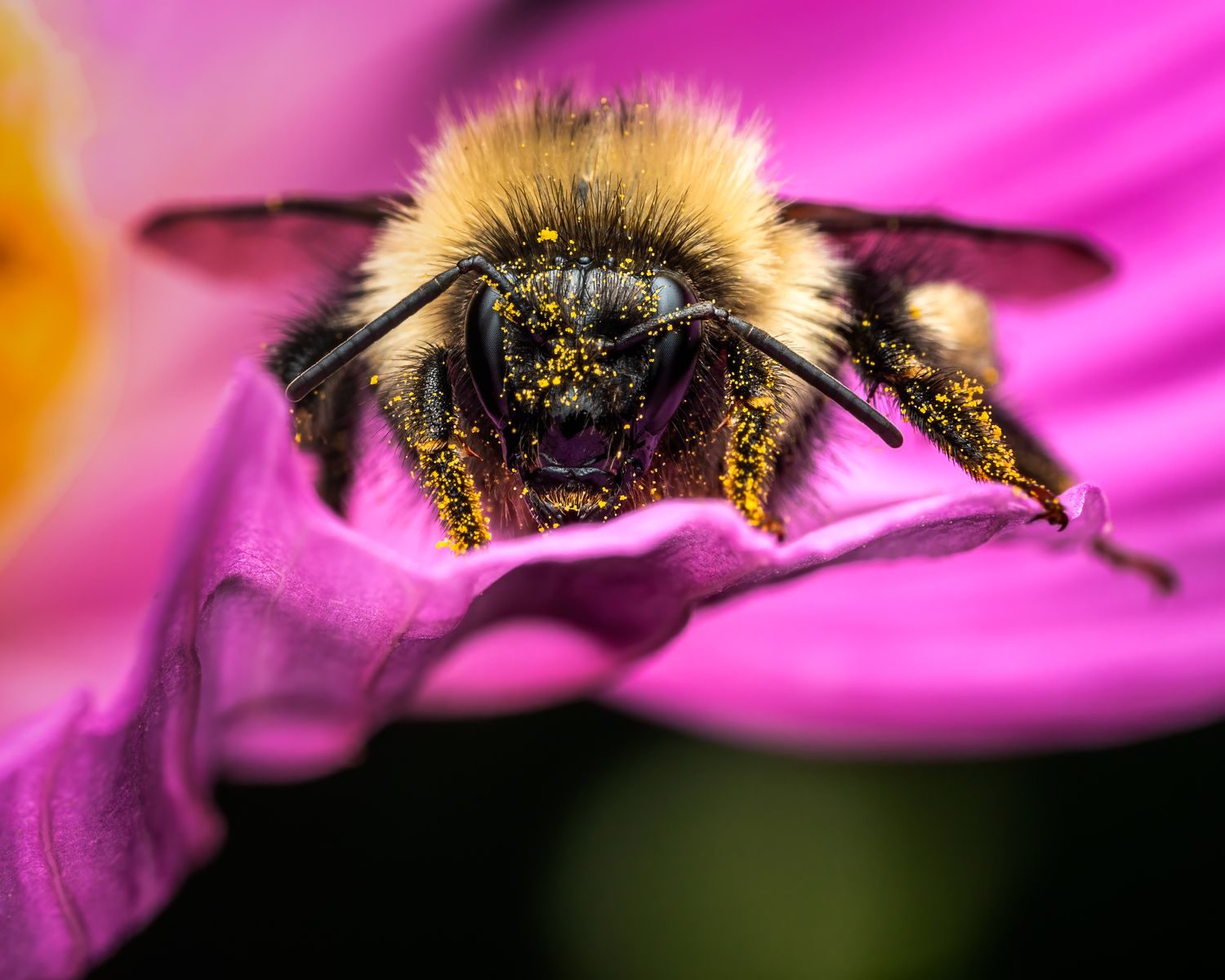
A bumblebee filmed in a flower garden became an instant “pollen puff” after emerging almost completely dusted in pale pollen. The clip, captured by gardener Kathy Jennings and highlighted in August 2026, showed the bee moving through a Rose of Sharon flower. Its fuzzy body had picked up so much loose pollen that the insect looked more powdered than striped, turning an ordinary foraging visit into an unusually photogenic pollination lesson.
The coating was funny to human eyes, but pollen on a bumblebee is part of serious biological work. Bumblebees visit flowers for both nectar and pollen, and female workers can groom collected pollen into specialized baskets on their hind legs. Some grains remain on body hairs and can be transferred when the bee visits another flower, helping plants reproduce while the bee gathers food for itself and its colony.
Rose of Sharon

Jennings’ garden clip showed the bumblebee working inside Rose of Sharon, a flowering shrub also commonly called shrub althea and belonging to the hibiscus family. The original report noted that Jennings had seen similar pollen-covered bees in her yard before, suggesting the flowers were regular foraging stops. Large, open blooms can place a visiting bee directly against pollen-bearing structures as it searches for floral rewards. That close contact helps explain how an insect can emerge carrying a conspicuous dusting over much of its normally dark and yellow body.
Pollen-Covered Bumblebee
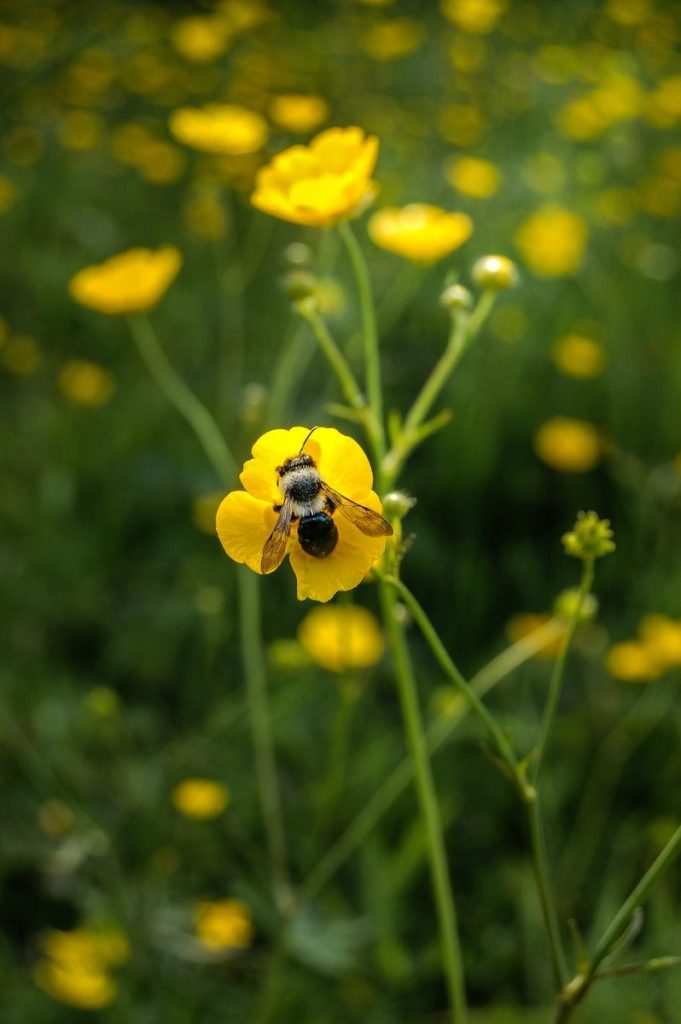
The bee in the video was so heavily coated that its usual markings were partly obscured by pollen. That does not mean the insect was trapped or injured by the flower. Bees routinely contact loose pollen while moving among floral structures, although the amount visible on an individual can vary greatly. In this case, the unusually thick coating created the “pollen puff” appearance that made the clip memorable. A photograph or short video captures one moment in the foraging process, before the bee has necessarily groomed much of that pollen from its body.
Hairy Bumblebee Body
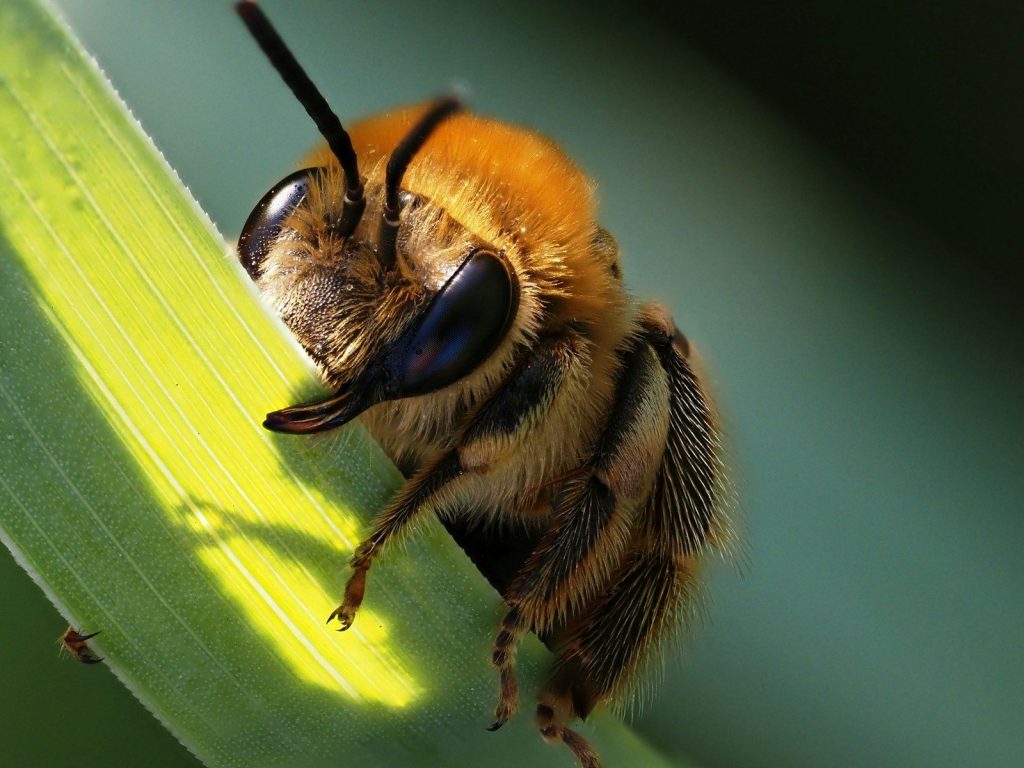
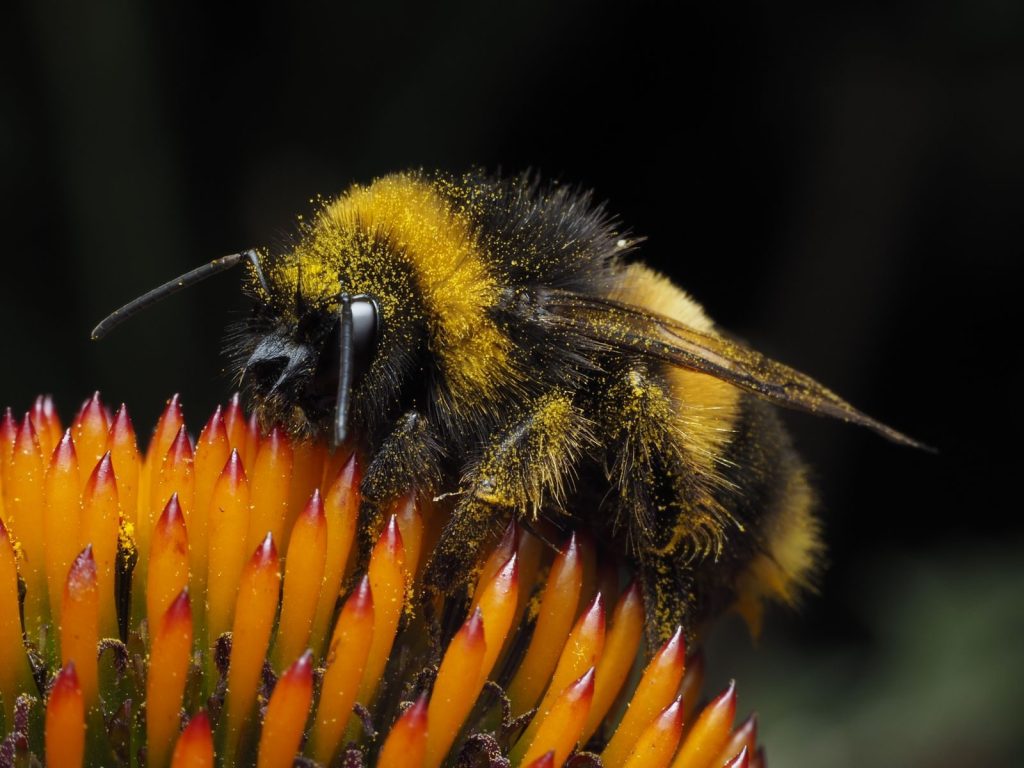
Bumblebees are especially fuzzy because much of their body is covered with branched hairs. Those hairs are excellent at catching pollen as a bee brushes against anthers inside flowers. U.S. Forest Service material on bumblebees specifically identifies hairy bodies as an adaptation for pollen collection. The coating seen in the viral clip therefore was not just debris sticking randomly to an insect. The bee’s body is well suited to collecting grains, which can later be groomed, transported, eaten by the colony, or transferred to another flower during continued foraging.
Hind-Leg Pollen Baskets
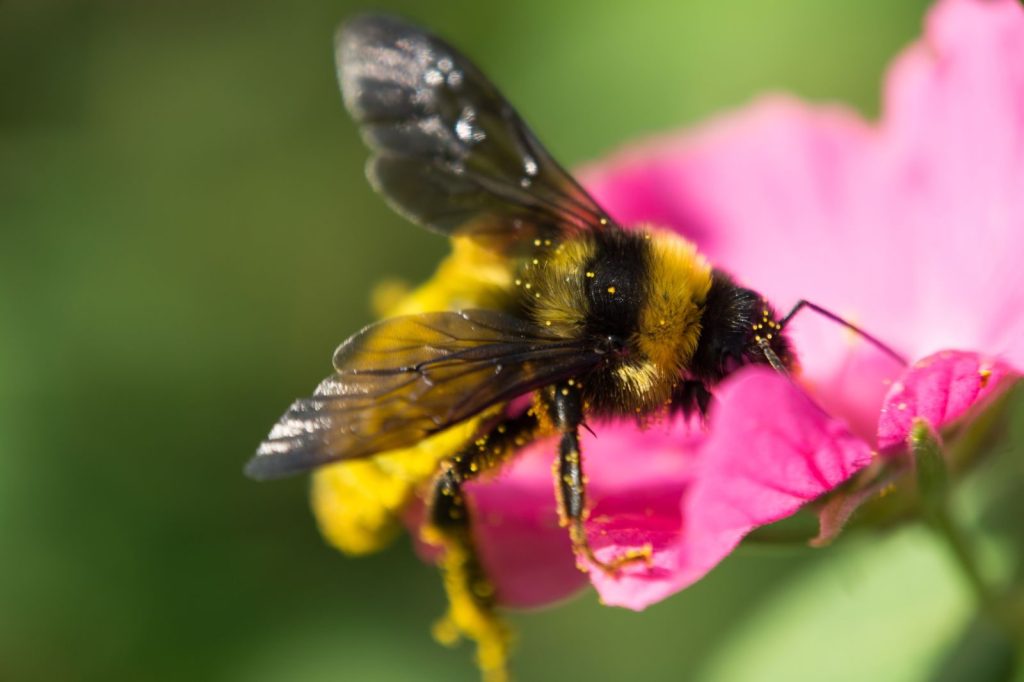
Female bumblebees, including workers, have specialized pollen baskets called corbiculae on their hind legs. As they forage, they use their legs to groom pollen from much of the body and pack it into these smooth carrying areas. A bee that initially looks dusted from head to abdomen may therefore later concentrate a large portion of its load on the legs. Males do not have the same pollen baskets. The structures make pollen collection efficient because a worker can transport a substantial load back to the nest while continuing to visit flowers.
Nectar and Pollen

Bumblebees do not visit flowers only for nectar while collecting pollen by accident. Female workers actively gather both resources. Nectar provides carbohydrates that fuel adult activity, while pollen supplies protein and other nutrients needed by developing brood. USDA guidance on bumblebee biology distinguishes female foragers, which collect nectar and pollen, from males, which mainly seek nectar. The viral bee may have been drinking nectar while becoming dusted, but its sex and exact foraging goal cannot be proven from a short clip alone unless identifying details are clear enough.
Flower Pollination
Pollen carried on a bee’s body can become valuable to the plant when some grains reach the stigma of a compatible flower. That transfer is pollination, the step that allows fertilization and ultimately seed production in flowering plants. Bees are effective pollinators because they repeatedly visit blooms while seeking food, and pollen can remain on body hairs even after grooming. A bee does not need to be completely coated to pollinate successfully. The dramatic “pollen puff” simply makes a normally easy-to-miss part of plant reproduction unusually visible to people watching.
Worker Bumblebees

A typical bumblebee colony divides much of its seasonal work among females. After the nest produces adult workers, the queen increasingly depends on them to bring food back for developing young. Workers leave the nest to collect nectar and pollen from flowering plants, while also performing other colony tasks at different stages of life. That makes a foraging bumblebee part of a larger social system rather than a solitary visitor collecting only for itself. The pollen load carried home can help support larvae that will become the colony’s next generation of adults.
Bee-Friendly Gardens
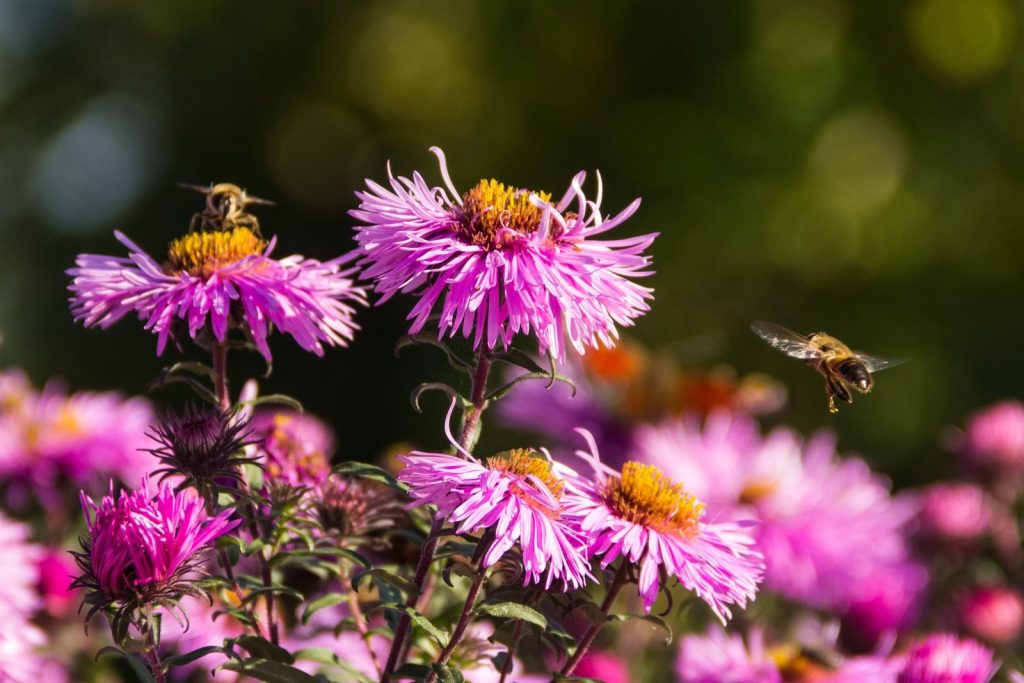
Gardens can support bumblebees by providing a succession of flowering plants that offer nectar and pollen across the growing season. A single attractive shrub may draw many visits while it is blooming, but pollinators benefit more from varied flowers available at different times. Extension and U.S. Forest Service guidance also emphasizes the value of flowering habitat for detecting and supporting bumblebees. Jennings’ pollen-covered visitor is a vivid reminder of what those plantings can make possible: repeated, close interactions between ordinary garden flowers and the insects that depend on them for food.
Featured Image: Photo by Skyler Ewing on Pexels