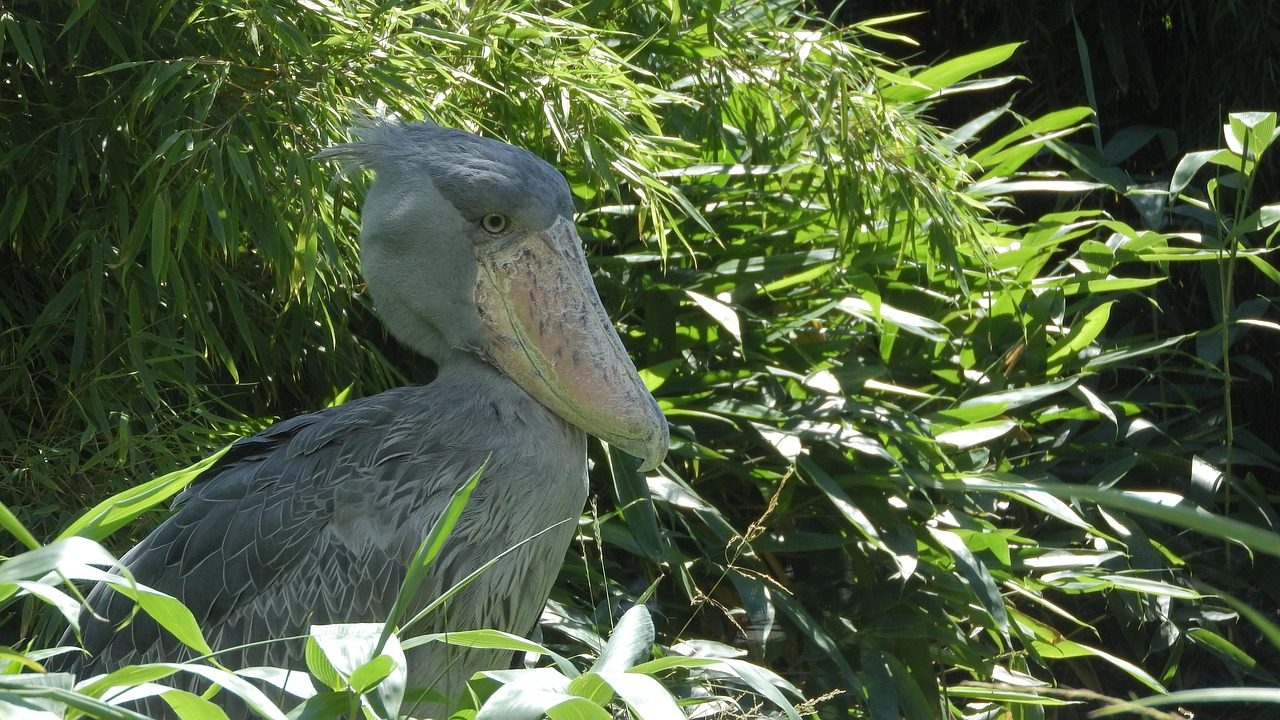
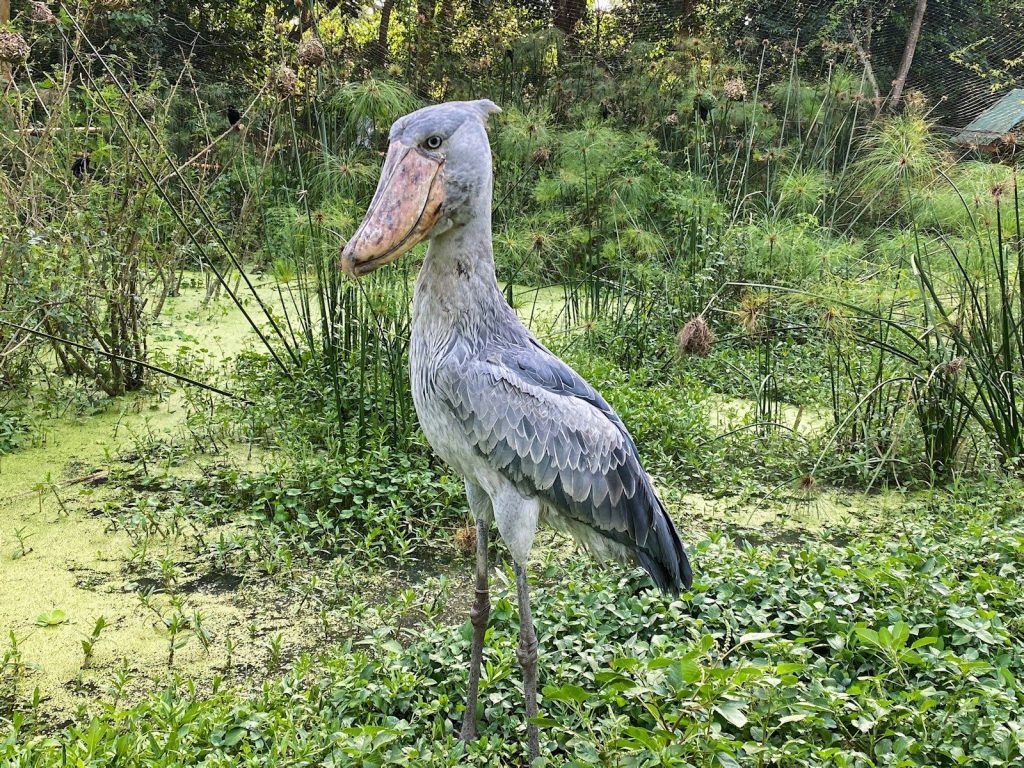
The shoebill is one of the most striking and intimidating birds in the world. With its massive shoe-shaped bill, towering height, and statue-like stillness, it looks more like a prehistoric creature than a modern bird. A close encounter with a shoebill can feel almost surreal, as its intense stare and motionless posture often leave people unsure of what it will do next.
A Bird That Looks Straight Out of Prehistory
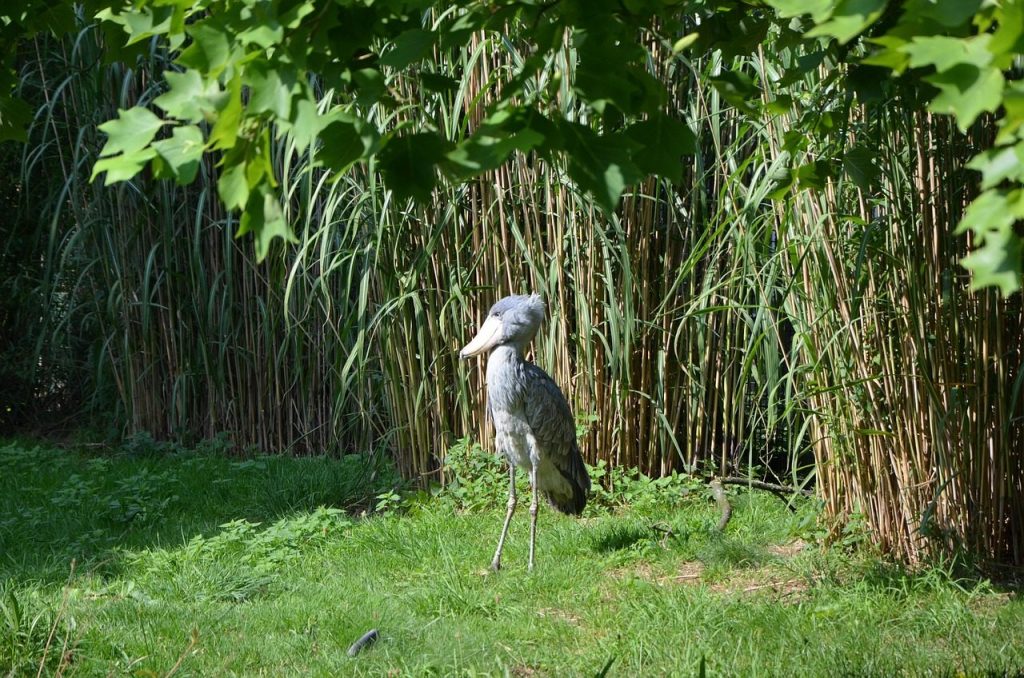
Shoebills stand over five feet tall and are instantly recognizable thanks to their enormous, hooked beaks. Their appearance has often been compared to dinosaurs, giving them an almost mythical presence in the wetlands of East Africa where they live.
Unusual Behavior in Close Encounters
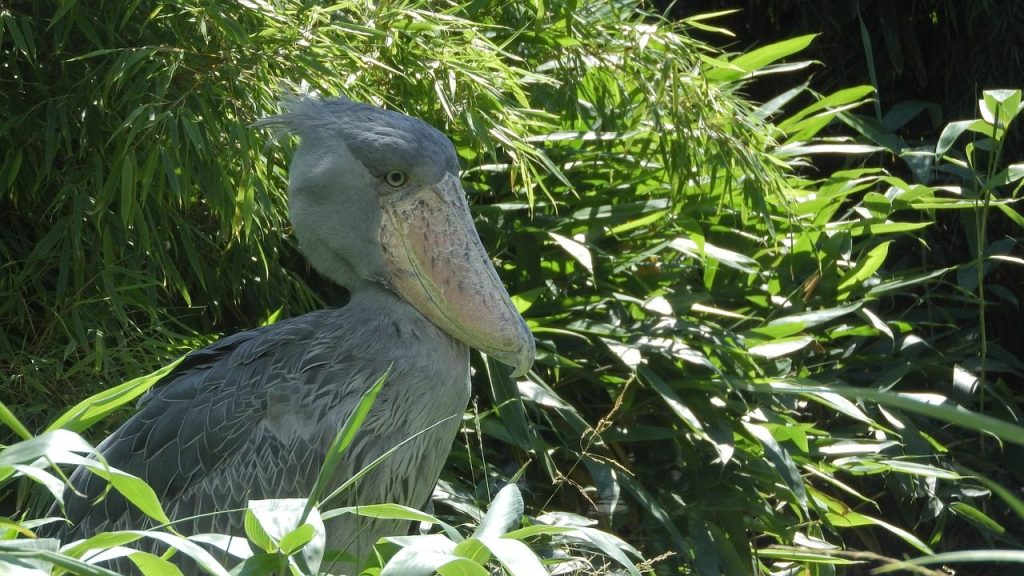
When a shoebill faces a human at close range, it typically does not react with immediate flight or aggression. Instead, it often remains completely still, watching quietly. This behavior can make the encounter feel even more intense, as the bird appears calm but highly aware.
The Famous “Machine Gun” Bill Clatter
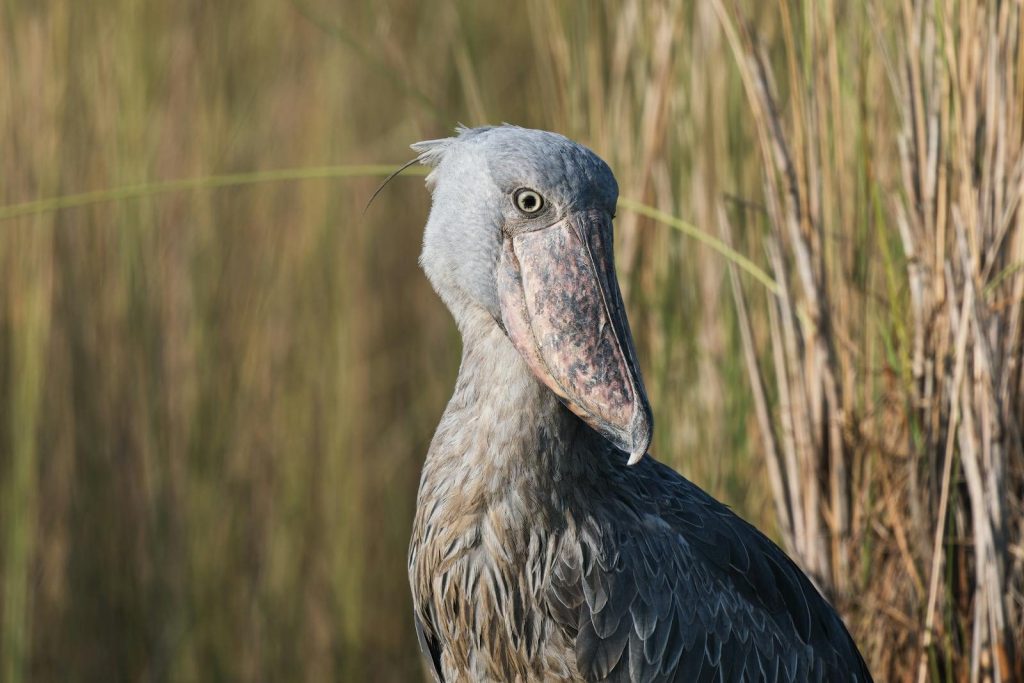
One of the shoebill’s most unusual behaviors is its rapid bill clattering, a sound often compared to a machine gun. It is believed to be a form of communication, possibly used as a greeting or warning, and can be startling when heard unexpectedly in the wild.
A Powerful Predator of Swamp Ecosystems
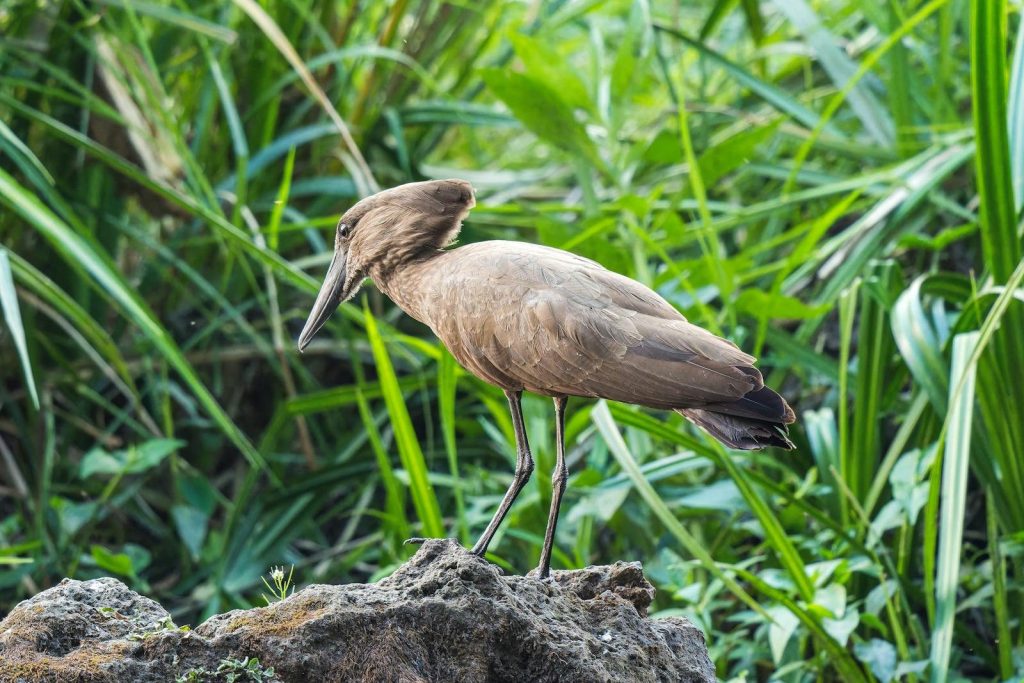
Despite its calm appearance, the shoebill is a skilled and efficient hunter. It feeds mainly on fish such as lungfish and bichirs, striking with incredible speed and precision. Its powerful bill is capable of capturing large and slippery prey in swamp environments.
Patience Is Its Ultimate Hunting Strategy
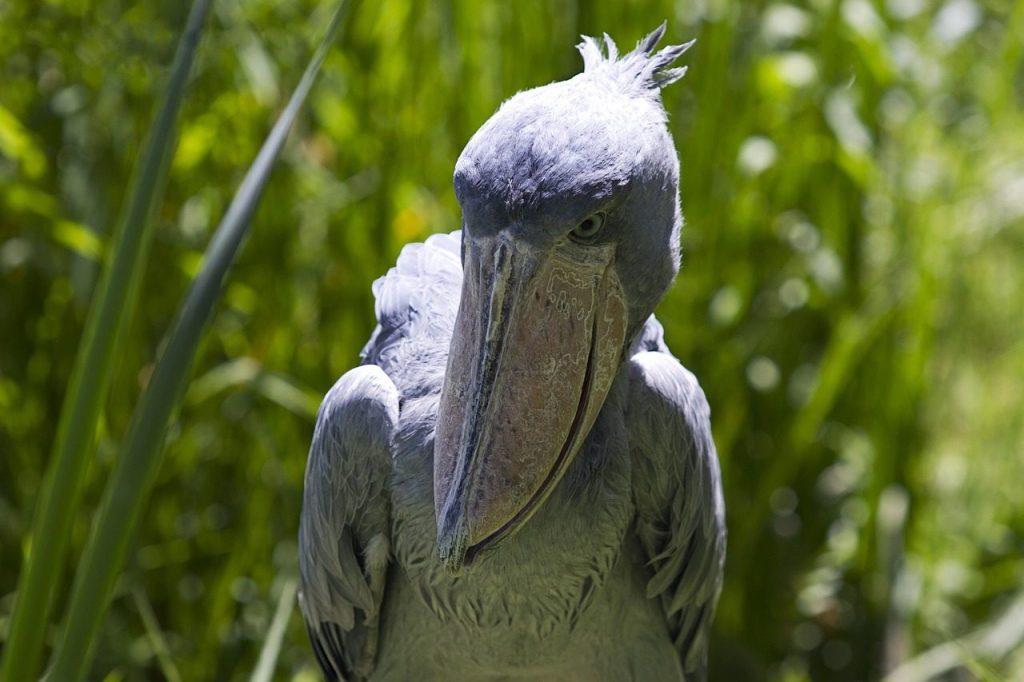
Shoebills are known for their extreme patience. They often stand motionless for long periods, waiting for prey to surface. This ambush style of hunting allows them to conserve energy while maximizing their chances of a successful strike.
Why Close Encounters Are Rare and Special
Shoebills are naturally shy and live in remote wetlands, making human encounters uncommon. When they do occur, they are usually brief but memorable. Wildlife experts stress the importance of maintaining distance, as these birds are sensitive to disturbance despite their calm appearance.