Wild animals carry coat patterns that can help with camouflage, recognition, temperature control and protection from pests. Some patterns are instantly familiar, such as a tiger’s stripes or a giraffe’s patches, while others become especially impressive when their biological function is understood. Beauty is subjective, so this is not a scientific ranking. Instead, these eight animals were chosen because their coats are visually distinctive and supported by well documented zoological research.
Many of these patterns are also useful to researchers. Individual tigers, giraffes, zebras and painted dogs can be recognized from unique markings, making photographs valuable for long term monitoring. In other species, a coat can break up the body outline or reduce successful landings by biting flies. The result is a useful reminder that an animal’s appearance is rarely just decoration. Color, contrast and pattern can become practical tools for surviving in a particular environment.
Tiger Stripes

A tiger’s orange coat is crossed by dark vertical stripes that help break up its outline in grass and forest shadows. San Diego Zoo Wildlife Alliance notes that tigers are stalk and ambush hunters, so concealment is important while they wait for prey to come close. No two tigers have exactly the same stripe pattern. Researchers can therefore use clear photographs of the flanks to recognize individuals, much as fingerprints distinguish people. The pattern is both visually striking and useful for field identification.
Giraffe Patches

Giraffes carry large patches separated by lighter lines, and the exact arrangement differs from animal to animal. San Diego Zoo Wildlife Alliance describes each giraffe’s markings as individual as human fingerprints. Coat patterns also vary among giraffe species, helping give northern, reticulated, Masai and southern giraffes different appearances. In the field, researchers can match photographs of those patterns to known animals. What looks like a decorative mosaic is therefore also a reliable natural identification system that can support population monitoring over many years.
Zebra Stripes

Zebra stripes are among the most debated animal patterns, but strong experimental evidence supports a role in reducing attacks by biting flies. A 2019 PLOS ONE study found that horseflies landed far less often on zebras than on uniformly colored horses. When horses wore striped coats, fly landings also dropped sharply. Researchers concluded that stripes interfere with controlled landing at close range. The pattern may have other effects too, but protection from biting flies is now one of the best supported explanations.
Jaguar Rosettes
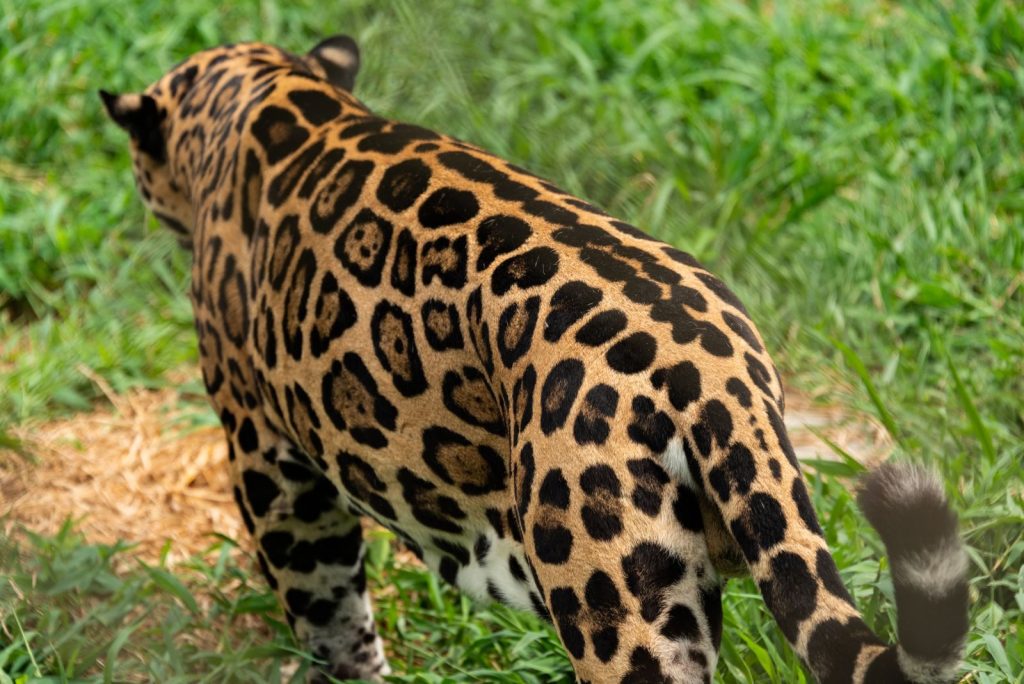
Jaguars are covered with dark rosettes, many of which contain smaller spots in the center. That feature helps distinguish them from leopards, whose rosettes usually lack the central dot. San Diego Zoo Wildlife Alliance explains that the markings break up the cat’s outline in forests and grasslands, helping it remain concealed from prey. Some jaguars are melanistic and can look almost black, yet their rosette pattern may still be visible in suitable light. The same species can therefore produce two dramatically different appearances.
Snow Leopard Camouflage

Snow leopards wear a pale gray or cream coat marked with blurred dark spots and rosettes. In the rocky mountains of Central Asia, that pattern provides exceptional camouflage against stone, shadow and patches of snow. Their fur also becomes particularly dense in cold conditions, adding insulation to visual concealment. San Diego Zoo Wildlife Alliance notes that the cats can be extremely difficult to locate in their natural habitat. The coat helps explain why this elusive predator is often called a ghost of the mountains.
Clouded Leopard Markings

Clouded leopards take their name from the large, irregular, cloud shaped markings across their bodies. These cats belong to the genus Neofelis and are not simply small versions of true leopards. San Diego Zoo Wildlife Alliance notes that they live mainly in Southeast Asian forests and spend substantial time in trees, especially where larger cats are present. Their long tails help with balance, while their unusual coat blends with the broken light and dense vegetation. Few wild cats have markings quite as distinctive.
Okapi Leg Stripes

An okapi looks as though two different coat designs were combined. Its body is dark brown or reddish brown, while the legs and hindquarters carry bold white stripes. San Diego Zoo Wildlife Alliance explains that those stripes can provide camouflage in partial sunlight filtering through dense rainforest. They may also help young animals follow their mothers. The coat itself is dense, velvety and oily, which helps water slide away. Despite its zebra like legs, the okapi is actually a close relative of giraffes.
Painted Dog Patches

African painted dogs carry irregular patches of black, brown and white, with a pattern unique to each animal. San Diego Zoo Wildlife Alliance notes that the markings give the species its common name and can help observers distinguish individuals. The dogs live in highly social packs and are built for endurance rather than a short ambush. Their coat is especially memorable because there is no standard layout. Each animal looks different, yet the shared mix of contrasting patches makes the species immediately recognizable across African savannas and bushland.