Laughter is not exclusively human, but saying another species “laughs like us” requires careful wording. Researchers use play vocalizations, panting sounds, ultrasonic calls, and other signals as evidence of evolutionary parallels rather than proof that animals understand jokes.
A major review identified play-associated vocalizations across at least 65 species. Recent research has also found important rhythmic similarities between human and great-ape laughter.
Chimpanzee Laughter

Chimpanzees produce breathy, panting laughter-like sounds during social play and tickling. Their vocalizations do not sound exactly like a human giggle because apes coordinate breathing and vocal production differently.
A 2026 study examining laughter sequences across humans and great apes found shared rhythmic organization, supporting the idea that laughter has deep evolutionary roots. Human laughter has become faster and more flexible, but chimpanzee play laughter appears to share part of the ancestral system from which ours evolved.
Bonobo Laughter
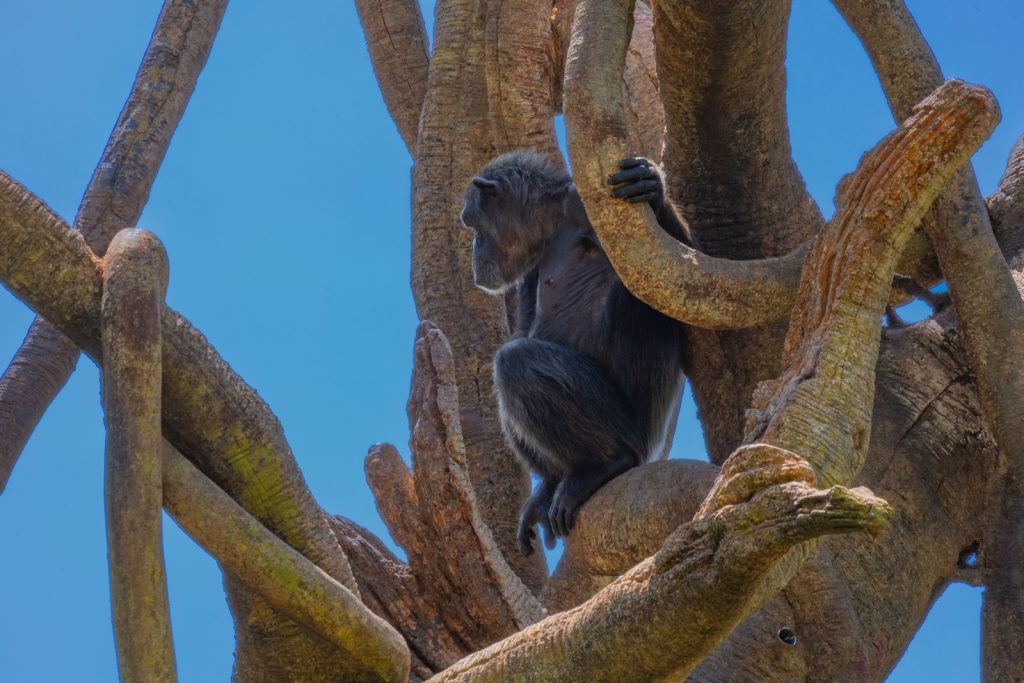
Bonobos also produce laughter-like vocalizations during playful social interaction. Their close evolutionary relationship with humans and chimpanzees makes them especially useful for investigating how primate laughter developed.
Researchers comparing ape species found regular rhythmic structure in bonobo laughter, although human laughter changes more strongly with social context. The sounds should not automatically be interpreted as evidence that a bonobo finds something “funny” in the human sense. They are most clearly associated with maintaining playful, nonaggressive social interactions.
Gorilla Laughter

Gorillas produce characteristic play vocalizations during wrestling, chasing, tickling, and other social interactions. These sounds are part of the broader family of great-ape laughter studied alongside humans.
The 2026 comparative research found that gorilla laughter, like that of chimpanzees, bonobos, orangutans, and humans, follows a regular rhythmic pattern. That similarity suggests part of the basic laughter system existed before these evolutionary lineages separated, although humans later developed unusually flexible use of laughter in conversation and social communication.
Orangutan Laughter
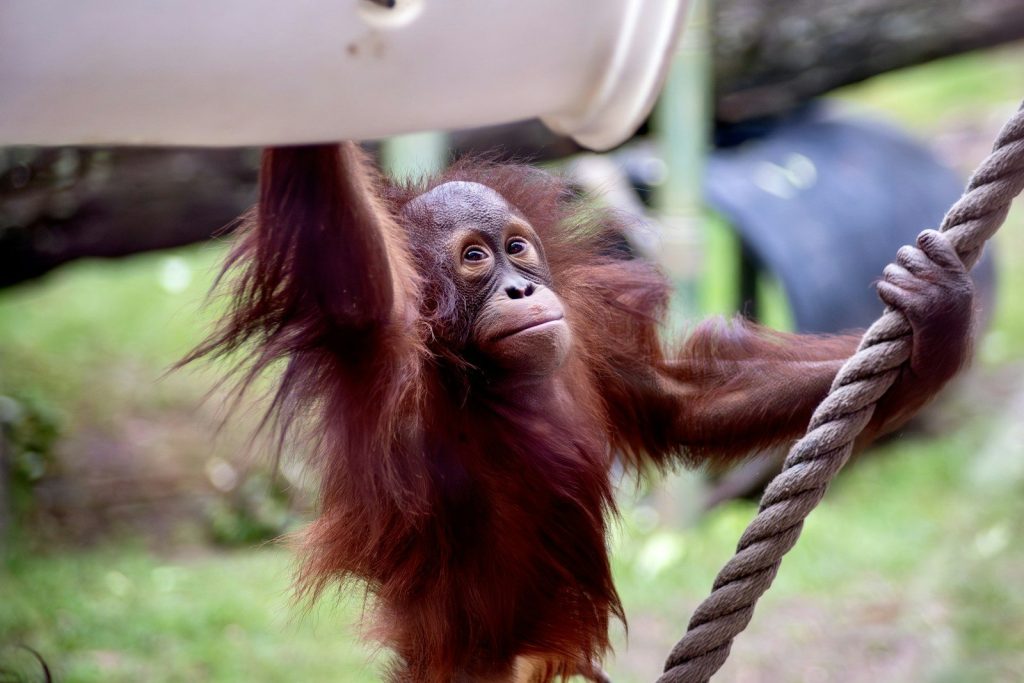
Orangutans may look quieter and more solitary than African great apes, yet they also produce laughter-like vocalizations during playful encounters and tickling. Their inclusion is important because orangutans separated from the lineage leading to humans earlier than chimpanzees and bonobos did.
Finding comparable rhythmic properties across all living great apes strengthens the argument for an ancient evolutionary origin. The common ancestor involved may have lived roughly 15 million years ago, long before modern humans existed.
Rats

Rats produce ultrasonic calls around 50 kilohertz during rough-and-tumble play and when appropriately tickled. Humans normally cannot hear these calls without equipment because they occur above our hearing range.
Scientists often describe these sounds as laughter-like because they are strongly associated with playful and rewarding situations. Experiments have also connected tickling responses with activity in somatosensory brain regions. Calling the sound “rat laughter” is useful shorthand, but researchers remain careful about assuming the animal experiences precisely the same emotion a laughing human does.
Kea Parrot

The kea, an exceptionally playful New Zealand parrot, produces a distinctive play call that can influence the behavior of other kea nearby. Research has found that hearing the call can promote playful activity, creating something resembling contagious play.
That makes the kea especially interesting because laughter-like communication is not limited to mammals. The call does not sound like human laughter, but its social function has similarities: it signals a playful context and can help turn an interaction toward play rather than aggression.
Dogs

Dogs produce characteristic play panting during friendly interaction, accompanied by familiar signals such as play bows and relaxed facial expressions. Researchers include these vocalizations in broader discussions of animal play signals and laughter-like communication.
Calling it “dog laughter” can be catchy, but the phrase should not imply that a dog has heard a joke. The better-supported interpretation is that special breathing and vocal signals help communicate playful intent, preventing rough chasing, wrestling, and mouthing from being mistaken for genuine aggression.
Dolphins

Bottlenose dolphins produce specific signals during play-fighting that differ from sounds used during serious aggressive interactions. Researchers have interpreted these as play signals that may help keep energetic encounters from escalating.
This is functionally similar to one proposed origin of laughter: communicating that rough physical behavior is friendly rather than threatening. Dolphin sounds are very different from human chuckling, so “laughter” remains an analogy. What the evidence supports is a sophisticated vocal system helping social animals distinguish genuine conflict from play.