There is no scientifically standardized ranking of the 17 “fastest” birds of prey. Dive speed, level flight, pursuit speed, and maneuverability are different measurements, and reliable maximum speeds are unavailable for many raptors.
These eight species instead demonstrate well-documented forms of high-speed hunting, from the peregrine’s spectacular stoop to hawks racing through dense woodland.
Peregrine Falcon
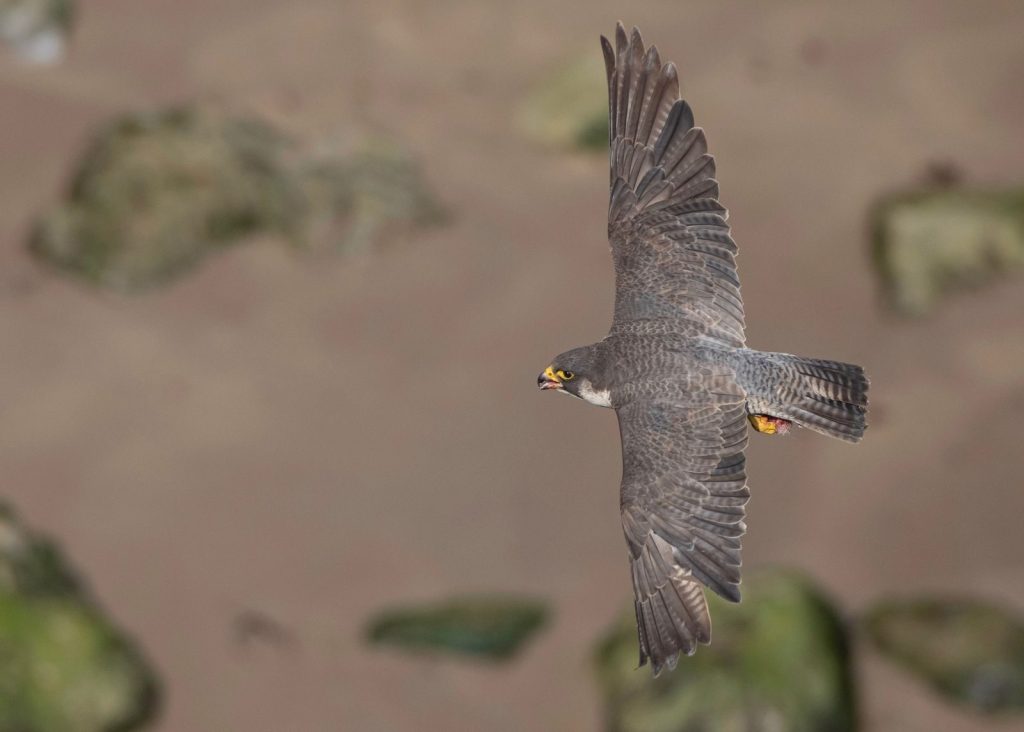
The peregrine falcon is the clearest speed champion among hunting birds. Cornell reports ordinary traveling speeds around 25–34 mph and direct pursuits reaching about 69 mph, already fast enough to overtake many flying birds.
Its greatest speed comes during the hunting stoop. After positioning high above prey, a peregrine folds its wings and plunges downward. Cornell cites approximately 200 mph and calculations reaching 238 mph under particular conditions. That spectacular dive is very different from sustained level flight and should not be compared directly with ordinary cruising speeds.
Golden Eagle
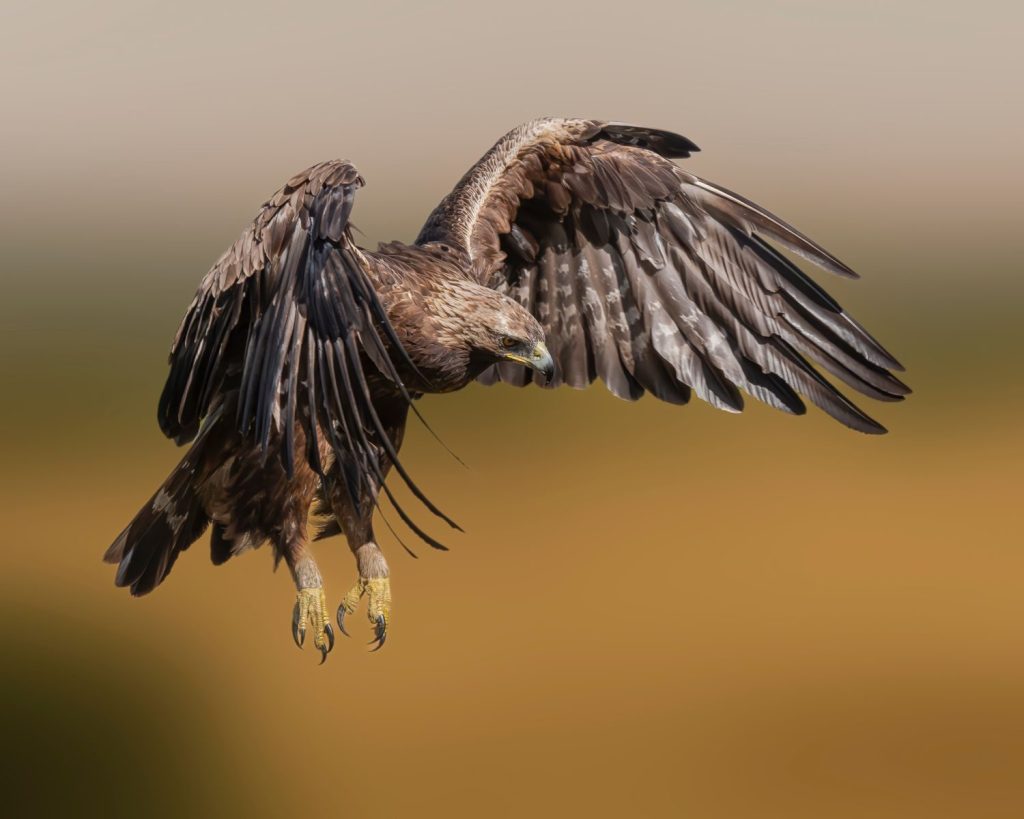
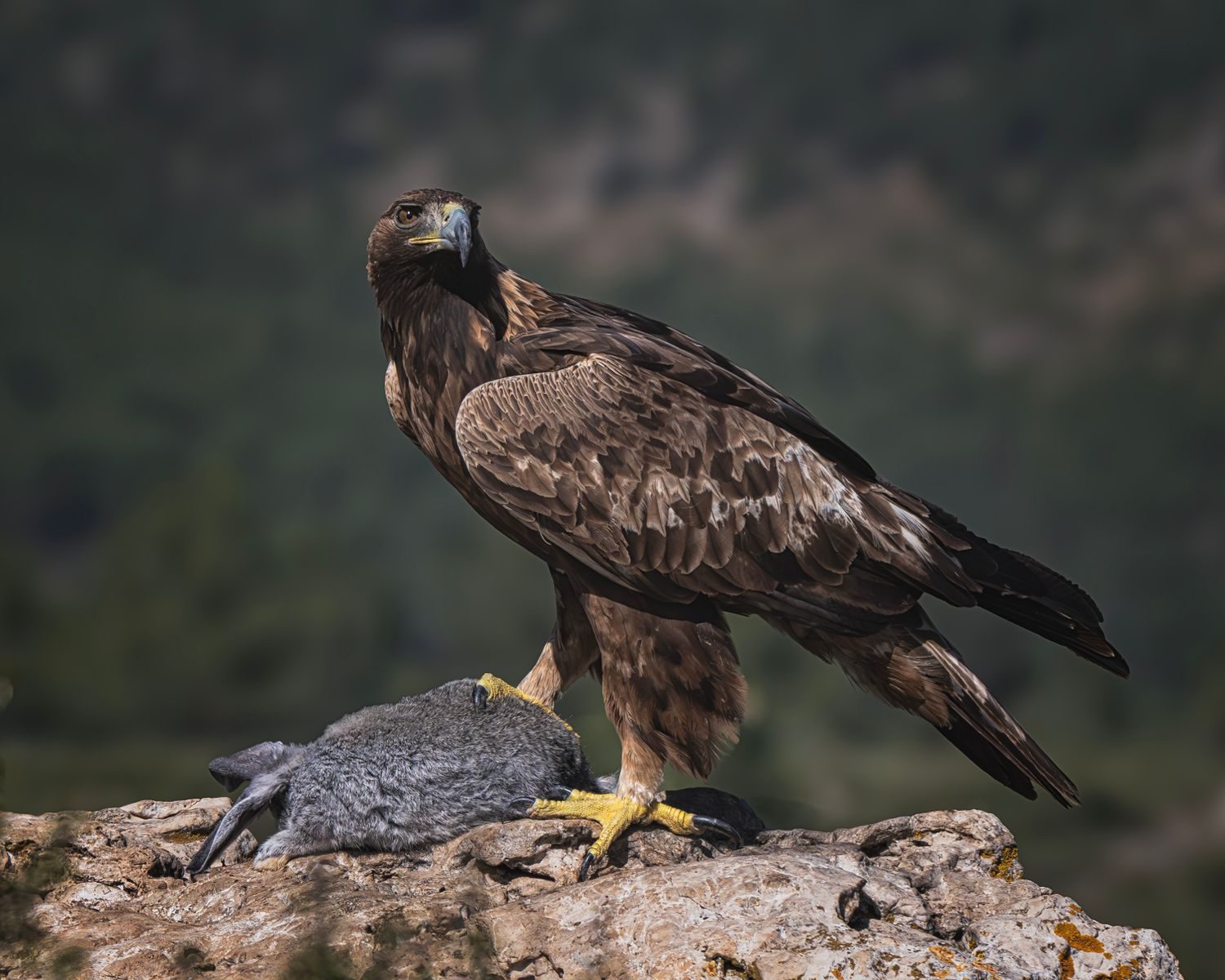
Golden eagles combine size with remarkable aerial agility. They often search for prey while soaring above open landscapes before descending rapidly after rabbits, hares, ground squirrels, and other animals below.
Cornell describes them as among North America’s fastest and nimblest large raptors. Bird Academy material reports that golden eagles can reach roughly 200 mph during steep dives, then spread their wings and tail to create drag and slow dramatically near the ground. Their hunting speed is therefore built around controlled acceleration and braking rather than simply flying at maximum velocity continuously.
Merlin
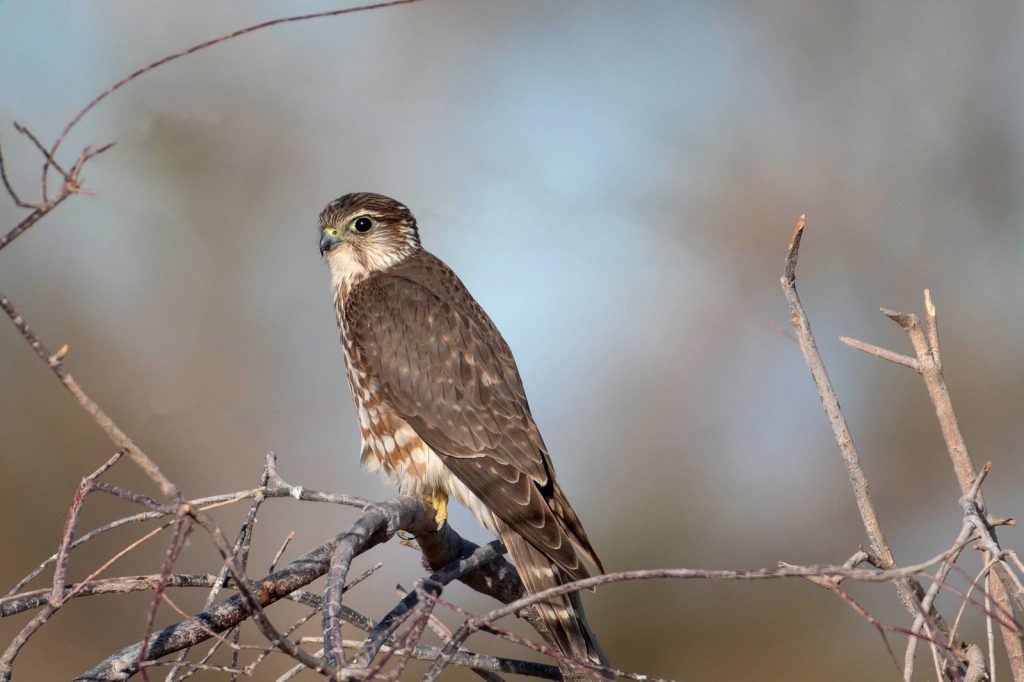
The Merlin is much smaller than a peregrine, but its hunting style depends heavily on speed and maneuverability. Cornell reports a typical flight speed of about 30 mph, with faster speeds reached while pursuing prey.
Instead of relying primarily on a dramatic high-altitude stoop, Merlins frequently chase small birds horizontally or even attack from below. Their wingbeats are unusually rapid for falcons, and they can pursue prey until it tires. Some pairs have even been observed coordinating attacks on flocks, with one bird creating confusion while the second exploits the disturbance.
Gyrfalcon
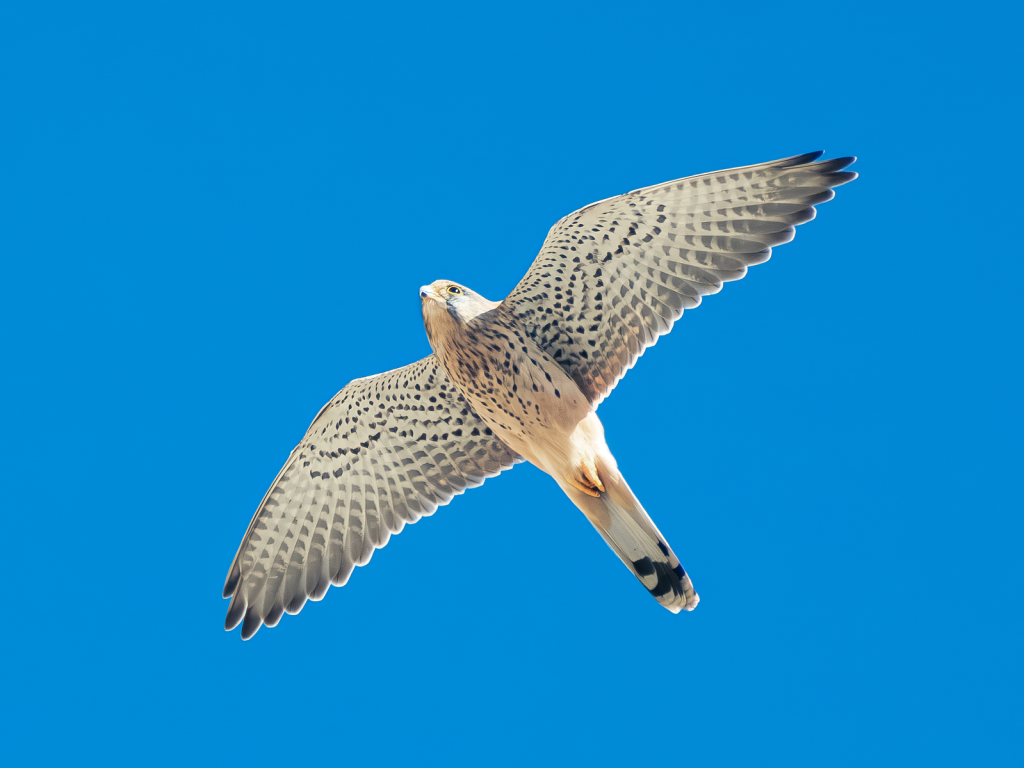
The Gyrfalcon is the world’s largest falcon and a powerful predator of Arctic landscapes. Ptarmigan form a major part of its diet, although it can also catch waterfowl, seabirds, shorebirds, and mammals such as hares and ground squirrels.
Reliable sources do not provide one universally accepted maximum wild hunting speed for the species, so assigning it a precise position in a fastest-bird ranking would be misleading. Its documented strength lies in fast, sustained pursuit through open tundra environments where prey may attempt prolonged escape rather than facing a peregrine-style vertical stoop.
Prairie Falcon
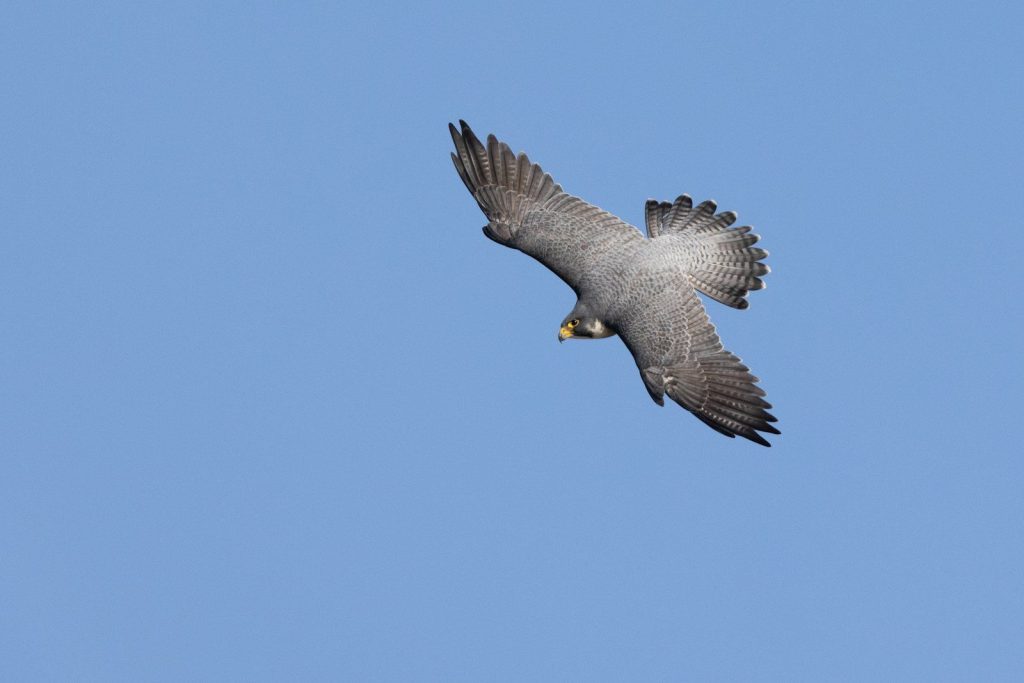
Prairie falcons hunt the open landscapes of western North America using speed close to the ground. Cornell describes low-level “strafing” flights that can take the bird only about ten feet above the surface while it searches for prey.
They also hunt from perches and while soaring, allowing different approaches depending on terrain and target. Ground squirrels are important prey, while birds can be pursued in flight. Their speed is especially effective when combined with surprise: flying low uses the landscape to conceal an approaching falcon until relatively little distance remains for prey to escape.
American Goshawk
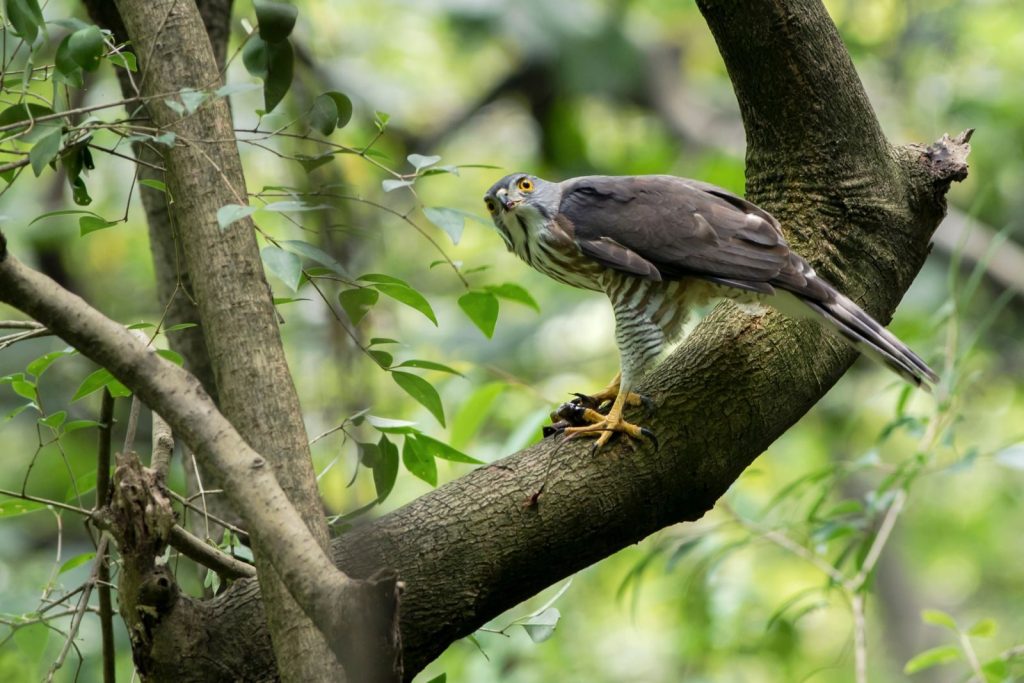
American goshawks turn dense forest into a high-speed obstacle course. They ambush birds and mammals, then pursue fleeing prey between trunks, branches, and brush where a straight-line speed record matters less than rapid acceleration and control.
Cornell describes goshawks flying at high speeds through forests while using their long tails as rudders. They may crash through vegetation and have even pursued potential prey into water. Broad wings generate acceleration quickly, making this raptor an example of speed optimized for confined woodland hunting rather than open-air diving from extreme height.
Aplomado Falcon
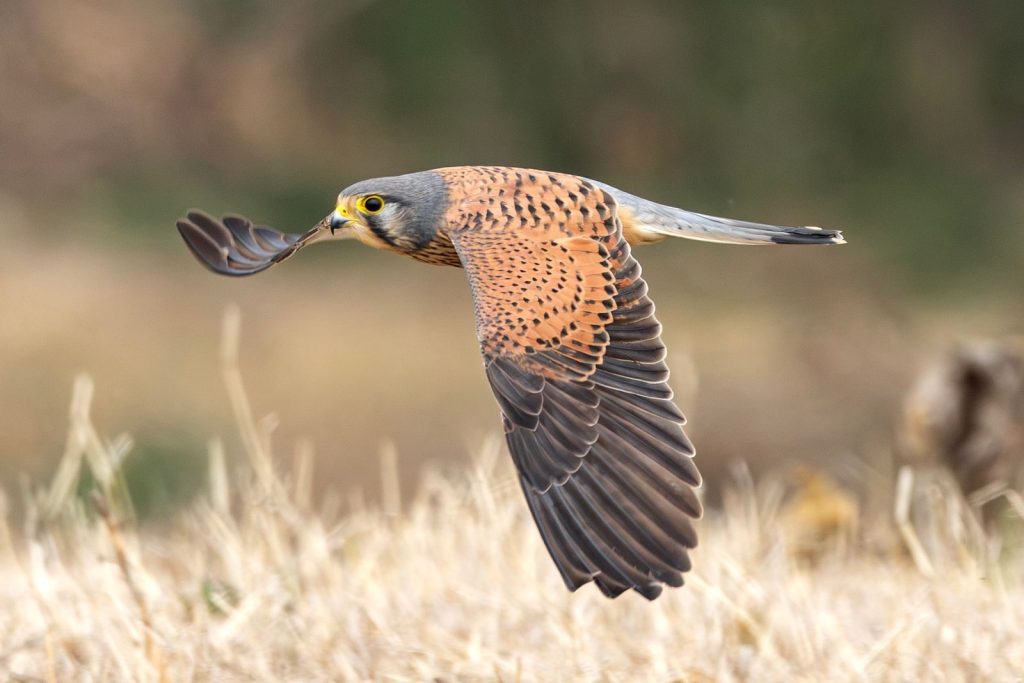
Aplomado falcons hunt in open grasslands and savannas from the southern United States through parts of Latin America. Cornell describes their flight as fast and powerful enough to outpace Mourning Doves and White-winged Doves.
Their hunting behavior is unusually flexible. They catch birds and insects in the air, pursue prey on the ground, and sometimes hunt cooperatively as pairs. One falcon may flush prey while its partner intercepts the escaping animal. That combination of speed, maneuverability, and cooperation makes the species formidable without requiring an unsupported maximum-speed number.
Sharp-Shinned Hawk
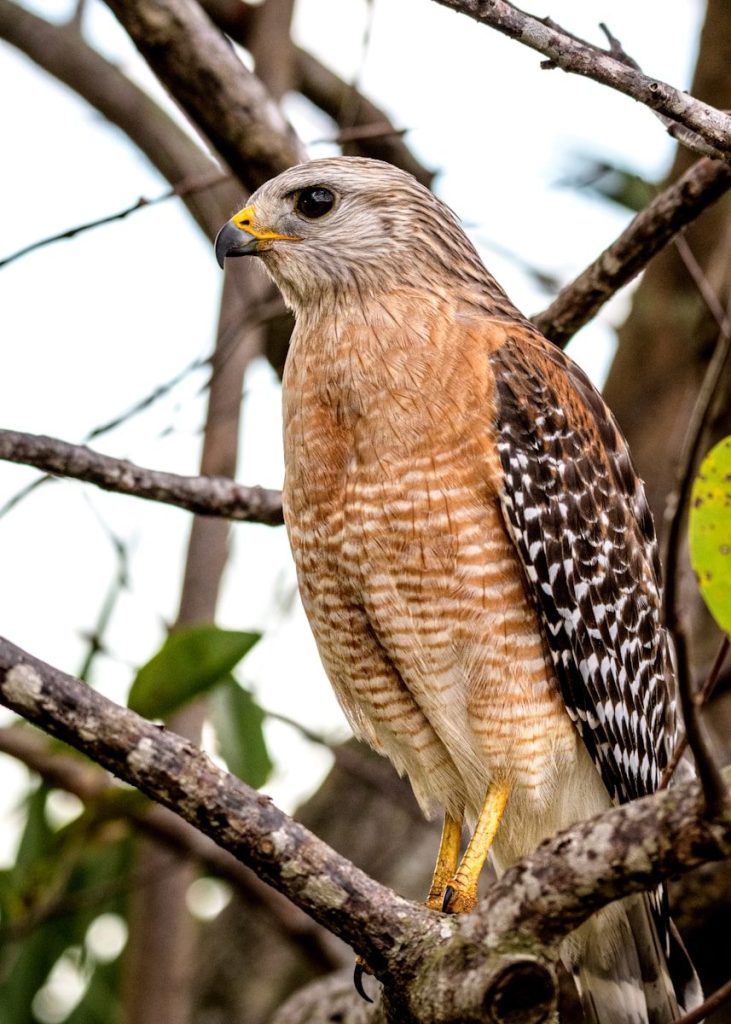
Sharp-shinned hawks are small woodland raptors built for sudden pursuit. Rather than diving from great heights, they often explode from concealed perches and chase songbirds through trees at close range.
Short rounded wings and a long tail give them the agility needed to maneuver through dense vegetation at high speed. Cornell describes them as acrobatic pursuit hunters that use cover to approach undetected before accelerating after prey. Their hunting style shows why “fastest” cannot mean only miles per hour: surviving a chase through branches demands turning ability as much as raw velocity.
Featured Image: Photo by Jesús Esteban San José on Pexels