The exact clip behind this title cannot be independently authenticated from the title alone, so its location, prey animal, and outcome should not be invented. What happens during real Komodo dragon hunts, however, is well documented.
The world’s largest living lizard combines ambush, powerful jaws, serrated teeth, venom, and an extraordinary sense of smell. Those adaptations allow it to tackle prey far larger than most other lizards can handle.
Komodo Dragon
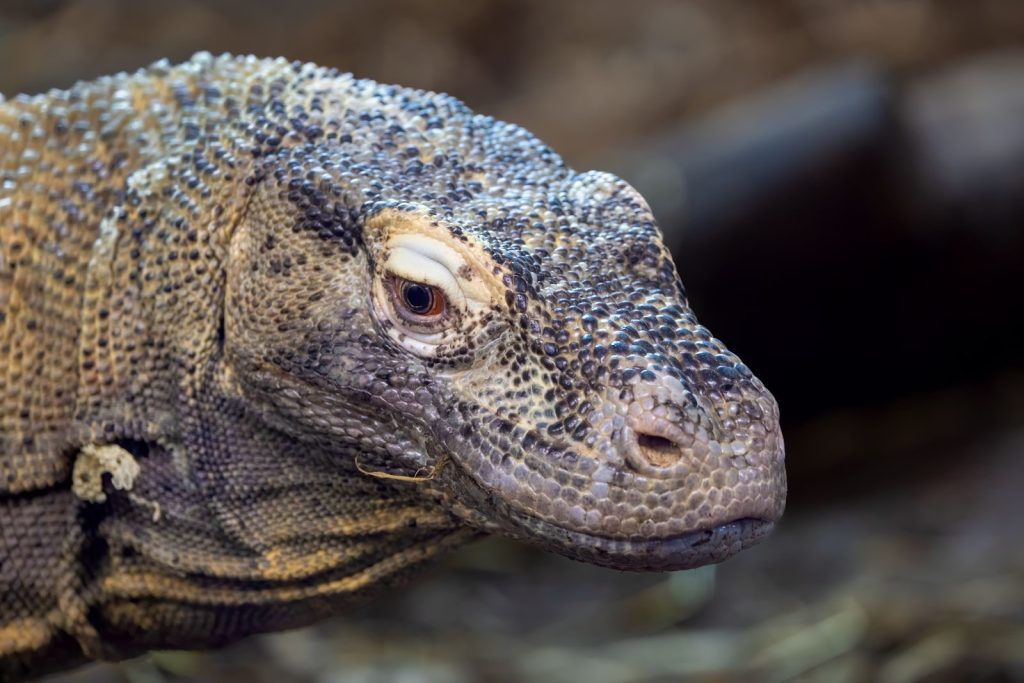
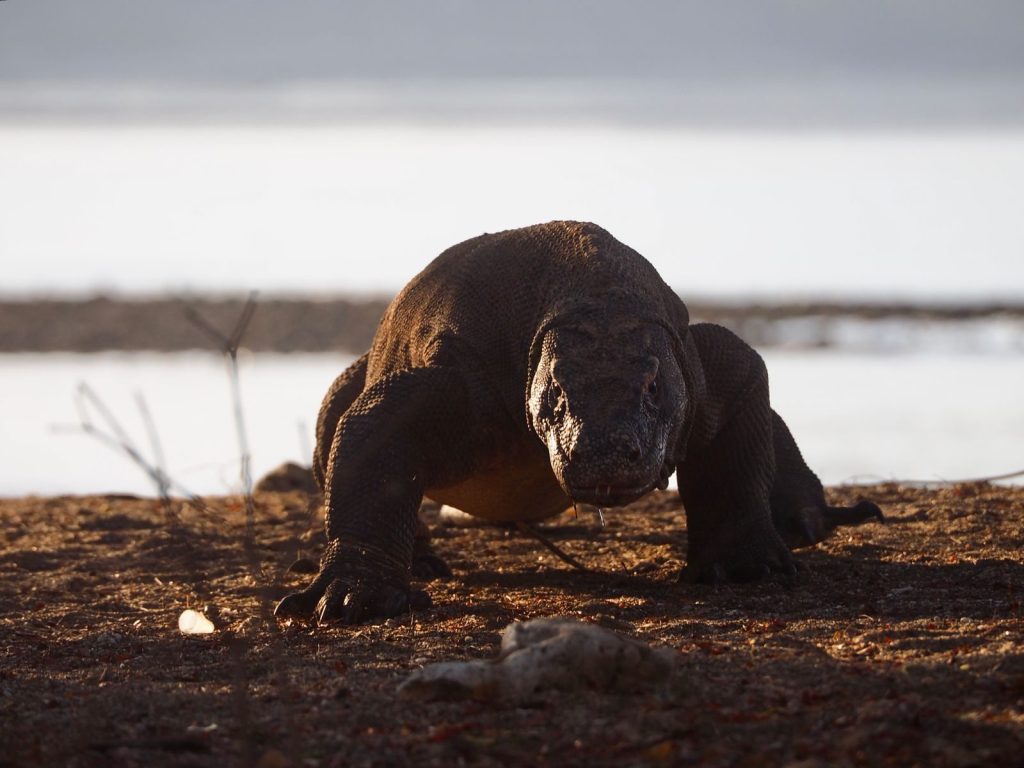
Komodo dragons are giant monitor lizards native to several Indonesian islands. Large adults can exceed 3 meters in length, although individuals vary considerably. Their muscular bodies, strong limbs, heavy tails, sharp claws, and powerful jaws make them formidable predators.
They are not built for prolonged high-speed pursuit. Instead, a dragon can remain surprisingly still before launching a short attack when suitable prey comes close. That approach conserves energy while giving the reptile a chance to land a damaging first bite.
Deer Ambush
Timor deer are important prey for adult Komodo dragons. A dragon may wait near trails or other places where animals are likely to pass, relying on camouflage and patience rather than chasing prey across long distances from the beginning.
Once within range, it can surge forward and bite. The attack does not always end instantly, particularly with large prey. A wounded animal may initially escape, while the combination of physical trauma, blood loss, and venom can make the encounter increasingly difficult to survive.
Serrated Teeth

Komodo dragons possess sharp, recurved teeth with serrated cutting edges. When a dragon bites and pulls, those teeth can create deep wounds rather than simply holding prey in place like a blunt clamp.
Researchers studying Komodo feeding anatomy found that the teeth work together with powerful neck movements and venom. This corrected an older popular story that dangerous mouth bacteria were the main reason bitten prey died. The modern evidence points instead to severe wounds, blood loss, and venom effects.
Komodo Venom
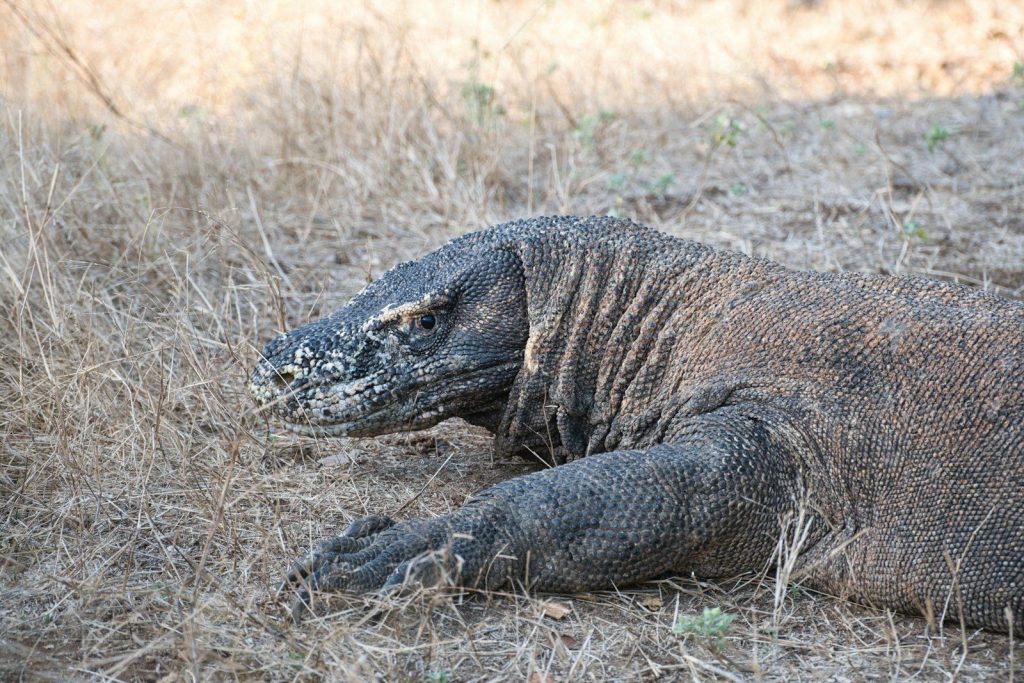
Komodo dragons have venom glands in the lower jaw. Research published in Proceedings of the National Academy of Sciences found venom components capable of affecting blood pressure and blood clotting, helping explain why a serious bite can rapidly weaken prey.
The venom does not function like a magical poison that guarantees delayed death after every bite. The dragon’s predatory system works as a package: sharp teeth inflict major mechanical damage while venom can worsen bleeding and physiological stress. Both elements matter during an attack.
Forked Tongue
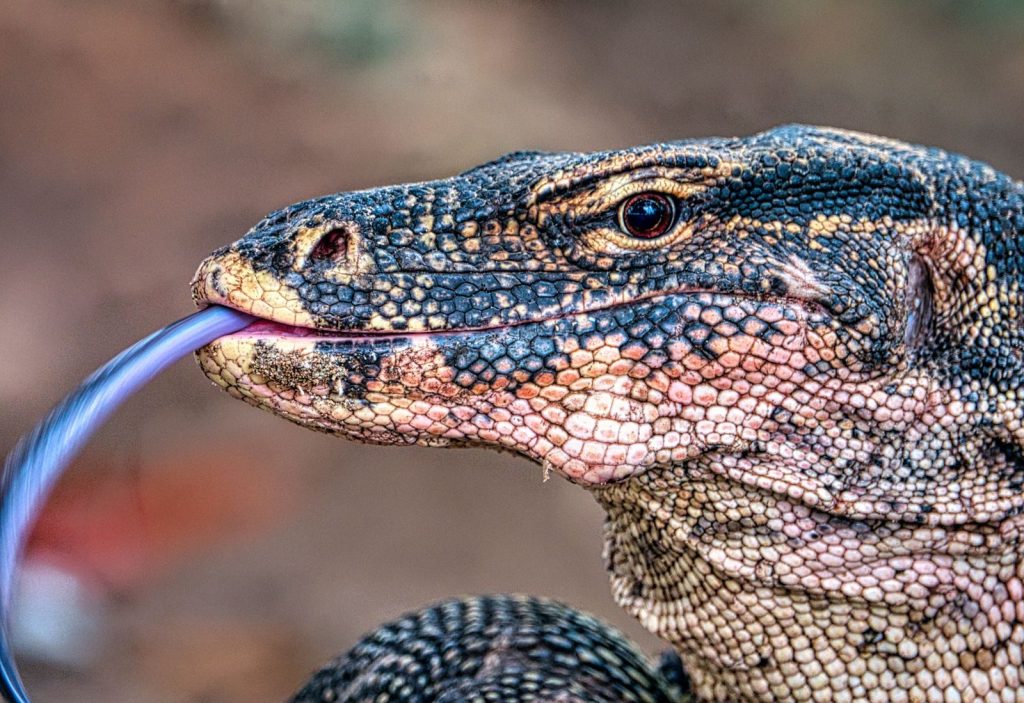
Like other monitor lizards, Komodo dragons repeatedly flick their forked tongues while exploring. The tongue collects chemical particles and transfers them to the vomeronasal system in the roof of the mouth, providing detailed information about surrounding scents.
This chemical sense helps a dragon locate food that may not be visible. Carrion forms part of its diet, so following odor through a landscape can lead to a carcass or wounded animal. The tongue is therefore an important hunting and scavenging tool, not a stinging organ.
Large Prey
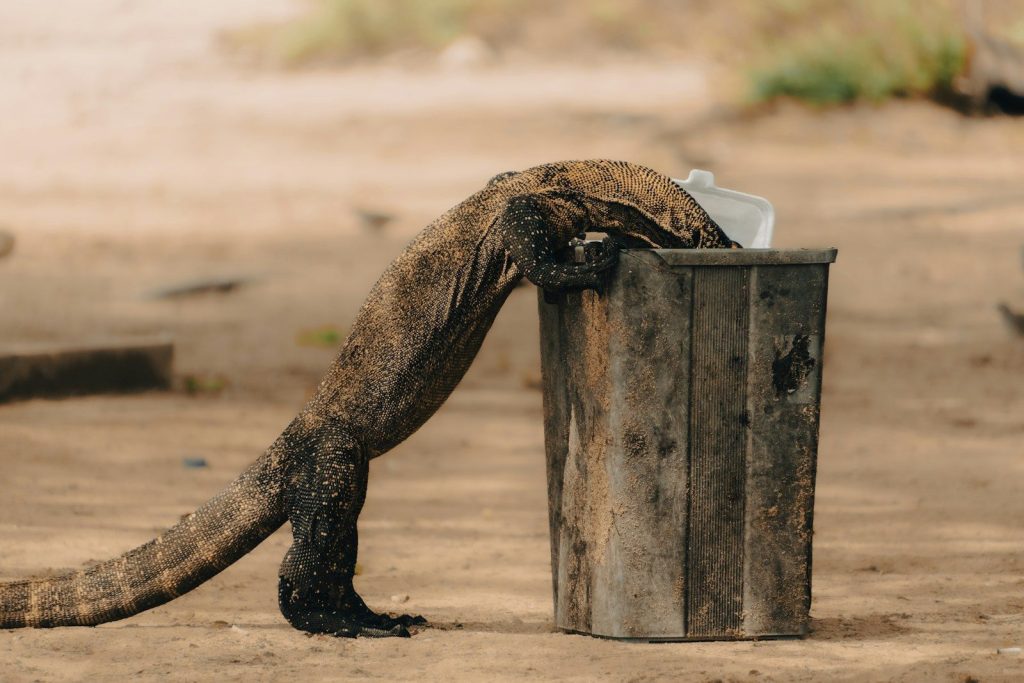
Adult Komodo dragons can take large mammals, including deer and wild pigs, and they will also eat smaller reptiles, birds, mammals, and carrion. Large individuals have even been documented attacking animals approaching their own substantial body size.
A large meal can provide considerable energy, so a dragon does not need to hunt successfully every day. Young dragons eat much smaller prey and spend more time in trees, partly reducing the danger posed by larger Komodos, which can cannibalize smaller individuals.
Komodo Feeding
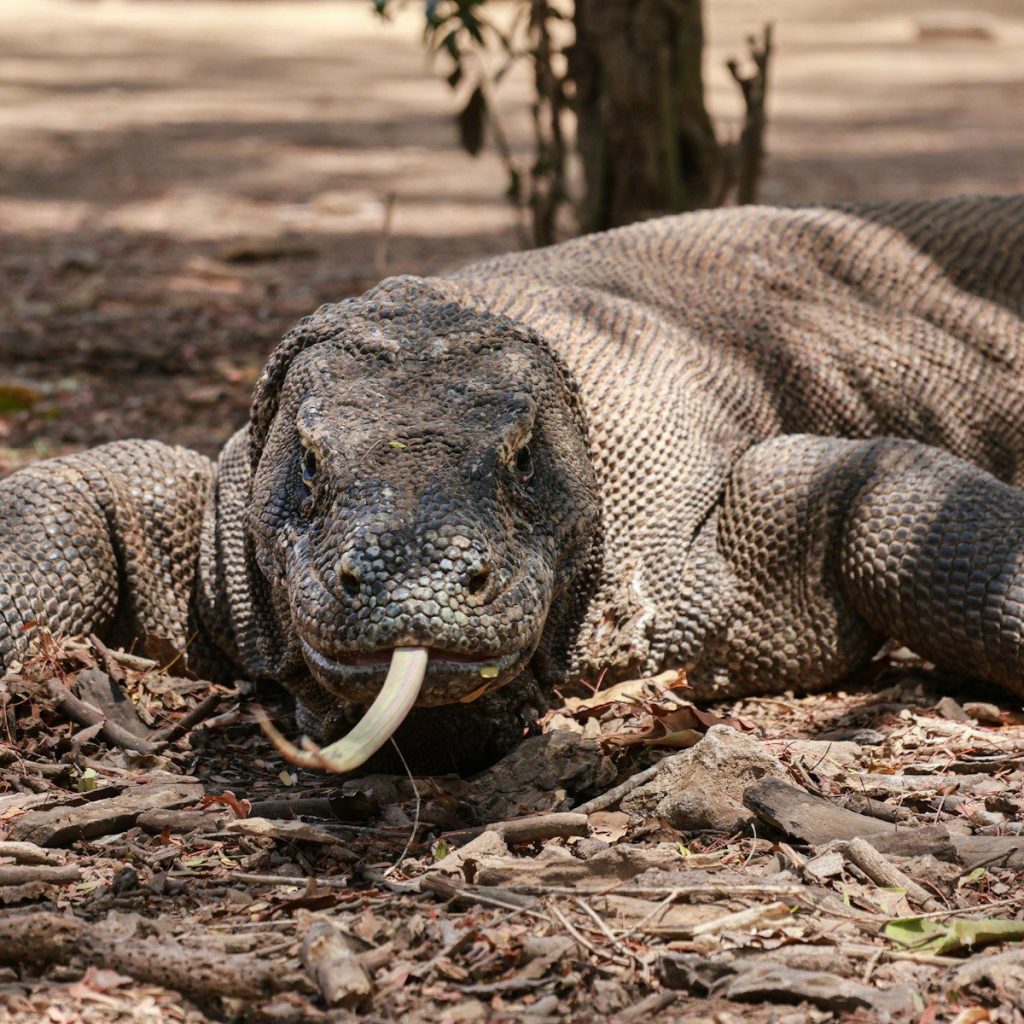
Once a carcass is available, a Komodo dragon can tear off sizable pieces using its teeth and strong neck muscles. Several dragons may gather at the same food source, especially when the smell of a large carcass travels through the surrounding habitat.
Feeding scenes can look chaotic because size influences access to food and larger animals can dominate smaller ones. Cannibalism is also documented. A dragon approaching a carcass therefore faces competition as well as an opportunity to feed, particularly where several adults have detected the same meal.
Komodo National Park
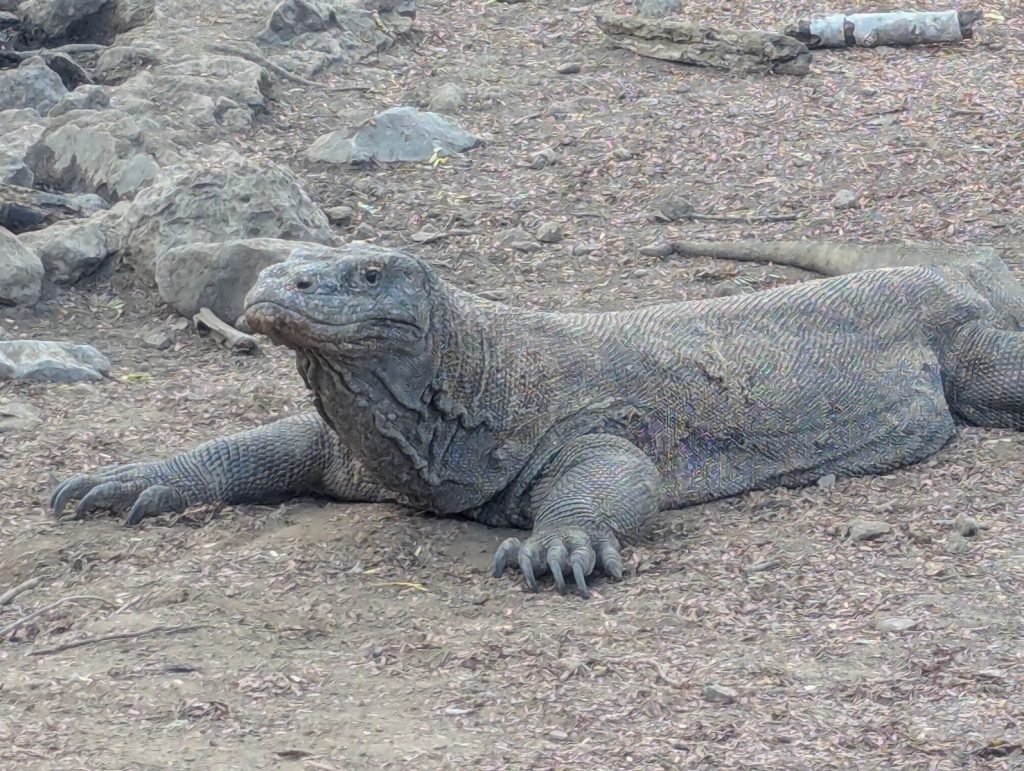
Wild Komodo dragons survive naturally in a very restricted part of Indonesia, including islands within and around Komodo National Park. Their limited distribution means protecting habitat and prey populations is especially important for the species’ future.
Visitors should never treat a slow-moving dragon as tame. These are powerful wild predators capable of causing serious injury. Viewing them with trained local guides and following park instructions allows people to observe their natural behavior without creating unnecessary risk for either humans or animals.
Featured Image:Photo by Joshua J. Cotten on Unsplash