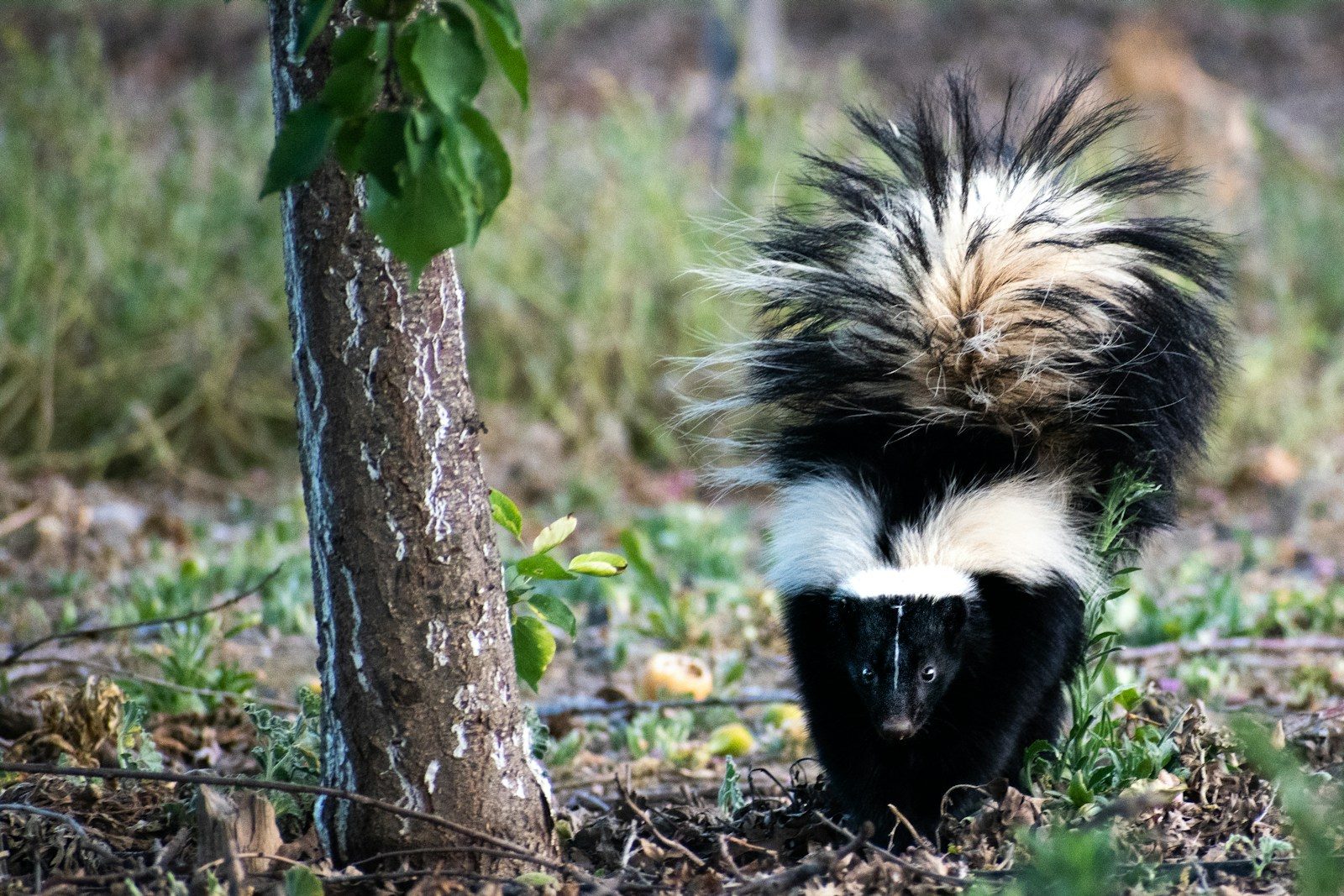
Finding a skunk in your yard can be alarming, especially because of the animal’s powerful defensive spray. But wildlife experts say skunks are usually calm, nonaggressive animals that prefer avoiding humans whenever possible.
If you notice one wandering around your property, the key is to stay calm and avoid forcing the animal into a defensive situation.
Why Skunks Enter Residential Areas
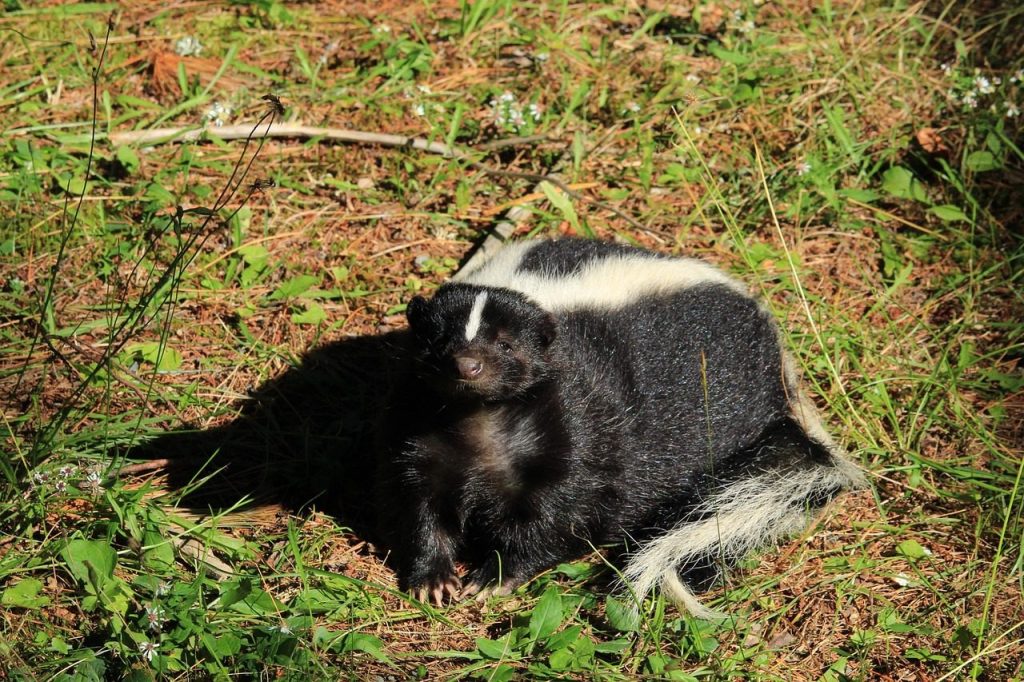
Skunks are often attracted to neighborhoods because they can easily find food and shelter. Pet food, overflowing garbage cans, fallen fruit, bird seed, and open crawl spaces all make ideal environments for them.
They may also hide under porches, decks, sheds, or wood piles to rest safely during the day.
Do Not Approach or Corner the Animal
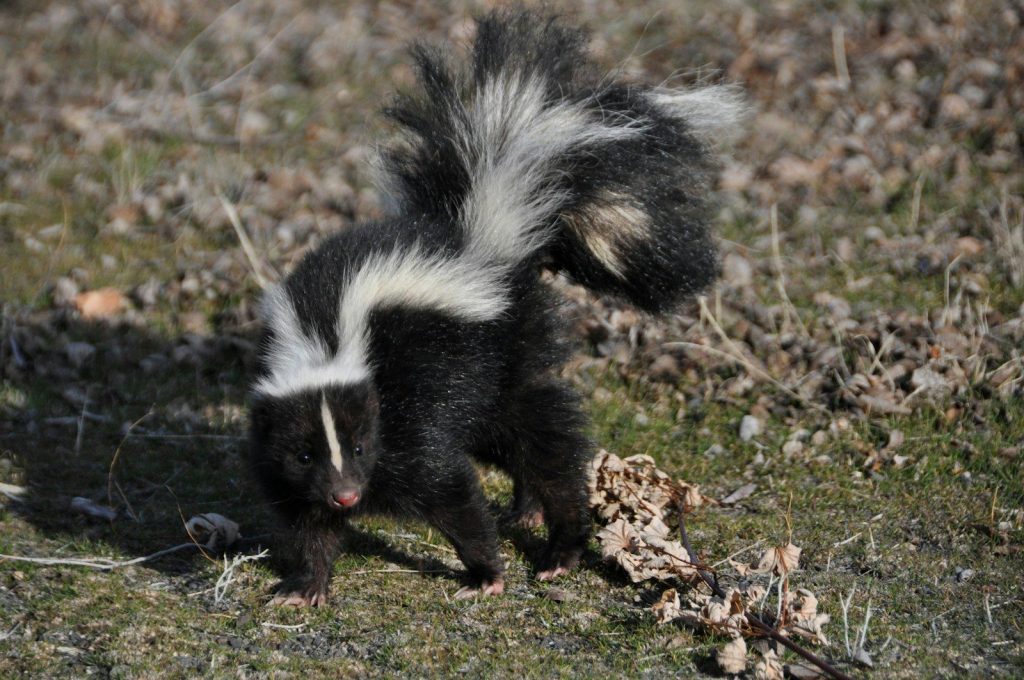
One of the biggest mistakes people make is trying to scare away or trap a skunk themselves. When frightened, skunks raise their tails, stomp the ground, and spray as a last line of defense.
Their spray can travel several feet and produces an extremely strong odor that is difficult to remove.
Remove Food Sources
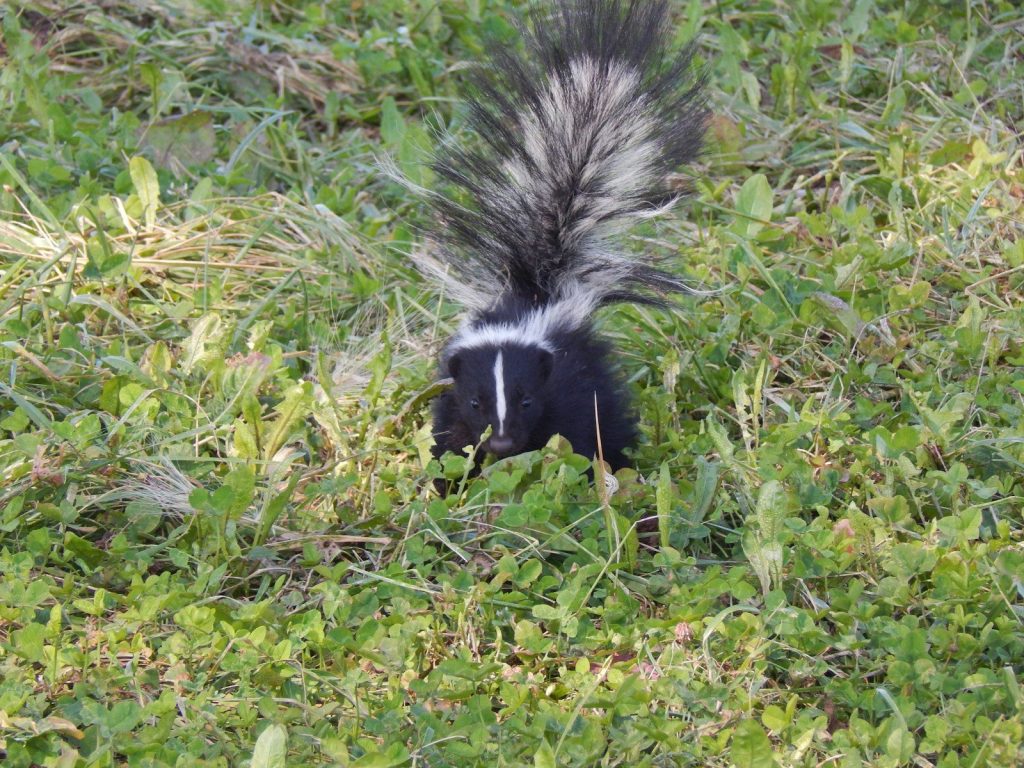
Wildlife experts recommend eliminating anything that may attract skunks to your property. Secure trash bins tightly, bring pet food indoors, and clean up fallen fruit or bird seed from the ground.
Reducing food access often encourages skunks to move elsewhere naturally.
Block Potential Shelter Areas

If skunks are nesting under structures, experts suggest carefully sealing entry points only after confirming the animal has left.
Motion activated lights or mild deterrents may also help discourage them from returning.
Keep Pets Away

Dogs are especially likely to trigger defensive spraying because they often bark or chase skunks. Keeping pets supervised at night can help avoid unpleasant encounters.
Skunks are mostly active during evening and nighttime hours.
Are Skunks Dangerous?
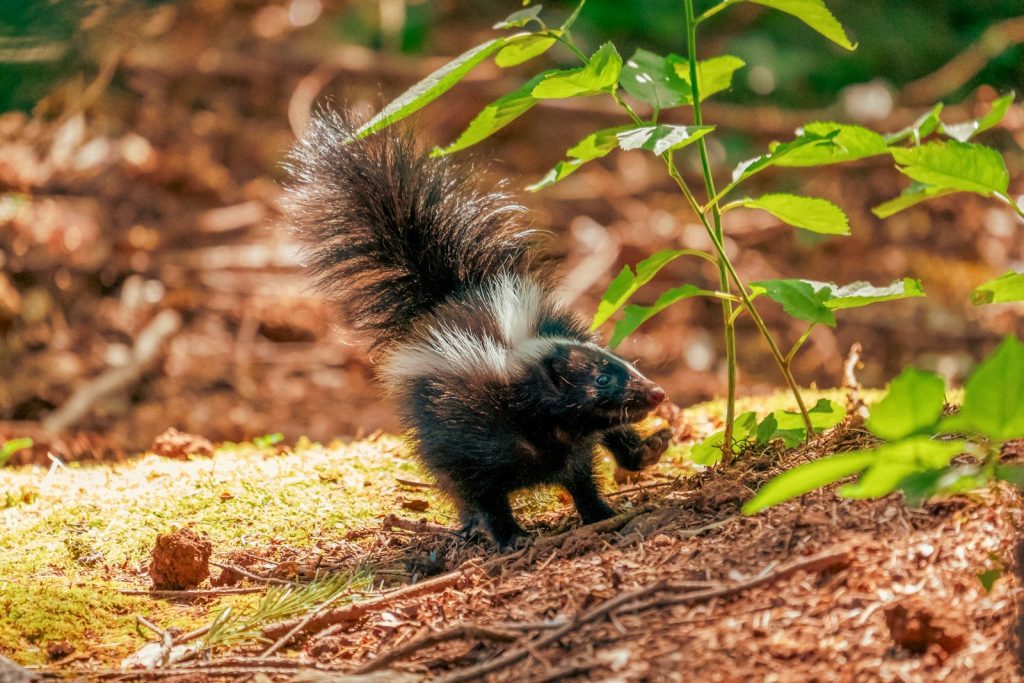
Skunks are not naturally aggressive toward people, but they can carry diseases such as rabies in rare cases. Wildlife officials advise avoiding direct contact with any wild animal behaving strangely or appearing sick.
If a skunk seems unusually aggressive, injured, or disoriented, local animal control should be contacted.
What If a Skunk Sprays?
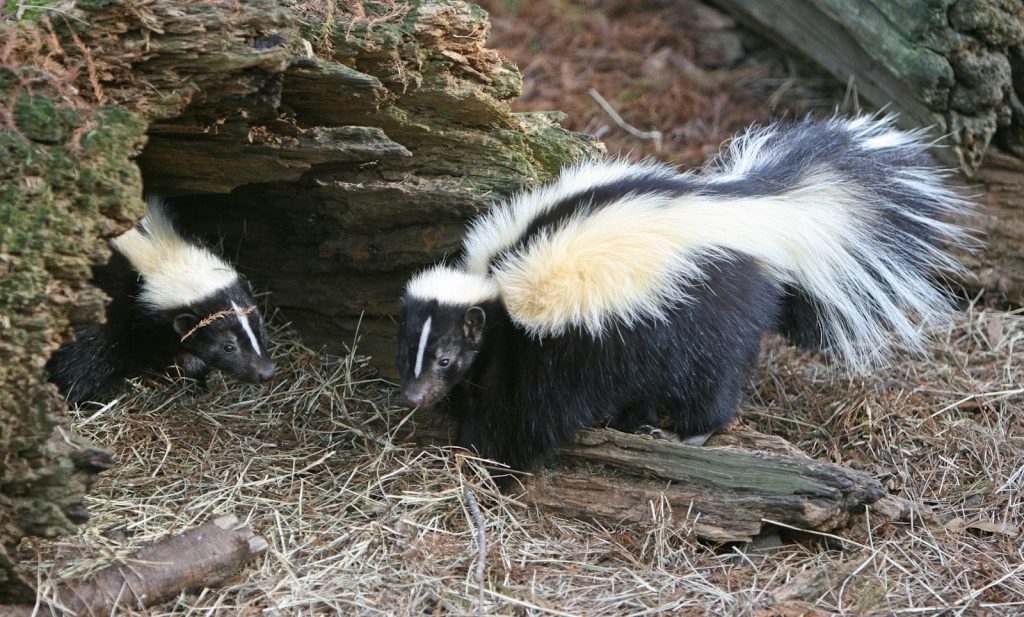
If spraying occurs, veterinarians and wildlife experts often recommend mixtures containing hydrogen peroxide, baking soda, and dish soap to help neutralize the smell.
Tomato juice is a popular myth but is generally less effective at removing skunk odor completely.