The exact “she thought it was a shark” incident cannot be independently authenticated from the title alone. A verified 2026 Texas sighting did involve an angler initially mistaking a large manta ray for a shark or dolphin.
Giant manta rays can reach extraordinary dimensions, yet their appearance is far more intimidating than their diet. These enormous rays feed mainly on tiny plankton rather than large animals.
Galveston Manta Sighting

In June 2026, Houston angler Dustin Heath filmed a large manta ray near Galveston’s 91st Street Fishing Pier. He initially thought he was looking at a shark or dolphin because a small projecting fin created a misleading silhouette at a distance.
The animal appeared to be a juvenile roughly six to eight feet across. About 50 people were reportedly on the pier as it surfaced and moved past, providing a documented example of how easily a large ray can be misidentified from shore.
Giant Manta Ray
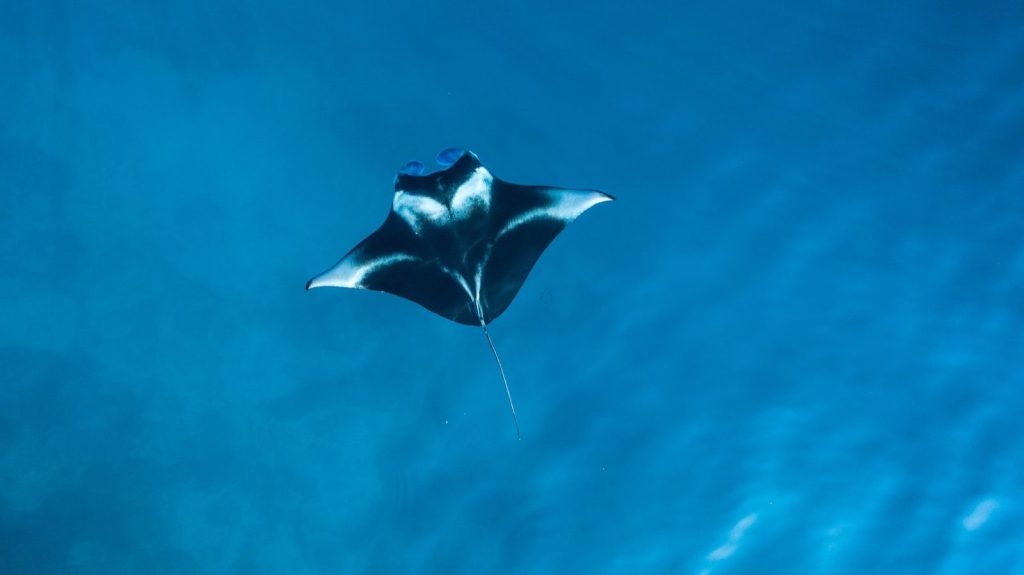
The giant manta ray, Mobula birostris, is the world’s largest ray. NOAA records individuals reaching disc widths of about 26 feet, while exceptionally large animals can weigh several thousand pounds. Their broad bodies and enormous pectoral fins create a striking silhouette beneath the surface.
Despite that size, manta rays are filter feeders rather than large-prey hunters. They swim through plankton-rich water and capture tiny organisms, meaning an enormous manta approaching the surface is not behaving like a predatory shark searching for swimmers.
Manta Ray Fins

A manta’s huge triangular pectoral fins move in a wing-like motion as the animal swims. From a distance, part of the body or one raised fin can briefly break the surface, making identification difficult for someone expecting to see a shark.
The resemblance disappears once the entire animal becomes visible. Mantas have a broad flattened body rather than the streamlined shape of most sharks. Their movement can appear almost like underwater flight, with the large fins providing lift and propulsion as they glide through open water.
Manta Ray Feeding
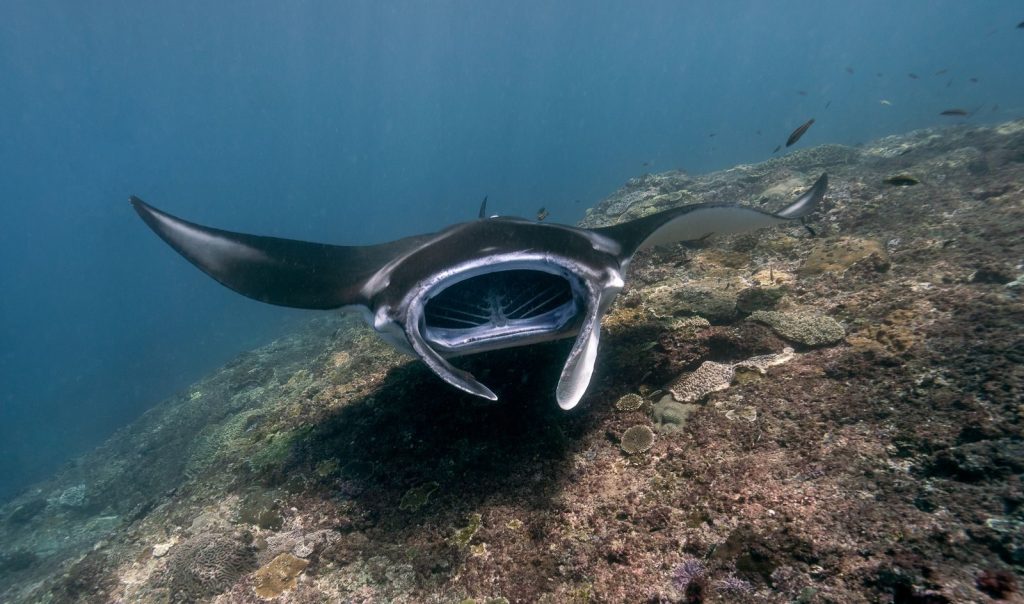
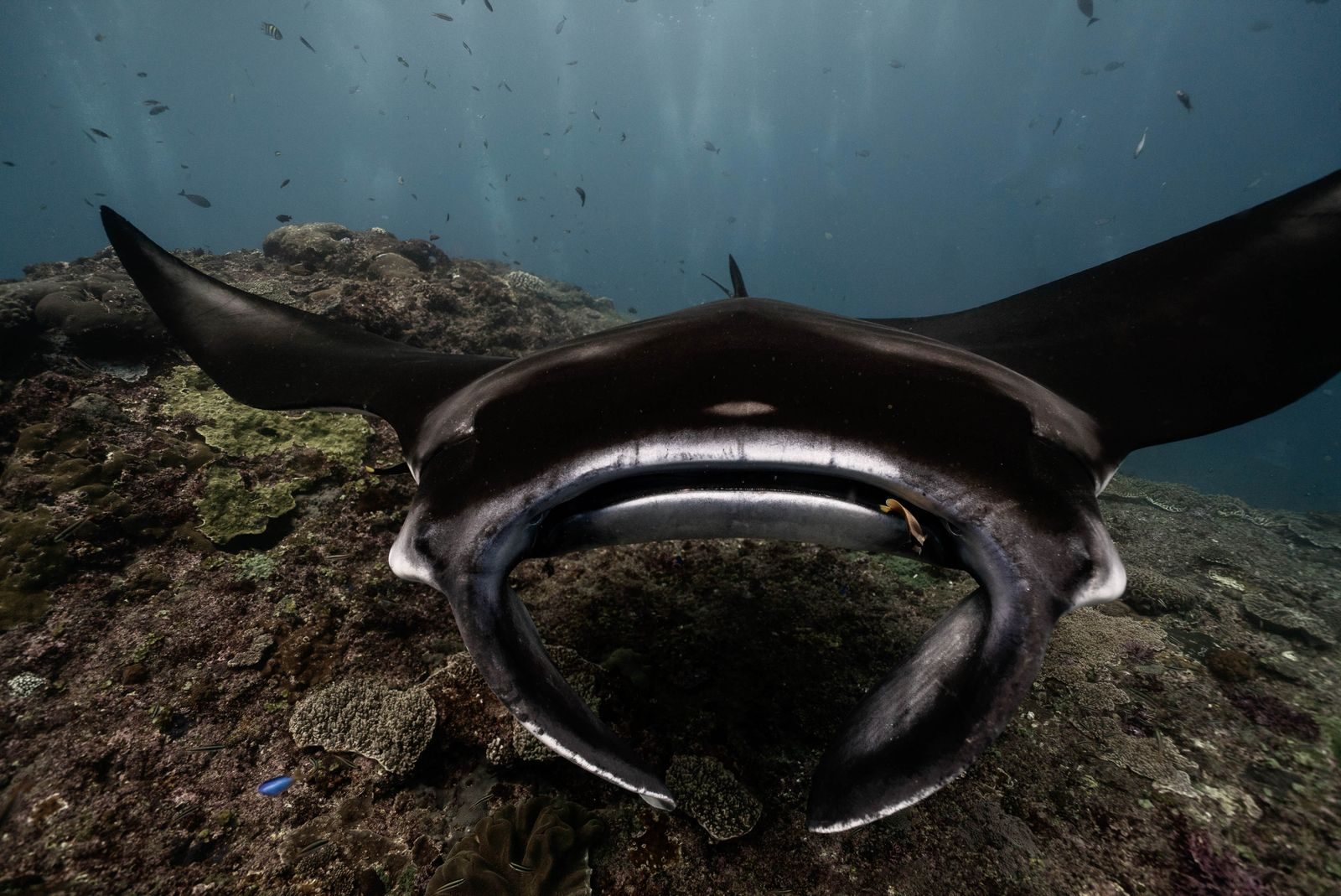
Giant manta rays concentrate where plankton becomes abundant. They can swim through productive water with their mouths open, filtering tiny prey while moving forward. Some feeding behaviors include repeated turns and barrel rolls that allow them to remain inside dense patches of food.
That may also bring them unexpectedly close to the surface or coastline. Experts examining another June 2026 Galveston manta sighting suggested plentiful plankton near shore could explain why the animal approached an area where people do not regularly expect to see these ocean giants.
Manta Cephalic Lobes

Two flexible structures project from the front of a manta ray’s head. Known as cephalic lobes, they can look almost horn-like when rolled, contributing to the old nickname “devil ray.”
During feeding, the lobes unfurl and help channel plankton-filled water toward the mouth. They are therefore feeding equipment rather than weapons. Combined with the manta’s huge wings and dark upper surface, these strange structures can make a surfacing animal look dramatic, but its anatomy is designed around gathering tiny suspended prey rather than attacking large animals.
Flower Garden Banks

Giant manta rays are regularly studied at Flower Garden Banks National Marine Sanctuary, roughly 100 miles off the Texas coast. Researchers confirmed the sanctuary as nursery habitat for juvenile giant mantas, making it especially important for understanding the species’ early life.
NOAA’s updated 2026 conservation framework recognizes only three documented giant-manta nursery areas worldwide, with two occurring in the southeastern United States. Repeated sightings of juveniles and their tendency to return to these areas helped scientists identify the nursery habitats.
Threatened Manta Rays

Giant manta rays have been protected as threatened under the U.S. Endangered Species Act since 2018. Their major threats include targeted fishing in parts of the world and accidental capture in commercial fishing gear.
Their biology makes population losses difficult to replace quickly. Giant mantas grow slowly and generally produce just one pup after a long reproductive cycle. NOAA also identifies vessel strikes, pollution, marine debris, and other human activities as potential pressures, making seemingly healthy giant animals part of a population that still requires protection.
Safe Manta Viewing
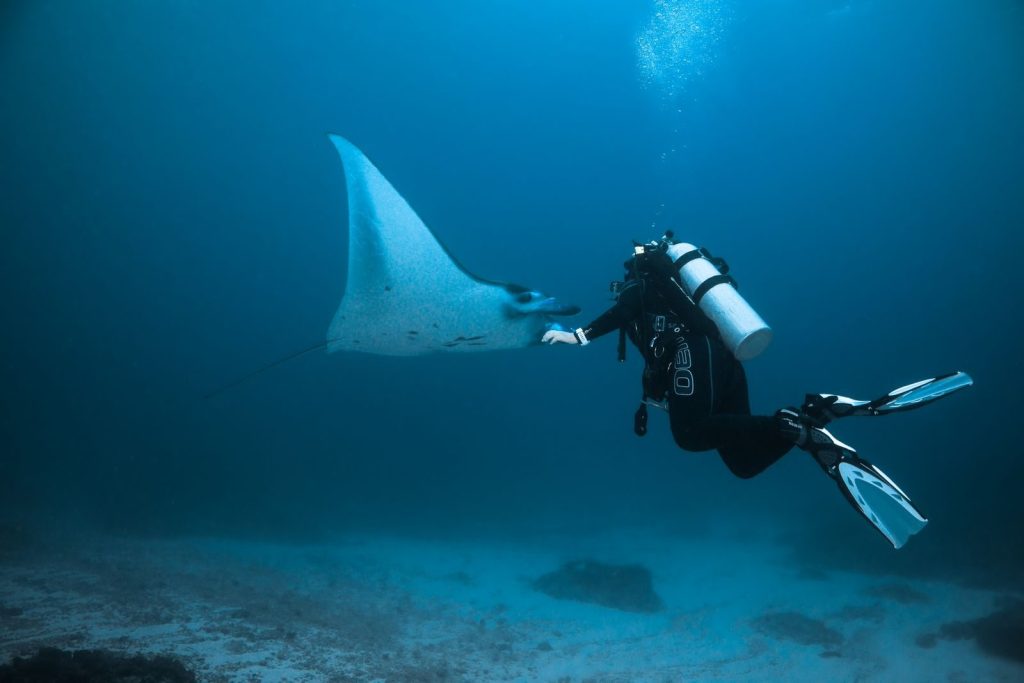
A manta near a boat or pier should be watched without chasing, touching, hooking, or crowding it. NOAA conservation guidance emphasizes reducing interactions that can cause vessel strikes, entanglement, or other injuries to this protected species.
The dramatic size of a manta makes close footage tempting, but distance produces a safer encounter. A huge dark shape appearing beneath the surface may create a moment of uncertainty, yet identifying the animal before reacting can prevent a harmless plankton feeder from being treated like a dangerous shark.
Featured Image: Photo by Elianne Dipp on Pexels