Skip to content

Recent Posts

  • Rangers Pull a Giraffe From Deadly Tanzanian Mud
  • How Orcas Surround Prey and Hunt Together
  • How an Octopus Hunts With Three Hearts
  • What Elephants Do When Others Get Too Close
  • Baby White Rhino Mick Takes His First Outdoor Steps

Most Used Categories

  • Nature & Wildlife (716)
  • Risk (66)
  • Human Interest (48)
  • Exotic Animals (24)
  • Survival (22)
  • Hunting (22)
  • Bees/Swarms fear (20)
  • Suspense (16)
  • Adventure (3)
  • Gears (2)
Skip to content
  • About Us
  • Contact Us
  • Disclaimer
  • Privacy Policy
  • Terms & Conditions

Hive Hunters Tales

  • Suspense
  • Nature & Wildlife
  • Human Interest
  • Hunting
  • Bees/Swarms fear
  • Exotic Animals
  • Risk
  • Survival
  • Adventure
  • Gears
  • Home
  • Hunting
  • How Orcas Surround Prey and Hunt Together
Drone shot of whales swimming gracefully in the ocean, showcasing marine wildlife from above.

How Orcas Surround Prey and Hunt Together

JakeAugust 10, 2026August 9, 2026

Killer whales are apex predators, but there is no single universal orca hunting method. Different populations learn different prey preferences and techniques.

Some hunt fish, while others specialise in seals, sea lions, squid, or even other whales. Coordinated teamwork allows a pod to turn several individual hunters into a highly organised group.

Orca Diets Differ

Two orcas gracefully swimming in the Pacific Ocean, Alaska.
Photo by Dianne Maddox on Pexels

In the northeastern Pacific, resident killer whales concentrate mainly on fish, especially salmon. Bigg’s killer whales primarily hunt marine mammals and squid. These differences show that hunting behavior is culturally shaped rather than identical across the species.

Pods Work as Teams

A serene group of orcas gliding through the calm waters of Telegraph Cove, BC.
Photo by marnock on Pexels

NOAA describes killer whales as coordinated hunters that work together to capture prey. Several animals can approach from different directions, maintain contact with one another, and adjust their movements as the target turns or tries to escape.

Surrounding Limits Escape

A captivating close-up of an orca surfacing in the ocean near Santa Barbara, California.
Photo by Adam Ernster on Pexels

For prey such as seals, coordinated positioning can reduce open escape routes. One orca may pressure the animal from one side while others remain nearby. The group does not need to attack simultaneously; simply controlling where the prey can move provides an advantage.

Silence Can Help

A majestic orca swimming in the vast ocean, showcasing its elegance and power.
Photo by Felix Rottmann on Pexels

Marine-mammal-eating orcas may become quieter while hunting because seals and other cetaceans can hear underwater calls. Reducing vocal activity may help predators approach without broadcasting their exact location before the final chase.

Waves Become Weapons

Majestic orca swimming in a snowy fjord with scenic winter backdrop.
Photo by Krister P on Pexels

Some orcas have learned to generate waves that wash seals from ice. They coordinate their approach, dive together, and create moving water powerful enough to destabilise the prey’s temporary refuge. The technique requires timing and is learned rather than performed identically by every population.

Fish Require Different Tactics

two black and white orca swimming in a body of water
Photo by Stephen Walker on Unsplash

Fish-eating killer whales use methods suited to faster, schooling prey rather than seals. Some populations herd fish into concentrated groups, while others depend heavily on echolocation to locate individual salmon. Hunting culture follows the prey available in each ecosystem.

Young Orcas Learn
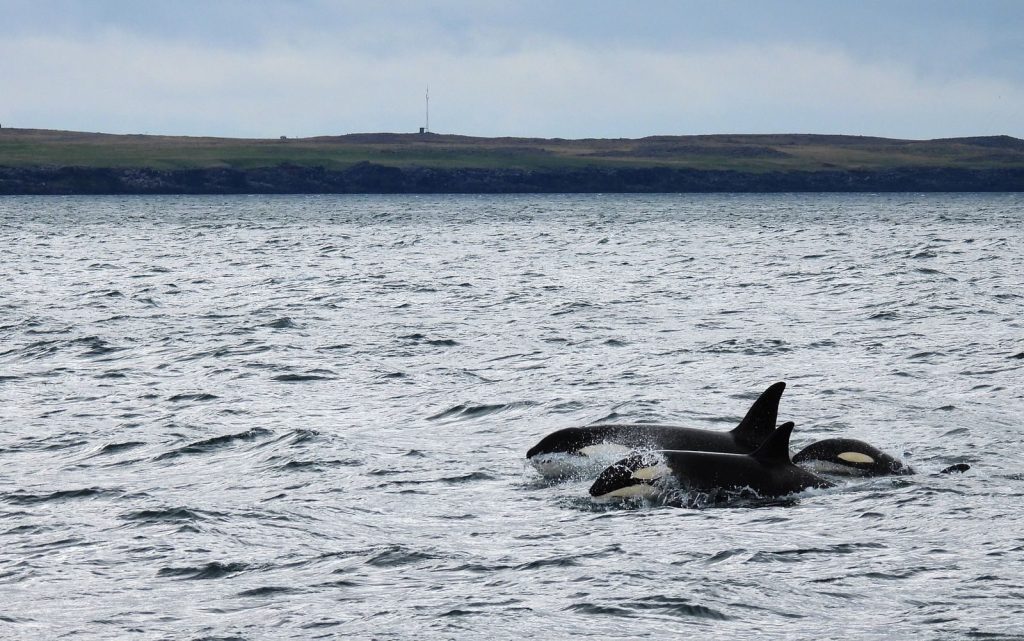
Orcas swimming in the waters near Ólafsvík, Iceland. Captured at day time, showcasing marine life.
Photo by Ronile   on Pexels

Orca calls and behaviors are culturally transmitted within family groups. Young whales spend years alongside older relatives, giving them opportunities to observe prey selection, pursuit routes, coordination, and handling techniques. Their hunting skills are therefore partly learned through family life.

The Pod Shares an Advantage

Majestic orcas swim along the rocky shoreline of San Juan Islands, Washington.
Photo by Jeff Wiles on Pexels

Surrounding prey succeeds because several intelligent predators can solve the same problem together. The exact tactic may change with seals, fish, sharks, or whales, but coordination remains one of the defining features that makes killer whales such effective ocean hunters.

Featured Image: Photo by Ivan Stecko on Pexels
Post navigation

Previous: How an Octopus Hunts With Three Hearts
Next: Rangers Pull a Giraffe From Deadly Tanzanian Mud

Related Posts

A vibrant display of raw seafood including lobster and scallop ready for gourmet cooking.

Can Eating Invasive Species Help Control Them?

August 9, 2026August 9, 2026 Jake
A hawk stands over its prey on the grass.

Camera Trap Captures a Golden Eagle Hunting Deer

August 9, 2026August 9, 2026 Jake

Scientists Discover Ancient Crocodile That Lived Alongside Early Humans

July 19, 2026July 18, 2026 Jake

Leave a Reply Cancel reply

Your email address will not be published. Required fields are marked *

Recent Posts

  • Rangers Pull a Giraffe From Deadly Tanzanian Mud
  • How Orcas Surround Prey and Hunt Together
  • How an Octopus Hunts With Three Hearts
  • What Elephants Do When Others Get Too Close
  • Baby White Rhino Mick Takes His First Outdoor Steps
Copyright All Rights Reserved | Theme: BlockWP by Candid Themes.