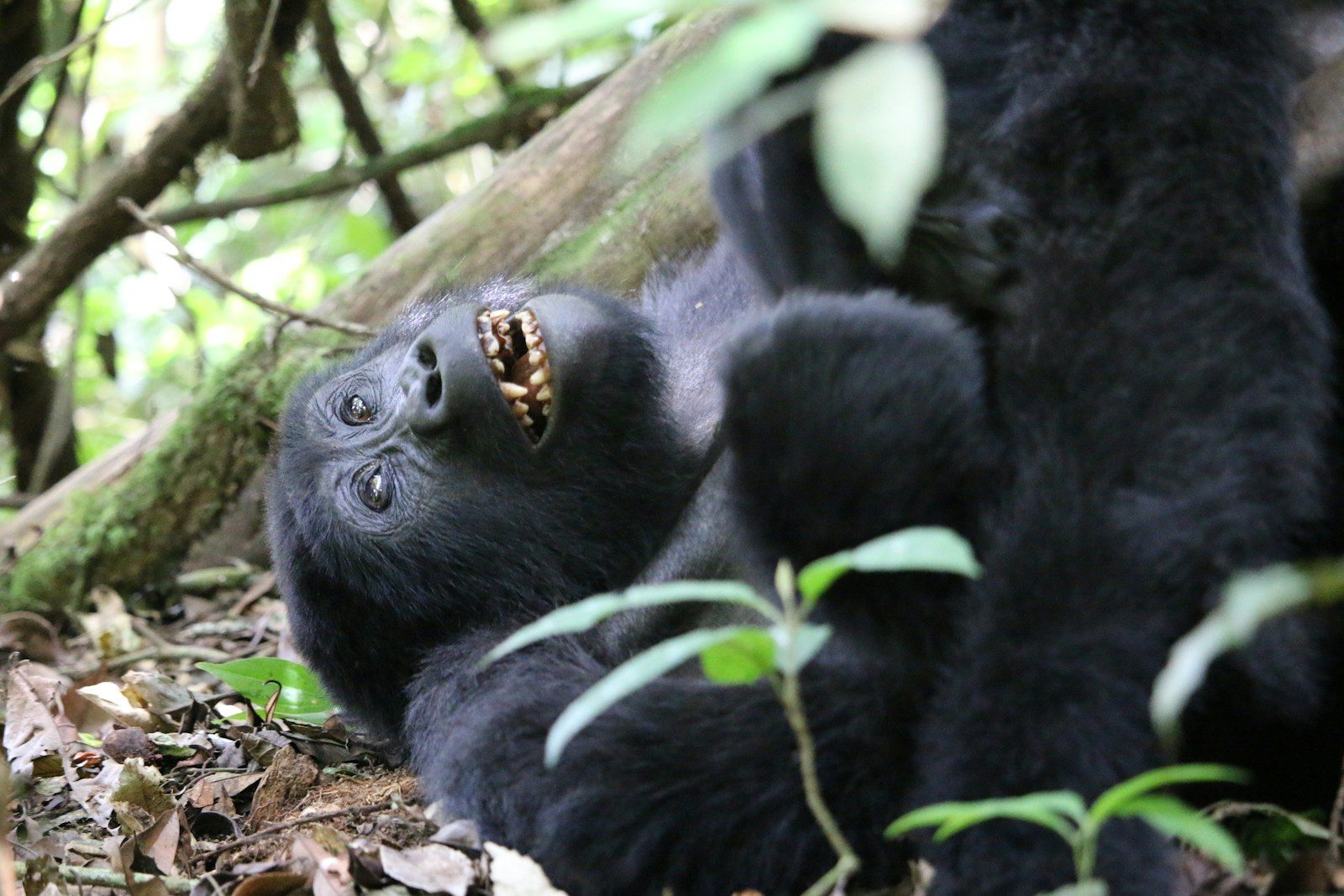
Watching a gorilla laugh might seem like a heartwarming internet moment, but it has also helped scientists uncover fascinating clues about the evolution of laughter. A recent study found that humans and great apes share remarkably similar laughter rhythms, suggesting this joyful behavior has ancient evolutionary roots.
The research, supported by a playful video of a gorilla laughing while being gently tickled, offers new insights into how emotional communication has been preserved across species for millions of years.
A Gorilla’s Laughter Captured Scientists’ Attention

The video, recorded in Coventry, England, shows a gorilla responding with bursts of laughter as a researcher gently tickles its foot. The interaction highlights how gorillas express positive emotions in ways surprisingly familiar to humans.
Rather than being simple amusement, the gorilla’s laughter became valuable scientific evidence. Researchers analyzed these vocalizations to better understand how laughter evolved across primate species.
Study Finds Humans and Great Apes Share Similar Laughter Patterns

Researchers from the University of Warwick published their findings in the journal Nature on June 25. They examined laughter produced by humans, chimpanzees, bonobos, gorillas, and orangutans.
The study found that all five species generate laughter using nearly identical rhythmic patterns. According to scientists, this shared structure has remained largely unchanged for at least 15 million years.
Laughter May Have Ancient Evolutionary Origins

Scientists believe laughter developed long before modern humans appeared. The consistent rhythm found across great apes suggests it originated in a common ancestor shared by these species.
This discovery supports the idea that laughter evolved as a social communication tool. It may have strengthened relationships, encouraged play, and reinforced cooperation within early primate groups.
Tickling Helps Researchers Study Animal Emotions

Tickling has become an important method for studying positive emotional responses in animals. Similar research has previously shown that rats also produce playful vocalizations when tickled.
For great apes, gentle tickling provides researchers with a safe and natural way to observe genuine expressions of joy. These responses offer valuable insights into animal behavior and emotional development.
Why This Discovery Matters for Science

Understanding laughter across species helps researchers explore the origins of human emotions and social behavior. It also strengthens evidence that many emotional expressions evolved long before humans.
The findings remind us that laughter is more than entertainment. It represents an ancient biological behavior that has connected humans and their closest relatives for millions of years.
Featured Image: Photo by Gabriel Schumacher on Unsplash