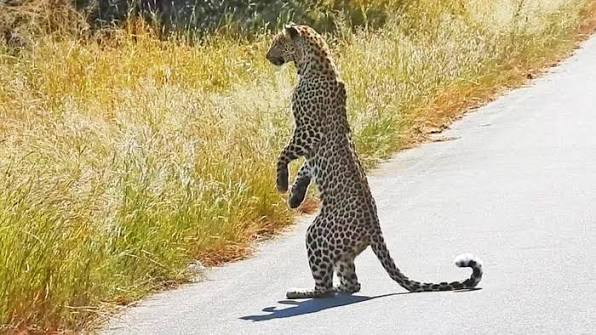
Wildlife sightings often surprise us, but every so often an encounter appears so unusual that it challenges what we think we know about nature. In Kruger National Park, South Africa, a leopard was filmed briefly standing upright on its hind legs, creating a viral moment that stunned viewers worldwide and sparked debate about big cat behavior.
The Extraordinary Moment in the Wild
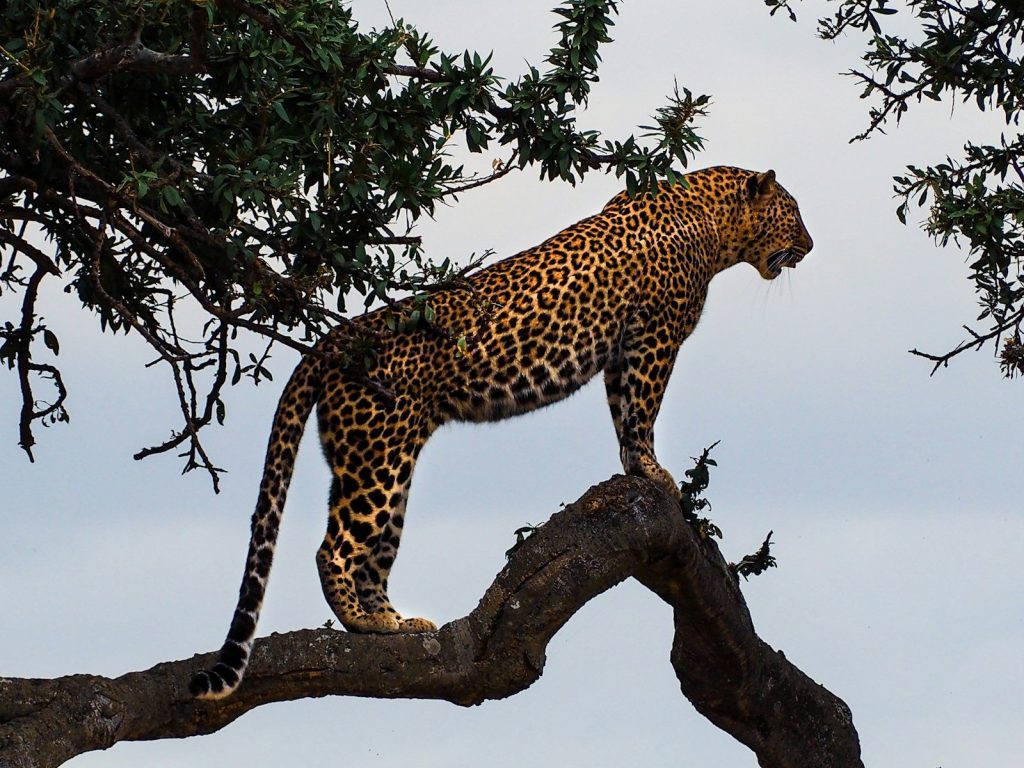
The sighting reportedly took place near Kumana Dam, south of Satara Rest Camp, in Kruger National Park. A safari visitor captured the leopard on video while it was stalking prey in tall grass.
What began as a typical hunting scene quickly turned extraordinary when the predator suddenly rose onto its hind legs.
A Predator in a Rare Upright Stance
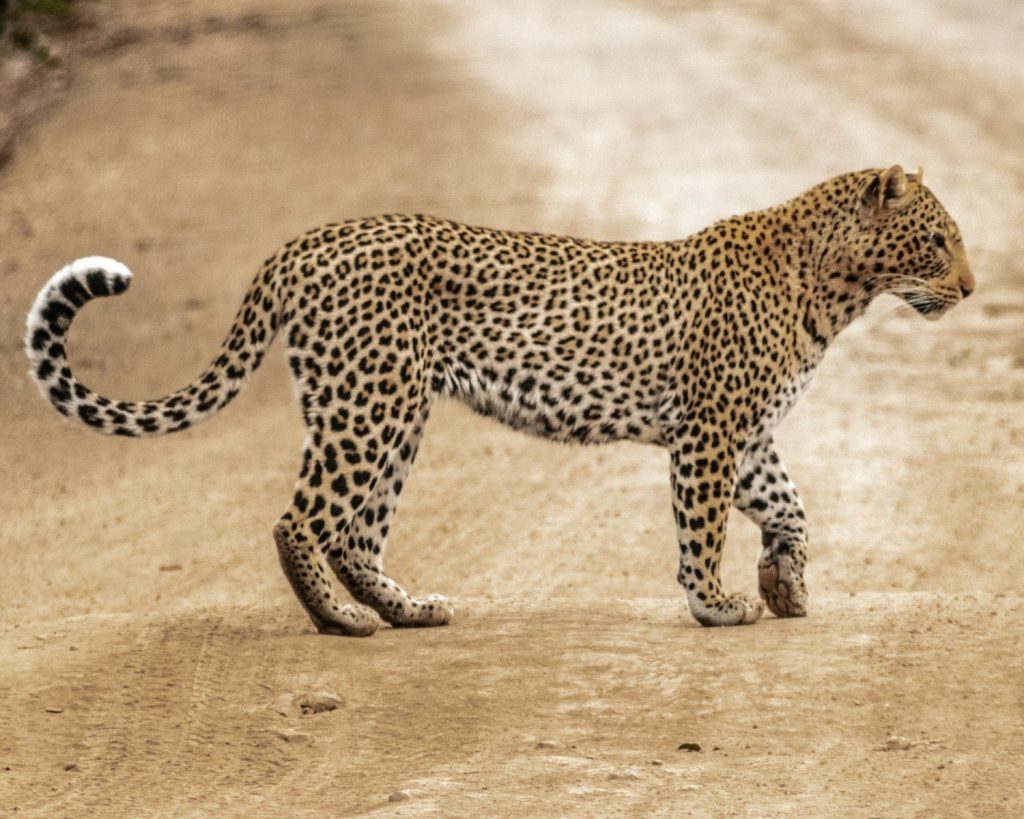
Instead of remaining low and concealed like most stalking leopards, the animal appeared to lift itself upright, balancing momentarily to gain a better view over the tall grass.
Observers described the moment as both surreal and unexpected, as leopards are not typically seen maintaining such a posture for extended periods.
Why Leopards Stand on Their Hind Legs
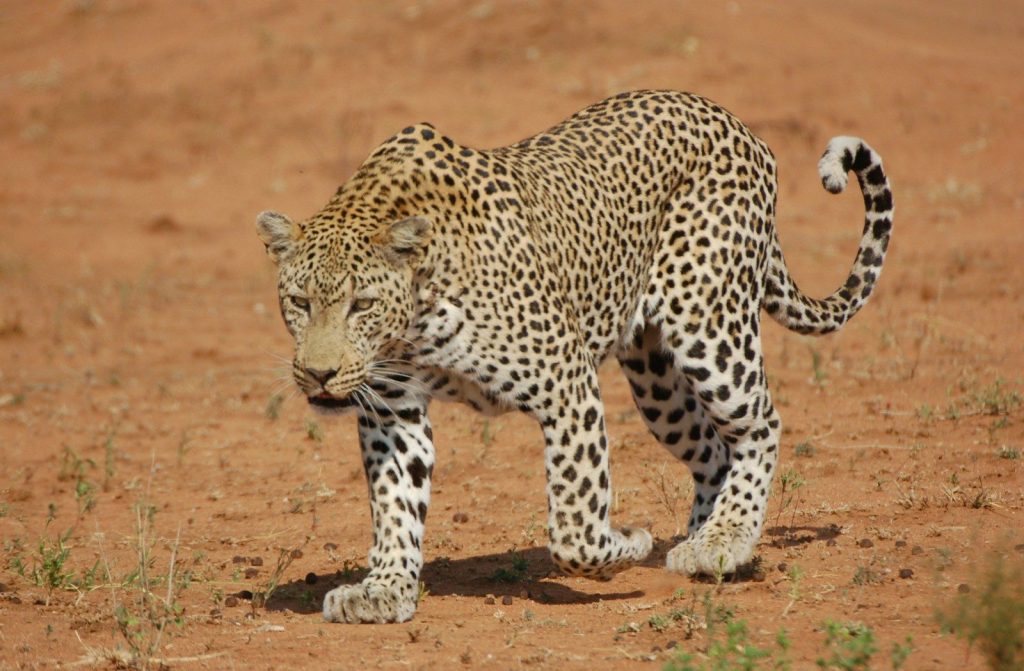
While the footage appeared unusual, wildlife experts note that leopards occasionally rise on their hind legs for practical reasons.
One of the most common explanations is visibility. In dense grassland environments, standing upright helps a leopard scan for prey or assess movement that would otherwise be hidden from ground level.
This behavior is not a sign of a “new evolution,” but rather an example of the species’ adaptability and problem-solving instincts in the wild.
Built for Balance and Precision
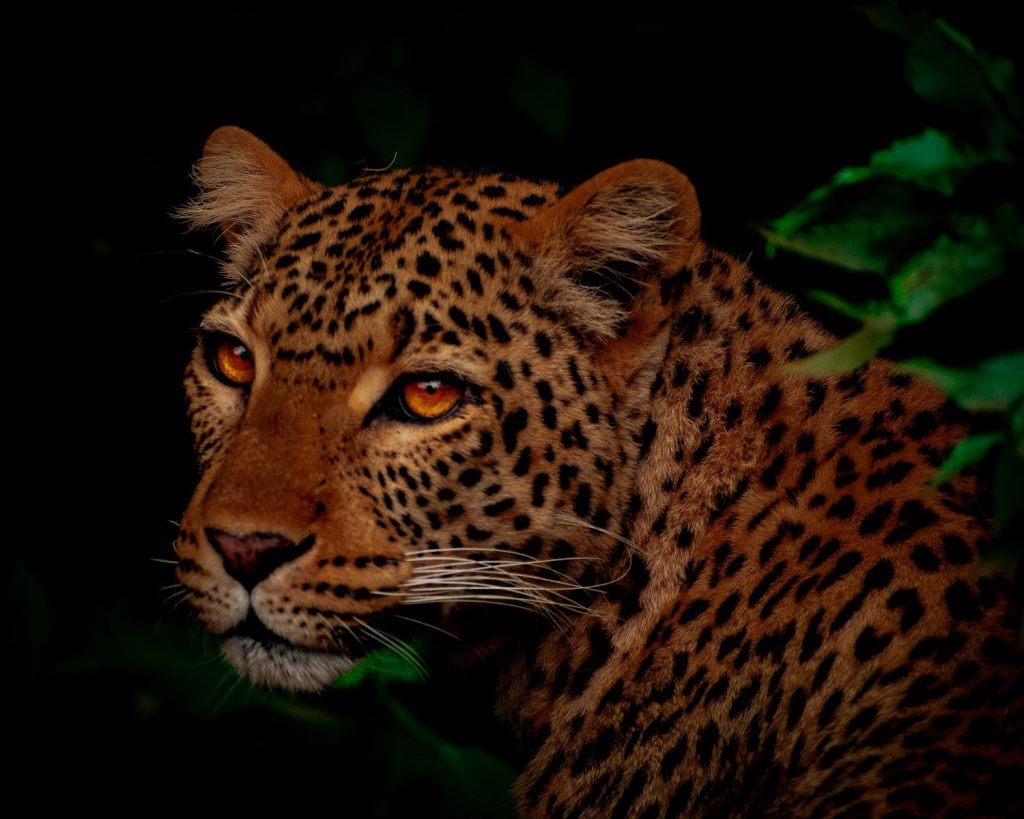
Leopards are among the most agile big cats in the world. Their long tails help them maintain balance, allowing for sudden shifts in posture or movement when needed.
Although they primarily move on all fours, their muscular hind legs give them enough strength to briefly elevate themselves when scanning their surroundings.
A Rare but Natural Behavior
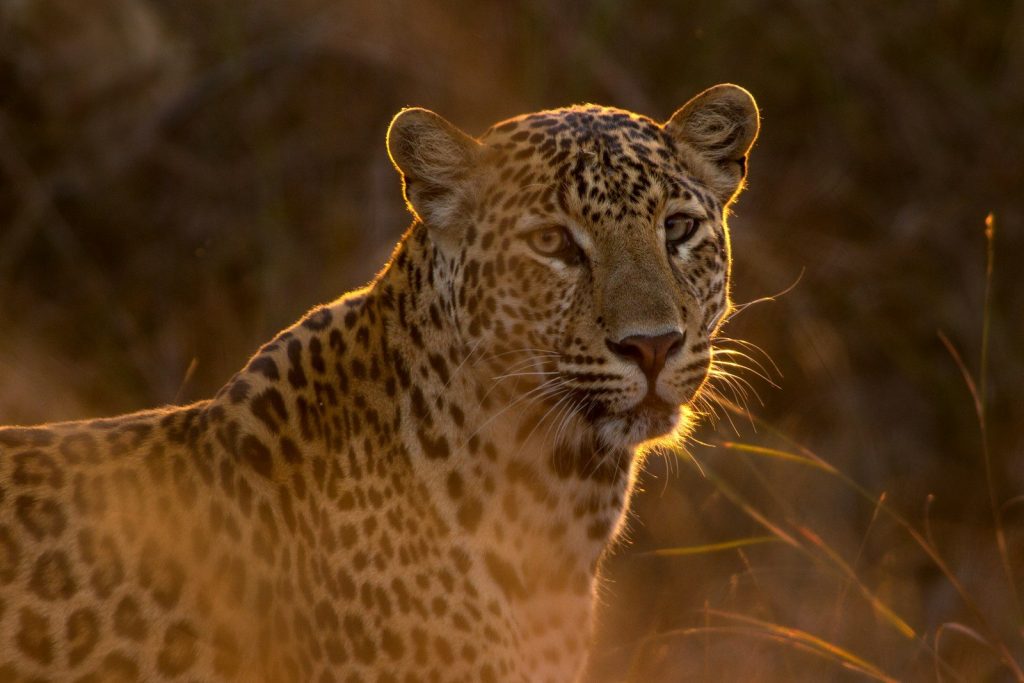
Wildlife specialists emphasize that while uncommon, upright posture in leopards is not unheard of. It is typically brief and situational, occurring when the animal needs a better vantage point during hunting or when navigating obstructed terrain.
The behavior reflects survival strategy rather than anomaly.